

You know the feeling. Your child still looks bright, still says they're fine, but the homework takes longer, the confidence looks thinner, and you're the one on your phone at 11pm comparing tutors in London while trying not to wake the house. That's usually when parents stop pretending this will sort itself out and start looking for a private tutor London families trust, not just the one with the nicest profile photo.
In London, tutoring is no longer a desperate last resort. A Sutton Trust briefing found that 30% of young people aged 11-16 had ever had private tutoring, up from 27% before the COVID-19 period, which is why it now feels like part of normal secondary life rather than a niche extra (Sutton Trust briefing). In London specifically, 45% of pupils have had private tutoring, compared with 27% in the rest of England, and that gap tells you something important. Families here are not being dramatic. They are responding to a system where support is already built into the culture.
The problem is that most parents still shop for tutors the wrong way. They start with ratings and price, then hope the rest will take care of itself. It doesn't. The decision is whether your child needs a single tutor, a short burst of specialist help, or a more structured learning environment altogether.
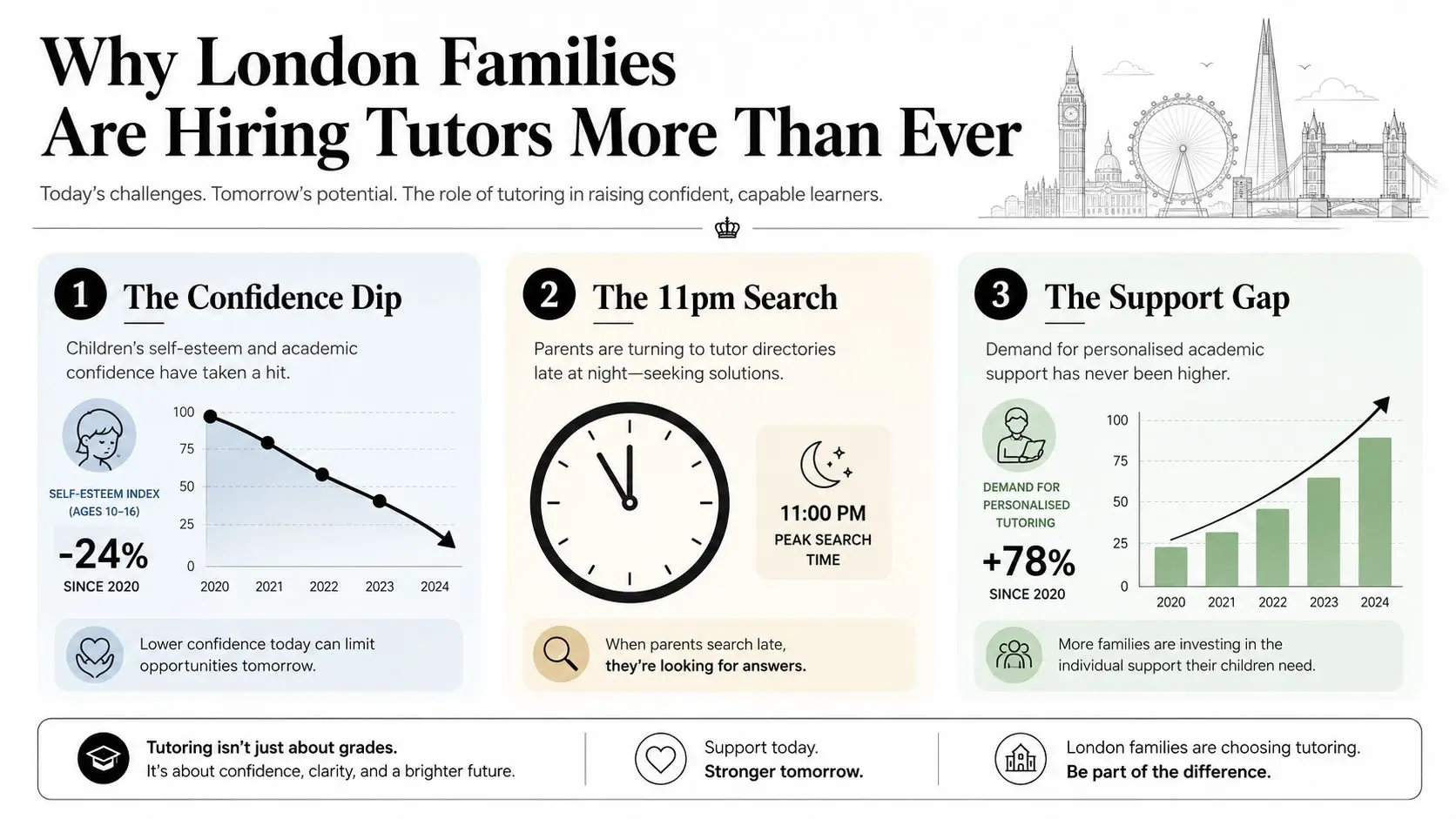
Why London Families Are Hiring Tutors More Than Ever
A Year 9 boy falls behind in maths, and the first sign is not a failing grade. It is the way he starts saying, “I'm just not good at this,” before he has even picked up a pen. His mum opens three London tutor directories after dinner, closes them again, then opens them once more because she cannot tell whether she needs a subject expert, a confidence boost, or a complete reset.
That is the current state of the tutoring market. The need is real, but the choice is messy. London families are not only paying for extra lessons, they are paying for reassurance, momentum, and a way to stop a child from giving up.
The capital has normalised tutoring
The biggest shift is that tutoring is now ordinary. A Sutton Trust briefing found that 30% of young people aged 11-16 had ever had private tutoring, and that is enough to explain why so many parents now feel like they are behind if they have not booked someone already. In London, that normalisation is stronger. Save My Exams tutoring statistics notes that 45% of pupils have had tutoring, compared with 27% in the rest of England.
That does not mean every child needs tuition. It does mean tutoring is no longer a sign of panic or failure. For many families, it is part of how they keep a child moving when school alone is not enough. A parent in Bromley looking for GCSE chemistry support is in a different market from a parent in Hampstead looking for Year 6 maths, but both are making the same judgement, the child needs more than the current setup is giving. Families also use tutoring for attention and executive-function support, and some children need a route into that support, whether through a tutor or through services where you can find ADHD coaching for adults.
Practical rule: if your child has stopped volunteering answers, started avoiding a subject, or dreads homework, the first job is not to buy more content. It is to restore confidence with the right kind of support.
A tutor can help, but it is not always the right shape
Parents often think the answer is “find a good tutor”. Sometimes it is. Sometimes the problem is that the child needs more structure, not more tutoring hours. If the issue is one weak topic, a tutor can be exactly right. If the issue is a wider lack of structure, a tutor can become a weekly sticking plaster.
That is why the decision matters emotionally as well as academically. You are not just buying an hour. You are deciding whether your child needs coaching, containment, or a different learning environment altogether. For some families, that is where a structured online school such as Queen's starts to make more sense than trying to bolt support onto a school rhythm that is already broken.
Where to Find a Private Tutor in London
If you search for a private tutor London parents can hire quickly, you'll see the same four routes again and again. Some are useful. Some are just fast. The trick is knowing what each channel is good for, and what it leaves out.
Agencies, directories, school networks, direct hire
Local agencies usually give the neatest shortlist. They often do the filtering for you, which is handy if you're short on time and want someone who can start soon. The downside is that speed often wins over fit, and the tutor on paper may not be the one your child warms to.
Online directories are broader and noisier. They let you compare subjects, levels, availability, and reviews, but they rarely answer the questions that matter most to parents, like safeguarding, first-lesson structure, or whether the tutor knows how to work with exam boards and additional needs. A parent can spend an hour scrolling and still not know how the tutor would teach their child differently from the last one.
School recommendation networks are often the cleanest route when they exist. A form tutor, head of year, or SENCO may know which tutors have worked well with similar pupils. That route can be especially helpful when a child needs curriculum-aligned support, because the recommendation comes with context, not just a star rating.
Direct hire through social media or university noticeboards is the most mixed option. You can sometimes find a strong subject graduate or a tutor with a flexible timetable, but you're doing more of the filtering yourself. If you go this way, treat it as a sourcing route, not a quality stamp. For parents who are also thinking about broader support, find ADHD coaching for adults can be a useful reminder that the right help is often very specific to the person, not just the subject.
Useful shortcut: if a site hides the tutor behind generic claims and doesn't make it easy to ask about DBS, lesson planning, or school coordination, keep moving.
Match the channel to the problem
A Year 6 maths gap in Hampstead needs a different search than A-Level chemistry in Bromley. The younger child may benefit from a patient local tutor who can rebuild basics and confidence. The older student may need someone with sharp exam knowledge and a track record of teaching that specific syllabus.
If you need to move quickly, start with the channel most likely to surface a tutor who fits the child's situation, not just your postcode. If the directories all look commercial and vague, that's a sign to slow down, not speed up. The question is simple, can this person help your child feel safer, clearer, and more capable within a few weeks, or are you just buying convenience?
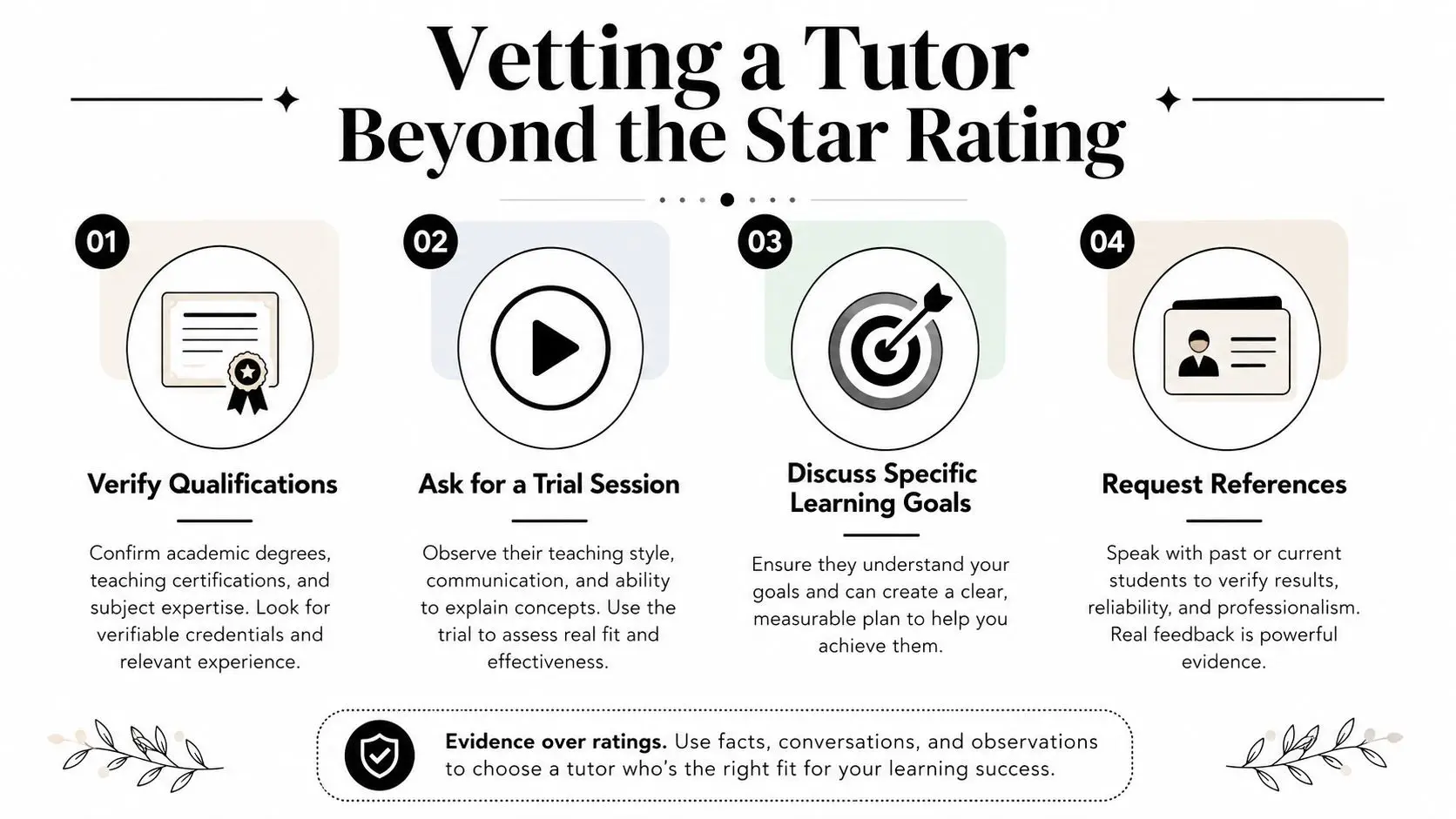
Vetting a Tutor Beyond the Star Rating
A five-star profile looks tidy on screen. It tells you very little about whether the person in front of your child can teach, keep things safe, and work with your school without causing more trouble than they solve. For London parents, that is the ultimate test.
Start with the must-haves
For children under 18, ask for an Enhanced DBS certificate, not a vague promise that “everything is in order”. Local-authority guidance says parents should check DBS certification, references, and qualifications, and they should actively supervise and monitor sessions (City of London guidance for private tutors). If a tutor hesitates, gets defensive, or says they have never been asked before, that is a poor sign.
For a deeper look at the process, you can review this tutor background check. It is the sort of conversation that should happen before the first lesson, not after a problem appears.
Qualifications and experience matter too. Guidance on private tutoring in the UK recommends degrees, subject knowledge, school experience of 3 to 5 years, and safeguarding checks when teaching under-18s (TutorHouse guidance). You do not need a perfect CV. You do need evidence that the tutor has taught the level your child needs, not just the subject in general.
Red flag: a tutor who keeps leaning on reviews but will not show a DBS certificate, will not explain their training, and has no plan for the first lesson is asking you to trust vibes instead of evidence.
Ask about the first lesson, not just the lesson rate
The first session should do more than “see how it goes”. It should diagnose. If your child is in Year 9 and struggling with algebra, ask the tutor exactly how they would identify the gap in the first lesson. A solid answer will mention checking prior knowledge, asking the child to solve a few targeted problems, and spotting whether the issue is vocabulary, method, memory, or confidence.
That is also where references matter. Do not ask for a generic testimonial. Ask whether the tutor has supported pupils with similar needs, similar exam boards, or similar school pressure. If the answer stays polished and vague, the tutor may be good at selling themselves, not teaching your child.
A tutor also needs the right teaching habits, not just subject knowledge. Queen's Online School has a clear summary of the qualities of a good teacher, and it is a useful benchmark before you decide what good teaching looks like in your own home.
Use a short interview script
Ask these questions in plain English:
- What will you test in the first lesson?
- How will you track progress over four weeks?
- How do you adapt your teaching when a child is anxious or resistant?
- Can you show your DBS, qualifications, and references?
- How do you keep your teaching tied to the school curriculum?
A strong tutor answers without fuss. A weak one hides behind generalities. That is the difference between a professional and a performer.
What Private Tutoring Actually Costs in London
Money feels personal because it affects family choices. Treat it as planning, not judgement. Know the range, then choose a tutor without stretching the budget until it starts to bite elsewhere.
The Prospects private tutor profile says the average private tutor session rate sits between £30 and £42 per hour, with experienced tutors charging upwards of £50 per hour (Prospects private tutor profile). London often pushes higher than that, and one current advert lists a tutor at £180,000 per year for a 35-hour week, with 4 weeks of annual vacation and no accommodation or car provided, which shows how extreme the premium end of the market can be (Tutors International advert).
What that means in real monthly terms
Two one-hour sessions a week, term-time only, usually land around £240 to £420 a month at average rates, before any specialist premium, travel, or agency fee. That is the figure parents should keep in mind, not the hourly rate. Hourly quotes sound manageable until they turn into a full term and a real household bill.
| London Private Tutoring Cost Ranges by Scenario | Tutor type | Hourly rate | Monthly estimate (2 hrs/week) |
|---|---|---|---|
| Standard support | Average private tutor | £30 to £42 | £240 to £420 |
| Experienced support | Experienced tutor | £50+ | Higher than the average range |
| Premium in-person support | Specialist London tutor | Significantly higher | Can rise sharply with travel and demand |
Watch the hidden costs
Travel time matters in London. Agency placement fees matter too. So do paid trial lessons, and the habit of adding extras because the first few sessions go well. A tutor crossing the city may charge more because their day gets longer.
Payment models vary as well. Some tutors prefer pay-as-you-go, others want termly block booking, and a few push for a long commitment upfront. Be cautious with anything that locks you in before the first four weeks have shown a genuine shift. If the tutor is good, they will not need you to gamble blindly.
If you are comparing tuition against broader school spending, Queen's Online School has a clear breakdown of the costs of private schools that makes the comparison more concrete for family planning.
Supporting SEN and SEMH Learners the Right Way
A child with dyslexia, ADHD, autism, or social, emotional and mental health needs often doesn't need more pressure. They need a tutor who understands pace, structure, and the difference between challenge and overwhelm. Subject knowledge matters, but it's not enough on its own.
Look for adjustment, not just enthusiasm
A strong SEN-aware tutor knows how to chunk a session, slow down without making the child feel smaller, and keep attention moving before frustration takes over. For a child with attention difficulties, that might mean splitting a 45-minute lesson into shorter tasks with clear starts and finishes. For a child preparing for exams, it might mean written feedback that supports an EHCP review or helps the school see what still needs adjusting.
Ask directly about training and experience. Has the tutor worked with access arrangements? Can they adapt worksheets, use whiteboards, or change the pace without making the child feel singled out? If they can't explain how they've supported similar learners, don't assume they'll figure it out on the job.
Practical rule: a tutor for an SEN or SEMH learner should talk about coordination with the school, not just private progress in isolation.
Use the first four weeks as the test
The first month should tell you a lot. Week one should show whether the child feels safe enough to engage. Week two should show whether the tutor can adapt when the child struggles. Week three should show whether the work is tied to real school targets. By week four, you should have enough evidence to judge whether the support is helping, not just occupying time.
That doesn't mean there has to be dramatic progress straight away. It means the child should feel clearer, less frightened, and more willing to try. If the tutor is speaking only to you and never really connecting with the child, or if the school is being ignored completely, the setup is wrong.
Here's a simple example. A tutor helping a GCSE maths pupil with SEMH needs should know when to pause, when to rephrase, and when to reduce the task rather than force another round of correction. If they can do that while keeping standards high, you've got someone worth keeping.
When an Online School Makes More Sense Than a Tutor
Sometimes the right answer is not a better tutor. It's a better structure. If your child needs help in more than one subject, has SEMH needs, or has fallen behind across the board, a single tutor can end up treating symptoms while the underlying problem stays put.

The case for a structured online school
A tutor works around the school day. A structured online school replaces part of the stress the tutor is usually hired to fix. That matters when the issue is not one weak topic, but a whole learning environment that no longer fits the child. Queen's Online School is one example, with live lessons from subject-specialist teachers, small class sizes, GCSE and A-Level pathways through a Pearson Approved Examination Centre, and support for SEN and SEMH learners.
That setup changes the job from patching gaps to building routine. It also gives parents something most tutors can't offer on their own, a single place where curriculum, pacing, and progress all sit together. The children who often benefit most are the ones who need consistent teaching across several subjects, not just one weekly rescue session.
Online doesn't mean detached
The old objection is that online learning is lonely. It can be, if it's badly done. It isn't, if the provider has real social structure. Queen's Online School says it includes a global community, clubs, and social events, which matters because children need belonging as much as they need marks.
For families trying to decide between a tutor and a full online option, the key question is this. Do you need targeted support inside the existing system, or do you need a new system that fits the child better? If your answer keeps drifting toward the second option, forcing another one-to-one tutor session may just delay the obvious.
For a fuller sense of how that model works, take a look at what is virtual school before you commit to another term of patchwork support.
Your Next Steps and Common Questions
This is the week I'd run if I were choosing again. Book two trial lessons, ask each tutor for DBS and reference documents, prepare three diagnostic questions about your child's current gap, and set a review point at four weeks. Don't let the decision drag on indefinitely, because delay is expensive in both money and confidence.
A simple one-week plan
- Day 1: shortlist two or three tutors or one structured online option.
- Day 2: ask for DBS, qualifications, and references before you speak about availability.
- Day 3: send the same diagnostic questions to each person.
- Day 4: hold the trial lesson and watch how the tutor handles uncertainty.
- Day 7: ask your child what felt clear, confusing, or uncomfortable.
- Week 4: review progress and change course if nothing has shifted.
Best test: if your child can explain one thing more clearly after the first few sessions, you're probably on the right track. If they only say the lesson was “fine”, keep looking.
Common questions parents ask
How do I know if the tutor is working?
Your child should feel less stuck, less defensive, and more able to start tasks without a fight. The tutor should also be able to say what's improving and what still isn't.
What if my child resists tutoring?
Start with the child's discomfort, not the timetable. Resistance usually means fear, embarrassment, or boredom, and a good tutor will notice that quickly.
Will an online school be respected?
Yes, if it's a proper British curriculum provider with clear assessment and recognised qualifications. That's why the structure matters more than the format.
If, after all this, you realise you don't need another private tutor but a cleaner learning setup, Queen's Online School is worth a serious look. A CTA for Queens Online School.