

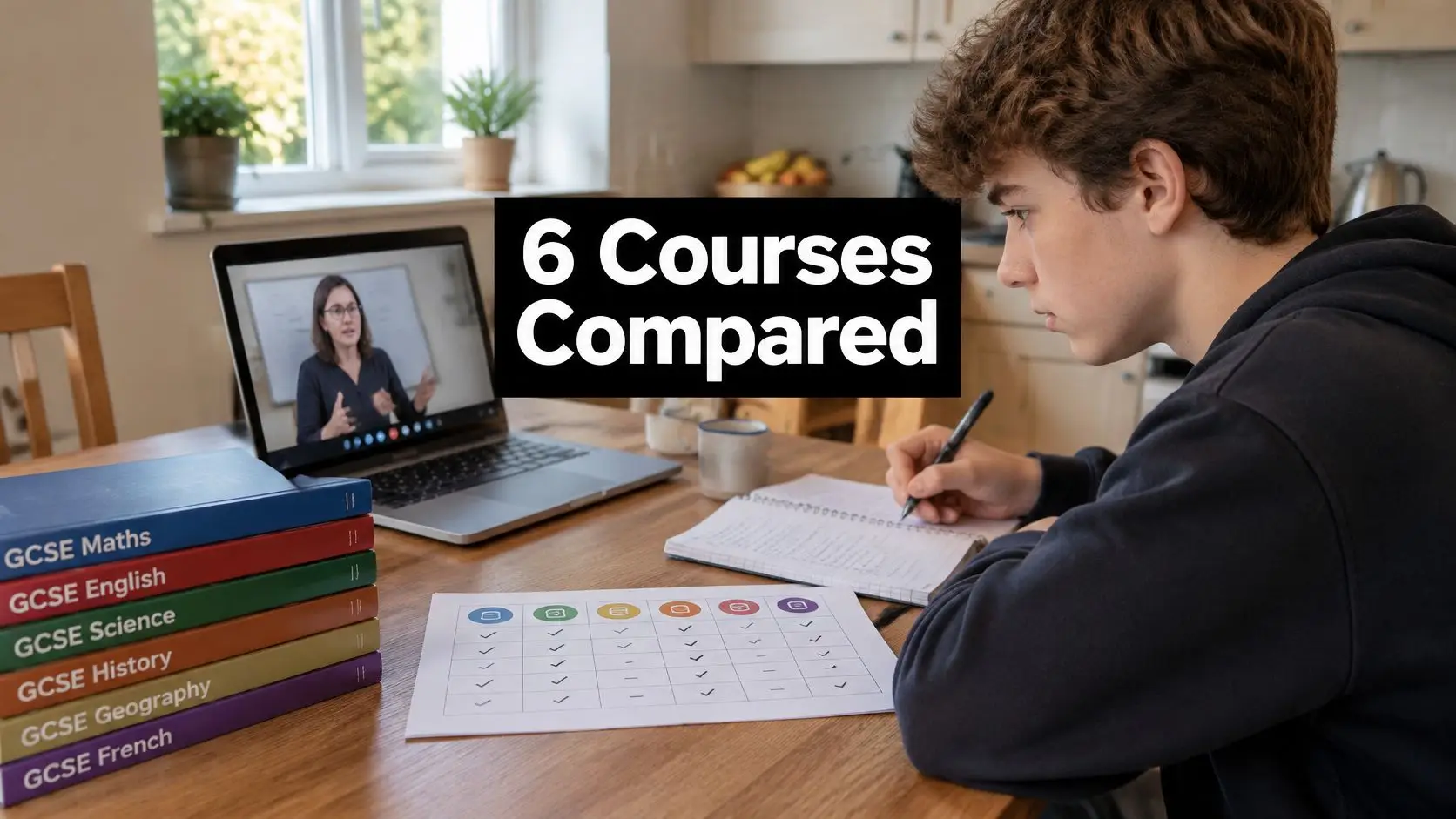
It's a weeknight at the kitchen table. Your 16-year-old is trying to talk about GCSEs, A Levels, or a timetable that no longer fits, and you're both hearing the same quiet worry underneath. This choice feels bigger because it is. It touches confidence, health, friendships and qualifications all at once.
You don't need a glossier brochure. You need to know what changes on a Monday morning. That's why this comparison of Online Courses UK for 16 Year Olds sorts six options by situation, not brand. Some give your child a full timetable. Some let you buy single subjects. One is built for self-paced study, and others put more weight on SEN and SEMH support.
For each option, check live or recorded lessons, class size, published fees, exam arrangements and who awards the qualification. If you're also planning online classes for homeschoolers, keep the same test in mind. The right course should fit your child's energy, anxiety level and next step, not force them to fit a platform.
1. Queens Online School
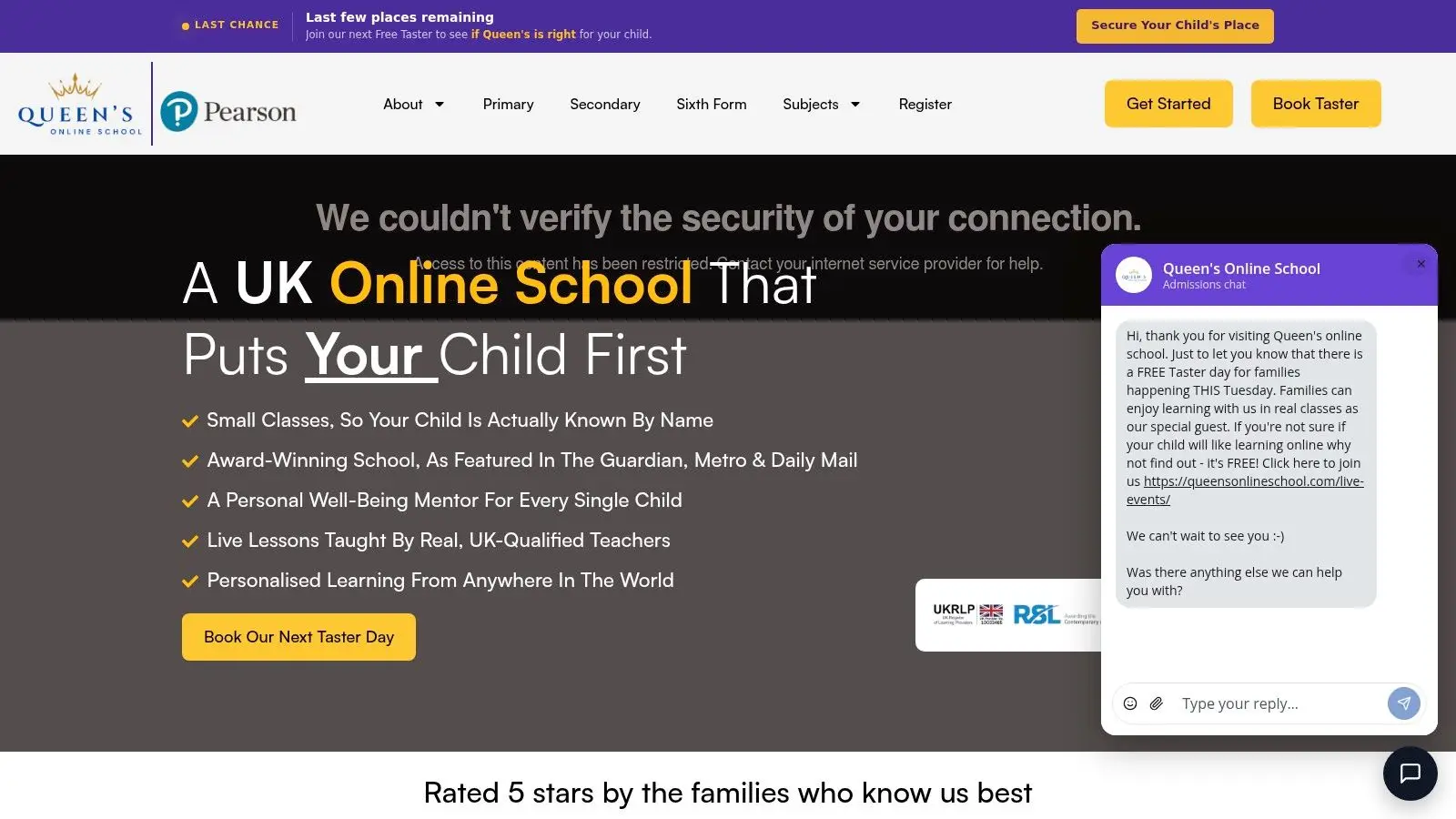
If your 16-year-old needs a change from classroom learning but still benefits from a teacher-led routine, Queens Online School offers live online classes across the British curriculum, from Key Stage 2 to Sixth Form. As part of the Cambridge Online Education Group, it teaches GCSE and A-Level courses, with subject-specialist teachers and small classes. Recorded sessions can help your child revisit a lesson or catch up after an absence.
The format has a practical trade-off: lessons happen online, so your child needs a suitable place to study and a routine that works at home. In return, live teaching provides opportunities to ask questions and receive real-time feedback. The school describes personalised learning shaped around each student's pace, strengths and ambitions.
Support That Goes Beyond the Timetable
If your child needs additional support, ask how it will work day to day. The school says it supports learners with SEN and SEMH needs in an inclusive environment. Its description also highlights mindfulness, leadership opportunities, clubs and social events, alongside a zero-tolerance anti-bullying policy. These are worth discussing directly if belonging, wellbeing or social contact is part of your decision.
- Live teaching: Subject-specialist teachers lead interactive lessons, with recordings available for review.
- Exam route: The school is a Pearson Approved Examination Centre and offers GCSE and A-Level qualifications. Confirm which subjects your child can take and where exams will be sat.
- Community and flexibility: Clubs, social events and flexible scheduling may suit a student who needs learning to fit around other commitments. Ask whether recorded sessions cover the lessons your child would miss.
Queen's Online School may suit a family seeking a teacher-led timetable with flexibility and support for individual needs. Tuition fees should be confirmed with a personalised quote, and you should ask what is included, including any exam costs. Online learning also means less everyday contact than attending a physical school, so consider how your child feels about socialising through classes and school activities.
2. King's InterHigh
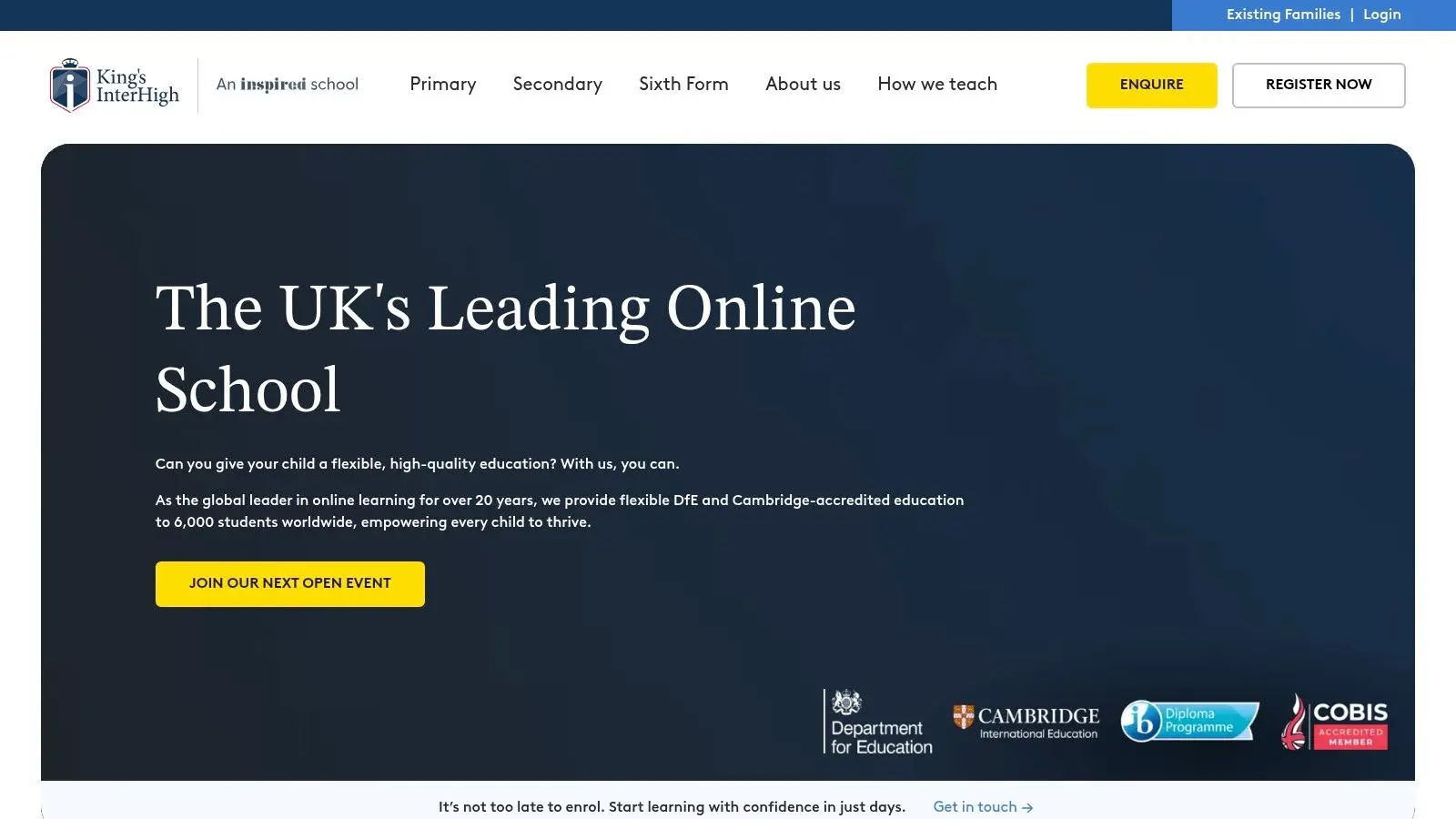
If your 16-year-old needs a familiar school rhythm, King's InterHigh offers a full online school with timetabled live lessons, clubs, pastoral support and university application guidance. Recordings are available around the clock, giving students another way to keep up after a disrupted day.
The GCSE package includes eight subjects, with extras available. Sixth-form students can take one to five A Levels from over 20 subjects, or choose the IB Diploma route. Check which subjects are available for your child and how their choices fit their plans. For a wider look at online learning options for teenagers, consider how a full timetable compares with a more flexible course.
What It Costs and What to Check
The school lists annual 2026/27 tuition at £7,250 for GCSE and £7,585 for three A Levels. Registration and exam-centre charges are extra, and rolling contracts cost more than annual contracts. Confirm current fees and the subject range with King's InterHigh before enrolling, then compare the full cost rather than tuition alone.
Practical rule: Ask for tuition, registration, deposit and exam-centre fees in one written total before comparing schools.
A full online timetable may suit a teenager who benefits from a school-like routine, but the fees and exam arrangements need to work for your family. The Department for Education participation dataset for 2024 recorded 1,097,880 young people, or 85.7%, in full-time education across the 16-to-18 cohort. Before committing, confirm the exam arrangements and whether the available subjects match your child's next steps.
3. My Online Schooling
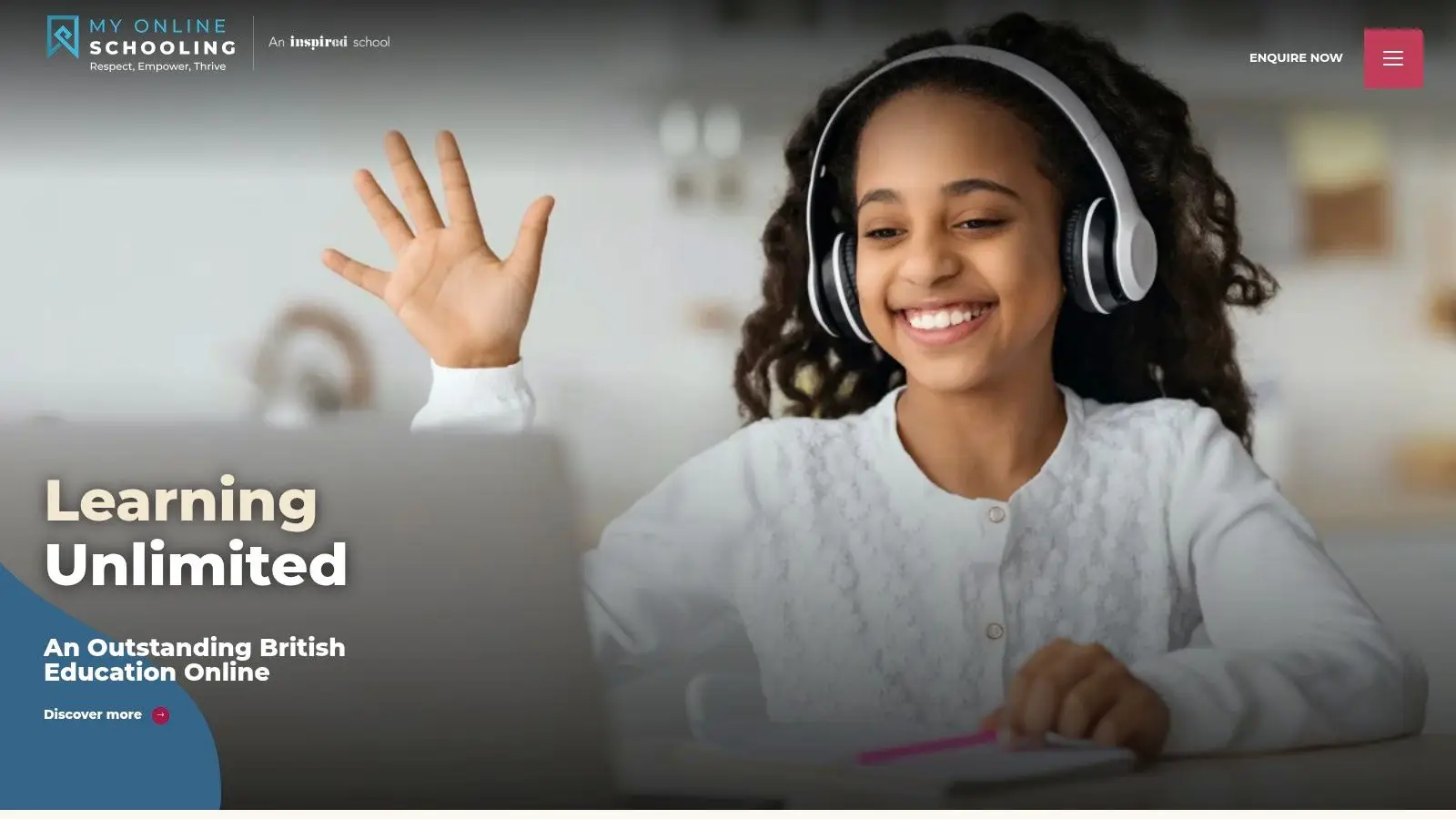
My Online Schooling may fit a family looking for one school pathway from primary through sixth form, rather than separate providers at each stage. It offers structured live lessons, flexible timetables and recordings, with International GCSE and A Level routes. Some options depend on location, so check what is available where your child lives before enrolling.
For a 16-year-old who finds school attendance difficult, a live lesson from home and the option to rewatch a recording may make it easier to keep up after a hard day. Recordings can support catch-up, though they do not replace help with anxiety or other reasons for absence.
Inclusion Claims to Test in Conversation
The school describes support for learners with SEN, anxiety, school absence and for internationally mobile families. Before you commit, ask who would write your child's support plan, how often pastoral staff check in, and what happens after repeated missed lessons.
- School pathway: Live teaching across age groups, rather than isolated exam courses.
- Flexibility: Recordings can support revision, catch-up and families who move.
- Pastoral focus: Ask admissions how the stated inclusion support works in practice and what contact your child can expect.
Students generally sit exams at an external centre, so check whether a suitable centre is available near you and whether the subjects involve practical or oral requirements. Exam arrangements and support matter as much as timetable flexibility. Ask the school for a written fee quote and for recent GCSE and A Level results in your child's subjects before you compare it with other providers.
4. Cambridge Online School and College International
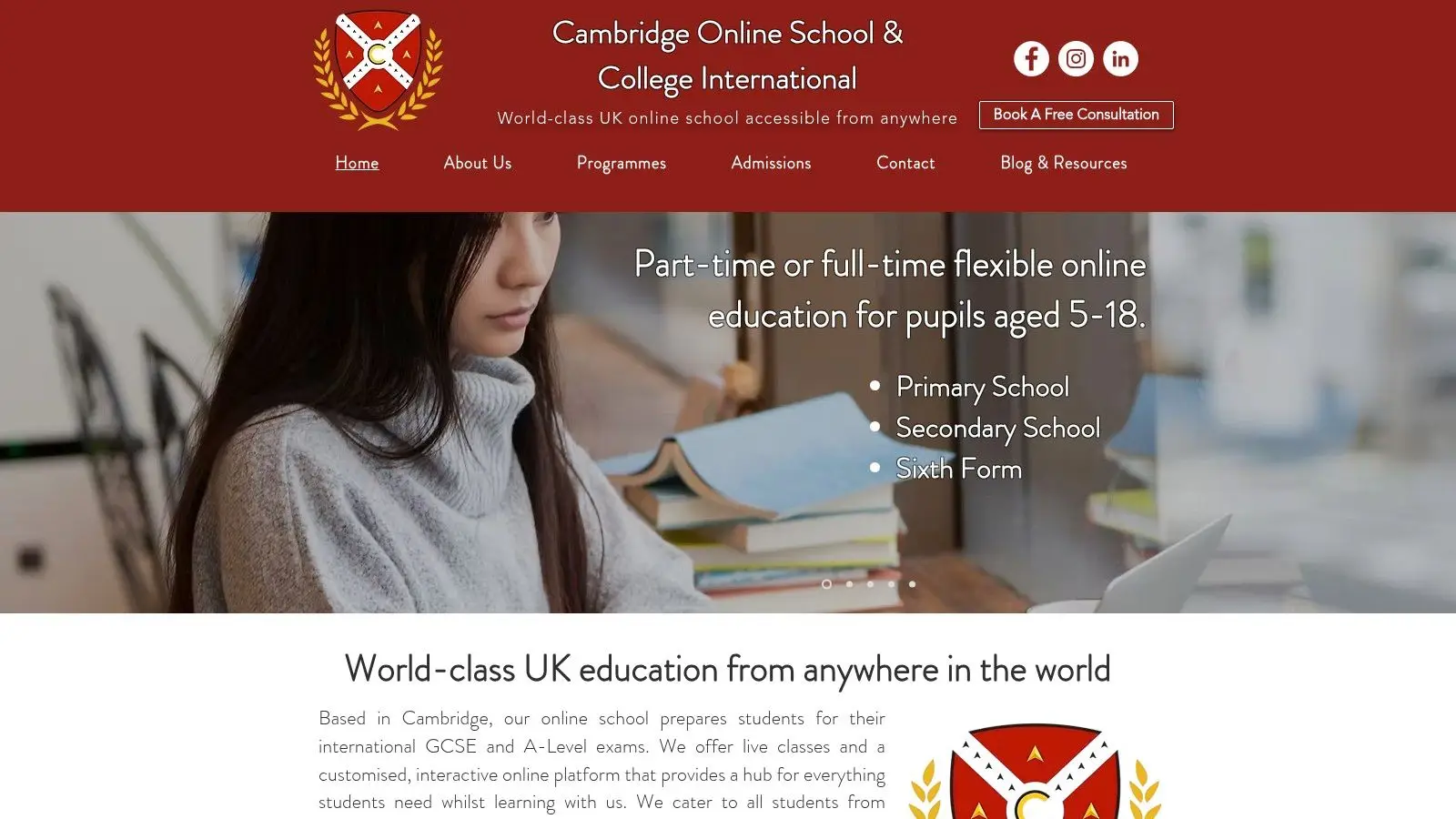
Cambridge Online School and College International offers full-time or part-time enrolment, with live or on-demand learning for secondary study and sixth-form A Levels. Its subject-by-subject option may suit a 16-year-old who needs just a few subjects rather than a complete timetable. The school describes itself as DfE-accredited, but check what that means for the specific course and any funding arrangements.
For example, your child may already have tutors for English and history but need structured science teaching and an A Level. Part-time study could fill those gaps without replacing what is working. Compare the format and costs with dedicated A Level online courses in the UK before deciding.
A seven-day trial is available after an initial consultation. Use it to check the platform during normal lesson times, practise uploading work and see whether on-demand study gives your child useful flexibility or leaves them feeling isolated.
Fees and Funding Questions
Package fees and instalment charges vary by course and plan. Request a written quote for the exact subjects, study format and payment plan your child needs, then compare it with other options. Ask whether exam charges are included and where exams must be taken.
Private tuition and funded college provision are different. Under the DfE funding rules for 16 to 19 provision for 2026 to 2027, a student aged 16, 17 or 18 on 31 August when they begin is normally treated as a 16-to-18 learner for funding purposes. Ask the provider directly whether the course is DfE-funded and which exam costs, if any, you would pay.
5. Nisai Virtual Academy
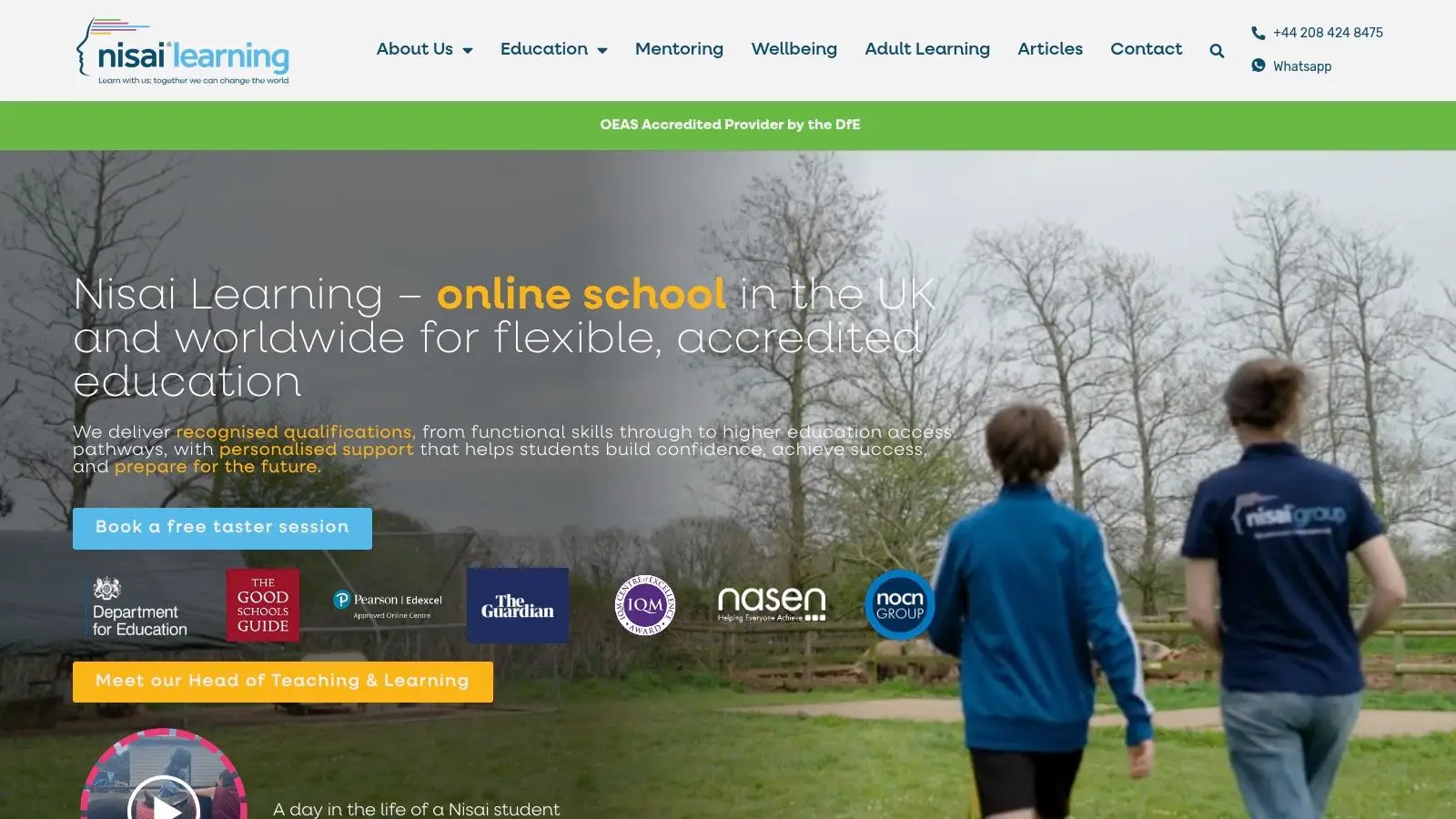
Nisai Virtual Academy is worth exploring when attendance itself has become the painful part. It provides live lessons in small classes, with recordings and teacher feedback, across secondary and post-16 study. Programmes include GCSEs, A Levels and other academic and vocational qualifications, with full-time or part-time options depending on the programme.
Nisai specifically describes support for learners with SEND, medical needs, anxiety or disrupted attendance. It also works with families, schools and local authorities, including on alternative provision. That range matters if your child's place might involve school or local authority involvement rather than a simple private purchase.
Why Support Detail Matters More Than Flexibility
Flexibility alone doesn't close gaps. The government SEND reform equalities impact assessment reports 87.4% of 16- and 17-year-olds with an EHCP were in education or training in March 2025, compared with 93.0% without SEN. Behind those figures are children who can easily drift when no named adult is watching closely.
A child with anxiety may love recorded explanations and predictable routines, but they still need someone who notices withdrawal early and acts the same day.
Ask how SEN support is documented, how reasonable adjustments are arranged, and whether EHCP outcomes shape the timetable. A taster session may be available, which I'd strongly recommend. Fees aren't clearly listed for all programmes, and timetable, availability and funding route can depend on how your child applies, so get programme-specific answers in writing.
6. Net School
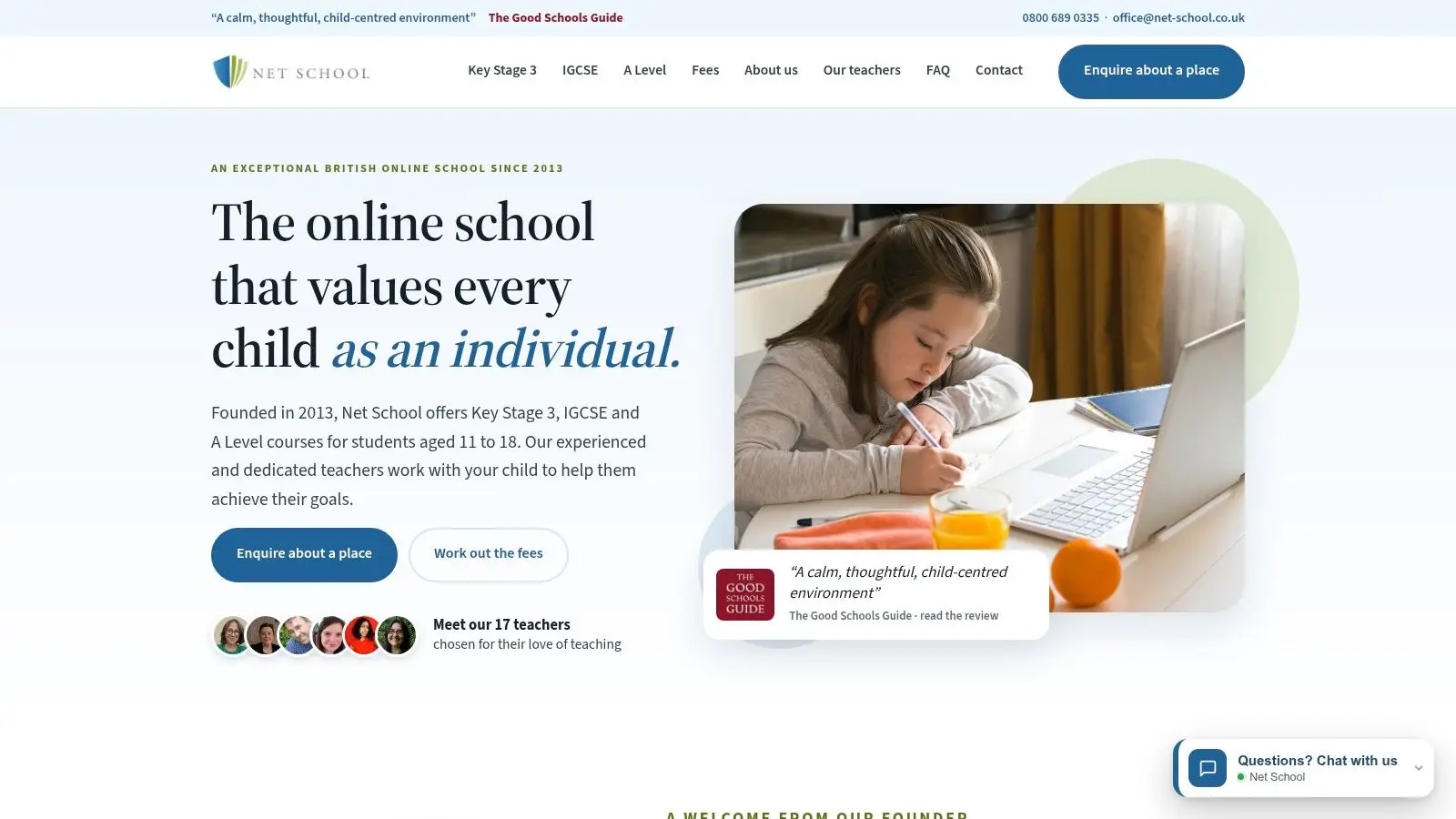
Net School isn't a complete online school, and that's its strength for the right child. It offers live small-group IGCSE classes for ages 14 to 16, plus individual tuition in selected A Level Maths and Science subjects for ages 16 to 18. You choose as many or as few IGCSE subjects as your child needs.
Say your teenager is home educated, happy with humanities at home, but stuck in maths and losing confidence before exams. One live subject with a specialist teacher, homework and revision sessions can change the mood at home without replacing your whole plan. Some teachers are described as examiners, which can help a child understand how marks are won.
- Subject choice: Enrol by subject instead of buying a full timetable you don't need.
- Included support: Homework, revision sessions, learning resources and clubs are included.
- Try before termly billing: Classroom demonstrations and termly billing are offered.
For 2026/27, typical two-hour IGCSE subjects are priced by term, with exam fees extra. A Level tuition is limited to selected Maths and Science subjects and priced on enquiry. Parents are responsible for exam registration and centre fees, and some subjects need separately purchased textbooks.
That exam point is central. The government 16 to 19 funding guidance says funded qualifications must be offered by an awarding organisation recognised by Ofqual and included on the approved list. Always ask for the exact qualification title and awarding body, whoever teaches it.
7. Wolsey Hall Oxford
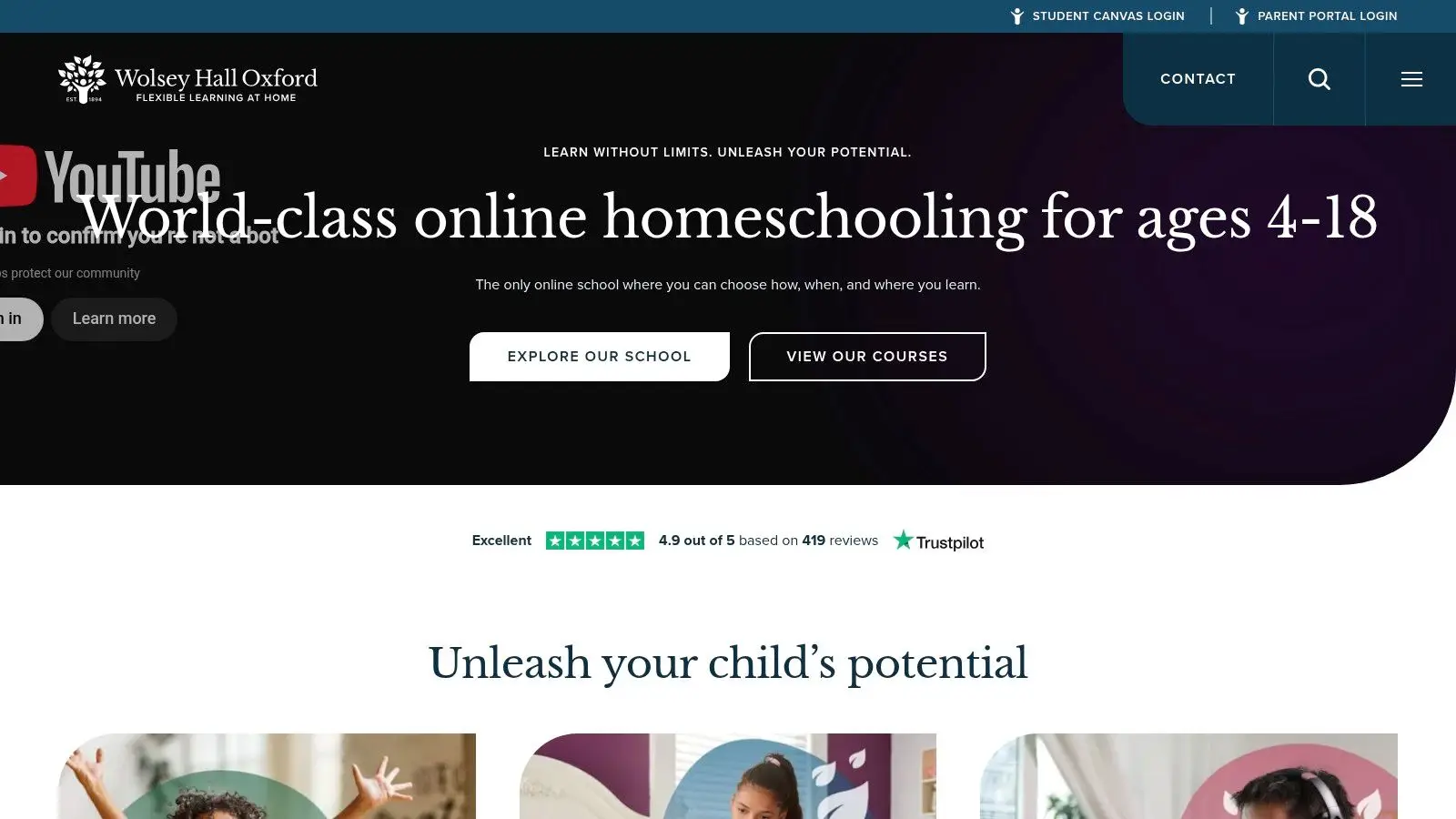
Wolsey Hall Oxford may suit a teenager who needs flexibility more than a fixed school day. It offers GCSE and IGCSE courses for ages 14 to 16, and A Levels, with no fixed timetables and no live lessons. Students work through online materials at their own pace; tutors mark assignments and answer academic questions, while a Student Progress Manager monitors progress.
For a young athlete, performer, or teenager whose health makes mornings unpredictable, studying after training or on a better day can ease pressure. The trade-off is that your child must get started independently and keep going without a live teacher. If they need someone beside them to begin work, self-paced study may be difficult to sustain.
Before enrolling, check that your child has a suitable device, a quiet workspace and a routine they can follow. Families comparing accredited online schools should also check what accreditation means for the course and exam arrangements.
Costs and Practical Limits
Fees vary by subject and bundle. Monthly instalments over six months are available, but confirm Wolsey Hall's current fees and any registration charge directly with the school. Exam centre fees are additional, and your family must arrange the exam centre.
This option is best for a student who can organise their study, read feedback carefully and work consistently. Agree on a regular check-in with an adult before lessons begin. Flexibility can make study fit around a teenager's needs, but it does not provide the structure of live classes.
How the six UK online options compare on format, published fees and best fit
| Item | Format | Published Fees (2026/27) | Best For |
|---|---|---|---|
| Queens Online School | Live online British school, Key Stage 2 to Sixth Form | Not specified; contact the school | Students wanting live lessons, pastoral support and a school community |
| King's InterHigh | Live online school with recorded lessons; GCSE, A levels and IB | GCSE: £7,250/year; three A levels: £7,585/year; extra charges apply | Students seeking a timetabled online school with post-16 options |
| My Online Schooling | Live online lessons, flexible timetables and recordings | Not clearly published; request a quote | Learners wanting a British-curriculum school pathway and flexible study |
| Cambridge Online School & College International | Full-time or part-time; live or on-demand learning | Nine-subject secondary: £8,985.60/year; three A levels: £9,072/year | Students seeking published package prices or individual-subject study |
| Nisai Virtual Academy | Live small-group online lessons; full-time or part-time options | Not clearly listed; fees depend on programme and circumstances | Learners needing structured study and additional support |
| Net School | Live small-group IGCSE classes and selected A-level tuition | IGCSE prices listed by subject and term; amounts not provided; exam fees extra | Students wanting selected subjects rather than a full school timetable |
| Wolsey Hall Oxford | Self-paced courses with tutor support; no live lessons | Fees vary by subject and bundle; registration and exam fees extra | Independent learners needing flexible, self-paced study |
Choosing With Confidence for Your Child's Next Chapter
Start with your child, not the provider list. Write down what they need to learn well on an ordinary Tuesday. Do they need live teachers, smaller groups, recordings, fewer transitions, specialist SEN support, or one strong maths class? That picture will rule out good providers that are wrong for them, and that's progress.
Then ask whether the course counts toward a clear next step. The Department for Education participation statistics for age 16 to 21 in 2025 show 88.2% of 16-17-year-olds from the mainstream state-funded Year 11 cohort were in education or apprenticeships at the end of 2025. Your child doesn't need to follow the majority route, but they do need recognised progression into sixth form, university, an apprenticeship, or work.
Shortlist two or three providers and ask each the same questions. Is it full-time or part-time? Who monitors attendance? What happens after missed lessons? Which exam board, exam centre and fees apply? How are breaks and screen time managed, especially if your child already feels drained online?
- Request a trial or sample lesson: Watch your child's body language during it, not just their polite answer afterwards.
- Confirm the full cost: Tuition, registration, textbooks, exam entry and centre fees in one figure.
- Check support in writing: Named pastoral contact, SEN adjustments, feedback turnaround and escalation when your child struggles.
You're not looking for perfection. You're looking for a place where your child can be known, taught properly and helped quickly when things wobble. Make the choice calmly, with exam routes and wellbeing protected, and you'll give them more than a course. You'll give them a steadier start to what comes next.
If your child needs live British teaching with small classes, a dedicated wellbeing mentor and clear GCSE, IGCSE and A Level routes from home, explore what Queens Online School offers and ask for current fees and a conversation about fit. Visit today to see how its structured online school could support your 16-year-old's next chapter with confidence.