
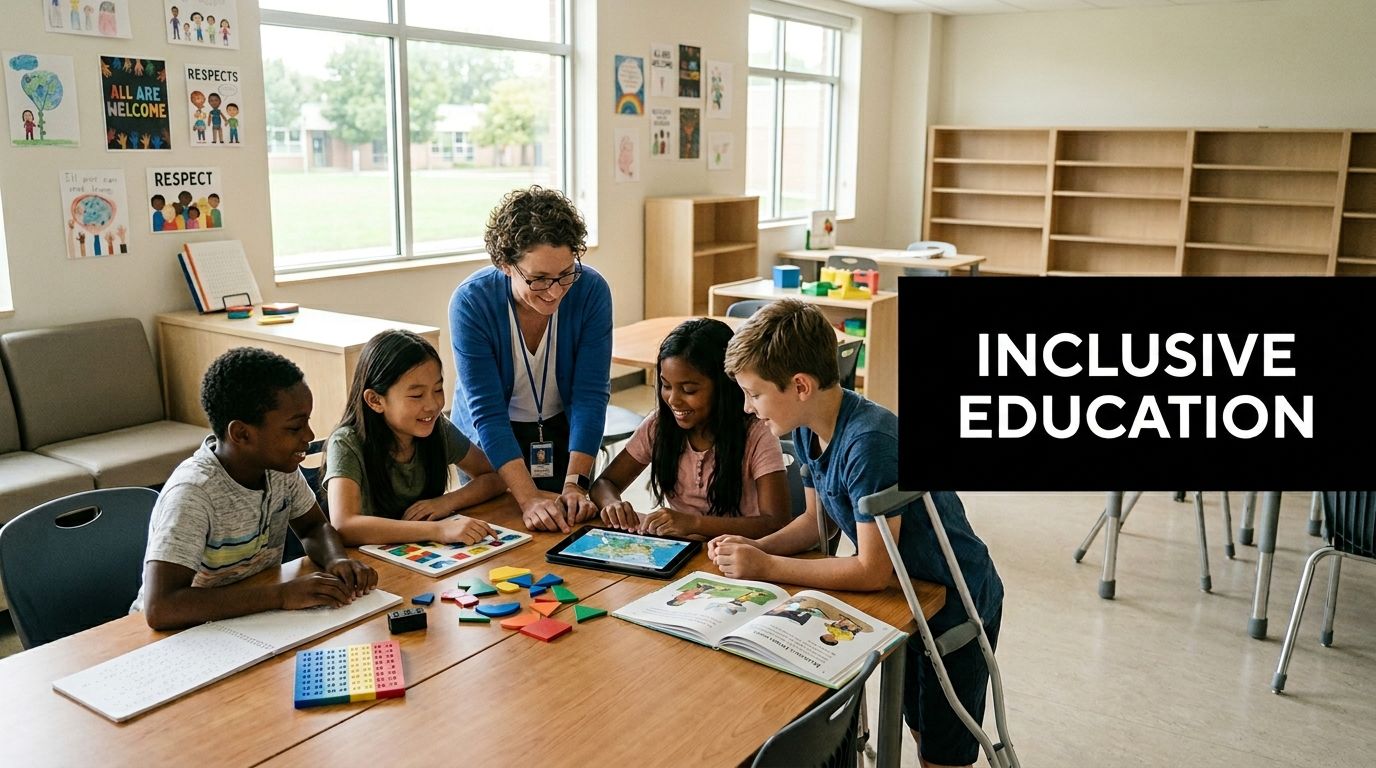
You may be reading this after another difficult school conversation. Perhaps your child comes home exhausted from trying to keep up in a classroom that doesn't quite fit. Perhaps you're a teacher who cares, but keeps thinking, “I want to do better than this, and I need practical training that helps me do it.”
That's where inclusive education courses can make a real difference. At their best, they don't just teach policy or theory. They help adults build learning spaces where a child feels safe, understood, and able to take part without having to hide who they are.
Every Child Deserves to Belong
A parent once asked me a question I hear in different forms every year: “Will my child be included, or just managed?” That question carries a lot of fear. It also carries hope. Most families aren't asking for perfection. They're asking whether their child will be known by name, whether a teacher will notice when the room feels too loud, whether support will arrive before confidence starts to slip.
For many children, belonging starts with small things. A lesson that can be heard as well as read. Time to process before answering. A teacher who uses respectful, thoughtful language. If you want to reflect on how language shapes safety and dignity, this guide to inclusive words for workplaces is useful well beyond offices. Schools need that same care.
This isn't a niche concern. In England, the Department for Education reported that 1,672,100 pupils had special educational needs in January 2024, representing 19.4% of all pupils, which means inclusive practice affects nearly 1 in 5 pupils according to this reported figure. For families, that matters because support shouldn't depend on luck, personal confidence, or how loudly someone can advocate.
Belonging is often the first support a child notices, even before they can name the teaching strategies behind it.
Schools need clear systems, and families need clarity too. A well-written inclusive education policy can tell you a great deal about whether inclusion is built into daily life or left as a vague promise.
If you're trying to sort through courses, qualifications, and school options, keep one test in mind. Ask what the child's day will feel like. If the answer is warm, specific, and practical, you're probably looking in the right direction.
What Is Inclusive Education Really
Inclusive education isn't just about putting different children in the same room. It's about making sure they can learn, contribute, and feel that they belong there.
Inclusion is not the same as integration
A simple way to picture it is a potluck dinner. At a rigid dinner party, everyone is expected to eat the same meal in the same way. At a potluck, people bring different dishes, different tastes are welcomed, and the gathering is richer because of that variety. A child in an inclusive setting shouldn't be treated like a guest who must passively adapt to someone else's plan. They should be part of the plan from the start.
That's the difference between integration and inclusion.
- Integration often means the child is physically present, but the system stays mostly unchanged.
- Inclusion means teaching, communication, routines, and support are designed so the child can participate meaningfully.
A child notices that difference quickly. In an integrated classroom, they may feel like they are always catching up, apologising, or needing exceptions. In an inclusive one, adjustments feel normal, not embarrassing.
What belonging looks like in practice
A child with processing differences may need instructions in short steps. A child with sensory sensitivities may need a calmer visual layout. A child who finds speaking in front of others difficult may show understanding better through chat, visuals, or a short one-to-one response.
These aren't favours. They are ways of removing unnecessary barriers.
Practical rule: If a child has to work twice as hard just to access the lesson, the problem isn't the child. The design needs attention.
Good inclusive education courses help adults spot that distinction. They train teachers and leaders to ask not “What is wrong with this learner?” but “What in this environment is making learning harder than it needs to be?”
That's why it helps to ground yourself in a clear definition before choosing training or a school. This overview of what inclusive education means gives a helpful starting point for that conversation.
In the end, inclusive education is deeply human. It says to a child, “You do not need to become less yourself to learn here.”
The Landscape of Inclusive Education Courses
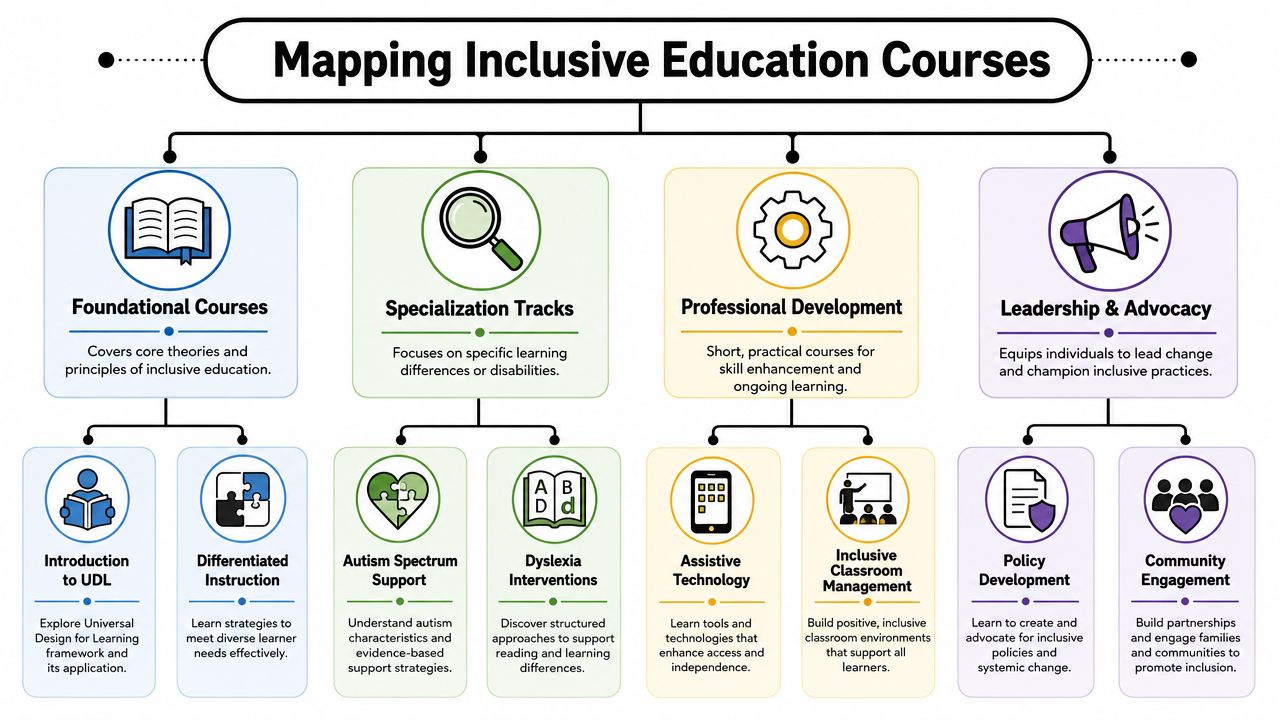
The phrase inclusive education courses can mean very different things. That's where many parents and teachers get stuck. One course may be a short professional module. Another may be a full university pathway. Another may describe a child's full-time school experience.
Professional development for classroom teachers
These courses are for practising teachers who want to improve daily teaching. They usually focus on things such as differentiated instruction, behaviour support, communication, accessible resources, and working with families or specialists.
This is often the most immediately useful route for a teacher who already has a classroom and needs better tools now. The strongest versions don't stay abstract. They show how to adapt a reading task, how to scaffold instructions, how to manage transitions, and how to respond when a child begins to feel overwhelmed.
A parent might never see the course certificate. They will notice the effect if their child comes home saying, “My teacher explained it in a way I could understand.”
University degrees and specialist qualifications
Some people want deeper training because they're moving towards specialist roles, leadership, or longer-term academic study. In that case, degree programmes or formal qualifications may be the right fit.
These tend to explore disability, curriculum design, assessment, educational psychology, school systems, ethics, and policy in much greater depth. They suit those who want to shape practice across a department or school, not only within one classroom.
The benefit for children is indirect but powerful. A well-trained specialist can help a whole school move from isolated adjustments to a more consistent culture of inclusion.
Short CPD modules and focused upskilling
Not every learner needs a long programme. Sometimes a teacher, teaching assistant, or school leader needs a short course on a precise topic, such as autism support, dyslexia-friendly materials, assistive technology, or inclusive classroom routines.
These shorter options can be useful when someone has identified a specific gap. They work best when they include examples, modelling, and practical tasks rather than broad statements about awareness.
A strong short course should help an adult do something different next week. If it only helps them sound more informed, it probably isn't enough.
Full-time programmes for children
Some families use the phrase “inclusive education course” when they're really looking for a full educational setting for their child. In that case, the question isn't only what adults are learning. It's what the child will experience every school day.
Here the key issues are different. Parents need to know how lessons are taught, how support works during live sessions, how progress is monitored, how social belonging is built, and what happens when a child is anxious, dysregulated, or stuck.
| Type | Best for | Main outcome |
|---|---|---|
| Teacher professional development | Practising teachers | Better day-to-day inclusive teaching |
| Degree or formal qualification | Aspiring specialists or leaders | Deeper expertise and system-level impact |
| Short CPD modules | Staff with a specific skills gap | Fast, targeted upskilling |
| Full-time school programme | Children and families | An ongoing learning environment built around access and belonging |
When you know which of these four paths you're looking at, the search becomes much less confusing.
From Theory to Practice Key Learning Outcomes
A course can sound compassionate and still leave a child unsupported. That's why outcomes matter. You want training that changes what adults notice, how they respond, and how a learner experiences the day.
Use the 4Ps to judge quality
One of the clearest ways to assess a course is through the World Bank's 4Ps: placement, presence, participation, and progress, described in this inclusive education framework. It's a helpful test because it pushes beyond appearances.
A child can be placed in a mainstream setting and still not feel included. They can be physically present and still not participate. They can attend regularly and still make little progress because support arrives too late or in the wrong form.
So when you look at inclusive education courses, ask whether they prepare adults to think in all four dimensions.
What strong learning outcomes feel like for a child
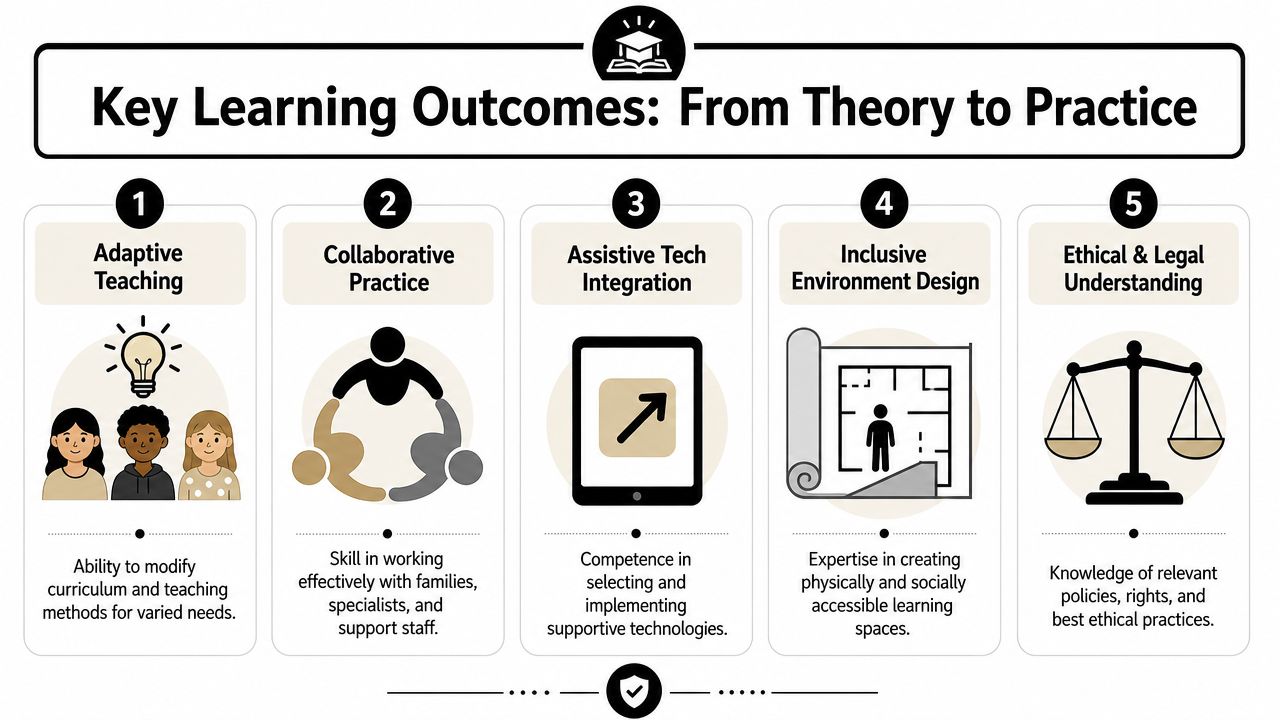
A course worth your time should build at least these kinds of competencies:
- Adaptive teaching: The adult can change task design, instructions, pacing, and response formats without lowering dignity.
- Collaborative practice: The adult can work with families, SEND staff, therapists, and pastoral teams in a joined-up way.
- Accessible technology use: The adult knows how to use supportive tools and accessible formats as part of normal teaching.
- Environment design: The adult can create calm, predictable, socially safe spaces, including online spaces.
- Ethical and legal understanding: The adult understands rights, responsibilities, and why inclusive practice must be consistent.
Here's what that means in real life. A child struggles with writing under time pressure. A poorly trained adult sees low output. A well-trained adult recognises a barrier, offers an alternative response format, checks understanding separately from handwriting load, and protects the child's confidence while still teaching the same concept.
The best inclusive teaching doesn't lower expectations. It removes avoidable barriers so a child can meet those expectations.
Practical training should also show adults how to use evidence well. Attendance patterns, classroom engagement, missed tasks, or repeated distress signals can help staff intervene earlier. This is why many educators look for guidance grounded in concrete inclusive education practices, not just broad values.
A child rarely says, “My teacher applied the 4Ps well today.” They say, “I could do the work,” “Someone noticed I was struggling,” or “I felt okay in that lesson.” That's the outcome that counts.
Choosing the Right Path for Your Family or Career
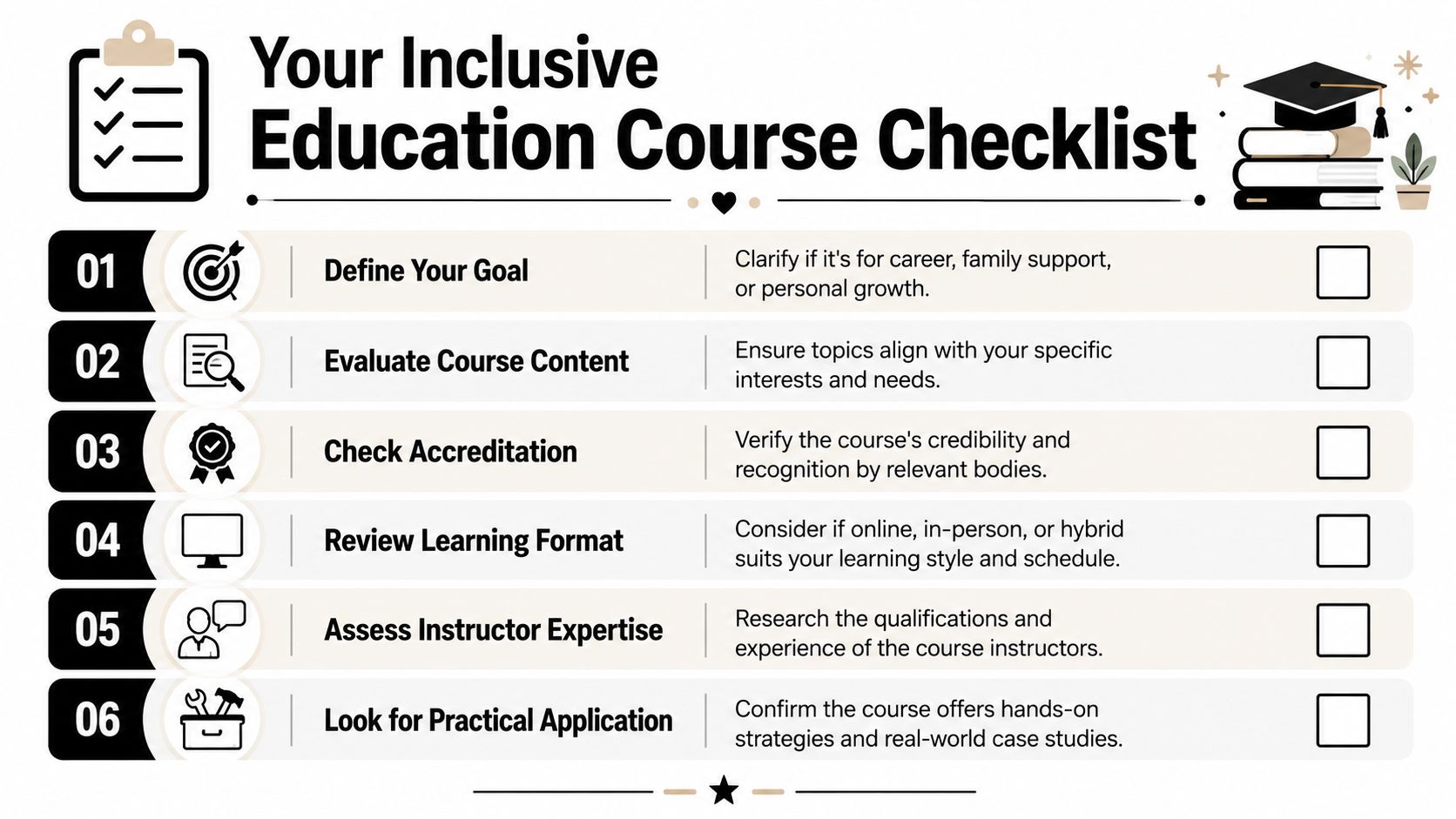
Once you know the options, the next challenge is choosing wisely. Many people feel pressured by marketing language. Try not to focus first on polished promises. Focus on what the course or school enables a child or educator to do.
What parents should ask
A strong question from a parent is: “What happens in the moment my child struggles?” That question often reveals more than a brochure ever will.
A 2025 systematic review found that effective inclusive-learning technologies most often combined multimedia content, accessibility features, and interactive elements, with 41 studies citing multimedia, 36 citing accessibility, and 32 citing interactivity in this systematic review of inclusive-learning technologies. For families, that translates into clear essential requirements.
Ask questions like these:
- Can my child access the same lesson in more than one way? Text alone won't suit every learner. Look for text, audio, video, visual supports, and chances to respond differently.
- What accessibility features are built in from the start? Ask about captions, readable layouts, keyboard navigation, alternative formats, and adjustable pacing.
- How interactive is the learning? A child who only watches is easier to overlook. Interaction helps teachers see confusion, confidence, and engagement in real time.
- What happens if my child becomes dysregulated during a live session? You're listening for a specific process, not a vague reassurance.
- How are teachers informed about my child's needs? Support should be coordinated, not dependent on one sympathetic adult.
What educators should look for
Teachers often choose courses that align with workload and immediate needs, which is sensible. Still, convenience shouldn't be the only measure.
Look for professional learning that includes:
- Demonstration, not just description: You need to see how adaptations work.
- Real scenarios: Good courses deal with missed instructions, sensory overload, uneven participation, and emotional regulation.
- Feedback on your practice: Reflection matters, but coached improvement matters more.
- Attention to communication: Families need plain language, clarity, and consistency.
If a course keeps saying “inclusive for all learners” but never shows how that looks in an actual lesson, keep asking questions.
A quick comparison tool
| Ask this | Strong answer sounds like |
|---|---|
| How is content delivered? | Multiple modes, not one fixed format |
| How is access supported? | Accessibility is built in, not added later |
| How do learners participate? | Regular interaction and visible teacher response |
| What happens when a learner struggles? | Clear steps, named support, timely adjustment |
| How is progress reviewed? | Regular monitoring tied to action |
Good decisions usually come from specific questions, not long prospectuses.
How Online Schools Can Nurture Inclusive Learning
At 8:55, a child logs in already carrying the weight of the day. In one setting, the lesson begins with a crowded screen, unclear instructions, and no one noticing that the child has gone quiet. In another, the teacher greets pupils by name, the routine is familiar, the task is shown in more than one way, and help arrives before frustration turns into shutdown. That difference shapes whether a child can learn, participate, and feel that they belong.
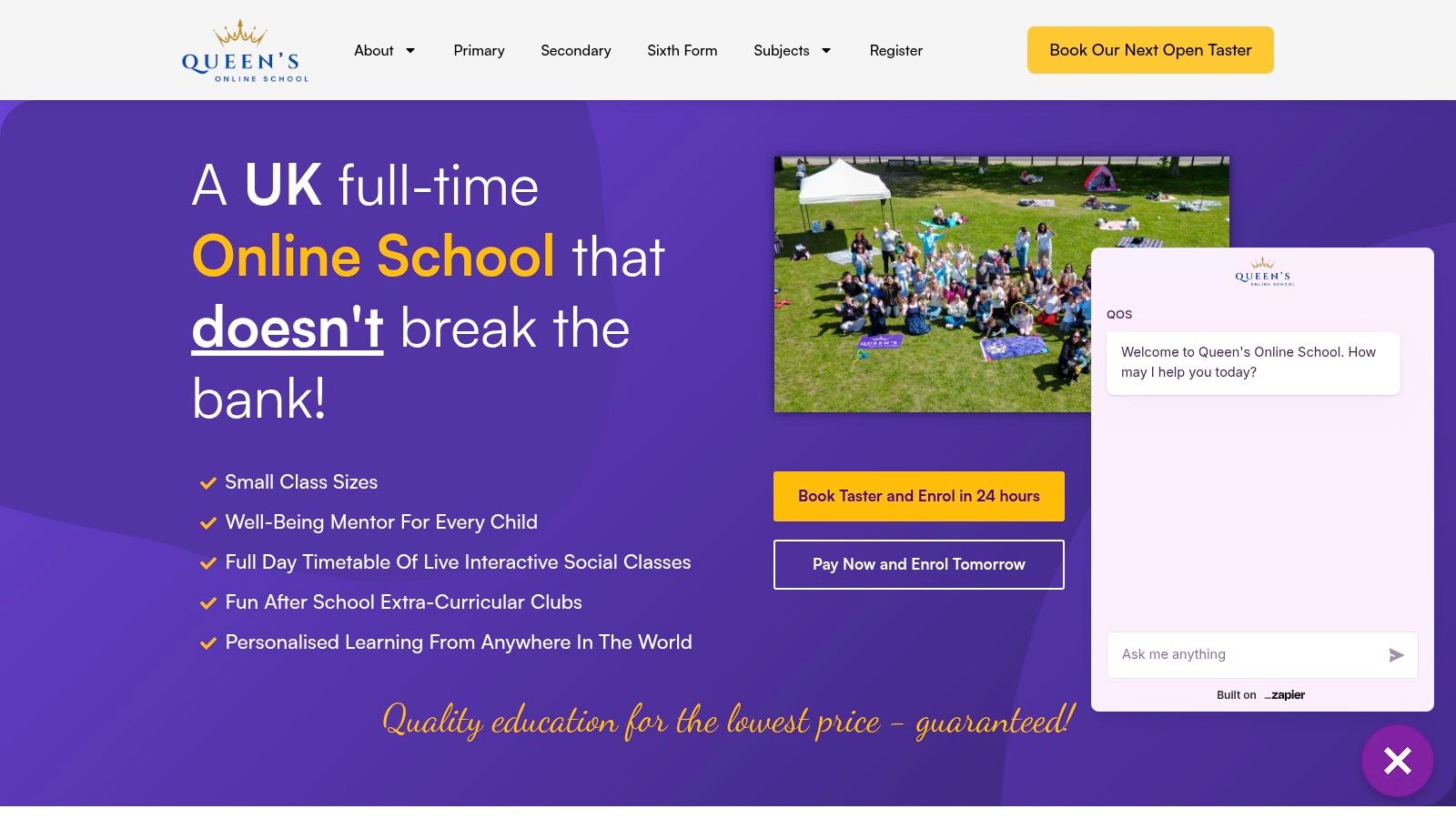
Online learning can suit some children very well. A calmer environment may reduce the strain of noise, travel, crowded corridors, or constant transitions. For some pupils, that lower sensory load creates more space for attention, confidence, and steady participation. For others, online learning only works if the school replaces physical proximity with clear teaching, careful routines, and prompt human support.
That is the point many families worry about, and rightly so.
A good online school treats inclusion as something a child should feel during the lesson, not as a promise written in a prospectus. The practical signs are often easy to spot once you know what to look for. Teachers give instructions in short stages. Visuals are uncluttered. Class routines are predictable. Pupils are invited into discussion without pressure or confusion. If a learner drifts, hesitates, or becomes overwhelmed, staff notice early and respond quickly.
It helps to picture online inclusion as the digital version of a well-prepared classroom. The doorway is easy to enter. The timetable is visible. The teacher can see who is coping and who is not. The child does not have to fight the setting before they can reach the learning.
If you support online learners yourself, this guide to effective virtual teaching strategies is a practical companion because it focuses on what pupils experience during live teaching.
Some schools are building this into their day-to-day provision. Queen's Online School, for example, offers live online classes following the British curriculum, with subject-specialist teaching and personalised support for learners who may need accommodations, including some pupils with SEND or SEMH profiles.
A short introduction can help families picture what that feels like in practice.
The question that matters most
Ask one clear question. “How will my child be supported while the lesson is happening?”
A reassuring answer will name the adults involved, explain the routine of the lesson, and describe what happens if your child misses an instruction, becomes anxious, or starts to disengage. If the answer stays general, the child may still be left to cope alone. In online education, belonging depends less on the platform itself and more on whether the child is seen, understood, and helped in real time.
Your Questions on Inclusive Education Answered
A parent usually asks these questions at the point where the decision feels personal. You are not comparing course brochures. You are trying to work out what will help a real child feel calmer, better understood, and more able to learn.
Are inclusive education courses only for specialists
No. Many courses are written for different people around the child, including class teachers, teaching assistants, school leaders, and parents.
The best choice depends on what you need to do next. A parent may need help understanding provision, language used in plans, and what good support looks like in practice. A teacher may need strategies they can use in tomorrow's lesson. A school leader may need training that helps staff build a culture where children are not treated as problems to be managed, but pupils who need the right conditions to take part.
What's the difference between inclusion and integration
The difference is felt most clearly by the child.
Integration often means the child is admitted to the classroom and expected to fit the existing routines with limited adjustment. Inclusion means the classroom, the teaching, and the support are shaped so the child can join in meaningfully. A useful way to picture it is this. Integration says, “You can come in.” Inclusion says, “You can belong here.”
If a pupil is physically present but regularly confused, overwhelmed, or left on the edge of the lesson, the setting may be integrated without being inclusive.
How do costs and funding work for online provision
For many families, this is the point where hope meets paperwork.
Funding for online schooling is not automatic, and decisions can vary depending on a child's needs and the local authority's view of suitable provision. If a child has an Education, Health and Care Plan, it is sensible to ask how the proposed setting meets the provision set out in that plan, and whether funding has been agreed in similar cases. The Department for Education explains the legal framework for children and young people with SEND in its SEND code of practice: https://www.gov.uk/government/publications/send-code-of-practice-0-to-25
Ask providers to explain costs in plain language. Ask local authorities what evidence they need. Ask who will put the case forward if a child cannot access learning well in their current setting. Clarity matters because uncertainty often delays support, and the child feels that delay first.
How do I judge whether a course is credible
Look for signs that the course connects directly to a child's day-to-day experience. Clear learning outcomes matter. Named tutors or staff with relevant experience matter. Practical examples matter. Assessment should show how learners will apply what they study, not just repeat definitions.
A credible course should help the adult answer questions such as these. What would I do if a child shuts down during a task? How would I adapt instructions without lowering expectations? How would I notice whether a pupil feels included, rather than compliant?
As noted earlier, Queen's Online School is one example of an online setting built around live teaching, personalised support, and the British curriculum. For many families, the next useful step is not finding the perfect label. It is finding a place where a child feels safe enough to join in, speak up, and make progress.