

Section 89 of the Education and Inspections Act 2006 is the core anti-bullying law UK requirement, mandating maintained schools in England to have behaviour measures covering bullying. For a child learning from home or joining lessons online, that duty still points to the same outcome: education must be safe, accessible and responsive when harmful behaviour appears.
A parent may notice the warning signs before anyone else. Their child closes the laptop when a particular classmate joins a lesson, stops speaking in group activities, or says they feel ill whenever an online session approaches. For a learner with SEN or SEMH needs, the distress may appear as shutdown, anger, avoidance or a sudden loss of confidence rather than a clear explanation of what happened.
Virtual education changes the setting, not the importance of protection. A hostile message, humiliating comment in a shared chat, exclusion from a digital group or repeated disruption during a live lesson can affect a child long after the screen goes dark. Schools need policies that recognise those behaviours and give children a safe, practical way to report them.
Why Anti-Bullying Laws Exist and What They Protect
A pupil logs into a live lesson with their camera off. The teacher assumes they're shy, but the child is trying not to show that they've been crying. Earlier, other pupils mocked their speech in a breakout room and shared an altered screenshot in a group chat. The child has SEN and already finds rapid conversations difficult, so the incident feels less like an isolated joke and more like proof that the virtual classroom isn't safe.
The first question should be what the child needs to feel safe enough to learn, not whether the behaviour fits an adult's preferred label. Bullying may involve repeated insults, exclusion, intimidation or online humiliation. Even where the facts are still being established, a school should listen carefully, reduce immediate risk and consider reasonable support for the learner.
Safety is part of educational access
A child who expects ridicule may avoid opening the platform, keep their microphone muted despite needing help, or stop submitting work. For a pupil with SEMH needs, the emotional cost can include heightened anxiety, loss of trust and a growing belief that adults won't intervene. A well-designed anti-bullying policy therefore protects more than good behaviour. It protects attendance, participation, relationships and the child's confidence to ask for help.
UK evidence shows why this remains urgent. Research suggests at least two in five young people experienced bullying in some form during the previous year, including cyber-bullying, and the Anti-Bullying Alliance notes that bullying costs the economy an estimated £11bn annually, as reported in the Education Policy Institute review of bullying evidence.
Child-centred rule: If a pupil says they feel unsafe, treat that disclosure as important before deciding what formal category applies.
The legal framework developed because schools can't leave protection to individual goodwill. Government guidance requires schools to have behaviour arrangements that address bullying and communicate them to the people who rely on them. The result is a shift from treating anti-bullying work as an optional welfare project to treating it as part of school accountability.
For virtual schools, that accountability must include the digital environment. Staff should know who monitors live sessions, how chat records are preserved, how a child can report privately and what happens when the alleged perpetrator is in the same online group. Those details turn a reassuring policy into protection a frightened child can actually use.
The Core Legal Framework Underpinning School Duties
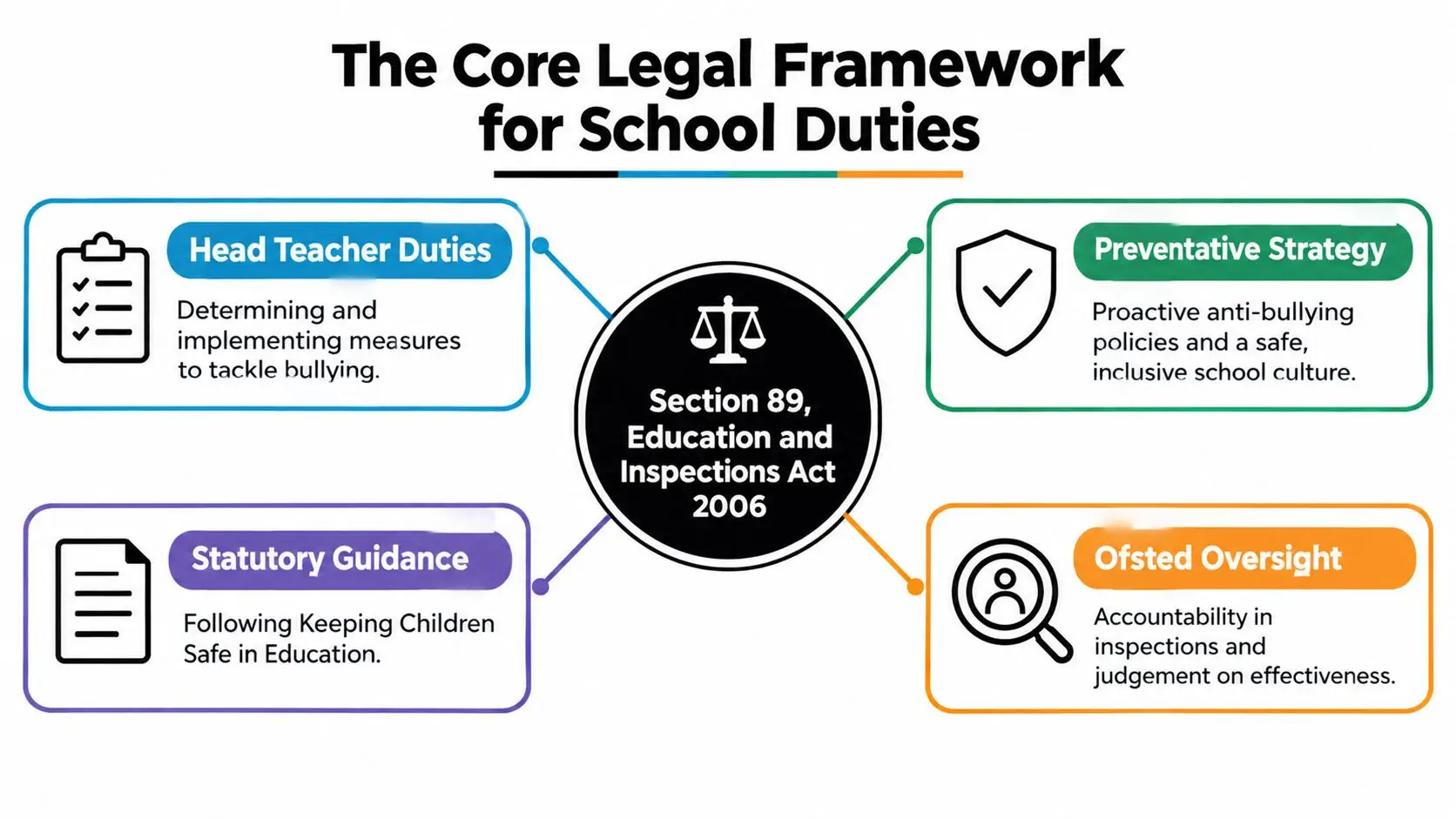
The central statutory starting point is Section 89 of the Education and Inspections Act 2006. It requires maintained schools in England to have measures that encourage good behaviour and prevent all forms of bullying among pupils, as confirmed by GOV.UK guidance on bullying at school.
That requirement has practical consequences. A school should have a written behaviour policy, explain it to pupils, staff and parents, train staff to recognise bullying and provide reporting routes that children can use. For an online provider, the policy should also explain how the school responds to conduct in live lessons, private messages, discussion boards, shared documents and school-related social spaces.
How equality law changes the response
The Equality Act 2010 sits alongside the school behaviour duty. It protects pupils from discrimination, harassment and victimisation connected with protected characteristics. That distinction matters because a racist insult, disability-based mockery or harassment linked to religion, sex, sexual orientation or another protected characteristic may require an equality-focused response as well as ordinary behaviour action.
Consider a pupil with a communication difference who is repeatedly imitated in a class chat. Staff shouldn't dismiss the conduct as ordinary teasing. They should ask whether the behaviour relates to disability, whether the child needs adjustments to participate safely and whether the incident indicates wider risk. Parents seeking a plain-language explanation of this intersection may find Pauline Vuyelwa Muswere-Enagbonma's discussion of equality law useful alongside official guidance.
The law also recognises that some conduct may be criminal. Violence, assault, theft, repeated harassment, intimidation and hate crimes should be reported to the police when relevant. A school investigation doesn't remove the need for urgent safeguarding or police action where the circumstances justify it.
What parents should expect to see
A lawful framework should be visible in daily practice, not hidden in a document. Look for:
- A clear policy: It defines bullying, cyber-bullying and identity-based harm in language children can understand.
- A usable reporting route: A pupil can tell a trusted adult privately without confronting the alleged bully.
- A proportionate response: Staff protect the child immediately while investigating fairly.
- Accountability: Leaders review incidents, identify patterns and escalate safeguarding concerns.
The purpose isn't to force every conflict into a legal dispute. It's to ensure that a child doesn't carry the burden alone while adults debate terminology.
Distinguishing Requirements for Different School Types
School status affects the source of the duty, but it shouldn't determine the quality of protection a child receives. A maintained school in England operates under the explicit requirement in Section 89. Academies and independent schools are governed through the Independent School Standards, which require the proprietor to prevent bullying so far as is reasonably practicable through an effective anti-bullying strategy, according to government advice on preventing and tackling bullying.
“Reasonably practicable” doesn't mean a school can ignore foreseeable risks. It means leaders should take sensible, organised steps based on the setting, the information available and the needs of pupils. In a virtual school, that includes considering the risks created by group chats, screen sharing, anonymous accounts, recordings and communication outside scheduled lessons when it relates to school activity.
| School Type | Legal Duty Source | Key Requirement |
|---|---|---|
| Maintained school in England | Section 89 of the Education and Inspections Act 2006 | Have measures that encourage good behaviour and prevent all forms of bullying among pupils |
| Academy | Independent School Standards | Prevent bullying so far as is reasonably practicable through an effective anti-bullying strategy |
| Independent school | Independent School Standards | Prevent bullying so far as is reasonably practicable through an effective anti-bullying strategy |
Policies need operational detail
A parent shouldn't have to guess who receives a report or whether an online incident counts because it happened outside the formal lesson. A useful policy explains how staff record concerns, who leads the response, when parents are contacted and how the school supports the child during the investigation.
The same principle applies to staff. Teachers need training that covers subtle exclusion, coded language, pile-ons in chats and behaviour that appears playful to adults but causes sustained distress to a pupil. Consistent sanctions matter, but so do adjustments such as changing a breakout group, restricting contact, offering a trusted adult check-in or providing a quieter route into lessons.
Schools should also explain the limits of their authority. Bullying can happen off-site and still fall within headteacher disciplinary powers when pupils are under school control or taking part in school-related activity. For families comparing provision, this guide to anti-bullying policies in schools offers a useful checklist of policy features to examine.
For parents: Ask less about whether a school has a policy and more about what happens in the first hour after a child reports harm.
The child's experience remains the practical test. A policy may satisfy a formal requirement, yet fail if a pupil must repeatedly retell a painful incident, remain in the same unsafe digital space or wait without an update. Effective implementation reduces those burdens.
Practical Steps for Reporting and Escalating Concerns
A parent often starts with uncertainty. Is this bullying, a friendship breakdown, a single unkind comment or something more serious? You don't need to solve that classification before contacting the school. Report the behaviour and describe its effect on the child.
Build a clear record
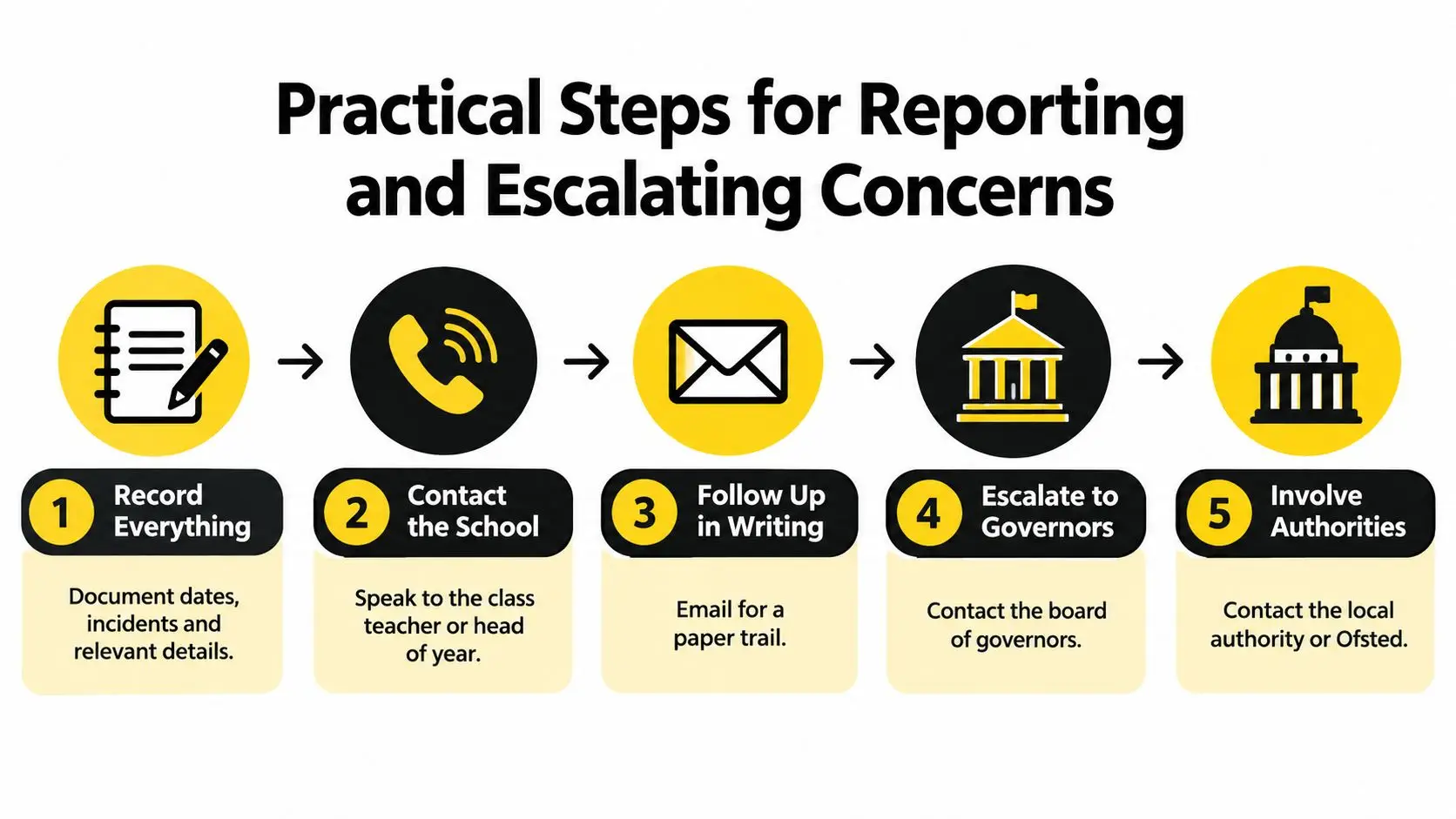
Write down what the child tells you in their own words, along with dates, lesson names, usernames, messages and the names of adults who were present. Save relevant screenshots or platform records without forwarding harmful material unnecessarily. Note changes in sleep, attendance, mood, work completion or willingness to join lessons, because those effects help staff understand the level of risk.
A calm written report should state:
- What happened: Describe the words or conduct without exaggeration.
- Where it happened: Identify the lesson, platform, chat or school-related activity.
- Who was affected: Explain the child's needs and the immediate impact.
- What protection is needed: Request a safe contact route, separation or welfare check where appropriate.
Contact the class teacher, form tutor or head of year first, unless there's an immediate safeguarding risk. Ask who will lead the response and when you should expect an update. A school may need time to speak to pupils and review records, but it should still acknowledge the concern and explain immediate safety arrangements.
Escalate without losing the child's voice
If the initial response doesn't resolve the concern, write to the headteacher or senior safeguarding lead. Refer to the school's published complaints and behaviour procedures, attach your chronology and ask specific questions. Avoid making the child responsible for proving every detail. Staff should investigate while keeping the pupil's emotional safety central.
This guide to dealing with bullying in schools can help families organise the conversation and identify practical questions. If internal routes fail, follow the school's formal complaints process and contact the governing body or proprietor. For maintained schools, the local authority may have a role, especially where safeguarding, attendance or wider education duties are involved. Ofsted can receive information about concerns, although it doesn't usually resolve individual complaints for families.
If the child faces threats, violence, hate crime, serious harassment or suspected significant harm, don't wait for the school process to finish. Contact the police or children's social care as appropriate. A school must treat bullying as a child protection concern when the circumstances indicate significant harm and refer to children's social care when the threshold is met.
Write for the next adult who may need to act. A dated, factual chronology helps leaders see patterns and prevents the child from having to start the story again each time.
Keep communication measured, but don't minimise the harm to protect adult relationships. The aim is not confrontation for its own sake. It's a timely, coordinated response that restores the child's ability to learn.
Safeguarding and Identity-Based Harm in Schools
A child may say, “They were only joking,” because they fear making the situation worse. The conduct might involve racist comments in a virtual classroom, repeated jokes about disability, hostile messages about religion or sexual orientation, or a coordinated attempt to exclude a pupil from online activities. These incidents need more than a generic reminder to be kind.
Keeping Children Safe in Education 2026 says school behaviour policies should include measures to prevent bullying, including cyberbullying, prejudice-based bullying and discriminatory bullying, as set out in the official Part One guidance. The wording supports a specific response because different forms of harm create different safeguarding and support needs.
Online settings create distinct risks
Virtual schooling can help a child avoid the sensory overload, crowded corridors or social pressure of a physical site. It can also expose them to rapid, persistent communication. A pupil may leave a live lesson but continue receiving messages, find that a screenshot is being circulated or worry that a recorded moment will be replayed.
For a learner with autism, ADHD, speech and language needs or SEMH needs, the school should consider how communication differences affect both reporting and protection. Staff might offer a private reporting form, a trusted adult call, additional processing time or a supported conversation. They should avoid assuming that a child who cannot describe the incident fluently hasn't been harmed.
A racist incident should be recorded and addressed as racist bullying, not softened into “a disagreement”. Disability-based teasing may require consideration of reasonable adjustments and the pupil's wider inclusion. Online harassment may require platform controls, evidence preservation and checks beyond the immediate lesson.
Safeguarding must connect the systems
An anti-bullying report can reveal other concerns, such as isolation, self-harm risk, coercion or abuse outside school. Staff should follow safeguarding procedures rather than treating the event solely as a disciplinary matter. Parents should tell the school about changes in behaviour and ask what support is available while facts are being established.
Practical measures may include:
- Safer digital groups: Review membership, permissions and breakout-room arrangements.
- Protected communication: Give the child a private way to contact a named adult.
- Emotional support: Offer check-ins, counselling pathways or a trusted staff relationship.
- Restorative care: Use dialogue only when the child feels safe and participation won't pressure them.
- Ongoing review: Check whether the harmful behaviour has stopped across every relevant platform.
Families looking for practical digital prevention ideas can consult this resource on cyber-bullying prevention. The central safeguard is simple: adults must respond to the actual identity-based harm and the child's vulnerability, not just to the surface form of the message.
Creating a Safe Learning Environment for Every Child
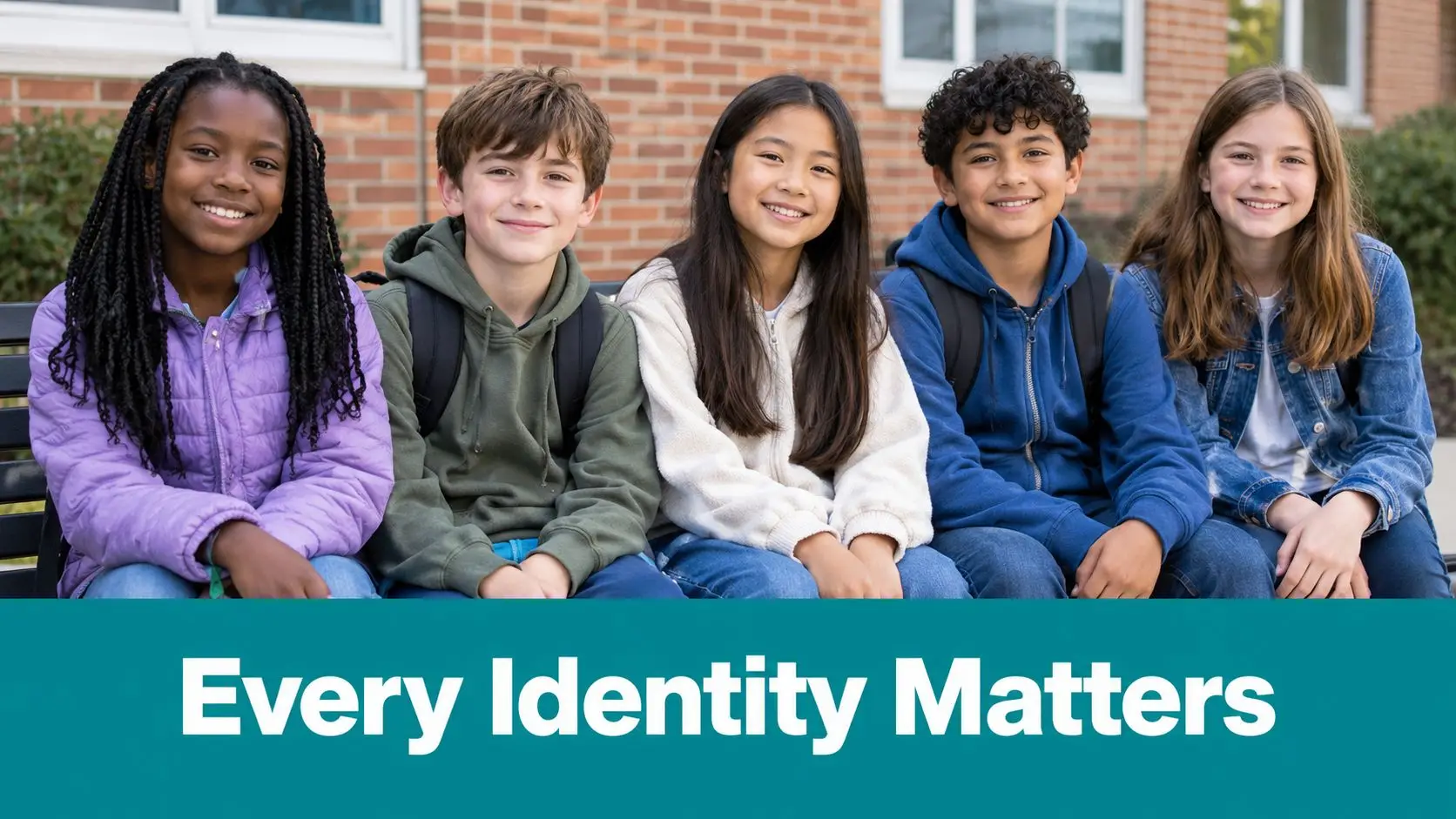
Legal duties create the floor, but children feel safety through daily relationships. A pupil who knows how to contact a trusted adult, expects staff to listen and sees classmates model respect is more likely to stay connected when something goes wrong. That matters especially for children who have already experienced rejection or find unpredictable social situations exhausting.
An online school can build belonging deliberately. Teachers can establish clear chat rules, check participation without shaming quiet pupils, structure group work carefully and make space for children who communicate differently. Mindfulness activities, leadership opportunities and moderated clubs can give learners positive ways to connect rather than leaving social life to unobserved private channels.
A child might begin with a written contribution instead of speaking live, then take responsibility for welcoming new pupils to a club. Another learner may need a predictable lesson routine and a named adult who checks in after a difficult interaction. These choices don't replace formal reporting, but they can help a child recover trust and confidence.
Belonging is protective when adults organise it intentionally.
Schools should also think about conflict resolution beyond punishment. A practical resource on conflict resolution in community spaces can help staff and families consider how listening, boundaries and shared responsibility contribute to safer communities. Any restorative approach must remain voluntary and child-centred. It isn't appropriate to place a frightened pupil in a face-to-face or online meeting with the person who harmed them before safety has been established.
For families considering virtual education, ask direct questions about supervision, reporting routes, staff training and support for SEN and SEMH learners. Ask how the school handles harmful conduct in live lessons, private messages and school-related online communities. The answers reveal whether the anti-bullying law UK framework has become a lived system of care or remains only a document.
Queens Online School provides live online British-curriculum teaching, small classes, recorded sessions and support for learners with SEN and SEMH needs, alongside a zero-tolerance anti-bullying policy and reporting routes. If your child needs flexible learning with safeguarding and belonging at the centre, visit Queens Online School to explore the provision and speak with the school.