

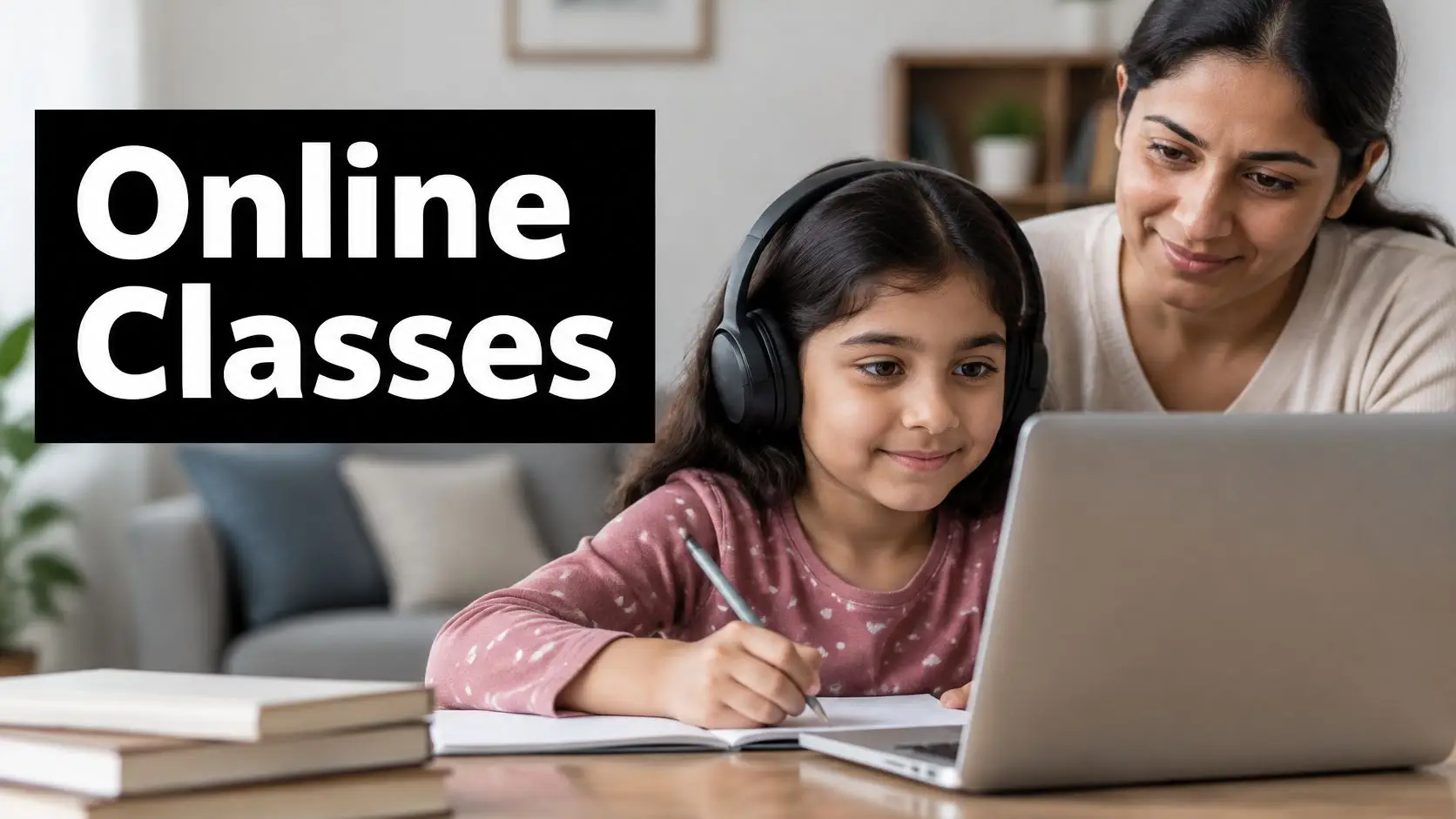
It's 11pm, your child is finally asleep, and you're scrolling through another glossy website wondering if any of these online classes for kids will make them want to learn. You're not looking for the biggest brand or the loudest promise. You want a child who feels engaged, supported and happy, not just enrolled and logged in.
That worry is well placed. The Office for National Statistics bulletin for 19 February 2021 found that 69% of parents reported their child had accessed real-time, interactive online learning provided by schools in January 2021, compared with only 25% in May 2020. Access grew fast, but access alone didn't guarantee a good experience.
Below are seven real options judged through your child, not their marketing. For each one, ask four simple questions. Does the age range fit, does the teaching suit their learning style, does the timetable work for your family, and will they get the social contact they need to thrive?
1. Queens Online School
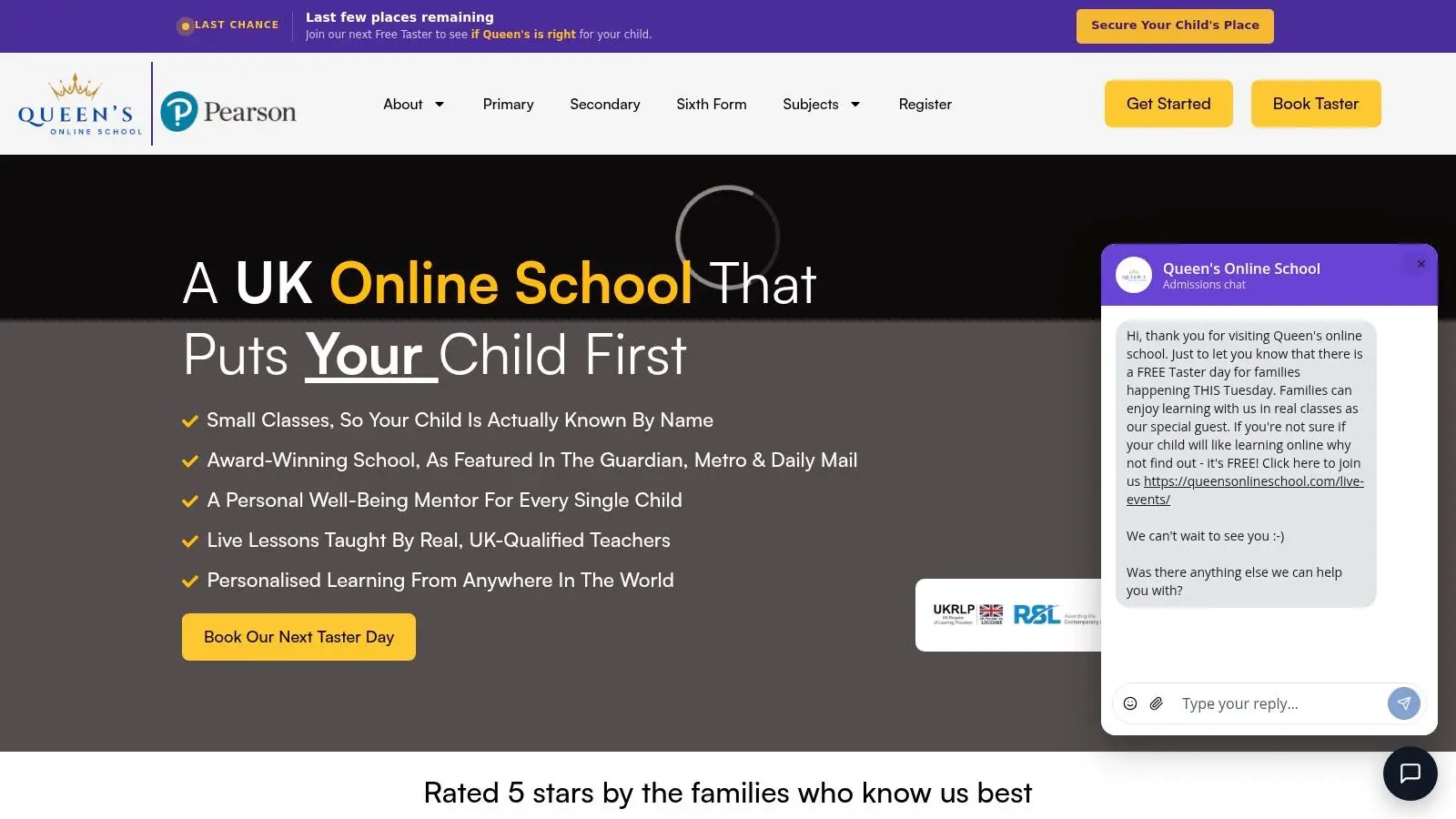
A quiet Year 4 and a GCSE student who trains most afternoons need different things from the same screen. Queens Online School is an independent British online school for ages 7 to 18, covering Primary, Secondary and Sixth Form, with students learning from home through live lessons and a structured weekly timetable. Fully qualified UK teachers lead the classes. Lessons are timed for international families, and every class is recorded.
Secondary students attend 26 live, teacher-led lessons every week in interactive virtual classrooms. Primary is Key Stage 2, Years 3 to 6, ages 7 to 11, in Art and Design, English, Projects and Maths, with active breaks built into lessons. Recordings are available 24/7, so a family in another time zone can catch up rather than miss the week.
A full timetable still has to become attendance. The Office for National Statistics article on deprivation inequalities for GCSE students found that approximately 87% of GCSE-age pupils had real-time online lessons by the third lockdown, yet only 64% of pupils in the most deprived areas reported attending three or more lessons per day.
What your child actually gets
Small online classes, regular pastoral support and real chances to talk with classmates. Teaching, assignments and resources sit together in Microsoft Teams for Education. Coursework, quizzes and other ongoing checks are usually completed online inside normal lessons. Lessons, assessments and support adapt to pace, preferences and goals, including targeted help for learners with SEN and SEMH needs.
Match the setup to the child in front of you. A hesitant speaker is better in a small group, where they can use chat, then voice, then a short explanation once they feel safe. A young performer or student athlete can use the Young Performers route or the Student Athlete Pathway, with scheduling around rehearsals, competitions and travel, and recorded lessons plus structured academic support. Self-paced assignments and personalised help sit beside the live week for unusual schedules, learning styles or commitments. That mix is a large part of why families choose online classes when they need flexibility and a timetable.
Parents of younger children should set the daily routine, monitor assignments and stay in touch with teachers. Older students get more room to work independently. Arts and music run as online courses and clubs, with work shared in virtual showcases. GCSE and A Level routes are offered through a Pearson Approved Examination Centre, and Cambridge Online Education Group provides preparation courses for exams and the next stage.
Ask for the full fee, including exam costs, before you compare. If you find a comparable online school with the same number of live lessons for a lower fee, Queen's refunds the difference. The honest limit is this: a child who cannot face any live week will still feel those 26 secondary lessons, even with catch-up. Choose it when your child needs classmates, a teacher who can see they are stuck, and a routine that can bend for sport, performance or time zone.
2. King's InterHigh
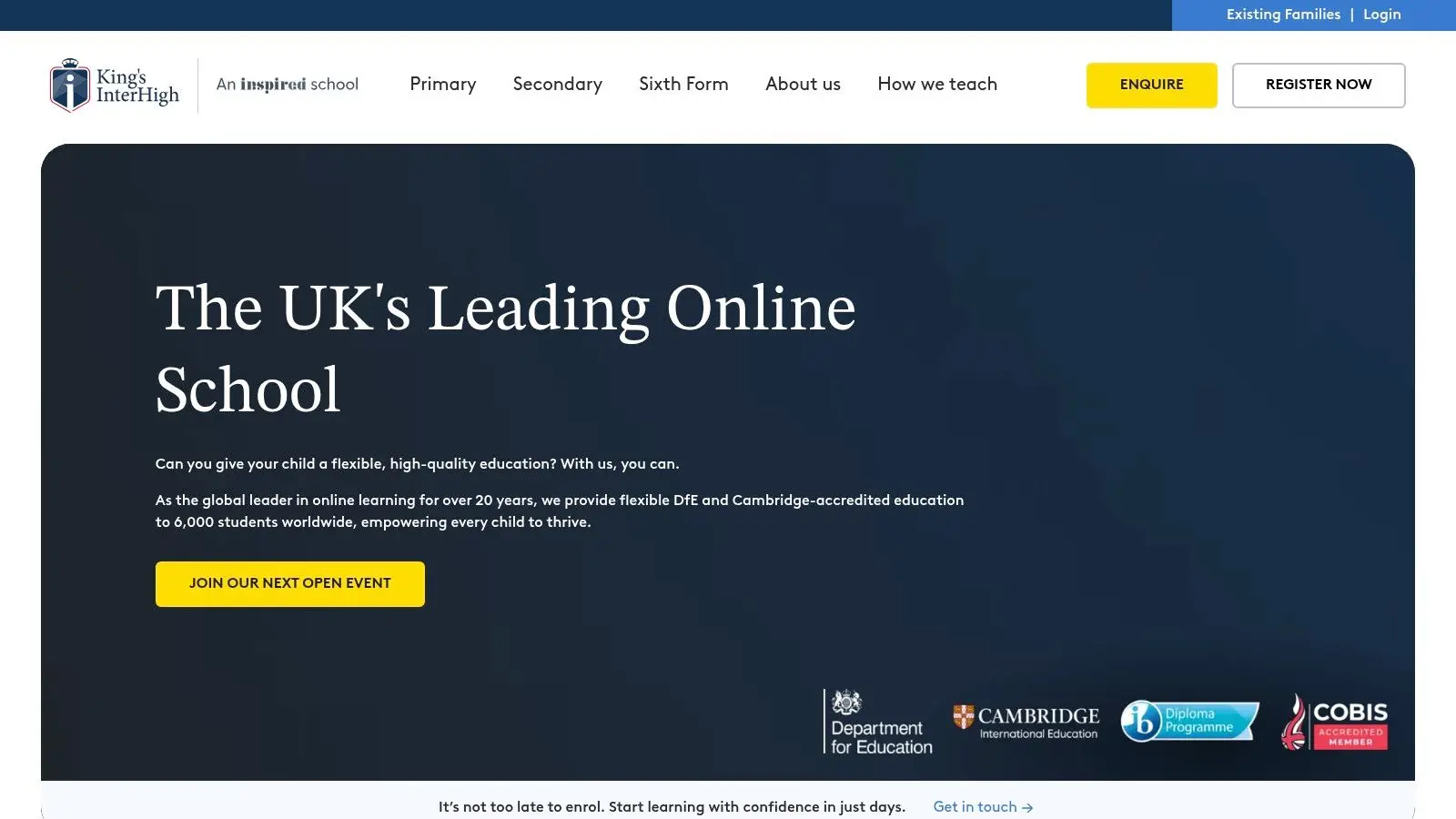
King's InterHigh suits families who want one school from childhood into late teens. It's a full-time online school for ages 7 to 19, covering primary through GCSE, A-level and the IB Diploma. Your child follows a school-style timetable of live, teacher-led lessons, with recordings for review, plus clubs, activities and pastoral support.
That breadth helps if you're tired of switching providers at each stage. A confident Year 5 child can stay with familiar routines into GCSE, while an older sibling works towards A-level or IB in the same system. Before you commit, check how its accreditation and exam routes compare using this guide to accredited online schools and what approval really means.
Budget plainly. Fees vary by stage, and exam-centre costs sit separately, so confirm current fees with the provider before comparing. Some activities or trips may cost extra too.
Fit and friction
- Best for: Families wanting a broad age range, multiple qualifications and a recognisable school community.
- Flexibility: Recorded lessons and annual or rolling contracts help if your plans might change.
- Watch for: Full-time screen-based study still demands time management, especially for younger children who tire quickly.
Digital familiarity helps, but it isn't the same as sustained effort. Ofcom's Online Nations Report 2025 found 76% of UK children aged 8 to 14 visited an education-related online service during a typical month. Your child may already tap into learning apps happily, yet still need you nearby at first to turn that habit into a full school day. Choose InterHigh if you want scale and choice, and you're ready to support the routine at home.
3. Sophia High School
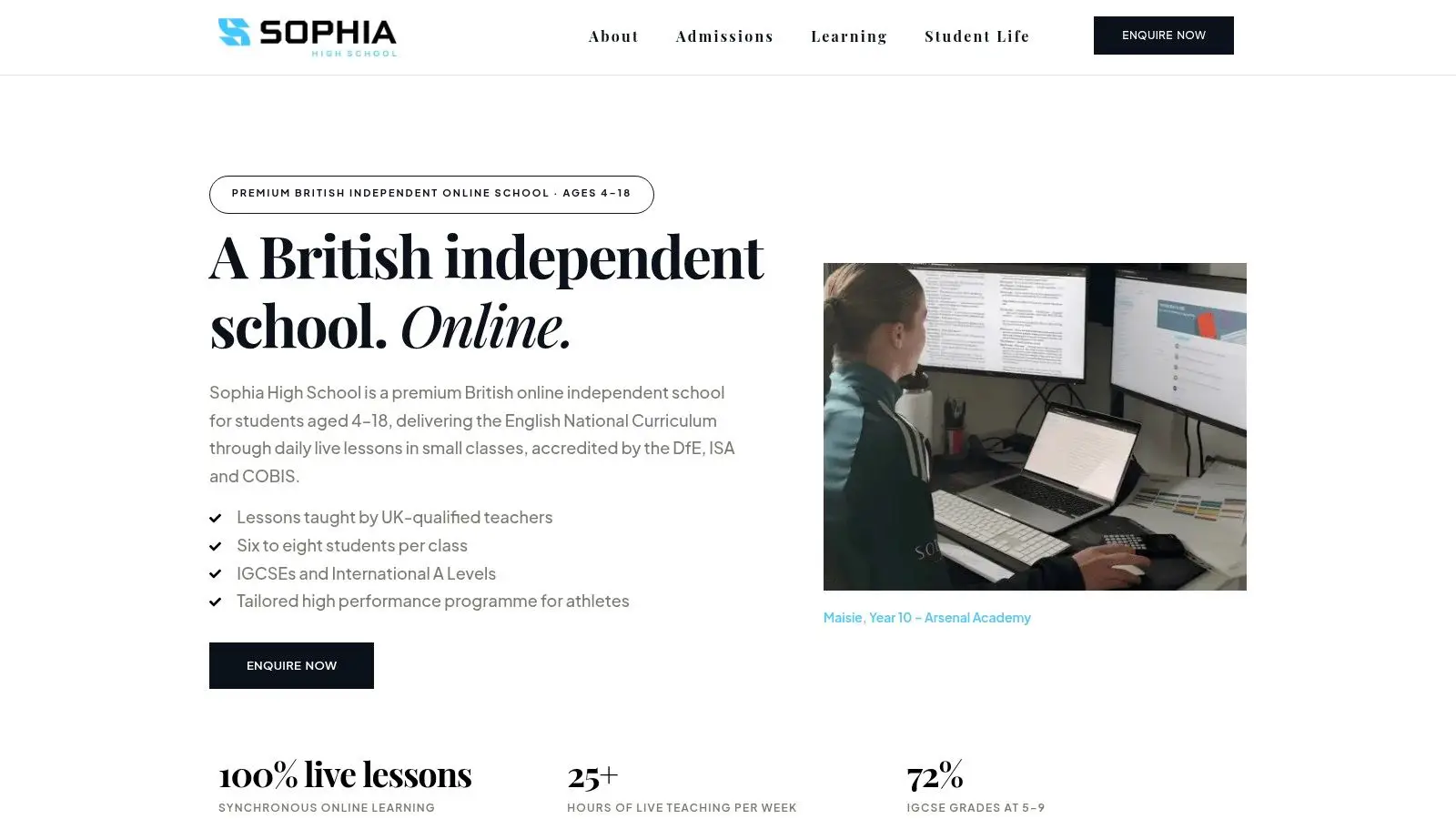
Pick Sophia High School when small really matters to your child. This is a full-time British online school from Reception to A-level, built around daily live lessons in small groups, pastoral care and mentoring. Core classes are typically limited to 6 to 8 students.
For a child with SEND, that size changes the emotional maths. A pupil with dyslexia who dreads reading aloud can hear instructions, answer privately and build confidence without an audience. The Department for Education announcement on modernising education reported that more than 8 in 10 surveyed teachers and school staff in an assistive-technology training pilot saw improvements in students' independence, confidence and engagement. Tools help only when teachers know your child well enough to use them properly.
Sophia offers personal tutoring, mentoring and recordings for catch-up across primary, lower-secondary, IGCSE and A-level pathways. The school states it is accredited through the UK Department for Education's Online Education Accreditation Scheme. If your child may later sit US admissions tests, you can find digital SAT study tools to compare alongside British qualifications.
The price of small
Fees are premium and charged annually, with UK VAT and some additional costs possibly applying. Exam-centre fees and some services are separate. Places may also be limited because classes are deliberately small.
Practical rule: Pay for tiny classes only if your child will actually use the extra attention. A self-assured teenager may thrive in a larger group for less.
Choose Sophia if your child needs close adult attention and you can sustain premium fees without resentment. Don't choose it hoping small groups alone will fix anxiety. Ask exactly who mentors your child, how often you hear from them, and what happens when attendance dips.
4. Minerva Virtual Academy
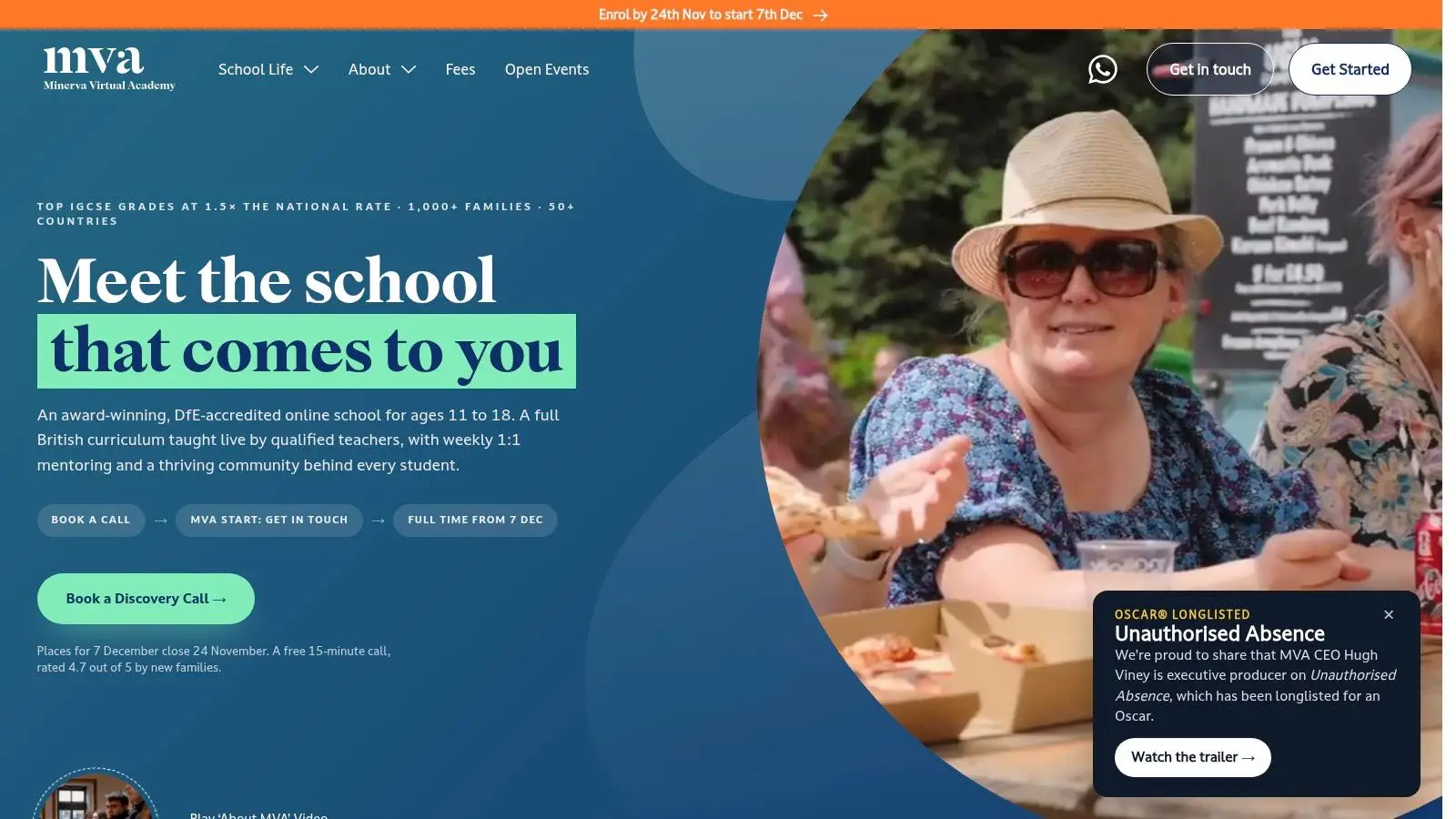
Your child logs in for a live lesson, then spends a long stretch working alone. That is the daily rhythm at Minerva Virtual Academy, which blends live lessons with independent work, mentor support and a virtual school community with co-curricular provision. Teaching and pastoral care are both there. So is the expectation that your child can start a task without an adult watching.
That suits a teenager who says, "I work better when I can get my head down, then ask for help." It suits a child recovering from burnout far less. Be honest about which child you have today, not the one you hope they will become by October.
Safeguarding questions matter here, as they do everywhere. Harrow Council's Elective Home Education Policy makes clear that parents remain responsible for ensuring education is suitable when using online platforms and tutors, and that checks should cover DBS status, supervision, reporting arrangements and online safety. Ask Minerva who notices if your child stops submitting work, and how quickly you will be contacted.
Costs and conditions
- Fee: Minerva charges an annual fee that includes a deposit and annual subscription. Request the current figure in writing before you compare providers.
- Payment choice: Annual, termly and monthly options are offered, and terms differ for international families. Confirm your own in writing.
- Extras: Public exam entries and optional trips sit outside the core fee.
Choose Minerva for a motivated secondary student who values a mentor and breathing room. Avoid it if your child needs continuous live teaching to stay anchored.
5. My Online Schooling
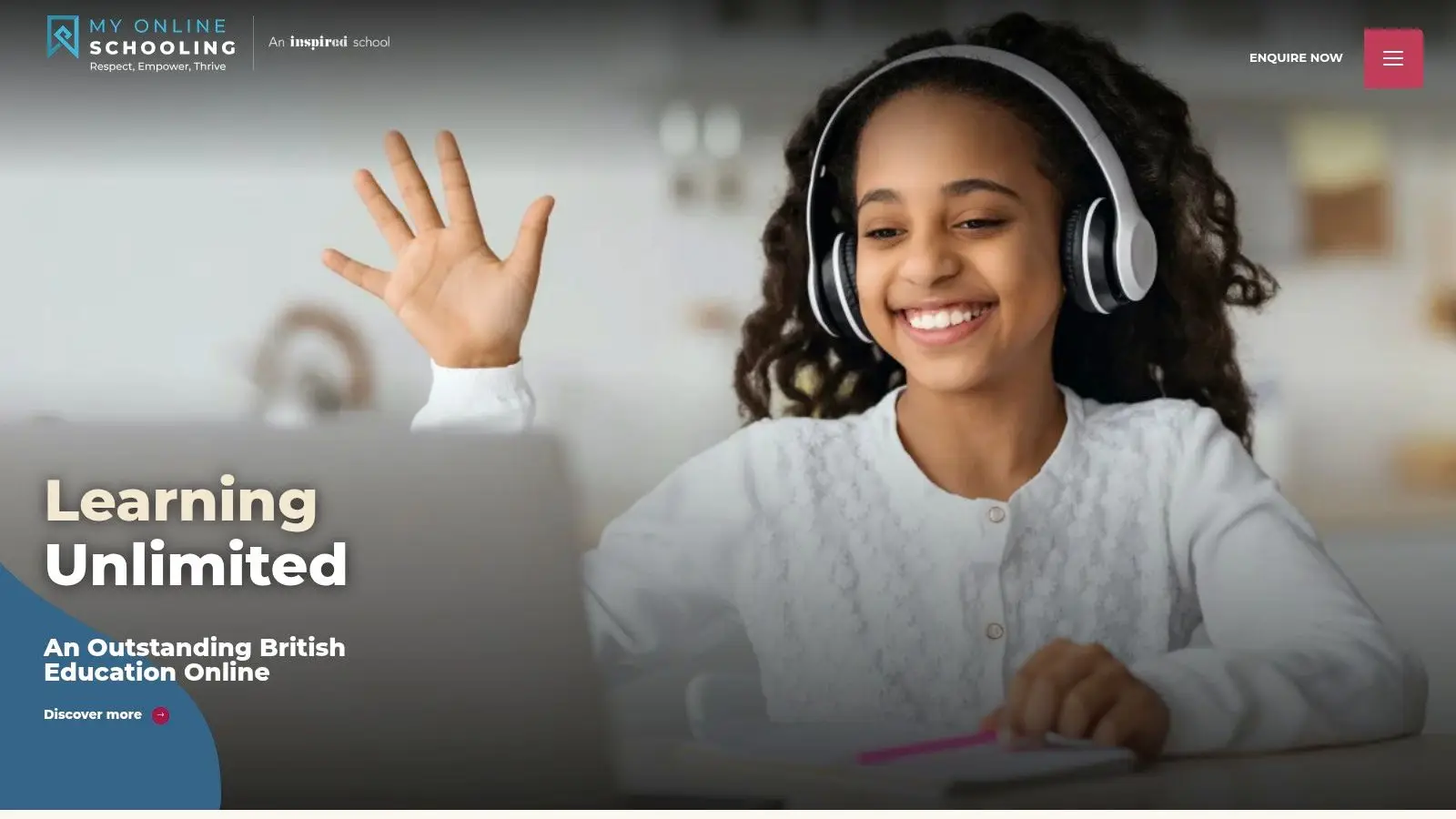
A family that moves often needs schooling that can travel with the child. My Online Schooling offers full-time online schooling for families, with lessons accessed from home through an online learning environment. Its classes are live and recorded, and recordings let students catch up across time zones.
For a child who has changed schools more than once, familiar teachers and classmates can offer continuity while home changes around them. That structure may suit a pupil who wants regular contact and a set routine. Check whether the timetable and level of interaction fit your child's confidence, age and social needs before enrolling.
Ofcom's page on how the UK goes online in 2025 reports that 78% of 13 to 17-year-olds say the internet helps with schoolwork. That finding does not establish how well a particular school teaches. Use it as context, then focus on what your child needs from live lessons, teacher support and contact with classmates.
What to confirm before you enrol
- Fees in writing: Ask for a written quote covering the annual cost, any deposit and enrolment fees.
- Schedule and support: Ask how lesson times work for your family, how recordings are accessed, and what pastoral support students receive.
- Your child's fit: Find out how much live teaching and class interaction the timetable includes, then compare it with the structure your child needs.
Choose this option if your family needs schooling that can continue through a move and your child benefits from scheduled lessons. Before committing, compare the written costs and ask your child whether the format feels manageable.
6. Cambridge Home School Online
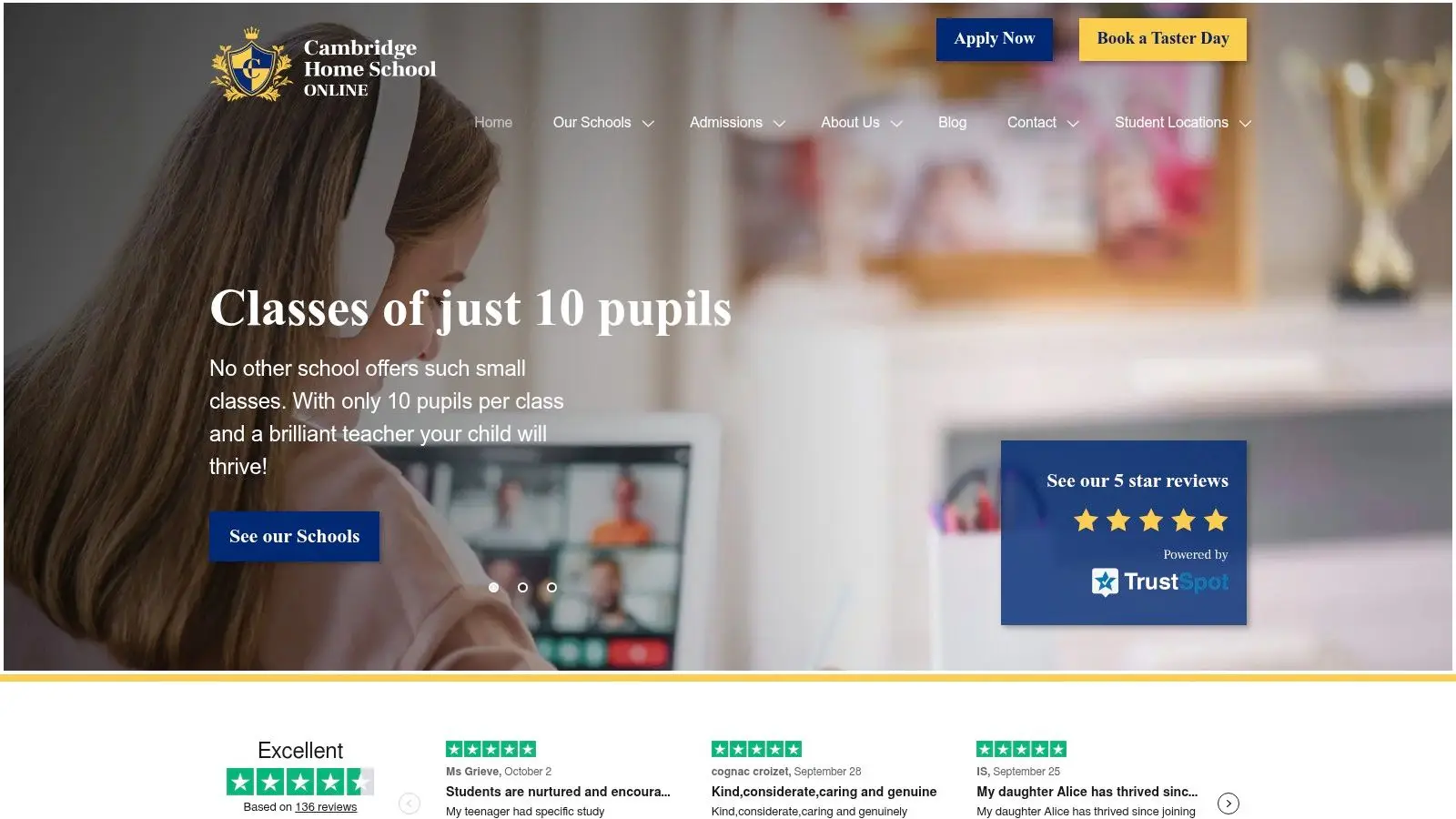
A child who thrives on specialist teaching may suit Cambridge Home School Online, which offers live classes through Microsoft Teams from primary age to sixth form. Its programmes cover primary, lower school, IGCSE and A-level. Small-group teaching and UCAS support for sixth-form students may appeal to families already planning for university.
For younger pupils, compare the school's approach with online primary schooling built around younger learners. A seven-year-old may need movement, visual activities and chances to share work aloud. An older student may value detailed essay feedback and a clear way to ask for help. Match the teaching style to your child's age, confidence and need for interaction.
Screen time also deserves attention. The government page Beyond the headlines on children's online lives reports that children aged 8 to 9 spend an average of two hours online each day, rising to four hours among 13 to 14-year-olds, excluding gaming time. Ask how the timetable includes breaks, offline reading and physical activity. A child who already spends long periods online needs a school day with room to move and look away from the screen.
Strengths and sticking points
Fees vary by year group, so confirm current costs and payment options directly with the school. Examination-centre and entry costs are extra. Check the full likely cost before deciding, especially if paying in full would put pressure on your household budget.
A child who is tired, distracted or anxious needs predictable pauses and a teacher who notices, not pressure to stay online longer.
Choose Cambridge Home School Online if your child wants live specialist teaching and its subject range suits their stage. If the fees or screen-based routine feel like a poor fit, keep looking.
7. Oxford Online School
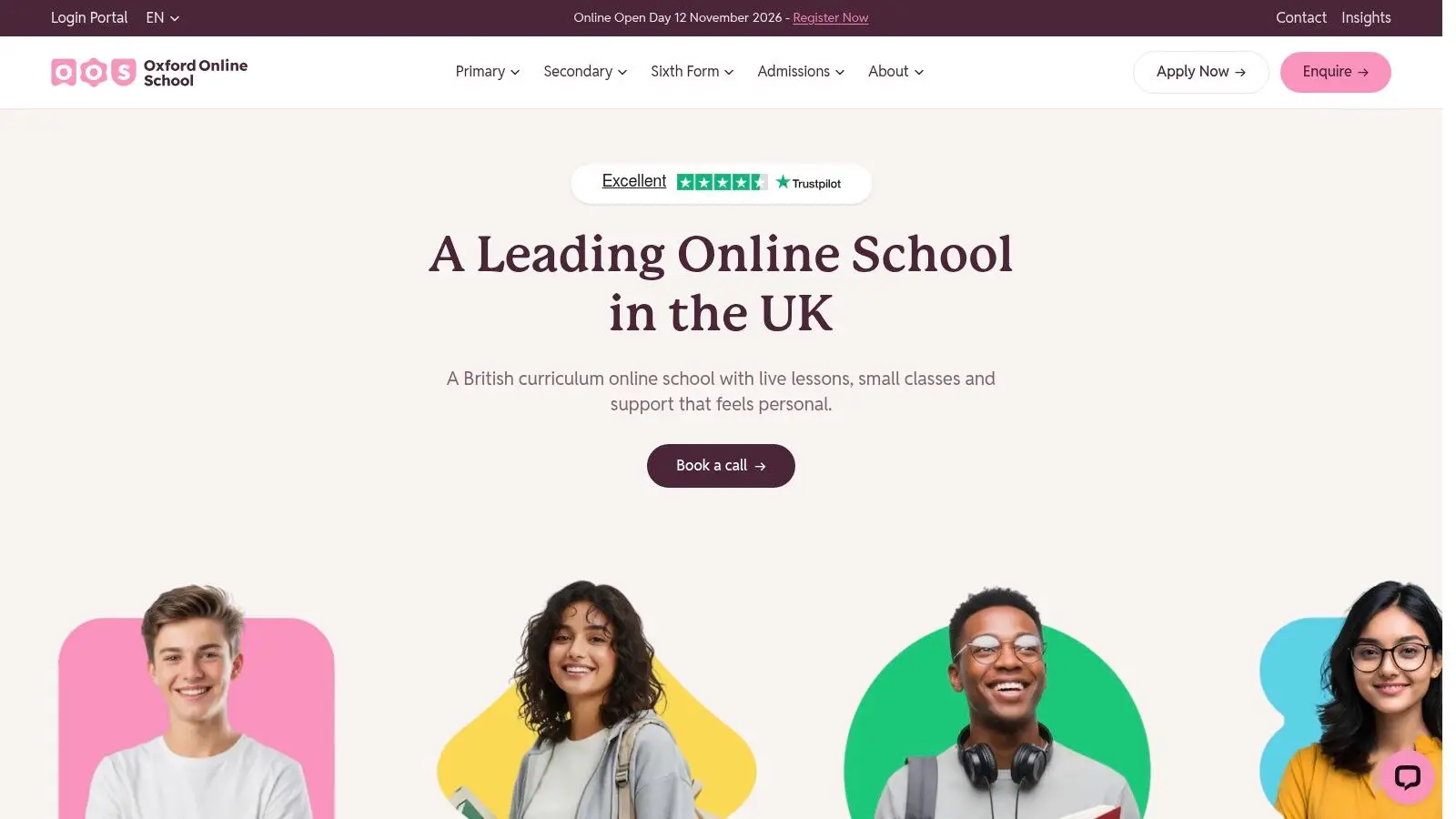
Consider Oxford Online School if you want a school-style route and like testing costs before you talk to admissions. It's a fully online British school for students aged 8 to 18, covering Key Stage 2 through sixth form. Pathways include primary, lower-secondary, GCSE and A-level.
Its fee estimator varies by programme, start date and payment schedule, with termly or yearly choices. The estimator also lists sibling discounts, which matters if you're moving two children at once and need to see whether the numbers survive contact with your budget. Run each child separately, screenshot the result, then ask admissions to confirm it in writing.
Social belonging should be part of that conversation, not an afterthought. The government consultation page Growing up in the online world reports 65% of 13 to 17-year-olds said being online helped with building or maintaining friendships. Ask Oxford exactly how classmates meet, collaborate and socialise, because a timetable alone doesn't create friends.
Questions that protect you
- Live teaching: Confirm the precise timetable and class sizes for your child's programme.
- Qualifications: Check accreditation and examination arrangements for the specific course.
- Total cost: Confirm additional charges beyond the estimator before you enrol.
Technology by itself won't do the teaching. The Department for Education evaluation of connectivity outcomes in schools states digital technology improves outcomes only when paired with suitable teaching, devices, software, connectivity and teacher capability. Choose Oxford if its answers on teachers, feedback and exams are specific. Don't choose it on the strength of an estimator and a famous city name.
7 Online Class Providers for Kids at a Glance
| Provider | Age Range | Teaching Style | Best For |
|---|---|---|---|
| Queens Online School | Key Stage 2 to Sixth Form | Live teacher-led lessons, small classes, recorded lessons, and personalised support | Students seeking structured British schooling with flexibility, wellbeing support, and extracurricular activities |
| King's InterHigh | Ages 7–19 | School-style timetable with live lessons, recordings, clubs, and pastoral support | Families wanting a full-time online school with a broad range of qualifications |
| Sophia High School | Reception to A-level | Daily live lessons in small groups, with tutoring, mentoring, and pastoral care | Students who benefit from small classes and individual attention |
| Minerva Virtual Academy | Particularly suited to secondary-age learners | Live lessons combined with independent study and regular mentor support | Secondary students seeking academic guidance and flexibility beyond a conventional timetable |
| My Online Schooling | Ages 6–18 | Live, interactive lessons with flexible timetables and pastoral care | International or relocating families looking for a structured British curriculum |
| Cambridge Home School Online | Primary age through Sixth Form | Live Microsoft Teams classes with small groups and subject specialists | Students seeking British qualifications and live teacher interaction, including sixth-form university support |
| Oxford Online School | Ages 8–18 | Fully online, school-style programmes | Families seeking online schooling across multiple age stages with flexible payment options |
Match the Class to the Child, Then Commit Confidently
Stop comparing logos and start with your child on an ordinary Tuesday. Watch when they concentrate, when they fade, and what brings them back. A child who lights up explaining a maths method to a friend needs live discussion. A child who panics when put on the spot needs small groups, chat options and a teacher who'll check in privately.
Use this checklist before you pay anything.
- Observe first: Note your child's best learning times, attention span, reading stamina and reaction to speaking in a group.
- Trial where possible: Sit nearby for the first lesson, then ask what felt easy, boring or frightening in their own words.
- Check the adults: Confirm teacher qualifications, accreditation, exam-board arrangements, safeguarding, DBS checks and who contacts you if attendance drops.
- Plan the week: Build a realistic routine with sleep, movement, meals, screen breaks and offline work, not just lesson times.
- Confirm the full cost: Get tuition, VAT, deposits, exam-centre fees, trips and refund terms in one written total.
Younger children need extra care with setup. Bedford Borough Family Hubs' online safety page reporting Ofcom data notes that in 2024, 76% of UK children aged 5 to 7 used a tablet. Familiarity with a tablet doesn't mean your child can manage passwords, headphones and instructions alone. Stay close at first, then step back as their confidence grows.
Queen's Online School puts these principles into a clear routine. Secondary students attend 26 live, teacher-led lessons each week with fully qualified UK teachers in small classes. Every class is recorded so families in any time zone can catch up, and primary lessons include active breaks so younger children aren't pinned to a chair.
We ask parents to help set a daily routine, monitor assignments and stay in touch with teachers as needed, while giving older students room to work independently. That balance protects both of you. Your child feels held without feeling watched, and you know who to contact before a small wobble becomes a lost term.
Visit queensonlineschool.com and test the fit against your checklist. If your child needs small classes, live British teaching, recognised qualifications and wellbeing support, commit and give the routine time to settle. Confidence grows from a good match kept consistently, not from endlessly searching for a perfect school.
If your child needs live British teaching in small classes, with recorded lessons, personal wellbeing support and recognised GCSE, IGCSE and A-Level routes, explore whether our approach fits your family. Visit Queens Online School to see the primary, secondary and sixth-form pathways and talk through your child's needs before you enrol.