

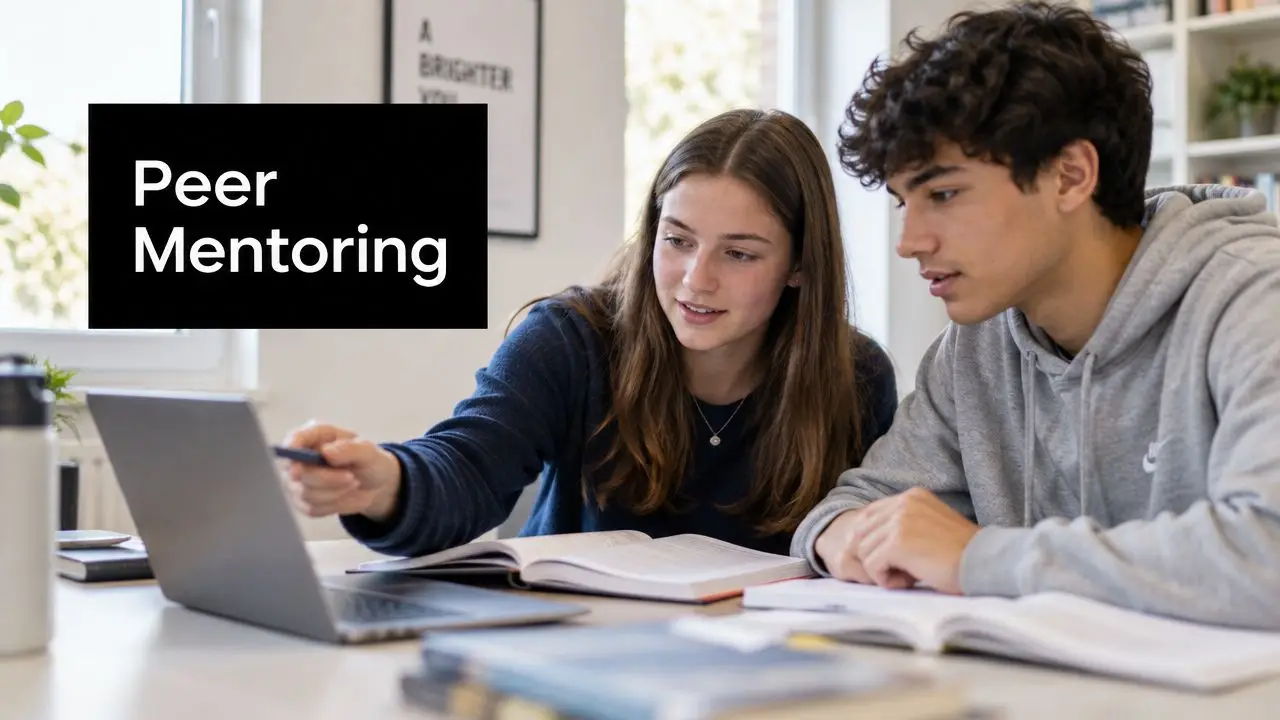
An online learner can be surrounded by lessons, messages and familiar faces on a screen, yet still feel alone. Before class, they might hover over the meeting link with a tight stomach, wondering whether anyone will notice if they stay quiet. A child who has missed school may worry about catching up. A teenager preparing for A-Levels may understand the work but feel unable to admit that stress is affecting concentration.
That's where peer mentoring can become a human bridge. It gives a learner someone closer to their own experience to talk to, learn from and gradually trust. The mentor isn't there to replace a teacher, parent or counsellor. They're there to help the child feel less alone while trained adults keep the relationship safe and purposeful.
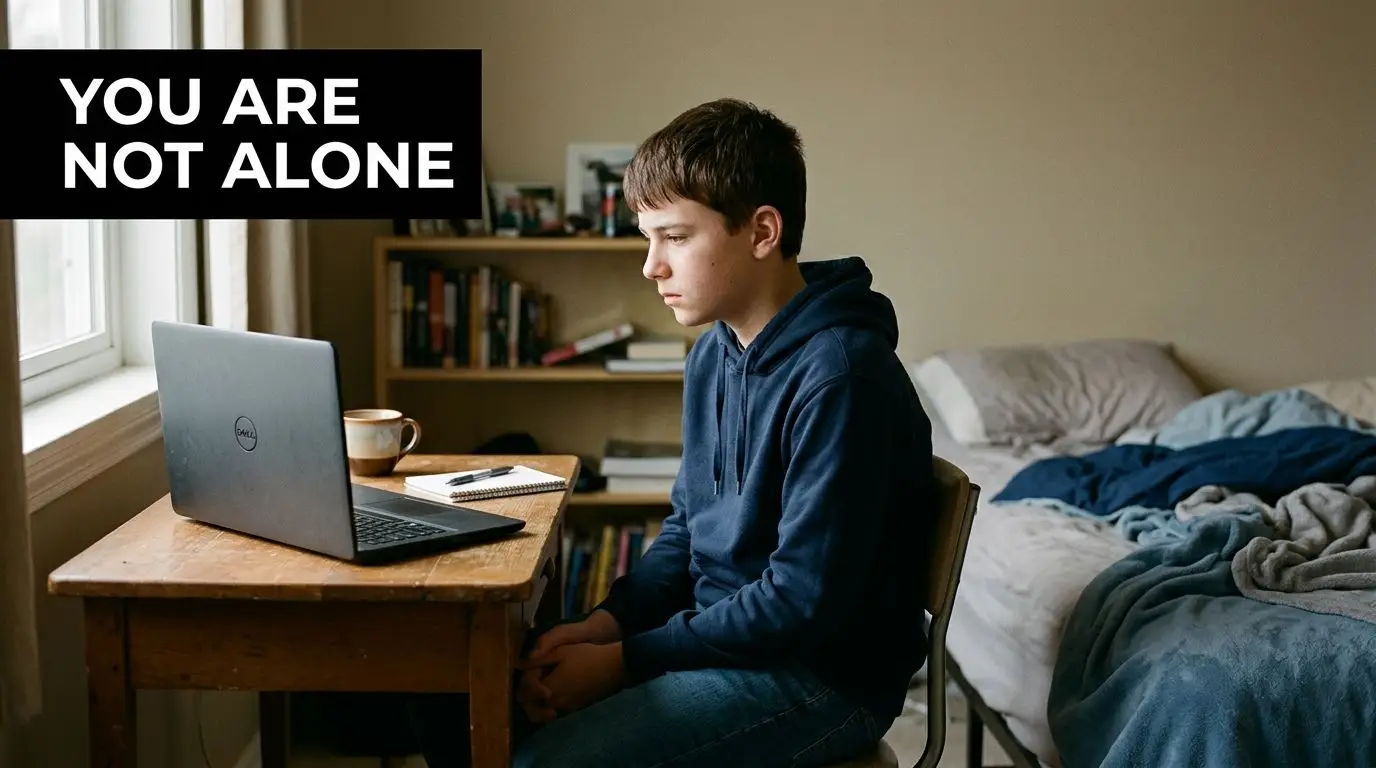
This guide answers what is peer mentoring in clear, practical terms. It looks at how the model works, which forms it can take, and why belonging and emotional safety often need to come before attainment. You'll also see examples from primary through A-Level and a practical lens for using peer mentoring in an online school.
Families supporting anxiety, low confidence or social difficulty may also find it useful to explore specialist emotional support, such as this resource from a Coral Gables psychology practice. The central message is reassuring: peer mentoring can be warm and relational while still being planned, supervised and centred on the child's needs.
Introduction to Peer Mentoring That Puts the Child First
A child doesn't usually say, “I need a structured peer-support intervention.” They say, “I don't want to go on camera,” “I don't know who to ask,” or “Everyone else already understands.” Those words point to an emotional need before they point to an academic one.
A thoughtful peer mentor can offer a small but important experience: someone listens without making the child feel foolish. The mentor might explain how they handled a similar challenge, help the learner prepare a question for the teacher, or just stay alongside them while they take part in a group activity. That relationship can make the next lesson feel possible.
Peer mentoring isn't just putting two pupils together and hoping friendship develops. A responsible programme considers training, boundaries, matching, supervision and follow-up. The child should know what the mentor can help with, what must be shared with an adult and where to go if something feels uncomfortable.
A peer mentor walks beside a learner. They don't carry the learner's whole journey.
For parents, understanding the difference matters. A mentor may encourage a child to speak, practise a routine or connect with classmates, but they must not diagnose mental health concerns, promise secrecy around safeguarding issues or take responsibility for teaching a whole subject. Staff remain accountable for care, learning and protection.
The rest of this guide follows that journey from definition to daily practice. It considers 1-to-1 support, groups, transition buddies and study-focused mentoring, then shows how these approaches can look for younger children, secondary pupils and A-Level students learning online. It also keeps an honest view of the evidence. Peer mentoring can help, but its value depends on how carefully adults design and sustain it.
What Peer Mentoring Really Means in Schools Today
Think of a learning buddy who has recently walked the same path. They remember which part felt confusing, what it was like to join a new group and how hard it can be to ask an adult for help. Their experience makes their guidance feel close and believable.
The Department for Education describes school peer support as a planned and structured form of support in which children and young people help one another after receiving training for their role. It can include informal buddying, formal 1-to-1 meetings and group sessions, with peer supporters listening to issues and offering appropriate support. You can read the Department for Education evidence review on children and young people's mental health peer support for the wider description.
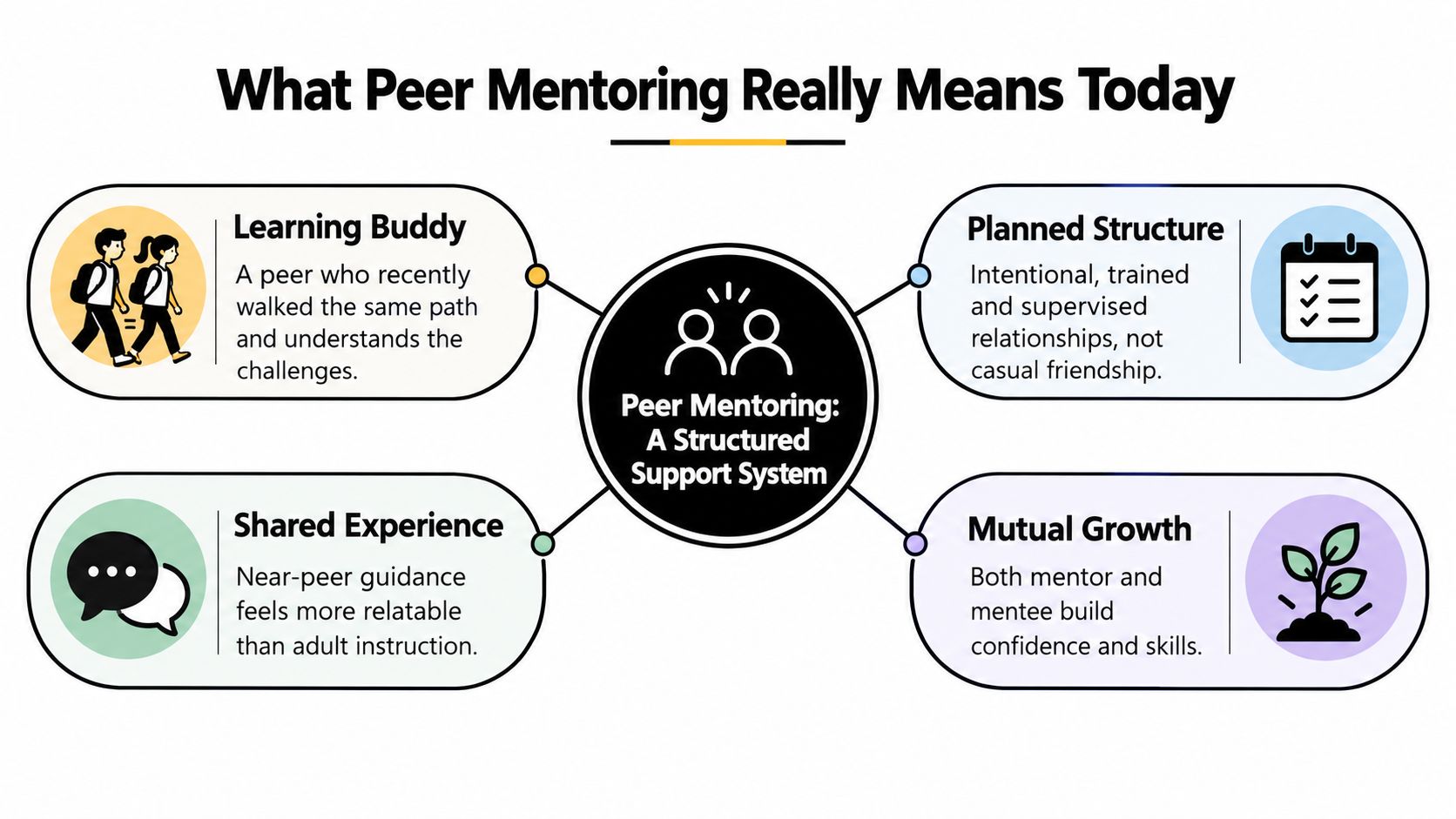
Core idea: Peer mentoring is a supported relationship in which a trained pupil helps another pupil feel more confident, connected and able to take an appropriate next step.
Who does what
The peer mentor listens, shares relevant experience and encourages the mentee. They might help a younger pupil find their way around an online platform, talk through a revision routine or welcome someone into a club.
The mentee remains an active participant. They can say what feels difficult, choose from safe options and ask for support. Being a mentee doesn't mean being weak. It means accepting support while developing independence.
The coordinator designs and oversees the programme. This adult selects or approves mentors, provides training, agrees communication rules, checks in with participants and responds when a concern needs professional attention.
Peer mentoring differs from tutoring because the mentor's main role isn't to deliver subject instruction. It differs from counselling because the mentor isn't a mental health professional. It also differs from friendship, which grows naturally and may not include clear boundaries or adult oversight.
The Department for Education reports that peer support can promote good mental wellbeing and help young people develop the confidence and knowledge to ask for help and support others. It also notes that these programmes can help identify emotional wellbeing concerns early, before they escalate. Families looking at the emotional side of school life may find practical ideas in this guide to back to school wellness by Be Your.
Common Peer Mentoring Models and Roles Explained
Different children need different forms of connection. A quiet primary pupil may need a familiar face during a transition, while an A-Level student may benefit from a focused study conversation with someone who has recently managed the same subject demands.
| Model | Format | Best For | Focus |
|---|---|---|---|
| 1-to-1 mentoring | Regular private meetings with adult oversight | Learners who need individual attention | Confidence, routines, belonging and help-seeking |
| Group mentoring | A small group guided by one or more trained peers | Learners who benefit from shared discussion | Participation, communication and mutual support |
| Transition buddying | Short-term contact during a move or new start | Primary pupils, new starters and returning learners | Familiarity, friendships and navigating routines |
| Subject or study mentoring | Structured academic conversations | Secondary and A-Level learners | Revision habits, organisation and subject confidence |
A 1-to-1 relationship can feel personal and predictable. The coordinator should still avoid creating an isolated channel where concerns remain unseen. Meetings need agreed times, suitable platforms and a clear route back to staff.
Group mentoring can reduce the pressure of being the only child who feels uncertain. One learner may ask a question that several others were afraid to voice. The risk is that confident pupils dominate, so the mentor needs prompts and turn-taking routines.
Buddying works especially well around a change. A pupil joining an online school might receive help understanding where recorded lessons sit, how to enter a club or whom to contact when they're stuck. The buddy doesn't need to solve every problem. Their role is to make the first steps less daunting.
Subject mentoring should also protect the mentee from feeling judged. A mentor can compare revision methods, model how they organise notes and help formulate questions for a subject teacher. They shouldn't mark work unofficially, give answers or present one method as the only correct approach.
For staff planning leadership opportunities, this resource on developing leadership skills provides a useful adjacent perspective. A pupil mentor gains responsibility, but the child receiving support must remain the programme's first priority.
How Peer Mentoring Supports Academic Social and Emotional Growth
A child who feels unsafe often spends mental energy managing that feeling. They may avoid speaking, hide confusion or leave a lesson early. When a trusted peer helps them feel seen, the child has more room to participate, practise and recover from mistakes.
The Education Endowment Foundation's evidence indicates that mentoring produces about +2 months of additional pupil progress on average, while also warning that the effect is typically small and may not last after the intervention ends. The Education Endowment Foundation evidence summary on peer mentoring therefore supports a sustained approach with reinforcement rather than a one-off pastoral event.
The emotional starting point
First comes emotional safety. The child needs to believe that asking for help won't lead to embarrassment. A mentor might say, “I found that part confusing too,” then help the learner identify one manageable question.
Next comes social belonging. Online learners can miss the informal moments that happen in corridors, queues and playgrounds. A planned peer group, club or buddy conversation creates a route into community without forcing instant confidence.
Only then can academic confidence grow reliably. The learner may start turning on their camera, submitting a question, attending more consistently or attempting a task they previously avoided. These are signs of readiness, not proof that every academic difficulty has disappeared.
The evidence base is encouraging but not simple. The EEF summary says effects are more promising for disadvantaged pupils and for non-academic outcomes such as attendance, behaviour and attitudes to school. That matters for learners with SEN or SEMH needs, because confidence, regulation and engagement can be essential foundations for subject learning.
Good practice: Measure whether the child feels more able to belong and ask for help, not only whether marks have changed.
The child may need other support alongside mentoring. Staff should combine peer relationships with specialist teaching, pastoral care and safeguarding processes. Families exploring how builds social skills may also find it helpful to connect mentoring with wider work on communication and confidence.
A school can use peer support groups to create that regular sense of connection, provided each group has clear expectations, adult oversight and an accessible route to further help.
Peer Mentoring in Action for Primary Secondary and A-Level Learners
The same principle feels different at each age. Younger children often need help entering a new social world. Secondary pupils may need reassurance after disruption. Older students may want a peer who understands the pressure without treating them like a problem to fix.
A primary transition
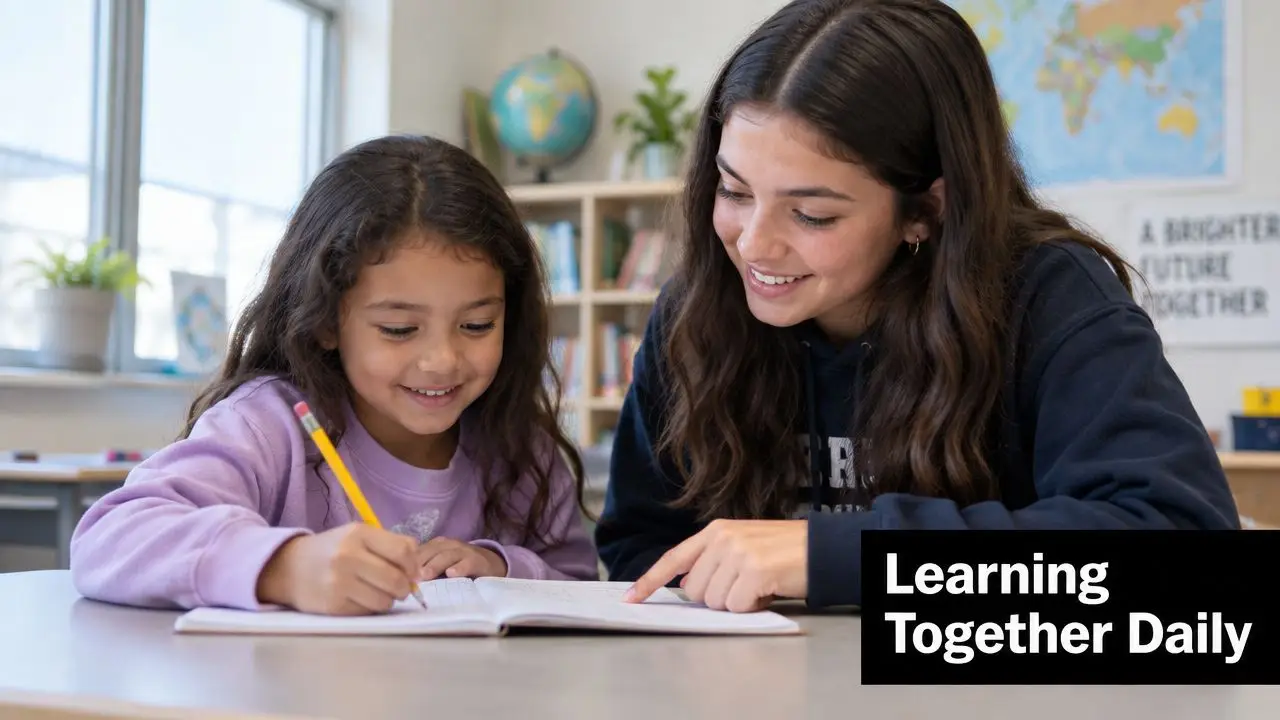
Maya has joined an online primary class and rarely speaks in group activities. Her peer mentor, Isla, shows her how to use the reaction button, introduces her during a small creative club and explains what happens when a lesson ends.
The coordinator checks that Maya and Isla are comfortable with the arrangement and gives Isla simple prompts. Isla isn't asked to manage Maya's worries. She helps Maya take part, then tells the coordinator when Maya seems unusually withdrawn.
After several meetings, Maya still feels nervous, but she knows one person will recognise her when she logs in. That emotional shift matters. The goal isn't to make her outgoing. It's to help her feel safe enough to choose participation.
A secondary return
Daniel has been absent and feels embarrassed about the work he has missed. His mentor, Yusuf, helps him create a short list of questions for teachers and shares the routine he uses to organise recorded lessons.
The coordinator checks progress without demanding personal details from Yusuf. If Daniel mentions feeling overwhelmed, Yusuf knows to encourage him to speak to the pastoral lead rather than trying to provide counselling.
Daniel's first success may be opening the recording and asking for clarification. His confidence grows through manageable actions, not a speech about trying harder.
An A-Level study partnership
Amira is preparing for A-Level examinations and understands her subject content, but exam stress makes revision feel chaotic. Her peer mentor, Leah, compares planning methods, talks through how she breaks a large topic into smaller tasks and helps Amira prepare questions for the subject specialist.
The coordinator keeps the arrangement focused and reviews whether it remains useful. Leah doesn't promise an outcome or pretend to know everything. She offers perspective from recent experience while the teacher remains responsible for academic accuracy.
Across these examples, the Department for Education's description remains visible: peer support can be informal buddying or formal 1-to-1 and group work, but children need training to provide appropriate support. The relationship should leave the mentee feeling more connected and capable, not dependent on a single pupil.
How Queens Online School Could Integrate Peer Mentoring Safely
An online school needs to design for connection deliberately. A physical school can create an accidental meeting in a corridor. A virtual school must build the safe meeting point into the timetable, platform and pastoral routine.
Begin with preparation
Mentors need training before they meet younger or more vulnerable pupils. Training should cover active listening, inclusive language, boundaries, confidentiality and the difference between encouragement and advice. It should also explain exactly how to report a safeguarding concern.
Matching should consider age, interests, communication preferences and support needs. A pupil with SEMH needs may require shorter meetings, predictable routines or a specialist adult nearby. A learner with SEN may benefit from clear agendas, accessible materials and the option to contribute through chat rather than speaking immediately.
Make online contact predictable
Queens Online School could use supervised breakout rooms, small-group support and peer-led activities alongside live lessons. Recorded sessions would allow a pupil to revisit learning privately, while scheduled peer contact could focus on belonging, organisation or study habits rather than repeating teaching.
A coordinator should know when meetings happen, who attends and what follow-up is required. Private messaging needs clear rules, and pupils should always have an obvious route to a trusted adult. Virtual clubs, forums and community events can extend connection beyond formal mentoring without turning peer mentors into unpaid pastoral staff.
Check whether it helps
Evaluation should ask children how safe, included and confident they feel. Staff can also review engagement, help-seeking and participation, while treating attendance or attainment data carefully rather than assuming any change came from mentoring.
UK evidence shows that peer mentoring is not one single model. Outcomes vary substantially by programme design, and the overall evidence is mixed, although some school-based studies have found benefits for mentees' mental health and mentors' sense of participation. The UCL research on mentoring approaches reinforces why training, matching, supervision and follow-up deserve as much attention as the initial idea.
Next Steps for Parents and Staff Exploring Peer Mentoring
Start with the child's experience, not the programme label. Ask what feels hardest, when they feel most alone and what kind of support would feel comfortable. Some children will want a regular conversation. Others may prefer a shared club, a study partner or a buddy who helps them manage the first few weeks.
Before agreeing to a programme, ask:
- Training: What will mentors learn, and how will they practise listening and boundaries?
- Safeguarding: Who supervises contact, and what happens if a child shares a serious concern?
- Matching: How will staff consider age, interests, communication style and SEN or SEMH needs?
- Follow-up: How often will adults check whether the relationship is helping?
- Choice: Can the child pause, change or leave the arrangement without feeling they've failed?
Explain the role in reassuring language. A mentee isn't being labelled as incapable. A mentor isn't expected to become a counsellor. Both pupils are joining a structured opportunity to build trust, confidence and practical skills.
UK research warns that outcomes depend heavily on programme design. Large-scale evaluations in English secondary schools have found that feeling supported doesn't always lead to measurable changes in attendance, attainment or behaviour, as discussed in this research on peer mentoring outcomes. That honesty protects children from inflated promises and helps adults focus on the conditions that make support more likely to work.
If a child is unsure how to begin asking for support, this guide on how to ask for help can provide a gentle starting point. The right programme gives a learner someone to turn towards while keeping skilled adults firmly responsible for education, wellbeing and safety.
Queens Online School offers live online British-curriculum classes, small-group and peer-led support, specialist teaching, clubs and community spaces for learners from Primary through Sixth Form. Visit Queens Online School to explore an online learning environment where belonging, confidence and academic progress can develop together.