England's Ofsted public report search portal at reports.ofsted.gov.uk gives parents and the public free access to official inspection reports and registered childcare records. That makes inspection reports online the first place to look when you want facts, not school marketing.
If you're sitting at the kitchen table late at night, tabs open on half a dozen school websites, you already know how slippery this search can feel. Every school sounds caring. Every brochure promises progress. The report is where you can check what's been recorded, and what that means for your child's day.
The Late-Night School Search Every Parent Knows
A parent rarely starts this process with confidence. More often, they start with a deadline, a worried child, or a feeling that the current setting isn't quite right. The web then fills with glossy promises, vague language, and polished photos that don't tell you much about the child walking into a classroom on Monday morning.
That's why inspection reports online matter. They give you a public, official record to compare schools over time, instead of relying on one-off impressions or advertising. For England, the central place to begin is Ofsted's public report search portal, which exists to help parents and the public find official inspection reports and registered childcare records in one searchable place (Ofsted public report search portal).
Why this feels so different from school marketing
Marketing speaks in broad reassurance. Inspection reports speak in recorded evidence. That difference matters when you're trying to work out whether a school can meet your child's needs every day, not just on an open evening.
Practical rule: if a school's website tells a good story but the report tells a thin one, trust the report first and ask follow-up questions later.
Ofsted also treats inspection and regulatory information as part of a wider public record, with some government report details removed from GOV.UK after 5 years and preserved via the National Archives (Ofsted public report search portal). That longer record is useful because you're not only looking for a snapshot, you're looking for patterns.
What Inspection Reports Are and Why They Matter for Your Child
Think of an inspection report as a health check for education. It doesn't replace your own judgement, but it gives you a structured view of what's working, what isn't, and what the school has been asked to improve. The big difference is that inspection reports online are meant to be read as public evidence, not internal paperwork.
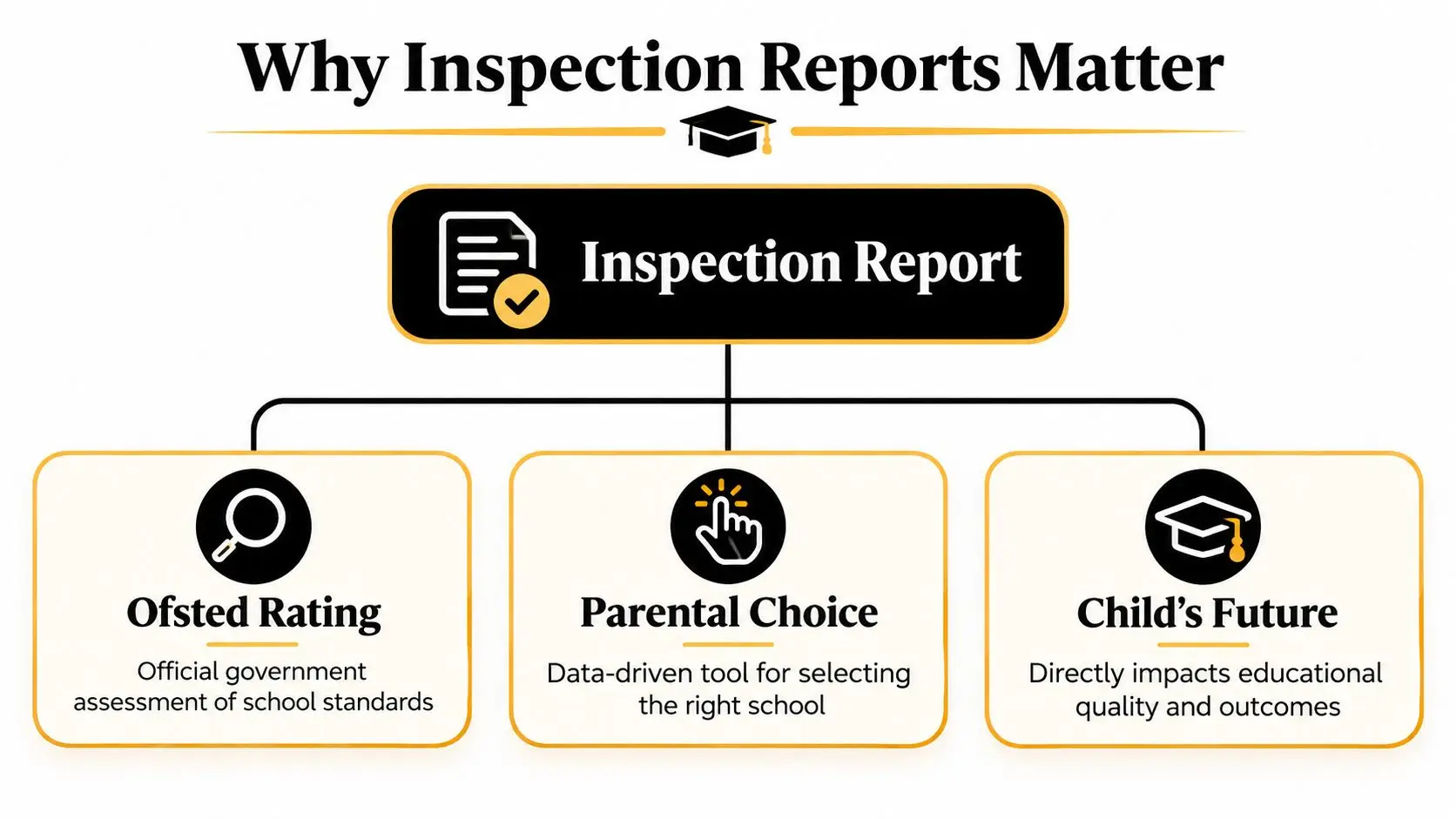
When you read a report with your child in mind, the wording starts to make more sense. A note about behaviour isn't really about compliance. It's about whether your child can concentrate, feel safe, and learn without daily disruption. A note about leadership isn't abstract either, because leadership decisions shape staffing, support, and consistency.
What to look for if your child has additional needs
If your child has SEN needs, you need more than the word “supported”. You need to see what the support is, who provides it, and whether anyone checks that it's helping. In inspection-style reporting, the useful version names the provision, identifies the specialist or adult involved, and points to a measurable outcome or follow-up.
That is why the child has to stay at the centre of your reading. A strong report doesn't just say the school is caring. It shows how a child's day is organised, how barriers are handled, and what happens when something isn't working. If you want a broader explanation of inspection language, this overview of Ofsted inspection is a useful companion.
The long archival window also matters for families comparing schools over time. A single rating can't tell you everything, but a pattern of evidence can tell you whether a school keeps its promises or merely looks good on paper.
Where to Find Inspection Reports Online
A parent trying to compare schools at night often starts with the same question, where is the official report kept? The answer depends on the type of school or provider, so the safest route is to begin with the regulator that oversees that setting and then check any specialist record if the school sits outside the usual state system.
| Inspection Body | Schools Inspected | Report Access |
|---|---|---|
| Ofsted | Most state schools, many childcare settings, and some independent schools | Ofsted public report search portal |
| ISI | Many fully independent schools | Independent Schools Inspectorate report access |
| Other specialist inspection bodies | Some specialised or regulated provisions | Use the provider's official inspection page or the relevant regulator's website |
For many families, the Ofsted portal is the first place to look because it gathers official reports and childcare records in one place (Ofsted public report search portal). The Office for Product Safety and Standards also publishes statistics on regulation, inspection, and enforcement activity in the UK, which shows that inspection reporting is handled as a formal government data function, with records that can be searched and checked rather than a loose collection of documents (OPSS statistics page).
A simple search routine that saves time
- Search the school name exactly as registered. Small spelling differences can send you to the wrong provider, just as using a nickname can lead you to the wrong contact record.
- Check the type of provider. State school, independent school, childcare setting, and specialist provision all place reports in different locations.
- Open the most recent official report first. That gives you the clearest current picture of what a child is likely to experience each day.
- Look for earlier reports or archived versions. The older record helps you see whether concerns came back again or whether the school addressed them properly.
If you are checking a fully online provider, the same approach still works. A school may mention inspection information on its own website, but the official regulator page is the safer source, especially if you want to see the wording exactly as the inspector recorded it.
How to Read and Interpret Key Sections and Ratings
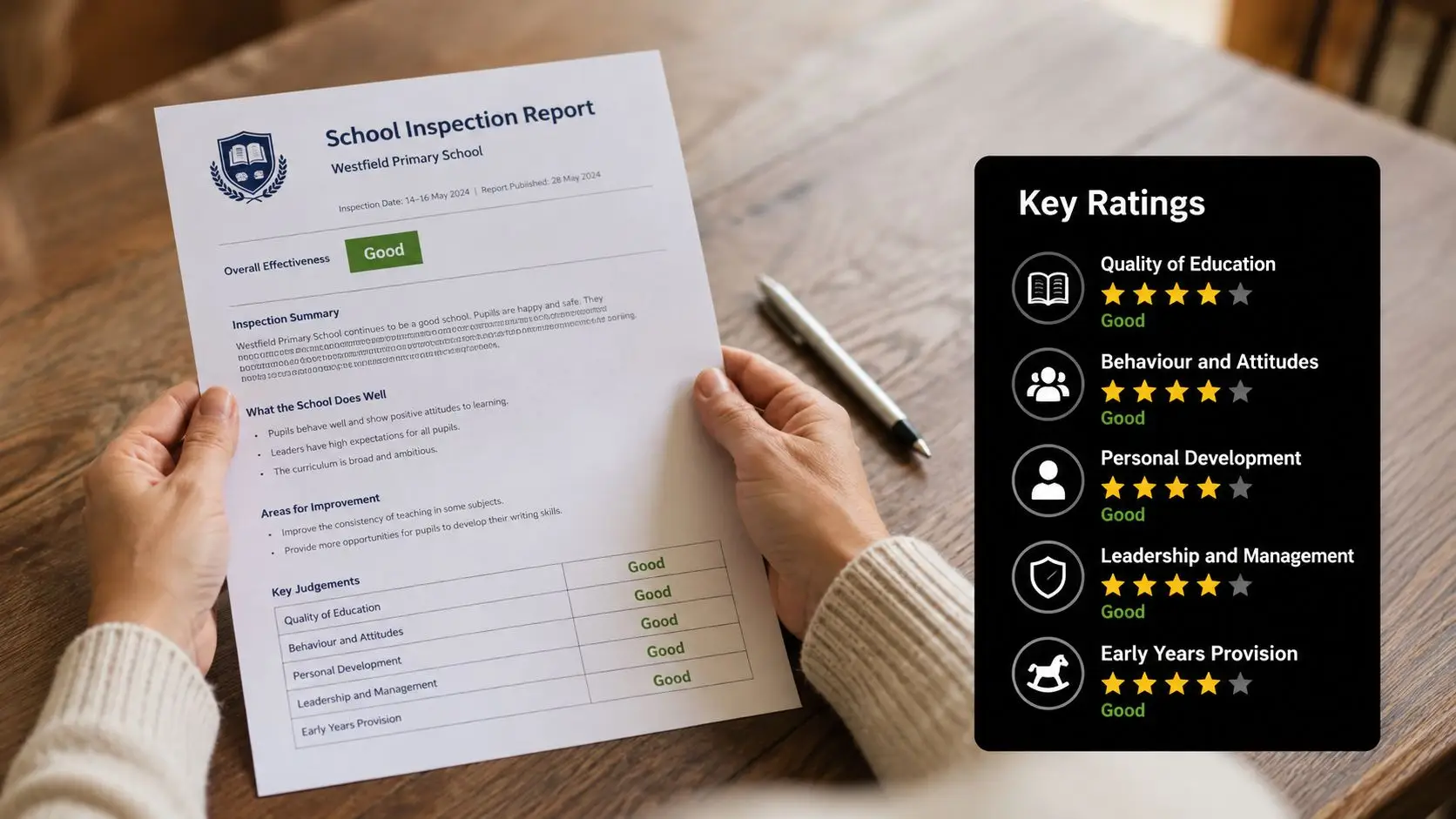
A report only becomes useful when you know what each part is saying. The headline grade matters, but it's only the start. The value is in the sections underneath, because they tell you what life is like for the child inside the school.
The main sections in plain language
- Overall effectiveness. This is the broad judgement, but it doesn't tell the whole story on its own.
- Quality of education. This looks at what children are taught and whether they learn it.
- Behaviour and attitudes. This shows how well children can settle, focus, and participate.
- Personal development. This covers confidence, relationships, wellbeing, and wider growth.
- Leadership and management. This asks whether adults are making sensible decisions and fixing problems properly.
A good rating is not the same as perfect. It means the provision meets the expected standard consistently, which is reassuring, but it still leaves room for areas that need attention. That's why the text around the rating matters as much as the label itself.
A strong report usually tells you what children experience, not just what the school intends.
For a child, those sections translate into everyday things. Are lessons organised clearly? Is help available when they get stuck? Do adults notice if attendance drops or support breaks down? That is the level at which the report starts to answer the parent's real question.
Red Flags and Strengths to Look for as a Parent
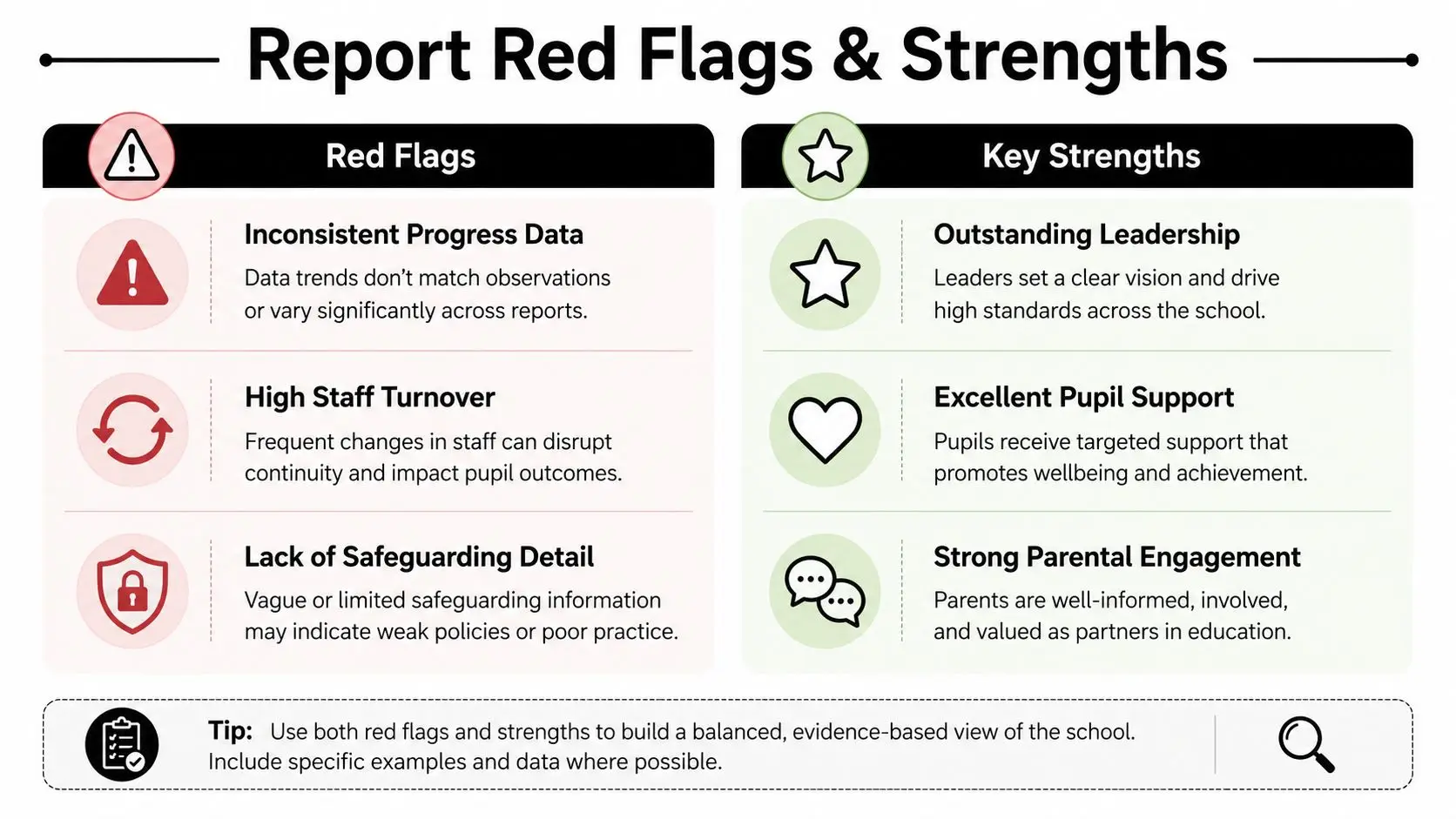
Some reports read confidently because they name provision, show evidence, and explain what happens next. Others sound polished but stay vague where parents most need clarity. The easiest way to judge them is to compare warning signs and reassuring signs side by side.
| Red Flags | Key Strengths |
|---|---|
| Inconsistent progress data. The report describes progress loosely but doesn't show where children are improving. | Outstanding leadership. Adults have a clear grip on priorities and act on weaknesses. |
| High staff turnover. Children may lose continuity and trust when adults keep changing. | Excellent pupil support. The report names support, shows who provides it, and explains follow-up. |
| Lack of safeguarding detail. Safety is mentioned, but the evidence is thin. | Strong parental engagement. The school works with families in a visible, structured way. |
The strongest reports are factual and specific. The weaker ones lean on warm language without enough proof. That is why it helps to read the report with a simple question in mind, “What would this feel like for my child on an ordinary Tuesday?”
Reports should contain objective findings backed by evidence, not emotional language alone.
If you want a second opinion while comparing schools, these online school reviews can help you compare how providers describe support and delivery, but they should sit alongside the official inspection record, not replace it. The report is still the document that tells you what was observed.
Reading Inspection Reports for Online Schools and Virtual Provisions
Online schooling needs a different reading habit. If a report only says a provider is flexible, that's not enough. You need to know how the child's day is organised, because an online school succeeds or fails in the rhythm of its delivery.
The most useful reports name the mechanics. They show what is online and what is offline. They explain how live lessons, independent study, and worksheet or reading work are arranged. They also make it clear how time is organised across the day, because a child's experience depends on structure as much as on content.
What parents should picture in a virtual setting
A good online report should let you answer practical questions like these:
- When does the child meet a teacher live?
- How much work is expected independently?
- What happens if the child misses a live lesson?
- How is progress checked across the week?
Those details matter more than vague claims about convenience. A child who thrives online usually needs clear routines, regular feedback, and adults who know when to step in.
For a family considering what a virtual school is, the inspection record should help you see whether the school's model is organised enough to support learning, or just convenient on paper. A child-centred report describes the timetable, the delivery method, and the follow-up, so you can picture the actual school day.
Understanding Accreditation and Quality Marks for Online Schools
Inspection reports tell you how well a school is operating. Accreditation tells you whether the provider can deliver recognised qualifications or meet a particular standard. Those are related, but they are not the same thing.
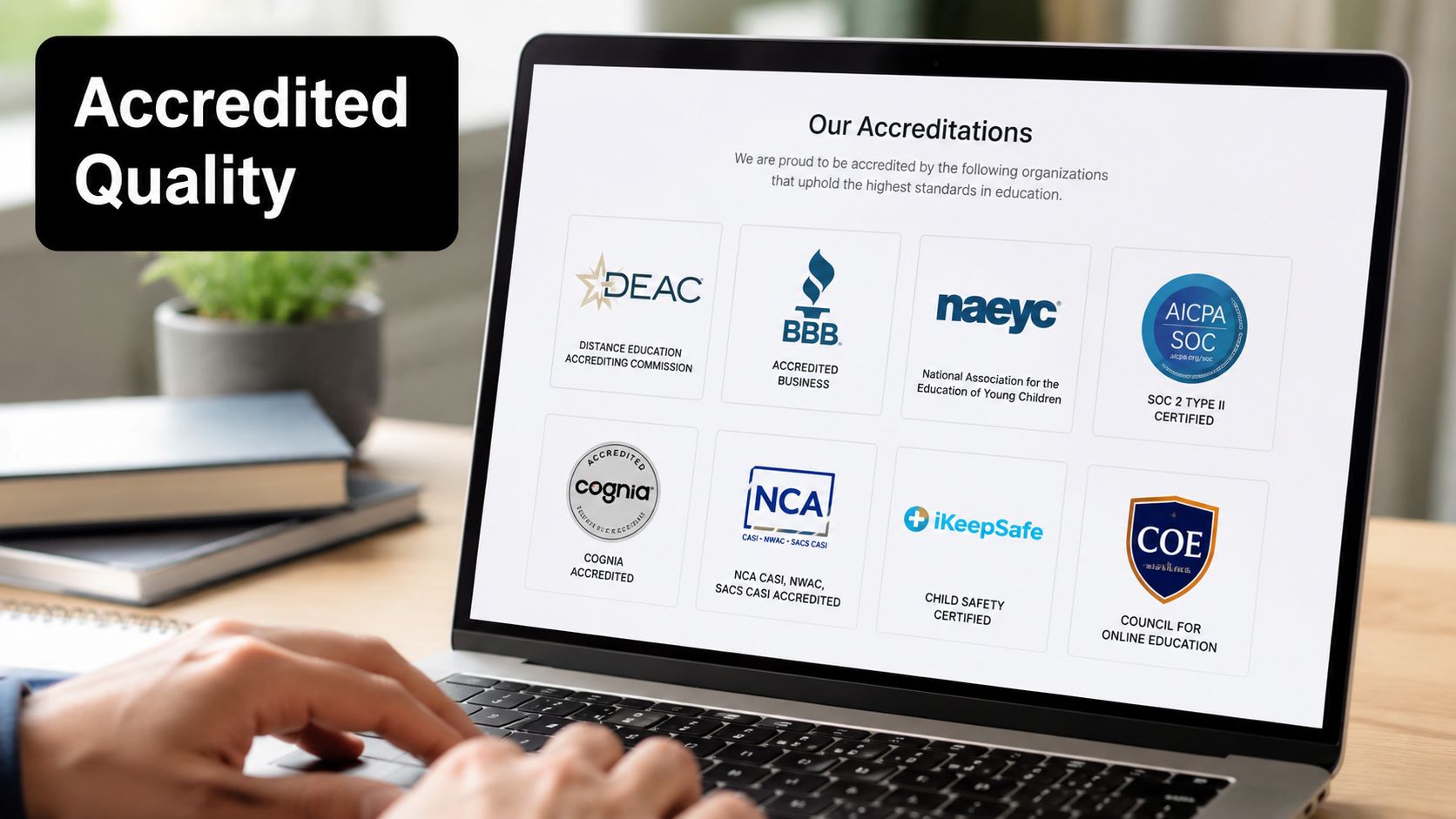
A provider may be a Pearson Approved Examination Centre and still need to show, through inspection evidence, how well it supports children day to day. The same is true of other quality marks, including recognition connected with Cambridge International or similar accreditations. They matter because they affect qualifications and delivery, but they don't tell you how a child is taught, supported, or monitored in practice.
That distinction is especially important for online schooling. A school can have the right permissions and still need clear, readable inspection evidence about attendance, support, feedback, and safeguarding. In other words, accreditation answers one question, while the inspection report answers another.
Practical rule: use accreditation to check legitimacy, and the inspection report to check lived experience.
Queen's Online School, for example, presents itself as a Pearson Approved Examination Centre while delivering a British curriculum online, which is the kind of combination families often need to assess alongside the report record. The document trail and the accreditation together give a fuller picture than either one alone.
Your Action Plan for Using Inspection Reports with Confidence
Start with the official source. For England, that means the Ofsted portal first, then the relevant inspectorate if the school sits elsewhere. Open the latest report, then read the sections that affect your child most directly, especially teaching, behaviour, support, and leadership.
After that, make a short parent checklist. Ask what the report says about your child's daily experience, not just the final rating. Look for named support, clear routines, evidence of follow-up, and anything that suggests a school knows how to act when a child needs more help.
Use accreditation as the second lens. It tells you whether the provider can issue or support recognised qualifications, but the inspection report tells you how that provision feels for a child in real life. That combination is what gives you confidence.
Before you decide, bookmark the Ofsted portal, write down the questions the report raises, and ask the school how those points are handled in ordinary practice. If possible, arrange a trial lesson or live demonstration so you can see whether the school's words match the child's experience.
The goal isn't a perfect school. It's the right school for your child, with the right structure, the right support, and adults who can show their work.
Queen's Online School offers live online learning, subject-specialist teaching, and a British curriculum for families who want a structured digital setting. If you're comparing inspection reports online and want to see how an online school presents its provision in practice, visit Queens Online School and review its approach alongside the official report record.