

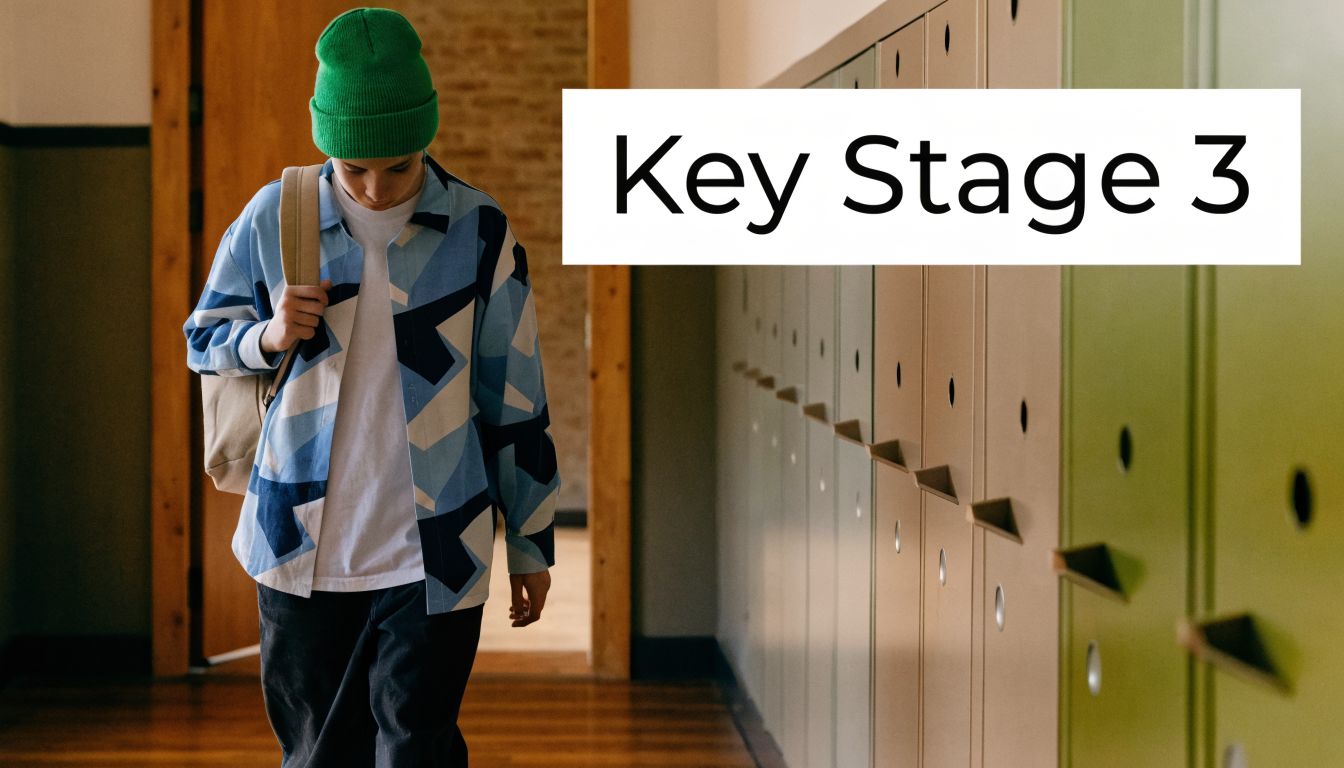
If your child is finishing Year 6, you may be feeling two things at once. Pride, because they’ve come so far. Anxiety, because secondary school can feel larger, louder, and far less predictable than the world they know now.
That mix of emotions is normal. Parents often ask what ks is year 7 because they’re not really asking for a label alone. They’re asking what life will feel like for their child, whether the work will be harder, whether friendships will settle, and whether their son or daughter will still feel known by the adults around them.
The good news is that Year 7 has a clear place in the British system. Once you understand that, the rest becomes much easier to manage. And when you keep your child’s emotional needs in view, not just the timetable, the transition becomes far less daunting.
The End of Primary School and The Start of Something New
The last weeks of Year 6 often carry a strange emotional weight. Your child may seem excited one minute and unsure the next. They talk about leavers’ assemblies, signed shirts, and summer plans, then suddenly ask quiet questions such as, “What if I get lost?” or “What if I don’t know anyone in my class?”
Parents feel it too. You’ve watched your child grow in a familiar setting where one main teacher knows their habits, strengths, and worries. Secondary school can feel like the opposite of that. New buildings. New routines. New expectations.

I’ve spoken with many parents at this stage, and the same concern comes up again and again. They’re not only worried about whether their child can cope academically. They want to know whether their child will feel safe, included, and confident enough to learn.
Starting secondary school is not a small step. For many children, it feels like starting over in a place that asks for more independence almost immediately.
A child who seemed completely settled in primary can wobble during this change. That doesn’t mean anything has gone wrong. It means they’re adjusting to a genuine life shift.
A simple way to support them is to treat the move as both an academic transition and an emotional one. That means preparing for practical things like homework and timetables, but also making room for feelings that may be messy, contradictory, and completely age-appropriate.
Year 7 The Official Start of Key Stage 3
The direct answer is simple. Year 7 is the start of Key Stage 3, or KS3.
In the UK curriculum, KS3 covers Years 7 to 9 for pupils aged 11 to 14, and Year 7 is usually for children aged 11 to 12. It is the first year of secondary school. A broad Year 7 curriculum usually includes 8 to 12 subjects taught by specialist teachers, and approximately 600,000 pupils enter Year 7 in England each year, as outlined in this overview of Year 7 in the UK school system.
What that means in everyday terms
Primary school often feels like one familiar base. Your child spends much of the day with one main teacher, in one classroom, with a fairly consistent rhythm.
Year 7 is different. Think of it as moving from a small village to a larger town. The world opens up. Your child may go to different rooms for English, maths, science, art, computing, and PE. Instead of one generalist teacher, they meet subject specialists.
That sounds big because it is big. But it’s also purposeful.
Why the system changes here
KS3 exists to widen a child’s experience. It gives them access to deeper subject knowledge while they’re still exploring what they enjoy and where they need support.
For some children, this is the stage where they discover they love history. For others, it’s when science starts to click because experiments feel more hands-on. Some realise they enjoy structure and logic in maths, while others come alive in drama or art.
If you’re comparing different ways to follow the British pathway, this guide to the UK homeschool curriculum helps show how Key Stages fit together across the school years.
Main point: If you’ve been wondering what ks is year 7, the answer is KS3, and that marks your child’s move into the first phase of secondary education.
What Your Child Will Learn in The Year 7 Curriculum
Year 7 brings a broader curriculum, but broad doesn’t mean random. The structure is there for a reason. It helps children build on what they learned in primary school while preparing gradually for the more focused choices that come later.

The statutory KS3 curriculum is intentionally broad. In science, pupils begin planning their own practical enquiries. In English, they move from short transition texts into a wider range of literature. This structure was established through the Education Reform Act 1988 and updated in 2014 to give pupils a balanced education before later specialisation, as described in this Year 7 curriculum guide.
The subjects most children meet
Most Year 7 pupils study a mix of core and foundation subjects.
| Area | Typical Year 7 experience |
|---|---|
| English | Reading more varied texts, developing writing, discussion, and interpretation |
| Mathematics | Building fluency from KS2 and moving into broader secondary concepts |
| Science | Learning biology, chemistry, and physics through theory and practical work |
| Humanities | Usually history and geography, often with more analytical thinking |
| Languages | Beginning or continuing a modern foreign language |
| Creative subjects | Art, music, drama, or design technology |
| Wider curriculum | PE, computing, and often PSHE or citizenship |
For many parents, the key surprise is not the number of subjects. It’s the change in style. Lessons often ask children to organise themselves more independently, remember equipment, manage deadlines, and adapt to different teacher expectations.
What homework tends to look like
Homework in Year 7 is usually there to build routine, not to overwhelm. Schools often set weekly tasks that consolidate classroom learning, such as spelling practice, reading, simple maths exercises, research, or short project work.
A child who handled primary homework easily may still need help adjusting. Not because the content is beyond them, but because the system is new. They now have to track several subjects at once.
A practical way to make this easier is to create a visible weekly routine at home:
- Choose one place: A calm, uncluttered space helps children settle faster.
- Use one planner: Keep all homework deadlines in one diary or digital list.
- Start small: Begin with short sessions and build consistency before increasing time.
- Review together: A quick check-in can prevent small confusions becoming bigger worries.
If your child needs extra support in one subject, this overview of Key Stage 3 mathematics shows how Year 7 maths builds from primary foundations into secondary reasoning.
How Progress and Understanding Are Measured in Year 7
Many parents carry stress from Year 6 SATs into secondary school. That’s understandable. After months of revision and scaled scores, it’s easy to assume Year 7 will bring another set of national tests.
It doesn’t.
KS3 has no statutory national tests. Instead, schools usually assess pupils through internal checks, teacher assessments, classwork, quizzes, and end-of-unit tasks. Schools also often use KS2 SATs results, where 100 is the expected standard, alongside their own baseline assessments to place pupils and target support. Analysis cited alongside the national curriculum guidance notes that this kind of early personalisation can improve Year 7 progress rates by 15 to 20% in high-achieving schools.
Why this matters for your child
This shift can be healthy. It gives teachers room to understand how your child learns, rather than relying on one high-pressure moment.
A pupil may arrive in Year 7 with a strong reading score but low confidence in class discussion. Another may have decent maths knowledge but poor organisation. Internal assessment helps staff notice those differences and respond to them.
Practical rule: If a school talks about assessment in Year 7, listen for the word “support”, not just “performance”.
Questions worth asking the school
Parents don’t need to become assessment experts. A few focused questions can tell you a great deal.
- How do you assess new pupils at the start of Year 7?
- How often will I receive updates on progress?
- What happens if my child falls behind in one subject?
- How do teachers adapt support when a child lacks confidence rather than ability?
If you want a clear parent-friendly explanation of ongoing classroom checks, this guide to what formative assessment means in practice is useful.
Navigating The Common Worries of The Year 7 Transition
A Year 7 timetable may look manageable on paper. Real life feels different when you’re the child living it.
Some children worry about practical things. Finding classrooms. Opening lockers. Remembering books. Others worry about social pressure. Who will they sit with at lunch? Will they make friends quickly? What happens if they don’t?

These concerns can look small to adults, but they don’t feel small to an 11-year-old. For many children, belonging is the hidden curriculum of Year 7. If they feel secure, learning follows more easily. If they feel unsettled, even a capable pupil can start to withdraw.
The worries parents mention most
- Friendships: Your child may fear being left out before school has even started.
- Confidence: A child who was one of the oldest in primary becomes one of the youngest again.
- Noise and pace: Corridors, transitions, and crowded spaces can be draining.
- Bullying or unkindness: Even the possibility of it can shape how safe a child feels.
Sometimes the biggest change isn’t academic at all. It’s the daily effort of being socially alert in a new environment.
When SEN or SEMH is part of the picture
This transition can be especially hard for children who already find change, sensory load, or social uncertainty difficult. According to the Department for Education data cited by Buckinghamshire Family Information Service, 15.5% of pupils had SEN in 2024/25, and Ofsted reporting referenced there indicates that up to 40% of pupils with SEMH needs face a significant risk of disengagement during the move to secondary school.
That matters because these children often don’t need “more pressure”. They need more understanding. They need adults who notice early signs of distress, such as headaches before school, emotional shutdown after lessons, refusal to participate, or a sudden drop in confidence.
Parents can support this in practical ways:
- Rehearse routines: Walk through what a school morning looks like before term begins.
- Name one safe adult: Make sure your child knows exactly who they can go to when they feel overwhelmed.
- Keep after-school time calm: Some children need quiet recovery time before they can talk.
- Build confidence deliberately: Helpful home strategies for building self-esteem in children can make a real difference during this stage.
A short explanation can also help children hear that their nerves are normal:
The children who settle best are not always the most outgoing. They are often the ones who feel understood, prepared, and able to ask for help.
Finding The Right Fit How Online Schooling Supports Year 7 Students
For some families, the usual secondary model works well. For others, it doesn’t. A child may be academically ready for Year 7 but emotionally worn down by noise, travel, crowding, or the constant social performance that a large school day can demand.
That’s where online schooling can offer something meaningfully different. Not easier. Different.

What a supportive online model changes
A good online school still gives a child specialist teaching across KS3 subjects. The difference is the environment around that learning.
Instead of spending energy on crowded corridors and difficult transitions between physical classrooms, a pupil can focus more directly on the lesson itself. For a shy child, speaking in a smaller live class can feel safer than trying to find their voice in a busy room. For a child with SEN or SEMH needs, a calm home environment can reduce the stress that blocks learning before it begins.
Why flexibility matters so much in Year 7
Year 7 is full of adjustment. Some children need more time to settle into routines, and flexibility can make that possible without lowering expectations.
A strong online setting can help by offering:
- Live teaching with subject specialists: Children still receive proper secondary-level instruction.
- Small classes: Teachers can spot confusion, hesitation, or disengagement earlier.
- Recorded lessons: If a pupil needs to revisit content, they can do so without panic.
- Consistency of environment: Learning happens in a familiar setting, which can lower stress.
- Clear safeguarding and anti-bullying expectations: Emotional safety remains central, not secondary.
This model can also suit families whose lives don’t fit a standard local timetable. Some travel regularly. Some live internationally and want a British curriculum. Some have a child who is bright, capable, and not thriving in a one-size-fits-all setting.
A child doesn’t need to be struggling badly before you consider a different school structure. Sometimes they simply need a setting that fits how they learn and cope best.
The key question isn’t “Can my child manage Year 7?” Most children can. The better question is “In what environment is my child most likely to feel secure enough to flourish?”
Empowering Your Child for a Successful KS3 Journey
If you’ve been asking what ks is year 7, the answer is clear. It’s the start of KS3, and with it comes a wider curriculum, new routines, and a more independent style of learning. But the label matters less than the lived experience.
Children do best in Year 7 when adults notice both achievement and emotion. Keep asking how school feels, not only how marks look. If maths confidence is a concern, some families also explore tools such as an online math tutoring service uses AI to add low-pressure practice alongside school support. Your child doesn’t need a perfect start to have a successful KS3 journey. They need steady support, patient listening, and a learning environment that helps them feel known.
If you’re looking for a flexible British curriculum for Year 7 and beyond, Queens Online School offers live lessons, subject-specialist teaching, small classes, and supportive pathways for pupils who need a calmer, more personalised approach to KS3.