

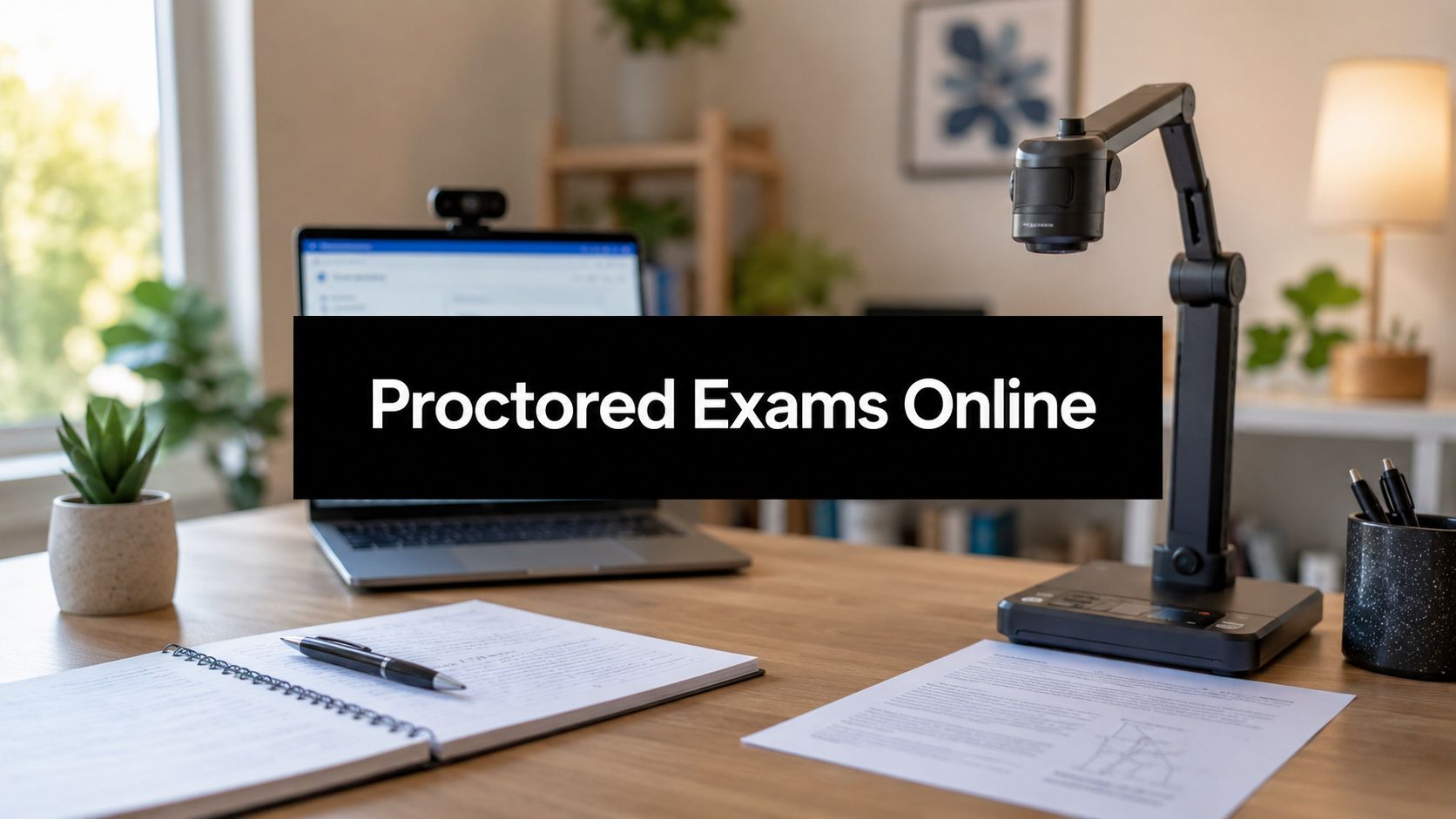
The email arrives in the middle of an already busy week. Your child has an upcoming assessment, and the school mentions that it will be an online proctored exam. For many parents, that phrase lands with a thud. You may wonder if it's fair, whether your child will feel watched, whether the technology will work, and what happens if anxiety gets in the way on the day.
Those questions are sensible. They come from the right place. When a child's qualification matters, and when that child may already find exams draining, anything unfamiliar can feel bigger than it is.
I've found that parents cope far better once the process stops sounding mysterious. Proctored exams online aren't meant to catch children out. At their best, they're simply a way to protect the value of a qualification while allowing a pupil to sit an exam away from a traditional hall. In modern online education, that matters. It allows students to learn flexibly without giving up credibility.
It also helps to remember that online learning itself is already familiar to many families. If your child attends live lessons, submits work digitally, and learns through a structured platform, then a proctored exam is an extension of that environment rather than a leap into the unknown. If you'd like a clearer picture of that wider setting, this explanation of a virtual learning environment is a helpful starting point.
Understanding the Shift to Proctored Exams Online
One mother recently described it to me this way. Her son was comfortable learning online, happy in lessons, and producing good work. Then the word “proctored” appeared in an assessment email, and everything changed. Suddenly she was picturing surveillance, technical glitches, and an upset child staring at a webcam.
That reaction is common because the term sounds colder than its actual state.
Why schools use proctored exams online
At heart, proctoring is about academic integrity. Schools and exam providers need confidence that the right student is taking the paper, that the assessment conditions are clear, and that the final result means what it should mean. In a physical exam hall, an invigilator handles that. Online, the same purpose is achieved through a digital process.
For families, the question isn't only “Is the exam secure?” It's also “Can my child complete it fairly and calmly?” Both matter.
A fair exam protects the qualification and the child at the same time.
When schools get the balance right, online assessment can reduce disruption for pupils who work best at home, need a familiar setting, or benefit from avoiding travel and crowded exam venues. That can make a real difference for children with sensory, emotional, or health needs.
The first worries parents usually have
Most concerns fall into a few clear categories:
- Fairness: Will students sitting at home be judged in the same way as those in traditional settings?
- Stress: Will the extra rules make my child more anxious than the exam itself?
- Privacy: Who sees the footage, and how is it handled?
- Practical setup: What if the internet drops or the microphone fails?
- Accessibility: Can the process adapt if my child has SEN or SEMH needs?
These are not awkward questions. They're responsible ones. A good school welcomes them, answers them plainly, and never treats wellbeing as an afterthought.
When parents understand the process, children usually feel that shift. They borrow our tone. If we present the exam as a manageable routine with support around it, rather than as a high-tech ordeal, most pupils settle far more quickly.
What Happens During an Online Proctored Exam
The simplest way to think about it is this. An online proctor is a digital invigilator. The role is the same as in an exam hall. Check identity, confirm the rules, observe the assessment conditions, and record anything that needs review.
That doesn't mean every online exam works in the same way. Schools and exam providers tend to use one of three broad models.
Three Types of Online Proctoring Explained
| Proctoring Type | How It Works | Level of Oversight |
|---|---|---|
| Live | A real person watches the student in real time during the exam and may guide the setup at the start | High |
| Recorded | The session is recorded and reviewed later if needed | Moderate |
| Automated | Software monitors the session and flags unusual behaviour for review | Varies depending on human follow-up |
Parents often feel calmer once they know which model is being used. A live proctoring setup can feel more personal because a human is present from the beginning. An automated system may feel less intrusive to some students, but only if the school explains clearly how flags are reviewed and how mistakes are handled.
A typical exam session from start to finish
Most online proctored exams follow a sequence like this:
Login and pre-check
Your child signs in early. They may be asked to test their camera, microphone, and internet connection before the exam begins.
Identity check
The platform or proctor confirms who the student is. This step protects the value of the qualification and helps ensure the result is attached to the correct candidate.
Room scan
The student may be asked to show the workspace and nearby area. The aim is to confirm that unauthorised materials or devices aren't being used.
Exam rules
Instructions are repeated clearly. These often cover what can stay on the desk, whether notes are allowed, and what to do if there's a technical problem.
Live monitoring
During the exam, the webcam and screen may be monitored. Some systems watch continuously. Others record for later review.
Submission and closure
Once the paper is finished, the student submits in the required way and waits for confirmation that the session has ended properly.
Practical rule: Tell your child that the setup checks are part of the exam routine, not a sign that they've done anything wrong.
There is reassuring evidence behind this model. A study comparing remote and on-site proctored exams found that 472 (79%) of 593 candidates took the test using proctoring software, while 121 (20%) were assessed on-site with live supervision, and the outcomes were equivalent and comparable between the groups. The study concluded that the type of proctoring did not influence exam results, supporting remote assessment as a fair option for high-stakes exams (research on remote and on-site exam comparability).
That matters because children need to know that an online format doesn't automatically put them at a disadvantage.
Balancing Security with Your Child's Well-being
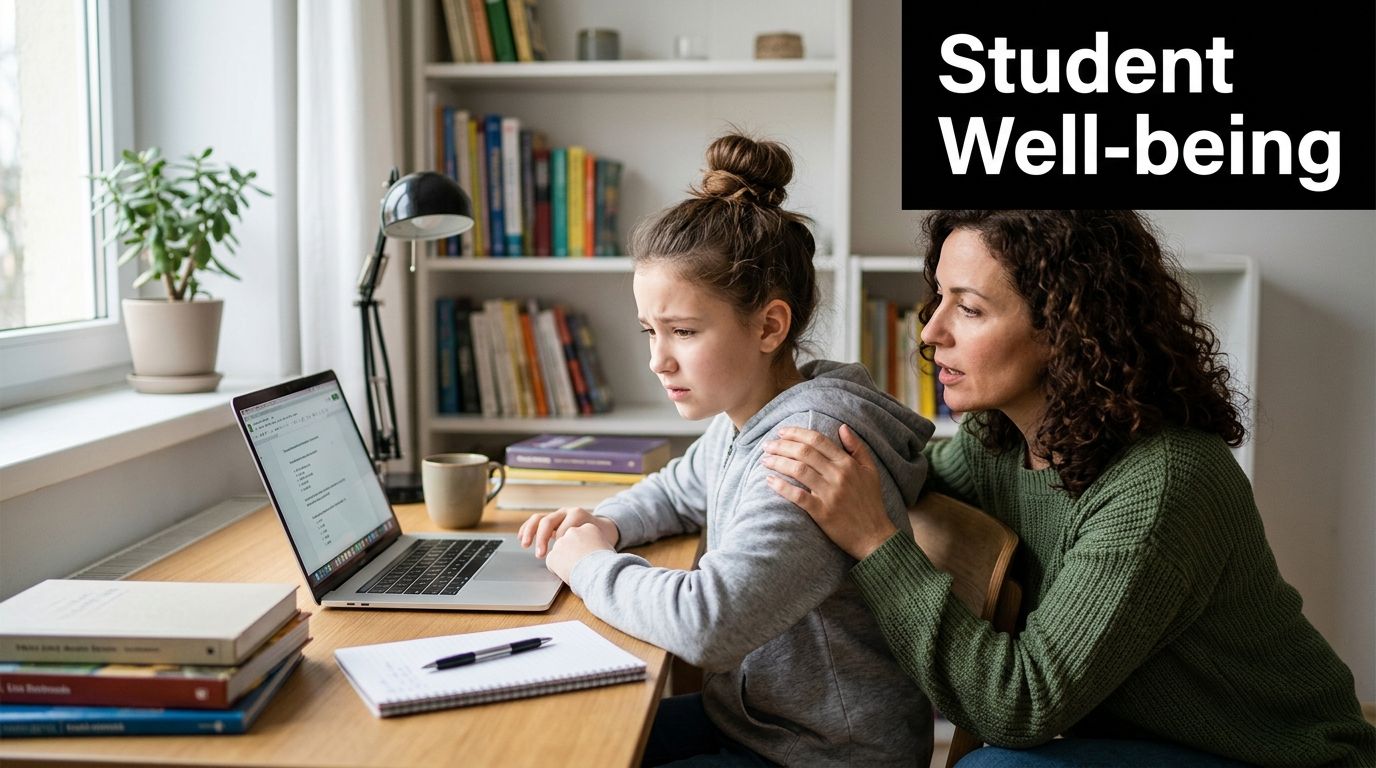
The hardest part of this conversation isn't the technology. It's trust.
A child may understand that an exam needs rules and still feel very uneasy about being watched on screen. A teenager may worry that looking away while thinking, moving from nerves, or adjusting position in a chair could be misread as suspicious. Those feelings are not overreactions. They are part of the lived experience of many students.
Why emotional safety matters as much as security
A 2023 study of medical students found that a substantial percentage feared false accusations of cheating from proctoring software, which highlights the anxiety and mistrust that surveillance-based systems can create for students (study on fear of false accusations in proctored exams).
For parents, the practical meaning is clear. Even when an exam system is technically sound, it can still feel threatening to a child unless adults explain it properly and respond with care.
Children with SEN or SEMH needs may feel this even more sharply. A process that seems routine to one pupil can feel exposing or overwhelming to another. A rigid tone, vague warnings, or unclear privacy rules can raise distress before the paper even starts.
If your child is already showing signs of worry, it helps to prepare emotionally as well as practically. A calm pre-exam routine, specific reassurance, and honest discussion can make a noticeable difference. Parents who need ideas for that often find this guidance on how to reduce exam stress useful.
What a responsible school should do
A child-centred school doesn't choose between integrity and wellbeing. It builds both into the process.
Look for these signs:
- Clear privacy information: Parents should be told what is recorded, who can access it, and how concerns are reviewed.
- Human review: If software flags a moment in the exam, a person should examine it carefully before any conclusion is drawn.
- Plain instructions: Children should know exactly what behaviour is expected, including what to do if they feel unwell or lose connection.
- A calm tone: Language matters. “We are here to support a fair exam” feels very different from “Any unusual behaviour will be investigated.”
If you want a wider frame for thinking about secure systems in general, this comprehensive guide to data protection is a useful resource for parents trying to ask better questions about digital safety.
A well-run proctored exam should feel structured, not threatening.
When families ask direct questions and schools answer them openly, children usually feel safer. That sense of safety is not a soft extra. It supports concentration, confidence, and performance.
Ensuring Accessibility for Every Learner
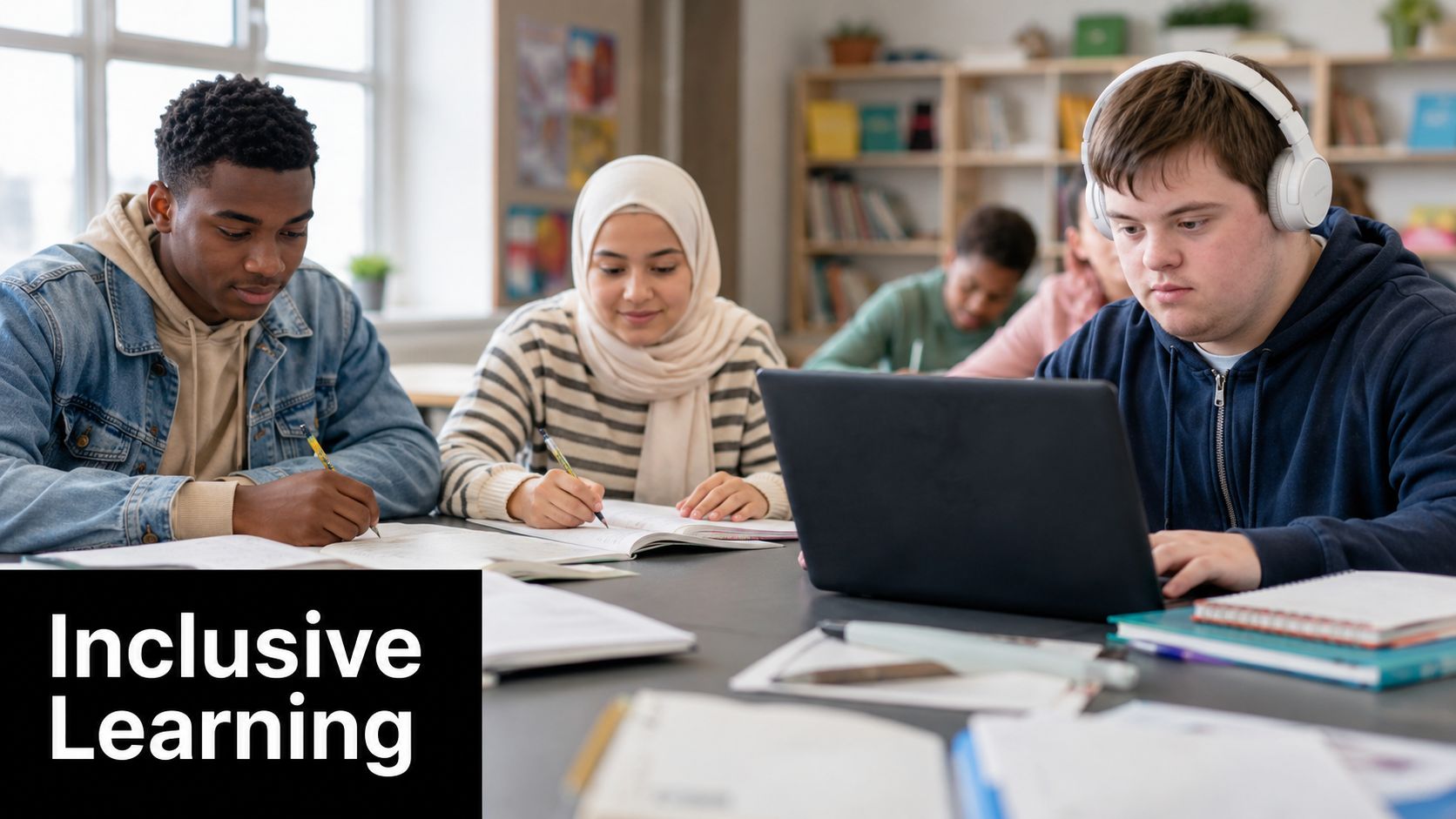
Accessibility in online exams isn't a side issue. It's central to fairness.
Some pupils can sit at a desk, log in, and begin without much emotional strain. Others need movement breaks, reassurance, sensory regulation, or very specific routines to stay calm enough to think clearly. If an online exam ignores that, the assessment stops measuring knowledge and starts measuring stress tolerance instead.
Where standard rules can become a problem
One rule often causes difficulty. For UK pupils with SEMH needs, strict no-break policies during proctored exams can trigger severe anxiety. A 2023 Ofsted report noted that 42% of SEN students experienced heightened stress in these conditions, affecting emotional safety and test performance (evidence on stress linked to no-break proctored exam rules).
That figure matters because it puts language around what many families already know. A child who feels trapped is less likely to perform at their best.
A simple example makes this clear. One pupil may need a brief pause to regulate breathing after the opening instructions. Another may need reassurance that a fidget tool is allowed. Another may become distressed by the thought of remaining fixed in webcam view for a long stretch of time. These are not behavioural problems. They are access needs.
Adjustments that can make the exam fairer
Schools can support pupils more effectively when they plan accommodations in advance and write them down clearly.
Consider asking about:
- Scheduled breaks: For some learners, a planned pause reduces panic and improves focus.
- Extra time: This can help when processing speed, anxiety, or regulation needs affect pace.
- Approved support items: A fidget tool, water bottle, or sensory aid may be appropriate if agreed beforehand.
- Modified check-in routines: Identity and room-check procedures can sometimes be handled in a way that reduces distress.
- A named adult contact: Knowing exactly who to contact if something goes wrong can calm a child before the exam begins.
Parent prompt: “What adjustment helps my child show what they know, rather than simply endure the format?”
How to talk to your child beforehand
Don't wait until the night before to discuss the rules. Children do better when they can rehearse the experience.
You might say, “The exam has some security steps at the start. That's routine. If anything feels confusing, we'll ask about it early so there are no surprises.” This keeps the tone practical and steady.
It also helps to describe accommodations as normal. If your child uses extra time or agreed breaks, present that as part of the exam plan, not as a special favour. Children often relax when they realise the system can bend in sensible ways.
Proctoring technology should adapt to the learner wherever possible. That's what fairness looks like in practice.
Preparing Your Tech and Space for Exam Day
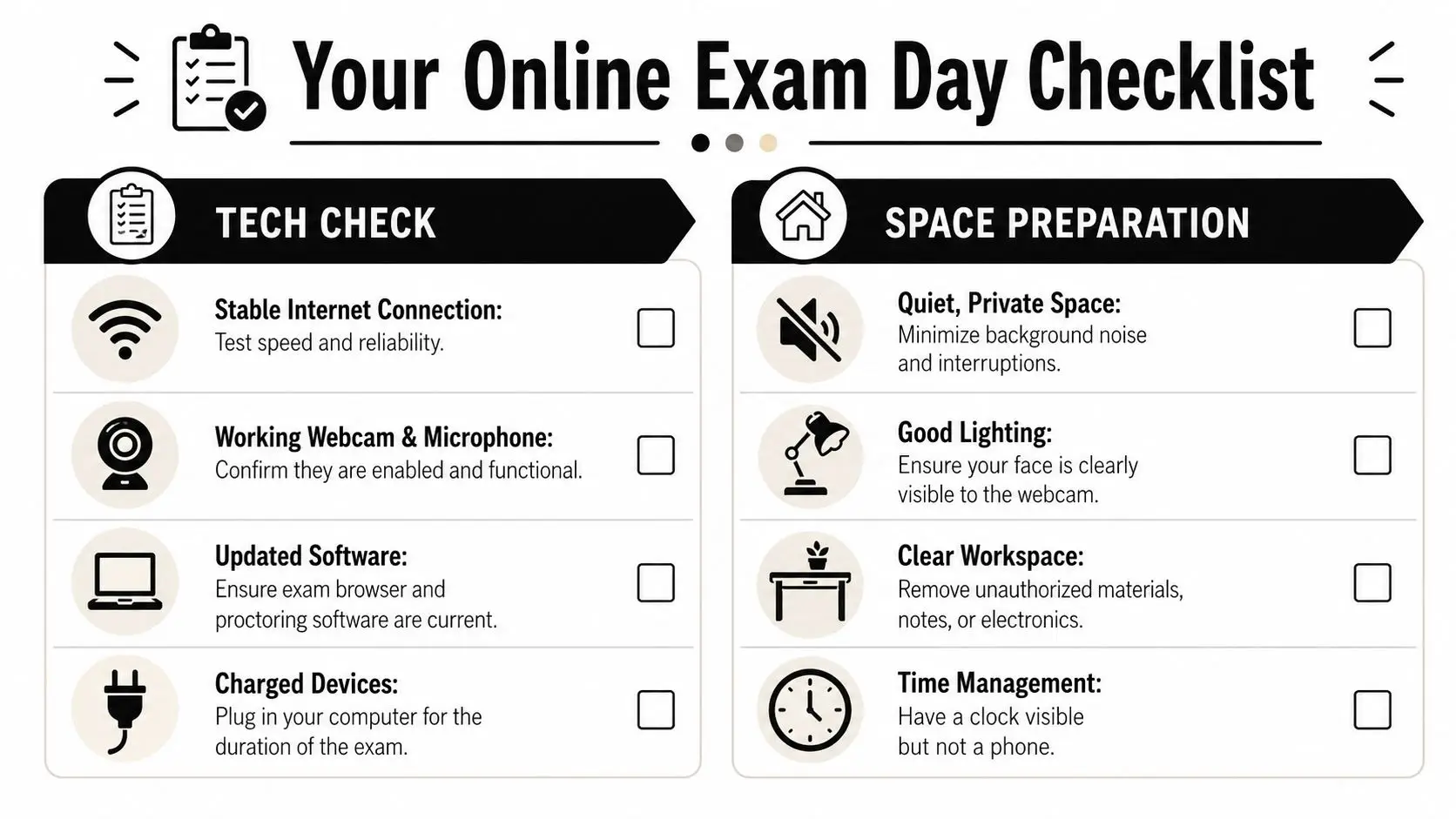
A surprising amount of exam stress comes from uncertainty about the setup. Families feel better when they can turn a vague worry into a short checklist and work through it calmly.
Tech checks that should happen early
Online proctored exams require a stable connection. Remote proctoring guidance specifies a minimum upload speed of 1.5 Mbps and ping under 25 ms, and poor stability can lead to interrupted sessions or automatic termination (remote proctoring technical support requirements).
That means internet quality isn't a minor detail. It's part of exam readiness.
Use this checklist a day or two before the paper:
- Test the connection: Run a speed and stability check in the exact room where your child will sit the exam.
- Check webcam and microphone: Open the exam platform or test tool and confirm both are working.
- Update software: If the provider uses a secure browser or exam app, install updates early.
- Plug in the device: Even if the battery seems fine, keep the computer connected to power throughout.
- Review platform guidance: If the school provides a technical checklist, follow it carefully. A page on system requirements for online learning can also help families think through the basics.
Preparing the room without making it feel clinical
The room doesn't need to feel like a testing centre. It does need to be tidy, quiet, and predictable.
A good setup usually includes:
- A clear desk: Remove notes, spare devices, and unrelated papers.
- Good lighting: The child's face should be visible without sitting in harsh glare.
- A quiet plan: Let siblings and other adults know when the exam is happening.
- A visible clock: Use a clock in the room rather than a phone, unless the exam rules say otherwise.
If something can be sorted the night before, sort it the night before. Exam morning should feel calm, not rushed.
If something goes wrong on the day
Dropped internet, login trouble, or a frozen screen can feel catastrophic to a child. Your steady response matters.
Tell your child in advance what the first step will be. That may be contacting the exam support line, informing the school, or following the provider's disruption instructions. The key is that the child knows there is a plan. Panic falls when procedure rises.
How Queen's Online School Manages GCSE & A-Level Assessments

Parents often ask whether online exams can feel both rigorous and humane. The answer depends less on the software alone and more on how the school wraps support around it.
Queen's Online School is a Pearson Approved Examination Centre, so GCSE and A-Level assessment isn't treated as an add-on. It sits within a wider culture of structured teaching, close communication, and pupil knowledge. That matters because children cope better with assessment when the adults around them already understand how they learn.
What supportive exam culture looks like in practice
A child who learns in small classes, receives regular feedback, and knows their teachers is less likely to feel that assessment happens in isolation. The exam still matters, but it doesn't arrive from nowhere.
This is especially important for pupils with SEN or SEMH needs. Schools that know a student well can identify likely pressure points early, discuss accommodations with families, and create a more personalised exam plan. That might involve a calmer check-in process, agreed adjustments, or extra preparation around the routine itself.
There's good reason to be encouraged by this approach. UK-focused analysis found that 55% of students and 69% of academics reported a positive overall experience with online proctored exams, with minimal cheating reported by either group (UK study on experiences of online proctored exams). In the right setting, children can complete remote assessment with confidence and credibility.
Why the wider learning environment matters
Assessment doesn't begin when the camera switches on. It begins in the weeks and months before the exam, in the daily habits of teaching, trust, and communication.
That's one reason many parents look closely at how online schools structure learning overall, not only how they invigilate exams. If you're interested in how digital learning systems support consistency and engagement more broadly, Learniverse's online training insights offer a useful perspective on virtual learning platforms and learner experience.
The strongest exam systems don't just monitor students. They know them, prepare them, and support them.
When a school connects integrity, accessibility, and pastoral care, proctored exams online stop feeling like a technical hurdle. They become one part of a thoughtful educational journey.
Moving Forward with Confidence
Most families don't need proctored exams online to feel exciting. They need them to feel understandable, fair, and manageable.
That's achievable. Children do best when adults reduce uncertainty, explain the process plainly, and pay attention to the human side of assessment as carefully as the technical side. Security matters because qualifications must mean something. Wellbeing matters because no child should have to sacrifice emotional safety in order to prove what they know.
If your child is facing an online proctored exam, start with conversation. Ask what worries them most. It may be the camera, the rules, the timing, or the fear of doing something wrong by accident. Once you know their specific concern, you can act on it.
You don't need to solve everything alone. A strong partnership between parent, student, and school makes all the difference. When families ask clear questions, when schools respond with clarity and kindness, and when the child feels heard, the process becomes far less daunting.
The aim isn't to make exams feel casual. It's to make them feel possible.
With preparation, honest communication, and the right support, many children can approach proctored exams online with more confidence than they first imagined.
If you're looking for a school that combines recognised British qualifications with live teaching, personalised support, and a thoughtful approach to student wellbeing, Queen's Online School is worth exploring. For families who want flexibility without compromising academic standards, especially those supporting children with SEN or SEMH needs, its fully online model offers a reassuring balance of structure, care, and opportunity.