

You may be reading this after another difficult evening. Your child has shut the laptop in frustration, or perhaps gone very quiet. You're trying to work out whether online learning could help, but every website seems to promise flexibility without clearly explaining what daily life will look like, how exams work, or whether the course even leads to a valid qualification.
That uncertainty is exhausting for parents. You're not only choosing a subject. You're trying to protect confidence, reduce stress, and keep future options open.
Biology often sits at the centre of that worry because it matters for so many next steps. A child may need it for sixth form choices, for later science study, or to prove to themselves that one difficult school experience doesn't define them. The good news is that online GCSE Biology courses can work very well when the format fits the learner, the accreditation is clear, and the support is real.
Is an Online GCSE Biology Course Right for Your Child?
Some children struggle in a traditional classroom for reasons that aren't obvious from their report alone. A bright student may know the content but freeze when asked to answer quickly in front of others. Another may lose confidence because the pace is wrong. If the class moves too fast, they feel left behind. If it moves too slowly, they switch off.
I've seen families reach this point after months of trying to “push through”. By then, the child often isn't just worried about Biology. They're worried that they've somehow become bad at learning.
A familiar turning point
One parent I've spoken with described her daughter as someone who loved nature documentaries and could happily explain food chains at the dinner table, yet came home from school saying she “hated science”. The problem wasn't curiosity. It was the setting. Noise, pace, and fear of getting answers wrong had crowded out the subject itself.
Online study can change that picture. At home, with calmer surroundings and a clearer rhythm, some learners start engaging again. They pause a lesson, replay an explanation, make notes in their own words, and ask questions without the social pressure they felt before.
Sometimes a child doesn't need less challenge. They need a learning environment where they feel safe enough to try.
That doesn't mean online learning suits everyone. Some children need the physical routine of leaving the house, sitting in a classroom, and being guided minute by minute. Others flourish when given more control. The key question isn't whether online study is modern or convenient. It's whether it fits your child's temperament, energy, and emotional needs.
Signs it may be a good fit
- Your child needs flexibility: This matters if health, anxiety, sports training, family moves, or other commitments make a fixed school timetable hard to manage.
- They learn well with thinking time: Biology includes ideas that often need revisiting, such as cells, enzymes, and inheritance.
- Confidence is fragile: A gentler pace can help a nervous learner re-enter study without feeling constantly judged.
- They're motivated by independence: Some teenagers do better when they can take ownership of their study plan.
Parents often ask whether choosing online means giving up on structure. It doesn't have to. The strongest arrangements combine flexibility with routine, pastoral support, and practical planning. Even outside science, families often find it helpful to look at wider study habits, especially around memory and daily practice. A useful example is this guide on how to study languages effectively, because many of the same principles apply: short regular sessions, low-pressure revision, and steady confidence building.
Unpacking the GCSE Biology Syllabus and Exams
For many parents, this is the point where online learning starts to feel real. The subject itself is usually manageable. The worry is everything around it. What exactly will my child study, which exam board are they following, and how do practicals work if lessons happen at home?
A clear course map calms much of that anxiety.
Biology is easier to grasp once you can see how the pieces fit together. Children often meet the syllabus as a crowded list of unfamiliar terms and assume they must memorise everything at once. In reality, the course builds in layers, much like learning to read a map before planning a journey. First come the core ideas, such as cells, movement of substances, and basic organisation in living things. Later topics make more sense because those earlier ideas are already in place.
What children actually study
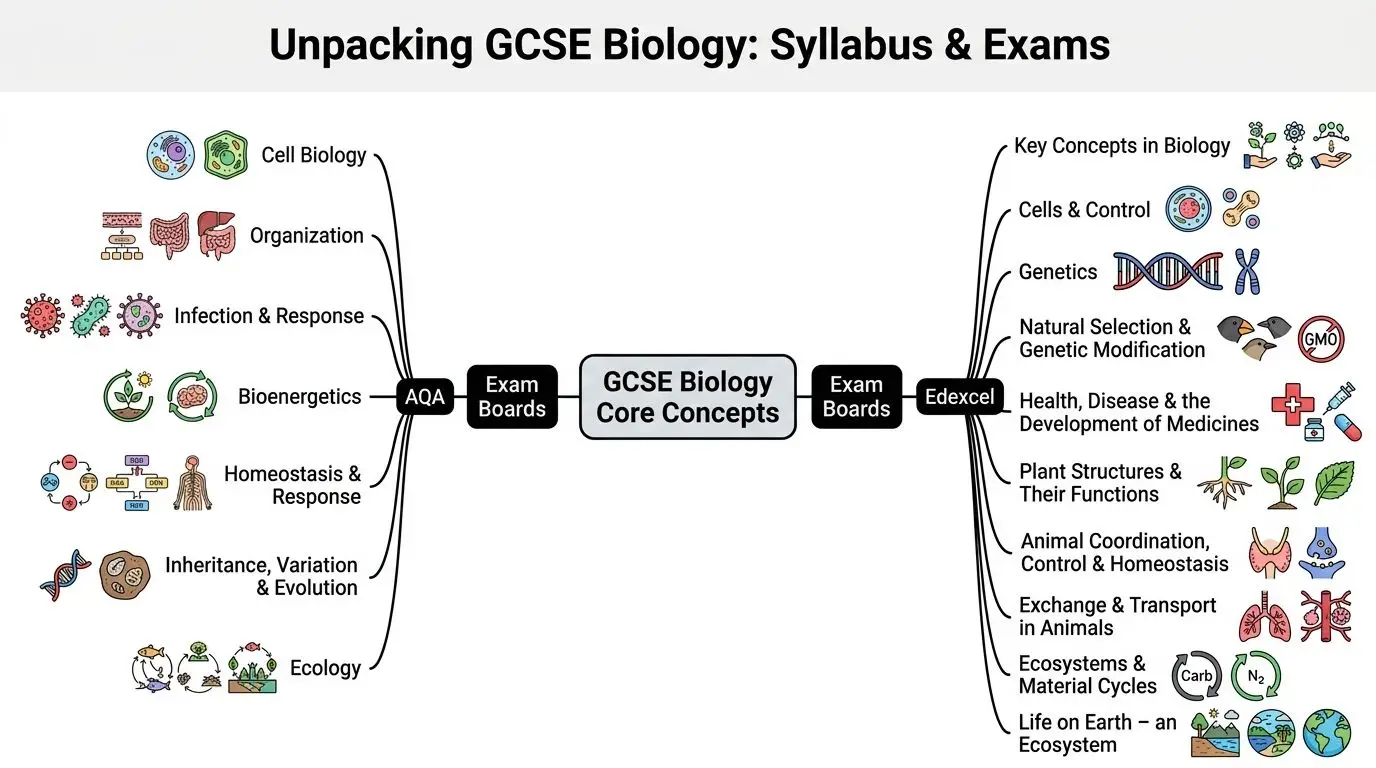
Across the main exam boards, the subject matter is broadly similar. Students move from microscopic structures to whole-body systems, then outward to inheritance, evolution, and the environment.
AQA includes topics such as:
- Cell biology
- Organisation
- Infection and response
- Bioenergetics
- Homeostasis and response
- Inheritance, variation and evolution
- Ecology
Edexcel organises the material a little differently, but the scientific ideas overlap closely. If you are comparing course options, this guide to the Edexcel exam board structure and assessment can help you see how providers may sequence the content.
What matters most is not whether one board uses a different heading or groups topics in another order. What matters is whether your child is taught in a way that joins the ideas together clearly. A nervous learner can cope well with challenging content when each new lesson feels like the next small step, rather than a jump into the unknown.
How to make the content feel manageable
Children often struggle when Biology is taught as a pile of facts to memorise. It becomes much more manageable when they see patterns and causes.
For example:
| Topic | Plain-language example |
|---|---|
| Enzymes | Enzymes work only if their shape stays right. Cooking an egg is a useful comparison. Once the protein structure changes, it cannot return to its original form. |
| Cells | Start with cells as the smallest working units, then build up to tissues, organs, and organ systems. |
| Ecology | Begin with one food chain, then extend that idea to habitats, ecosystems, and nutrient cycles. |
This is why gaps early in the course matter. A child who feels unsure about cells or organisation may later find homeostasis, disease, or ecology confusing, not because they are incapable, but because the foundation was shaky. Good teaching spots those gaps early and repairs them before they grow.
What about practicals and exams
This is often the part families worry about most, and with good reason. Science qualifications still include practical work, even when the teaching is online. The practical activities may support exam understanding, and the arrangements vary from one provider to another.
Ask direct questions early. Who provides the practical experience? Is it built into the course, arranged through a partner, or left to the family to organise? Will your child need to travel, and if so, how often? These details affect stress levels far more than many parents expect.
Practical rule: Ask exactly who organises the practical requirements, how they're scheduled, and what deadlines apply. Don't assume the provider handles it automatically.
The final exams are formal, timed papers taken under standard exam conditions. That often reassures families. Your child is not taking a watered-down version of GCSE Biology. They are working towards the same recognised qualification as other pupils, with the same need for careful preparation, clear teaching, and thoughtful exam planning.
For many families, peace of mind comes from knowing two things. First, the syllabus is structured and teachable. Second, the exam and practical arrangements are confirmed well before revision begins. Once those pieces are in place, children can focus on learning instead of carrying uncertainty in the background.
Live Lessons vs Self Paced Study What Works Best
It is 8.25 on a Tuesday morning. One child is already logged in, camera on, waiting for Biology to start because the routine helps them settle. Another child, just as capable, would feel tense in that same setup and learn far better by studying later in the day, pausing a video, replaying a tricky explanation, and taking notes at their own speed.
That is why the right format is not the one that sounds more academic. It is the one your child can live with, week after week, without stress building in the background.
When live lessons help most
Live classes usually suit children who need a clear structure around them. The timetable acts like a set of rails. It keeps the course moving, even on the ordinary days when motivation is low and Biology feels harder than it did last week.
They also help children who become anxious when they are not sure whether they have understood something properly. In Biology, one early misunderstanding can spread. A shaky grasp of cell division can later affect genetics. Confusion about enzymes can make whole topics feel harder than they are. In a live lesson, a teacher can catch that problem quickly, explain it another way, and reassure the child before worry settles in.
For some pupils, the social side matters just as much. Seeing the same teacher and classmates each week makes learning feel shared. That can be a great comfort, especially for a child who has lost confidence.
When self paced study can work better
Self paced study suits a different kind of pressure. It can be a good fit for a child managing health needs, training commitments, family travel, or a previous difficult school experience that has left them needing more breathing room.
The biggest benefit is control. Your child can slow down on hard topics and move faster through areas they already understand. Recorded teaching works like a pause and rewind button for learning. If mitosis made no sense at 2 pm, they can replay it at 6 pm with a clearer head.
That flexibility does come with responsibility. Some children use freedom well. Others drift, put off awkward topics, and then feel overwhelmed when too much unfinished work piles up. Parents often spot this later than they expected.
A strong online platform can make a real difference here because it affects how easily pupils can join lessons, find recordings, submit work, and ask for help. If you want to see what that looks like in practice, this guide to virtual classroom technology explains the day to day experience clearly.
A calmer way to choose
Start with your child as they are now, not the version of them you hope will appear once the course begins.
- Choose live lessons if: your child benefits from routine, asks questions in real time, or works better when a teacher is expecting them.
- Choose self paced study if: your child needs flexibility, likes revisiting material privately, or cannot reliably follow a standard school timetable.
- Pause and ask more questions if: your child struggles to start independent work, avoids difficult subjects, or becomes anxious when deadlines are not close.
One simple test helps many families. Ask yourself this: if nobody reminded your child to study Biology next Thursday, would the work still get done?
This short video helps bring the study experience to life:
The best format is the one that helps your child stay steady, ask for help early, and keep their confidence intact while they prepare for the same recognised GCSE standard.
The Truth About Accreditation and Finding Exam Centres
A parent often reaches this point with a knot in their stomach. The lessons look good, the timetable seems manageable, and their child is finally feeling hopeful about Biology again. Then the practical question arrives, and it is the one that matters most. Will this course lead to a recognised GCSE exam entry?
That anxiety is understandable. Online teaching and exam entry are related, but they are not the same thing. A provider can teach GCSE Biology well and still expect families to arrange the final exam separately.
The confusion parents most often face
The phrase “GCSE Biology course” can sound more complete than it really is. Sometimes it means full teaching plus exam entry support. Sometimes it means teaching only. Sometimes it follows a GCSE specification but does not register pupils for the exam at all.
For parents, this can feel like buying the ingredients for a meal and only later discovering the oven is in another building.
That does not mean the course is poor. It means you need the exam process explained clearly before your child begins, not in the spring when centre deadlines are close and stress is already rising.
Some families first come across this issue while comparing options for older learners too. This online education for adults guide shows how often accreditation and exam arrangements become the practical sticking point, even when the teaching itself looks strong.
What to check before enrolling
A short conversation with the school can save a great deal of worry later. Ask these questions plainly, and expect plain answers in return.
Which exam board does the course follow?
The provider should name the specification clearly, such as AQA or Pearson Edexcel. If the answer is vague, keep asking until you know exactly what your child will be studying toward.
Who enters your child for the exam?
Some schools arrange exam entry for families. Others prepare pupils academically but leave parents to book a separate centre. Neither model is automatically wrong, but you need to know which one you are choosing.
Will your child sit as a private candidate?
If your child is not entered through a mainstream school, you may need an exam centre that accepts private candidates. This is one of the most common points of confusion, and one of the easiest to sort early.
What are the science practical expectations?
In GCSE Biology, families often worry about practical work. Ask how the course covers required practical knowledge and whether there are any centre-specific requirements you should understand in advance.
If travel matters, regional availability matters too. Families comparing local arrangements can look at these online GCSE courses in Northern Ireland to get a clearer sense of how online study and exam logistics fit together.
The most reassuring mindset
Treat accreditation and exam entry like checking the locks before bedtime. It is not the exciting part of choosing a course, but it is what helps everyone sleep better.
A good provider should be able to explain three things without hesitation. Which specification they teach, how exam entry works, and what families need to do by when.
If a school cannot explain the exam route in calm, plain English, it is reasonable to keep looking. Your child deserves clarity, and you deserve peace of mind.
A Checklist for Choosing the Right Online School
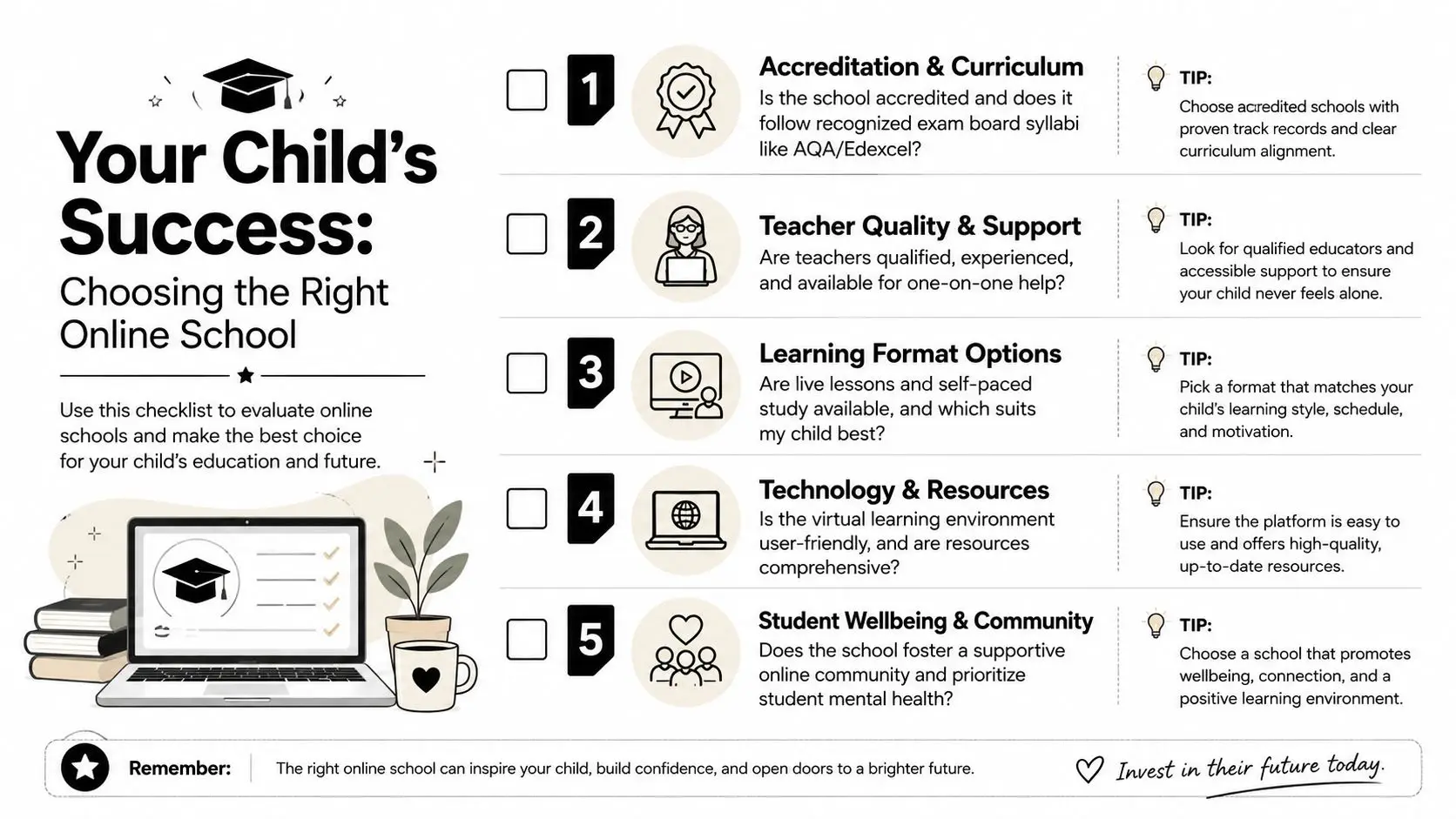
A parent usually reaches this point with a notebook full of promises and a child sitting nearby, wondering what happens next. The right choice often becomes clearer when you stop listening for marketing language and start listening for care, structure, and honest answers.
A good online GCSE Biology course should feel a little like a well-run clinic. You want the right specialists, a clear plan, and someone who notices quickly if your child is struggling rather than hoping the problem sorts itself out.
Questions worth asking on every call
Start with the child in front of you, not the brochure in front of the school representative.
Who will teach your child?
Ask whether Biology is taught by a subject specialist and how students ask questions between lessons. A strong answer is clear and specific.What does a normal week look like?
Parents need more than a timetable headline. Ask how many live lessons there are, how homework is set, and how missed work is picked up without turning one bad week into a bigger problem.How visible is your child to staff?
In some online settings, a pupil can log in, stay quiet, and drift. Ask how teachers notice confusion, low confidence, or falling engagement early.How is support handled if your child learns differently?
If your child has dyslexia, ADHD, autism, anxiety, or a history of school avoidance, ask for examples rather than broad reassurance. What adjustments are available? Who puts them in place? How quickly?How do families hear concerns?
Good schools do not wait until a report card to mention that something is wrong. Ask how often parents receive updates and who contacts you if your child starts to wobble.
A practical parent checklist
During school conversations, keep this list beside you:
- Ask for a sample lesson. Your child's face often tells you more than the prospectus. Relief, curiosity, tension, and shutdown all matter.
- Check how feedback works. Marking should help a pupil improve the next piece of work, not just record a grade.
- Ask about pastoral care. Tutor check-ins, mentor support, and a named adult can make online learning feel safer and more human.
- Read the safeguarding and anti-bullying policy. Children learn better when they feel protected.
- Ask what happens after absence. Illness, anxiety, family disruption, and lost motivation happen. A good school has a recovery plan, not a shrug.
- Look at the parent communication system. You need to know whether messages are answered promptly and whether expectations are easy to follow.
Think about the whole family
The strongest course on paper is not always the one a child can sustain calmly through the year. If lessons clash with medical appointments, caring responsibilities, or an already fragile routine, stress can build subtly at home long before grades slip.
This is why I often tell parents to choose the school that makes daily life more manageable, not more heroic. GCSE success rarely comes from constant pressure. It grows from a rhythm your child can keep.
If you're also exploring options for older learners in the household, this online education for adults guide offers a useful broader perspective on how flexibility and support affect study success across age groups.
Parent filter: Ask whether this school can teach Biology well, notice struggle early, and help your child recover confidence after a difficult week.
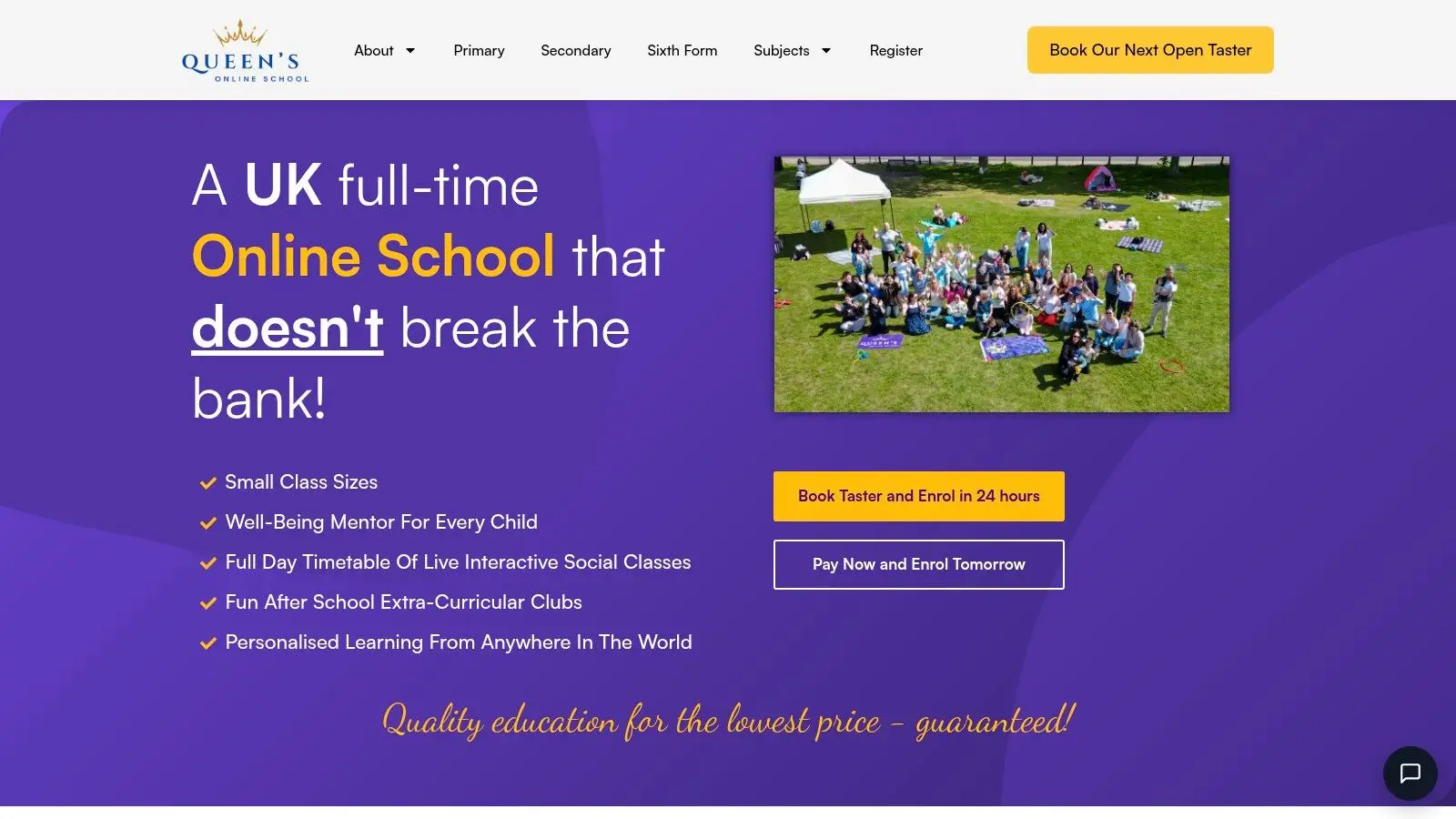
How Queen's Online School Nurtures Student Success
A strong online school solves practical problems before they become emotional ones. That's what families need most. Not just access to lessons, but a setting where the learner feels secure, challenged, and included.
For the anxious learner
Some students arrive carrying the weight of previous school experiences. They may hesitate to unmute, worry about being wrong, or need more time to process instructions. In that situation, small class sizes and real-time teacher feedback matter because they reduce the feeling of being lost in a crowd.
Live teaching also helps combat a common problem in online learning: silent disengagement. A child can look “present” on a platform while feeling completely disconnected. Interactive classes make that easier to spot and address.
For students aiming high
Teenagers who want top GCSE grades need more than flexibility. They need subject-specialist teaching, organised progression through the syllabus, and feedback that sharpens exam technique. A rigorous British curriculum helps here because expectations stay clear and progression feels purposeful.
There's also reassurance in knowing the school is part of a wider educational framework, not an improvised collection of videos and worksheets. That consistency gives ambitious students a firmer runway.
For international families and those needing certainty
For families moving between countries, balancing time zones, or seeking continuity, an online British curriculum can provide stability. It offers familiar academic structure while allowing a child to keep learning from wherever the family is based.
Exam logistics matter here too. A school that is a Pearson Approved Examination Centre removes one of the biggest sources of stress because families don't have to untangle the entire exam process on their own. That matters emotionally as much as administratively. It allows the household to focus on the child's learning instead of chasing paperwork.
For children who need belonging
A good online school isn't only a place to log in for lessons. It should feel like a community. Clubs, social events, leadership opportunities, and a visible commitment to wellbeing help children feel that they are part of something, not studying alone at a kitchen table.
That sense of belonging is especially important for learners with SEN or SEMH needs. A child who feels safe is more likely to take academic risks, ask for clarification, and recover after setbacks.
Enrolment Timelines and Your Questions Answered
One of the kindest things you can do for your child is remove last-minute rush. Decisions about online GCSE Biology courses feel much heavier when everything is left until exam season is already looming.
A practical timeline helps. Online GCSE Biology courses can be completed in as little as 6 to 12 months, and booking around six months before the chosen exam date is strongly recommended so families can secure a preferred exam centre and avoid late fees, according to this guide on retaking GCSE Biology online.
A calm timeline to work from
- Start researching early: Give yourself time to compare teaching style, accreditation, and support.
- Ask exam questions before enrolment: Don't leave centre arrangements until the course is underway.
- Build in settling time: Children often need a few weeks to adjust to a new routine and platform.
- Plan revision gently: Biology rewards steady review far more than panic cramming.
Common parent questions
Do universities accept online GCSEs?
What matters is the qualification and exam board, not whether day-to-day teaching happened online. Families should still check individual entry requirements later for specific courses.
What technology does my child need?
Most learners need a reliable device, stable internet access, and a quiet study space where they can concentrate and join lessons comfortably.
Can my child move back into a physical school later?
In many cases, yes. The smoother that transition needs to be, the more important it is to choose a recognised curriculum and keep good records of progress.
What if my child is bright but emotionally worn out?
Then wellbeing has to come first. Academic recovery is much easier when a child feels safe, listened to, and able to ask for help without shame.
The right course won't remove every challenge. But it can turn the experience of studying Biology from a source of dread into a steady, manageable path forward. That shift matters more than many families realise.
If you're looking for a school that combines live teaching, small classes, subject specialists, pastoral care, and recognised exam pathways, Queen's Online School is well worth exploring. For many families, the biggest relief comes from finding a place where academic standards stay high and the child's wellbeing remains at the centre of every decision.