


Successful communication with parents is proactive and multi-channel, centred on a child's wellbeing rather than only grades. It reassures families their child is safe, seen, and supported in an online setting, which can sometimes feel distant. The feeling of knowing your child is understood and cared for, even through a screen, is a powerful comfort for any parent.
Why Consistent Communication With Parents Matters
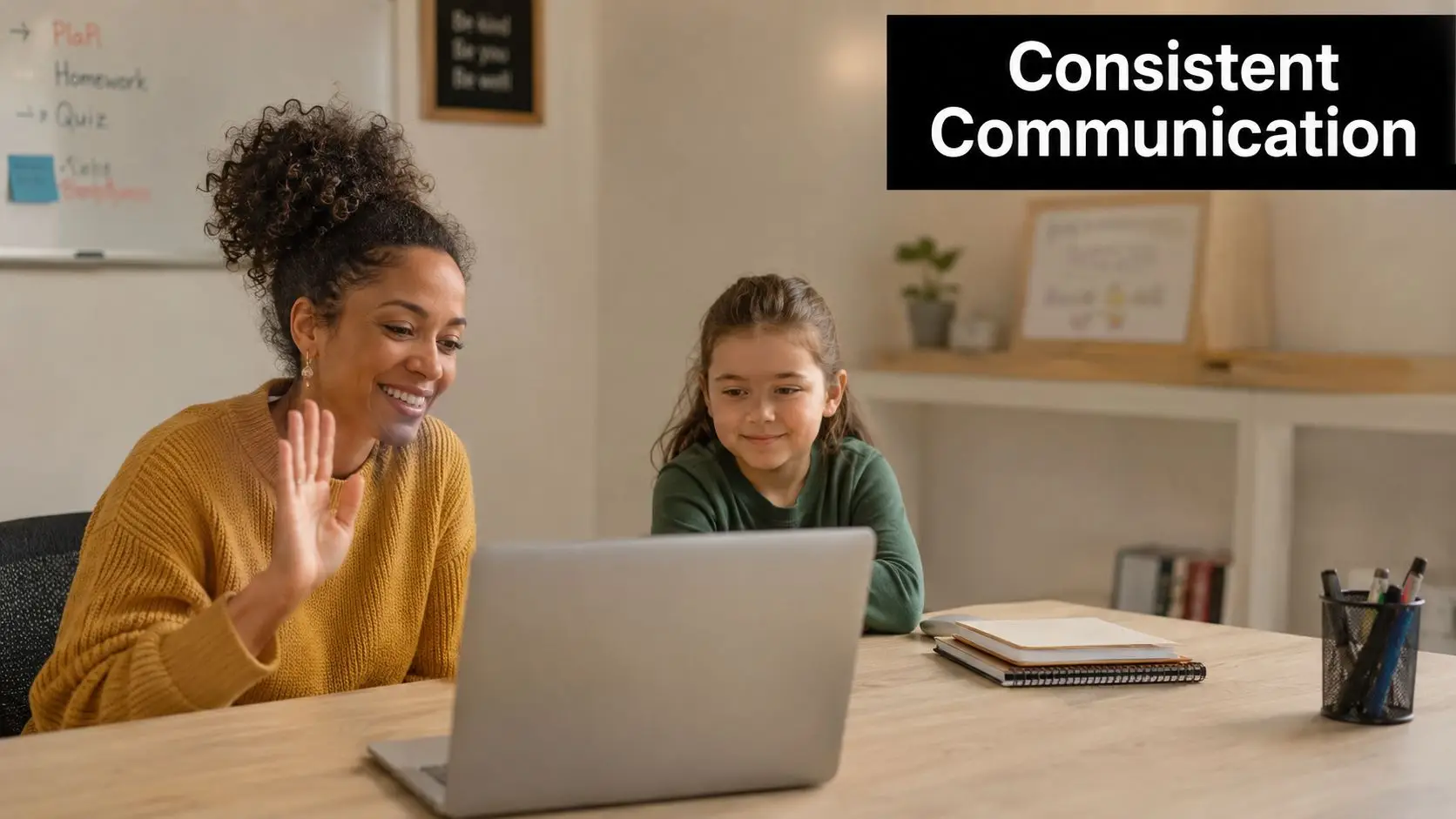
Consistent contact builds a sense of belonging for the child and transforms parental anxiety into relief. Imagine your child has been struggling with shyness. A brief, personal note after a live lesson saying, "Leo shared a wonderful idea about the story's hero today and seemed so proud," can completely change a parent's day, turning worry into a shared moment of celebration.
Regular communication also helps teachers notice patterns that signal a child's underlying needs. A sudden quietness isn't just a lack of participation; it could be a sign of tiredness, confusion, or a worry from home. When messages focus on "how is your child doing?" instead of just "what is their grade?", a true partnership forms, with the child's emotional health at its core.
There are practical reasons too. Predictable routines set clear expectations for response times, cutting down on frantic late-night emails from anxious parents. Fewer surprises mean calmer family evenings and a more settled child.
What Proactive, Child-Centred Communication Looks Like
- Daily or weekly brief updates: These should mention the child's emotional state and one specific, tangible success. For example: "Ava was so focused during our maths game today and she lit up when she solved the final puzzle."
- A thoughtful mix of channels: Use live class check-ins to see a child's face, a quick SMS for an urgent reminder like a forgotten book, and detailed portal notes for tracking progress over time.
- Targeted outreach for vulnerable learners: For a child who finds school challenging, scheduled check-ins provide a predictable rhythm that reduces their uncertainty and the parent's worry.
"Parents feel seen when updates mention the small wins and next steps that show their child is truly known." — a common insight from online teachers and school leaders.
Small, concrete examples connect emotionally. A teacher might send a note: "Today, Mia answered confidently in maths and smiled during the group activity. I saw her give a little fist pump! We'll invite her to lead tomorrow's starter to build on that confidence." That single line comforts the parent and celebrates the child as an individual.
Traditional vs Child-Centred Communication Models
Schools have long relied on formal, administrative reporting to keep parents informed. But online education calls for something warmer and more responsive—a partnership that feels human. The table below captures this shift from grade-focused updates to a model that puts the child's emotional world front and centre.
| Communication Aspect | Traditional Approach | Child-Centred Online Approach |
|---|---|---|
| Frequency | Sporadic termly reports | Short weekly updates and immediate flags for concerns |
| Focus | Administrative grades and attendance | Emotional wellbeing, engagement, and progress |
| Channel | Formal letter or generic email | Live check-ins, SMS for urgency, detailed portal notes |
| Tone | Formal and neutral | Warm, specific, and reassuring |
Small class sizes, like those at https://queensonlineschool.com, allow for these personalised touches that build profound trust. This approach keeps the child's needs at the heart of every message, ensuring they feel supported from all sides.
Making the Shift
Moving from transactional reporting to genuine partnership isn't about adding more work. It's about changing the lens through which you view communication. Start with one channel your families already use, commit to a rhythm you can sustain, and always lead with something the child did well before raising a concern.
The families who feel most connected are those who hear from teachers regularly—not just when something is wrong. That feeling of being in it together is worth the effort, as it creates a safety net of support around the child.
Modern families don't have the bandwidth for lengthy termly reports. They need short, timely updates that fit into a commute or a lunch break. A quick, mobile-friendly message offers immediate reassurance. For instance, a two-line SMS: "Tom joined all tasks today and really smiled during reading. He felt so confident! I'll support him with tomorrow's starter." This gives parents an emotional anchor and a clear next step, keeping them connected without adding to their mental load.
Combining live touchpoints with concise written notes is incredibly effective. Live check-ins let teachers read a child's mood and body language, while a 40–60 word portal note can summarise progress and actions. This dual approach supports the child’s wellbeing while giving parents a handy record to look back on.
Timing That Respects Family Routines
Time your communications to align with a family's day. Sending updates in the early evening or late morning often catches parents during a commute or on a lunch break. Avoid school-wide pings during the 8–9am morning rush or the 6–8pm family dinner and bedtime routine unless it is genuinely urgent. Respecting family time shows you see parents as partners, not just recipients of information.
- SMS: For urgent alerts that need a single, clear action (e.g., "School trip bus is running 30 mins late.").
- Short Emails: For non-urgent context and links to helpful resources.
- Portal Summaries: For academic details, evidence of progress, and a record of communication.
"Small, consistent updates build trust faster than rare, long reports." This consistency soothes parental anxiety and steadies the child’s support system.
Practical Templates That Reduce Teacher Load
Giving teachers micro-templates centred on the child makes a real difference. These aren't scripts, but frameworks for warm, efficient communication.
- Quick Celebration: "In today's science class, Chloe felt so proud when she explained her hypothesis. We'll encourage her to share first next time."
- Concern with Next Step: "Tom struggled to focus during maths today, and we tried a quick movement break. Could you try a similar break at home before homework?"
- Weekly Snapshot: Use bullet points for attendance, mood, one skill they mastered, and one target for next week.
These formats keep the tone specific and reassuring while drastically cutting the time spent drafting messages. Adding a one-tap acknowledgement button or a reply-to number also reassures parents their message was received, closing the communication loop.
Measuring What Matters
Go beyond tracking email open rates. Look at reply rates, acknowledgement clicks, and whether follow-up actions mentioned in a message actually happen. Aiming for at least a 50% quick acknowledgement rate on routine updates is a solid benchmark for a healthy, two-way dialogue.
Read our guide on parent portal access for seamless follow-up: Parent Portal Login UK.
Choosing Channels That Support Student Wellbeing
When a child's emotional safety is on the line, the channel you choose is as important as the message itself. Matching what you need to say with how you say it prevents unnecessary alarm and keeps the child firmly at the centre of every exchange.
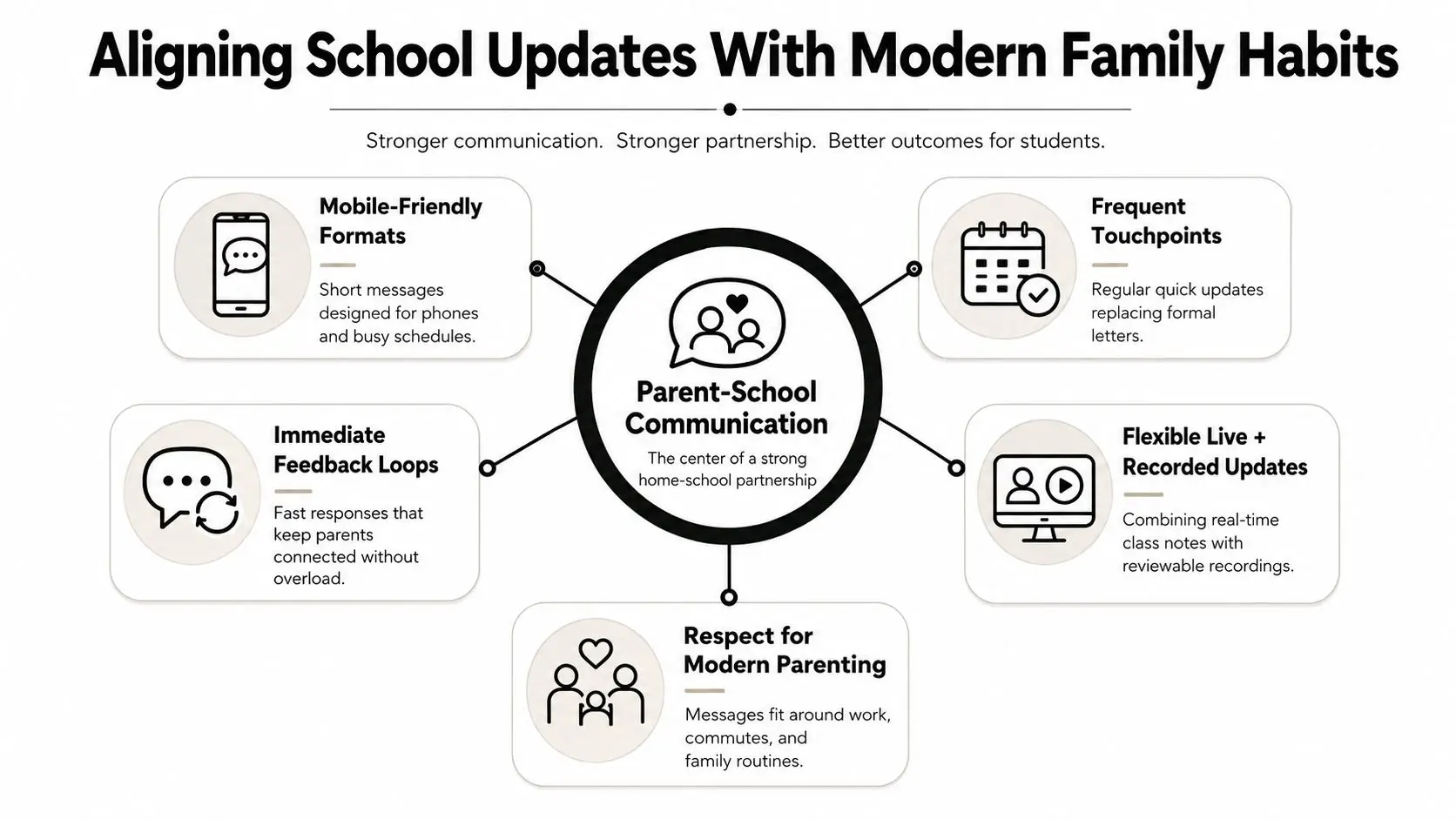
This infographic shows how short, mobile-friendly touchpoints, immediate feedback loops, and a mix of live and asynchronous updates create a reliable and reassuring connection between school and home. This system helps the child feel secure, knowing their support network is strong and connected.
When To Use Each Channel
- SMS: Perfect for urgent safety alerts or simple, one-step requests. For example: "Reminder: Sports day tomorrow, please pack a water bottle." However, never use it for sensitive behavioural conversations; a text can feel cold and escalate a parent's worry.
- Live Video: For conveying warmth and tone, calming a distressed child, or modelling a support strategy in real-time. Hearing a teacher's reassuring voice when emotions are high is invaluable.
- Portal Reports: For providing context, evidence, and a record of progress. These should include notes on emotional wellbeing alongside academic details.
- Email: Best for non-urgent summaries with links to resources or suggested home activities.
- Recorded Lessons: Offer flexibility for a child who needs more time to process information or was absent.
Practical Examples From the Classroom
Imagine a teacher notices a student, Sarah, seems withdrawn during a lesson. The teacher gently invites her to contribute without pressure. After the lesson, they send a 50-word portal note: "Sarah was a little quiet today, but she listened intently. I was so pleased when she gave a thumbs-up to a classmate's idea. Tomorrow, I'll pair her with a friend for the first task to help her feel more comfortable."
In another case, a sudden urgent absence triggers an SMS: "Anna is safe with us in the school office. We are supporting her and will update you by 3pm." That single line prevents panic and promises follow-up.
A quick update that names a feeling and suggests one supportive next step can calm a parent's fears and keep the child at the heart of the conversation.
A Simple Framework for Channel Choice
- Is it urgent? Use SMS for immediate, single-action messages.
- Is it sensitive? Use a phone call or live video for emotional or behavioural issues.
- Does it need a record? Use the parent portal for evidence and tracking follow-up actions.
Remember to measure what matters: reply rates, acknowledgement clicks, and whether suggested home actions happen. Aim for a 50% quick acknowledgement rate as a sign of healthy two-way contact.
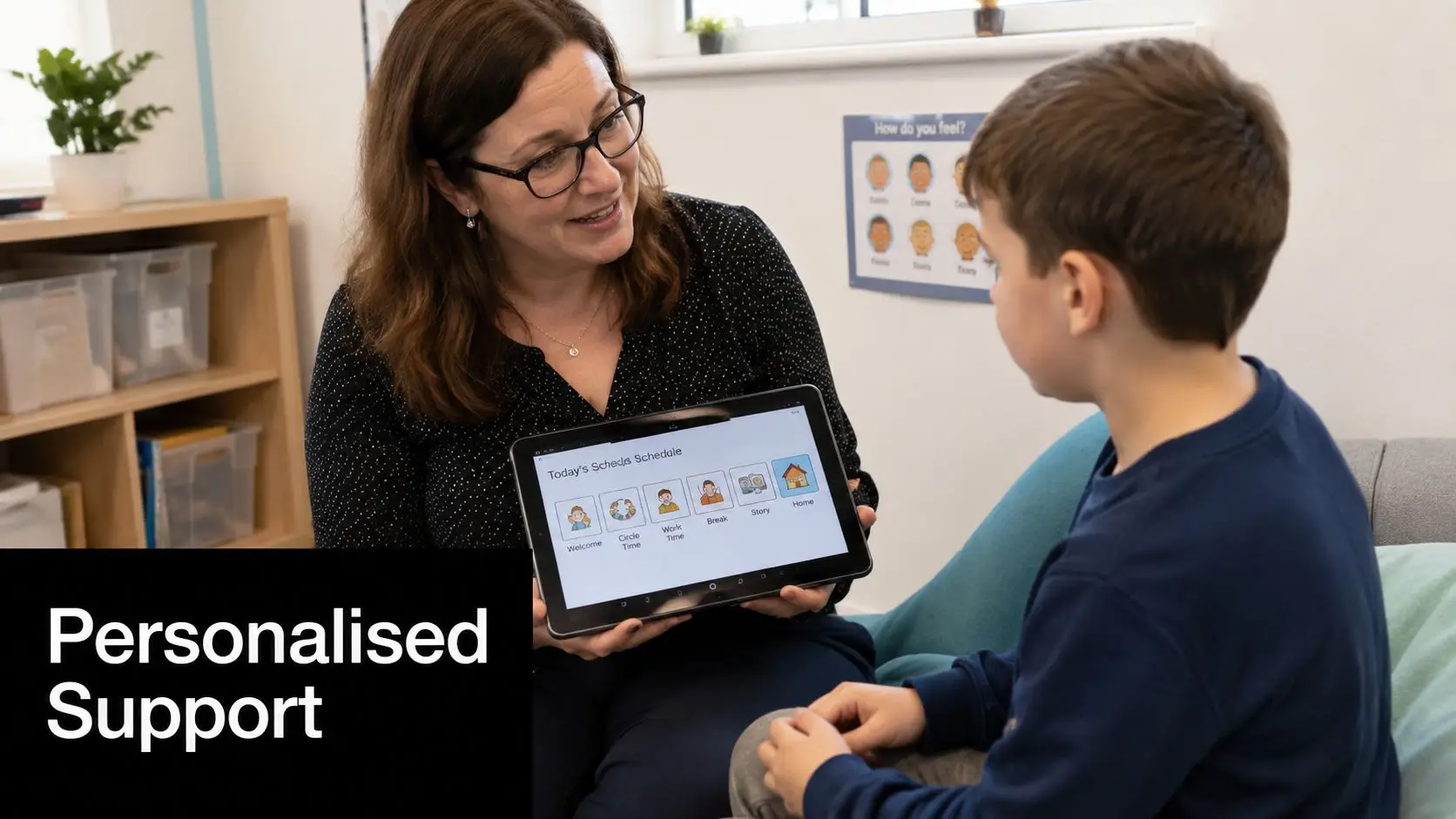
For children with SEN or SEMH needs, the predictability and tone of communication are often more important than the words themselves. A message like "Jasper followed the visual schedule for the starter task and held eye contact twice today," isn't just an update; it's proof of progress that reassures a worried parent. It celebrates the non-academic wins that matter just as much, keeping the child's unique needs front and centre. Attaching a visual schedule to a weekly update can ease morning anxiety and stop challenging behaviours before they start.
Individualising Frequency and Format
Agree on a contact rhythm with parents and stick to it. This predictability lowers stress for everyone and builds a crucial safety net for the child.
Offer multiple formats. A 50-word portal note works for some, while another family might prefer a visual PDF or a 30-second voice note to catch the reassuring tone of your voice. After big moments—like assessments or school transitions—adjust how often you reach out to ensure no one feels overwhelmed.
Regular, predictable updates calm both families and students, creating a reliable partnership between home and school that a child can depend on.
Language That Calms and Guides
Stick to clear, concrete language. Instead of saying a child "was disruptive," try "had trouble staying in his chair for more than five minutes during reading." This is observable, not judgmental. Always wrap up with a simple, actionable next step for home, like "Let's try a sensory break before reading tomorrow."
For example, with a Year 8 student who was struggling, we established a routine: a live check-in during the lesson to model a calm tone, followed by a quick portal note describing his mood, one success, and a home action. This three-part routine balanced emotional validation with actionable guidance without overwhelming him or his parents.
Working With Families as Experts
Parents are the experts on their own children. Invite them to share what soothes their child, what their triggers are, and which phrases to avoid. Co-create a simple, one-page plan listing these details and keep it in the portal so every staff member can use consistent, supportive language.
- Use a simple template to capture mood, trigger, intervention, and a home suggestion.
- Track acknowledgement rates to keep the conversation two-way; aim for 50% quick replies.
- Always respect consent and privacy; get permission before sharing sensitive details or sending voice notes.
Small adjustments in tone, format, and rhythm can turn routine updates into a lifeline for a child and their family.
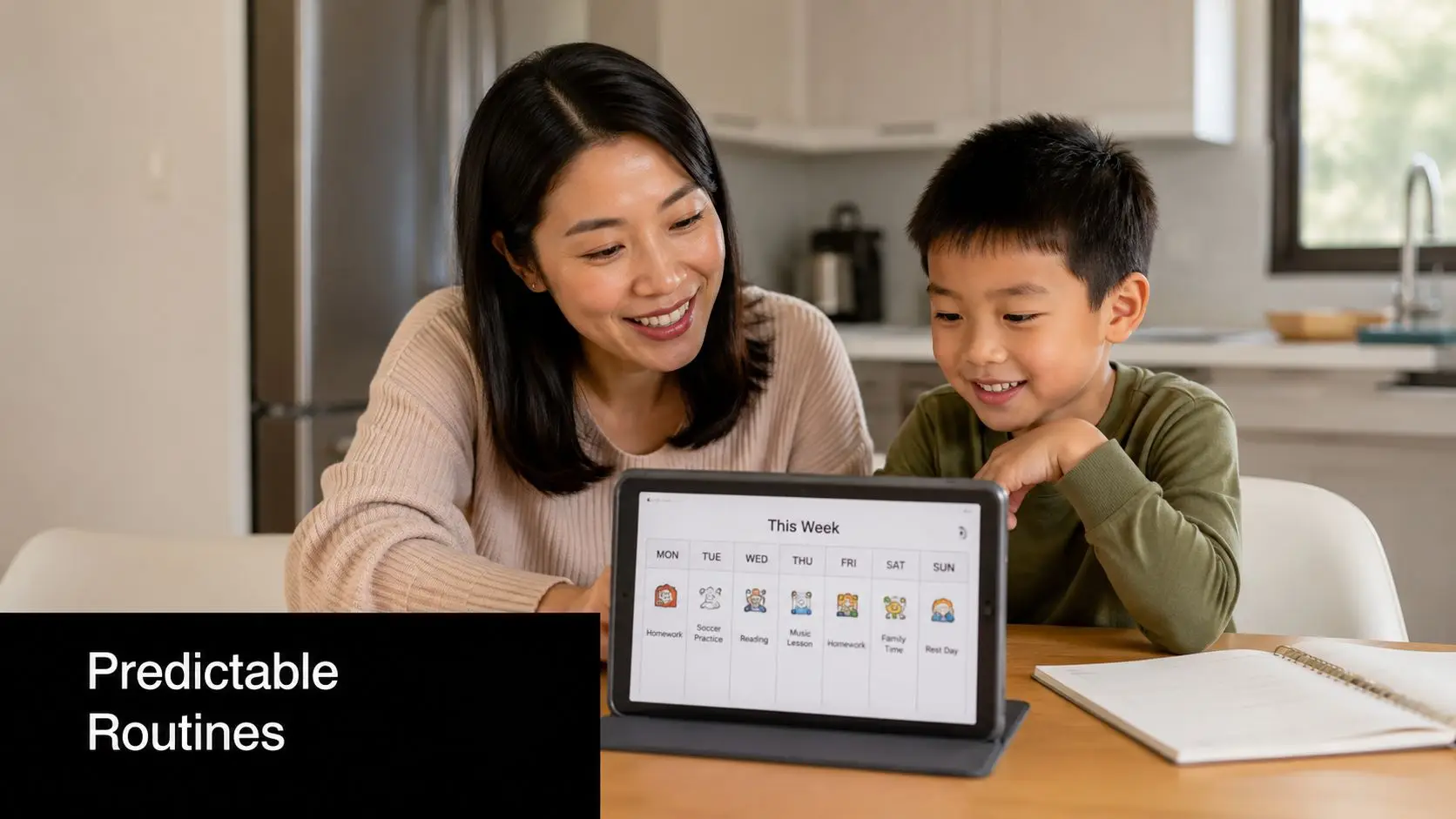
Nothing erodes a family’s confidence faster than unpredictable silence. When updates are random, parents are left to worry, and that anxiety often trickles down to the child. Trust begins with steady, dependable communication.
A simple weekly rhythm works wonders. A Monday morning bulletin that names one social goal and one academic focus gives parents a clear anchor for the week. It’s a small habit that reduces frantic emails and makes Monday mornings feel calmer for the child.
Setting clear expectations around reply times is also crucial. Share upfront that routine queries will be answered within 48 hours, while urgent safety messages get a reply within 1 hour. This transparency is deeply reassuring and protects teachers' wellbeing by setting healthy boundaries.
Micro-templates That Feel Human
Keeping messages warm while staying efficient is a skill. A short, three-line format helps maintain a friendly tone without taking all evening:
- A single sentence about the child's mood or a feeling they expressed.
- One line celebrating a specific, positive moment.
- One simple next step or a question for home, like “Ask your child about the bridge they built today—they were so proud of it.”
“A single line that names an emotion and a next step often calms a parent more than a long report.” Teachers find this approach restores trust quickly.
A Year 6 teacher sends a "Friday Snapshot" each week: attendance, a quick mood note, one progress highlight, and a suggested weekend conversation starter. Parents reply with a one-tap acknowledgement, which she tracks to gauge engagement without creating more work for anyone.
Weekly Touchpoint Formats
- SMS: For urgent, single-action items, with a promise of more detail to follow.
- Portal Notes (40–60 words): For sharing evidence, context, or tracking progress over time.
- Short Voice Clips: When tone is critical, always with parental consent first.
Track your acknowledgement rate and aim for 50% quick replies. If that number slips, the communication isn't working. Experiment with timing or a different channel. Small, predictable routines keep the child at the centre, reduce the emotional labour for parents, and ensure children feel seen and supported.
Frequently Asked Questions About Parent Partnerships
We've all received that email—the one that makes your stomach drop. When a message feels tense or accusatory, the first step is to pause. Remember, this is about a child you both care about. Open with empathy: "Thank you for sharing this with me. It sounds like a really tough morning. I want to help, so let's figure this out together." This shifts the dynamic from confrontation to collaboration, with the child's wellbeing as the shared goal.
What if a child refuses to engage with updates?
Instead of pushing more written updates on a child who is shutting down, try a gentle, curious approach. A script that works well is: "I noticed you seemed to switch off during our lesson today. Is there something that's making you uncomfortable?" Listen to the answer without judgment, then agree on one small, practical change, like a shorter check-in or a video recap they can watch later. This gives the child agency and shows you're on their side.
How do I handle a heated disagreement by email?
Email is the worst place for arguments. If a parent is upset, suggest moving the conversation offline immediately. Write back: "I can hear how upsetting this is, and I want to resolve it. Email isn't the best place for this. Could we have a 10-minute call tomorrow morning to talk it through?" Offering a private phone call de-escalates the situation and shows you are willing to face the issue directly.
What about privacy and monitoring concerns?
Be radically transparent. Clearly explain what data you collect and why it helps their child. Provide simple consent forms with genuine opt-outs for non-essentials. Only share the minimum information needed to support the child and meticulously log consent. Parents respect honesty far more than a polished privacy policy nobody reads.
How can I include SEN or SEMH needs in routine messages?
Predictability and clarity are your best friends. Use visual schedules, bullet points, and consistent timings. Every message should share one clear success and one manageable next step. For example:
- "Sam used his calm-down corner for 5 minutes today and rejoined the group. He felt so ready." — Small wins build enormous trust.
- "Next: Let's try a 5-minute sensory break at 10:15, just before maths." — Practical, specific, and easy for everyone to act on.
Keep the child at the heart of every interaction and prioritise calm, curious language to restore partnership quickly.
Quick Practical Scripts
- Teacher to parent after a worry: "I wanted to flag that Leo seemed sad today. We talked, and he said he missed his friend. Can we try a partner activity for him tomorrow?"
- Parent reply to school: "Thank you so much for noticing. We'll talk about it tonight and encourage him for tomorrow."
- Urgent safety SMS: "X is safe. We are supporting them and will update you by 5pm."
Measure success by acknowledgement rates and whether agreed actions happen. Aim for 50% quick replies on routine updates. If engagement drops, don't give up—experiment with timing or a different channel to find what works for that family.
For personalised support from Queen's Online School visit https://queensonlineschool.com.