


78% of 13–17-year-olds reported that being online helps with schoolwork or homework, while 55% said it helps them learn a new skill. Online learning for teenagers can work well when it combines skilled teaching, emotional support, purposeful interaction, and routines that protect sleep and concentration.
At 8 p.m., your teenager is still staring at a worksheet. Their laptop is open, but the work has barely moved. They're frustrated, you're unsure whether to step in, and the question feels uncomfortable: is online education giving them a better way to learn, or just putting more pressure on an already tired child?
The answer depends less on the screen itself than on the experience behind it. A well-designed online school can offer flexibility, quieter participation, personalised feedback, and a sense of belonging for a teenager who feels overwhelmed in a conventional classroom. A poorly designed one can leave a young person isolated, confused, and responsible for managing far more than they're ready to handle.
Why Online Learning Feels Like the Right Move for So Many Families
Many parents first consider online learning after a difficult evening like the one above. Perhaps their teenager has become anxious about school, struggles to keep up with the pace of lessons, or feels exhausted by the noise and social demands of a busy classroom. Sometimes the problem isn't academic ability at all. A capable student may understand the work but freeze when they have to answer publicly, move between rooms, or recover from a difficult social interaction.
That's why Ofcom's 2025 UK data matters. 78% of 13–17-year-olds said being online helps with schoolwork or homework, and 55% said it helps them learn a new skill, according to the UK government's summary of the national online-world consultation. Teenagers already use digital spaces to find explanations, practise skills, revisit difficult material, and work independently. Online schooling isn't just a pandemic workaround anymore. For many families, it's an important educational and emotional choice.
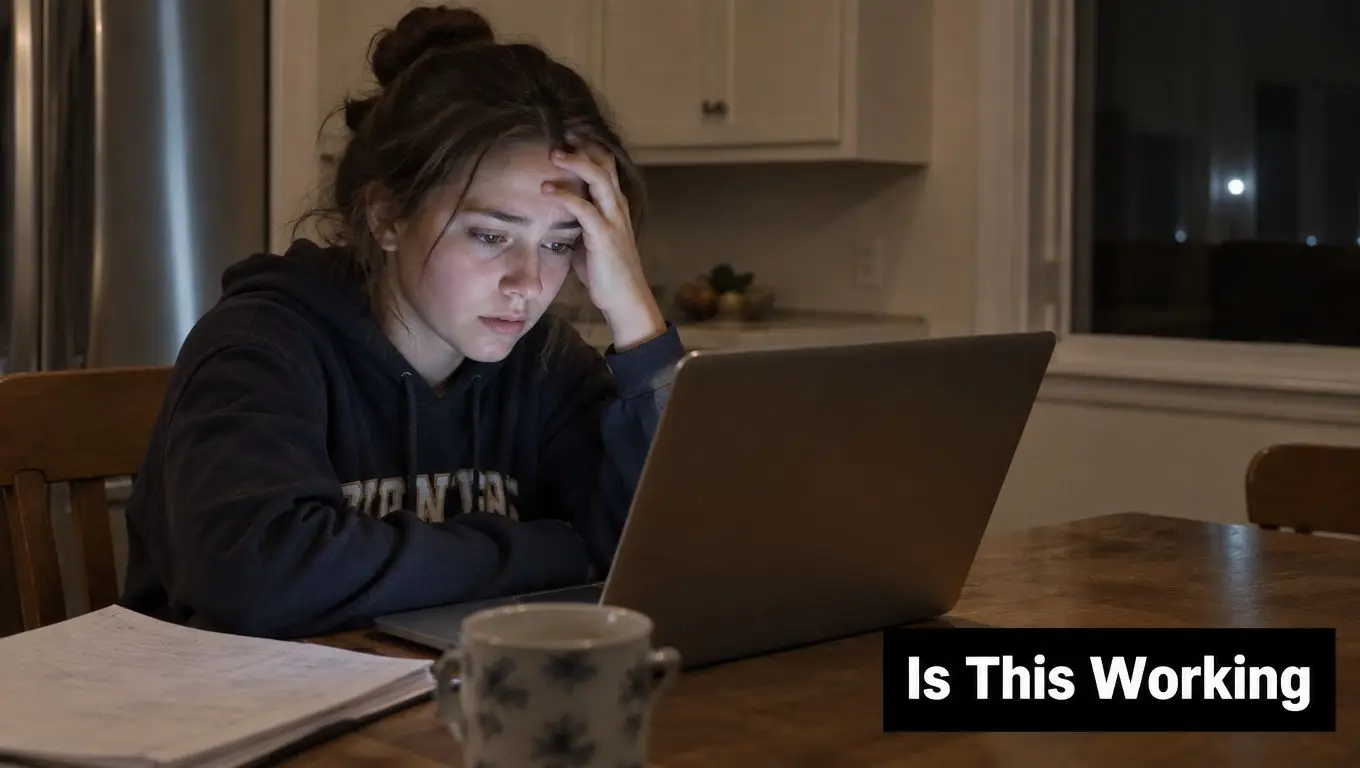
The teenager's experience comes first
Consider Maya, a fictional but familiar example. She understands mathematics when someone explains it slowly, but she avoids asking questions in a crowded classroom because she's afraid of looking behind. A live online lesson with a small group gives her another route. She can use the chat, show working on a shared screen, or replay the explanation later if the first attempt didn't land.
That flexibility only helps when the school provides a clear structure. A virtual learning environment should make it obvious where lessons, assignments, feedback, deadlines, and support are located. If Maya has to search across disconnected apps for instructions, the technology adds another barrier instead of removing one.
Parents should listen for the emotional language beneath a teenager's complaints. “I hate school” might mean “I'm exhausted by being watched.” “I can't do this” might mean “I don't know where to start.” The right online setting won't remove every challenge, but it can give the student enough safety and control to face academic work without feeling defeated before the lesson begins.
Benefits and Hidden Challenges of Digital Education
Online learning can bring genuine relief for some teenagers, yet it does not remove the need for structure or support. The useful question is whether a particular environment gives this student the right balance of challenge, connection, independence, and adult guidance.
A teenager who travels regularly with family may need lessons and recorded materials that remain available from different locations. Another may need a predictable timetable because too much choice increases anxiety. A student with strong self-management may work ahead productively, while someone who procrastinates may need regular teacher contact, visible deadlines, and reminders.
Where digital education can help
- Flexible scheduling: A teenager recovering from illness, managing anxiety, or balancing family responsibilities may cope better when lessons and independent work are arranged around their capacity.
- A calmer social environment: Online participation can reduce the immediate pressure of being called on, moving through crowded corridors, or facing constant peer observation. Social contact still matters, so it should be introduced in a manageable, purposeful way.
- Personalised pacing: Recorded explanations and guided practice, including asynchronous learning, let a student pause, revisit a difficult point, and try again. A student who needs more time with algebra should not interpret slower processing as failure.
- Access from different locations: International families and families who move may maintain continuity through a British curriculum delivered online.
- Visible feedback: Digital assignments can keep teacher comments, corrections, and next steps in one place, provided staff review the work and respond to it.
Ofcom's 2023 research found that 48% of 13–17-year-olds agreed that being online had a positive effect on their mental health, compared with 31% of adults, while 99% of UK teenagers reported at least one benefit from being online. The Ofcom Online Nation 2023 report supports a more careful view of screen use. A supervised peer club or pastoral check-in creates a different experience from passive scrolling late at night.
Where the model can fail
The drawbacks are concrete. Long periods of passive video can leave a student mentally foggy. A teenager may attend every lesson yet retain little when nobody asks them to retrieve information, explain their reasoning, or apply a concept. Independence can also become abandonment if a provider supplies a timetable without meaningful adult contact.
Social connection requires deliberate design. A shy student may welcome a quieter setting at first, then feel invisible when lessons contain no discussion, group work, clubs, or informal contact. Screen fatigue can turn a useful learning day into an exhausting one. Providers should recognise these risks and build safeguards into ordinary teaching, rather than leaving families to solve them alone.
A useful test: Ask your teenager whether the online environment helps them feel more capable and supported. If they describe feeling invisible, ask when that happens and whether staff respond.
For parents, a strong model usually combines live teaching, independent practice, recorded revision, feedback, and offline activity. Removing one element can quickly alter the balance between flexibility and isolation. Review the weekly timetable, contact arrangements, feedback process, and opportunities for social connection before deciding whether a provider suits your teenager.
From Key Stage 2 to A-Levels Understanding the UK Pathways
Parents often understand the names GCSE and A-Level but aren't sure how the British pathway develops before those qualifications. Online learning for teenagers works better when families know what the student is preparing for, how independence will grow, and which decisions need to be made at each stage.
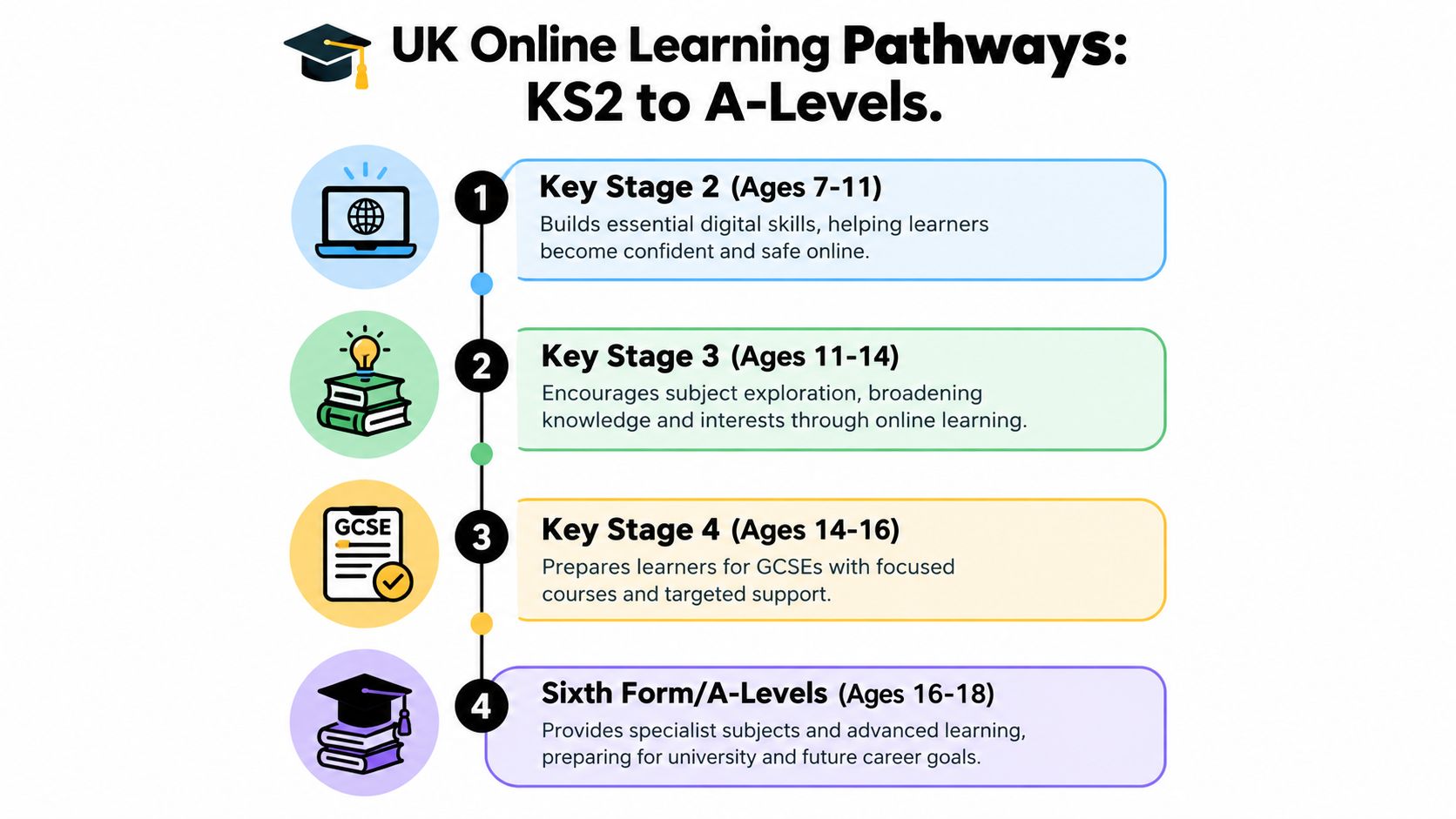
Key Stage 2 builds the foundations
Key Stage 2 generally covers ages 7–11. At this point, online provision should focus on secure foundations rather than expecting a child to manage a fully independent study programme. Reading, writing, mathematics, digital confidence, and clear communication matter more than filling the timetable with advanced platforms.
A primary learner may need an adult nearby to help interpret instructions, organise materials, and stay emotionally settled. Short tasks, movement breaks, visual explanations, and frequent encouragement can make the difference between a child feeling proud and feeling that online school is an endless stream of demands.
Key Stage 3 broadens the curriculum
Key Stage 3 generally covers ages 11–14. Students move into a wider range of subjects and begin to understand their own strengths. Science becomes more specialised, humanities require more extended reasoning, and written work demands greater organisation.
This is also a significant emotional transition. A teenager may appear independent in one lesson and need reassurance in the next. Good online teaching gives them structured choices without expecting them to manage every decision alone. Teachers should explain not only what the task is, but why it matters and how a successful response will look.
For international families, this stage is a useful point to check how the British curriculum aligns with the learner's previous school. Ask for a subject-by-subject transition discussion rather than assuming that year-group labels mean the same thing in every country.
Key Stage 4 prepares students for GCSEs
Key Stage 4 generally covers ages 14–16, with GCSE or International GCSE study at its centre. Students need subject-specialist teaching, regular assessment, revision guidance, and a clear route to examinations. A teenager who has previously worked flexibly may need help adjusting to the fixed demands of an examination syllabus.
Check which awarding body a provider uses, where examinations take place, and whether the student will be entered through an approved examination centre. The learning platform is only one part of the qualification journey. Coursework requirements, practical elements, examination access arrangements, and revision support also deserve attention.
Sixth Form leads towards A-Levels
Sixth Form generally covers ages 16–18, with A-Levels offering deeper specialisation and preparation for university or employment. Students usually study fewer subjects in greater depth, so they need stronger independent reading, essay planning, research, and time management.
A family abroad should check qualification recognition, university entry requirements, examination arrangements, and time-zone compatibility before enrolling. A British curriculum online learning pathway should be explained in terms of actual subjects, assessments, teacher contact, and progression, not just a list of attractive course names.
Protecting Teen Wellbeing and Supporting SEN and SEMH Needs
A teenager can be academically able and still find online learning difficult. SEN, or special educational needs, may affect communication, attention, processing, literacy, sensory regulation, or executive function. SEMH, meaning social, emotional, and mental health needs, may affect confidence, attendance, relationships, motivation, and the ability to recover after stress.
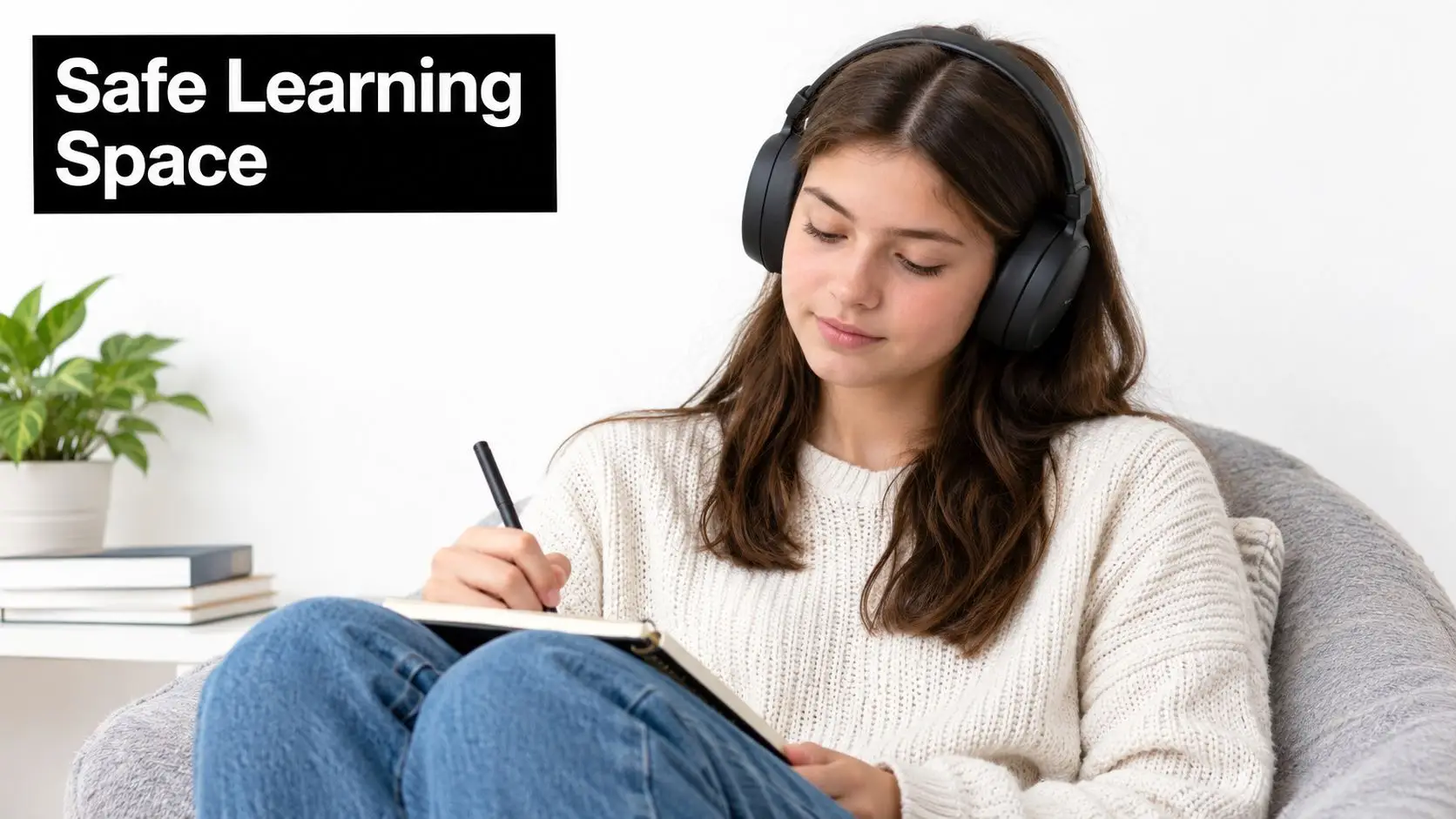
A suitable provider should ask how the student learns, not whether they can log in. Look for captions, keyboard navigation, adjustable playback speed, downloadable resources, readable layouts, and options for responding in different ways. A teenager with sensory sensitivities may need control over sound and visual load. A student with dyslexia may benefit from text-to-speech, clear formatting, and extra processing time. A young person experiencing anxiety may need a private route to ask for help without speaking in front of the group.
UK official statistics found that 38% of 13–17-year-olds reported that their screen time felt too high, and 19.1% of children aged 10–15 experienced online bullying behaviour during the year ending March 2023. The Office for National Statistics data on bullying and online experiences underlines why wellbeing and safeguarding must sit inside the learning model.
Signs a teenager may be struggling
Watch for changes rather than isolated bad days:
- A student repeatedly delays logging in, even for subjects they once enjoyed.
- Headaches, irritability, shutdowns, or tearfulness appear after lessons.
- Work is submitted, but the teenager can't explain what they've learned.
- They stop joining discussions or avoid cameras because they feel exposed.
- Their sleep routine becomes disorganised and recovery takes longer.
- They're frightened of messages, group chats, or a particular classmate.
A good school won't interpret every missed task as laziness. Staff should investigate whether the work is unclear, the platform is inaccessible, the student is being bullied, or anxiety is blocking participation. The provider should name the safeguarding lead, explain how concerns are reported, and tell parents what happens after a report.
The following video can help families think about how the physical study environment affects concentration and comfort:
Screen-time management shouldn't mean banning every digital activity. It means distinguishing a live discussion from passive browsing, building device-free breaks into the day, and protecting sleep. Ask whether the school monitors attendance and participation proportionately, with teacher judgement rather than intrusive surveillance.
For a vulnerable teenager, inclusion is practical. It looks like a named adult, an accessible lesson, a private reporting route, and a teacher who notices withdrawal.
Building Daily Routines and Study Skills That Actually Stick
A workable online-school day has rhythm. The teenager knows when lessons begin, when independent work happens, when to take a break, and when the academic day ends. Without those boundaries, home can start to feel like school everywhere and nowhere at once.
Start with a timetable that protects sleep and includes realistic transition time. A student who finishes a lesson and immediately opens social media may struggle to begin the next task, while one who works continuously for hours may become too fatigued to think clearly. Agree the routine with the teenager, then review it after observing what happens.
Turn attendance into active learning
Remote provision during England's January–February 2022 Schools Infection Survey included live lessons in 71% of secondary schools and recorded lessons in 62%, yet 58% of secondary pupils reported at least one difficulty with learning from home, according to the Office for National Statistics survey report. The lesson for parents is simple. A timetable full of sessions doesn't guarantee that a teenager is learning.
Encourage active habits:
- Retrieve before rereading: Ask your teenager to write down what they remember before opening the notes.
- Use short explanations: After a lesson, they should explain one idea aloud, sketch it, or apply it to an example.
- Plan the next action: “Revise biology” is vague. “Complete the cell-structure questions and mark them” gives the brain a clear starting point.
- Keep evidence of understanding: Finished questions, annotated notes, drafts, and corrections reveal more than a green attendance tick.
A parent's role is to provide warmth and accountability without becoming a full-time supervisor. Sit nearby for the first few minutes if starting is hard, but don't hover over every answer. Ask, “What's the next step?” rather than, “Why haven't you finished?”
Families who want to understand how timetable design affects adolescent wellbeing can also explore this practical discussion of school schedule impact on teens. The most effective routine is one the teenager can repeat on an ordinary day, not one that only works when everyone is calm and highly motivated.
How to Choose a Provider and Evaluate Quality Before You Commit
A polished website doesn't prove that an online school can support your child. Ask for evidence of teaching quality, examination arrangements, safeguarding, accessibility, and communication before making a commitment.
| Quality Indicator | What to Look For | Red Flags |
|---|---|---|
| Qualifications | Clear awarding bodies, examination-centre arrangements, and progression information | Vague claims about recognised qualifications |
| Teaching | Subject-specialist teachers, live interaction, feedback, and office-hour support | Mostly automated content with limited adult contact |
| Class experience | Manageable group sizes, participation opportunities, and respectful discussion | Students remain passive or rarely receive individual feedback |
| SEN and SEMH support | An assessment process, reasonable adjustments, accessible materials, and named pastoral staff | Inclusion appears in marketing but not in documented practice |
| Safeguarding | A named safeguarding lead, reporting route, anti-bullying policy, and clear escalation process | Families can't find who handles a concern |
| International access | Time-zone planning, examination logistics, and confirmation of qualification recognition | The provider expects every family to solve logistics alone |
Questions worth asking directly
Request a sample timetable and ask how much of it is live, recorded, independent, and offline. Ask how teachers identify a student who attends but doesn't participate. Find out how quickly staff respond to missed work and whether parents receive useful updates rather than unexplained dashboard alerts.
International families should ask whether lesson times fit the teenager's normal day and whether examinations can be taken through an approved centre in a practical location. They should also confirm how the qualification connects with the universities or institutions the student may later consider.
Privacy deserves equal attention. Ask what information the platform collects, who can access it, how long it is retained, and whether cameras or microphones are required beyond the lesson itself. A provider should answer plainly, without making parents feel difficult for asking.
For broader comparison, families researching structured online courses can use these Model Diplomat course recommendations as one reference point, then verify each provider's qualifications and support independently.
Queens Online School offers live, teacher-led programmes for learners aged 11–16 through Lower Secondary and Upper Secondary or GCSE study, with small classes, recorded sessions, subject-specialist teaching, and support for learners with SEN and SEMH needs. It also operates as a Pearson Approved Examination Centre, so parents can examine how its GCSE and International GCSE route fits their child's longer-term plans.
Making the Decision That Fits Your Teenager
The right choice is the one that helps your teenager learn without asking them to hide their needs. Flexibility matters, but so do skilled teachers, human contact, safeguarding, accessible materials, and routines that leave room for sleep and recovery.
Return to the teenager staring at the worksheet at 8 p.m. A better outcome might not mean that every evening becomes easy. It might mean they know where to find help, can replay the explanation, receive useful feedback, and feel safe enough to say, “I don't understand this yet.” That change in emotional experience can restore confidence and make academic progress possible.
Speak with your teenager before choosing. Ask what makes school exhausting, what helps them concentrate, how they prefer to ask questions, and what would make them feel known rather than monitored. Then compare providers against those answers, not against marketing promises.
If your teenager needs structured live lessons, recognised British qualifications, personalised teacher support, and a learning environment designed around belonging and wellbeing, visit Queens Online School to explore its online programmes. Speak with the school about your child's academic goals, SEN or SEMH needs, timetable, and examination pathway before deciding whether it's the right fit.