

You may be sitting at the kitchen table with a school prospectus open on one screen and your banking app on the other. Your child may already be talking about new subjects, fresh routines, or the relief of finally learning in an environment that suits them better. At the same time, a practical question starts to press in: how will the fees work, and how do you make sure every payment is safe, manageable, and on time?
That mix of hope and hesitation is completely normal.
Parents rarely see school payments as just admin. A payment plan often represents something much bigger. Stability for a child who needs calm. Continuity for a teenager preparing for GCSEs or A Levels. A smoother path for a learner with SEN or SEMH needs who benefits from predictability. When payments are clear, families can put their energy where it belongs, on attendance, progress, confidence, and wellbeing.
Online school payments have also become a familiar part of family life in the UK. The UK online education market is growing rapidly, with over 50% of all consumer card spending happening online in 2025, which shows that paying school fees online is now a common, secure, and well-established practice for families across the country, according to UK online education market data.
Investing in Your Child's Future with Confidence
A parent recently described the decision to move their child into online learning as “equal parts relief and responsibility”. Relief, because their child had begun to dread the school day. Responsibility, because choosing a new path meant reviewing fees, deadlines, and payment methods with real care.
That feeling matters. When you commit to an online school, you're not merely approving a transaction. You're creating the conditions for your child to start well and continue without disruption.

Why payment clarity matters to children
Children feel financial uncertainty even when adults try to shield them from it. They notice tense conversations, delayed decisions, or uncertainty around whether a course, exam, or support service can go ahead. Clear online school payments remove some of that pressure from the household.
A stable payment arrangement supports a stable school experience. That can mean:
- Fewer last-minute surprises so your child starts term with confidence
- Better planning for support needs if they require extra learning help or a carefully organised routine
- A calmer home environment because parents aren't chasing deadlines or searching through old emails for invoices
Practical rule: If a payment setup feels confusing now, it will usually feel more stressful at the busiest point in term. Simplicity is a form of support.
Many parents also find it helpful to review the wider household budget before agreeing to fees. If you want a simple framework for that, this guide to planning your personal finances is a useful starting point because it helps families think through regular commitments without losing sight of bigger goals.
Confidence comes from knowing your options
Some families want to pay in full for certainty. Others prefer termly payments to match income patterns. International families may need more flexibility around currency and card support. None of those preferences means you're less committed to your child's education. It means you're choosing a structure that makes that commitment sustainable.
That's the right way to think about it. The best payment arrangement is usually the one that protects your child's continuity and your peace of mind at the same time.
How Our School Fees Are Structured
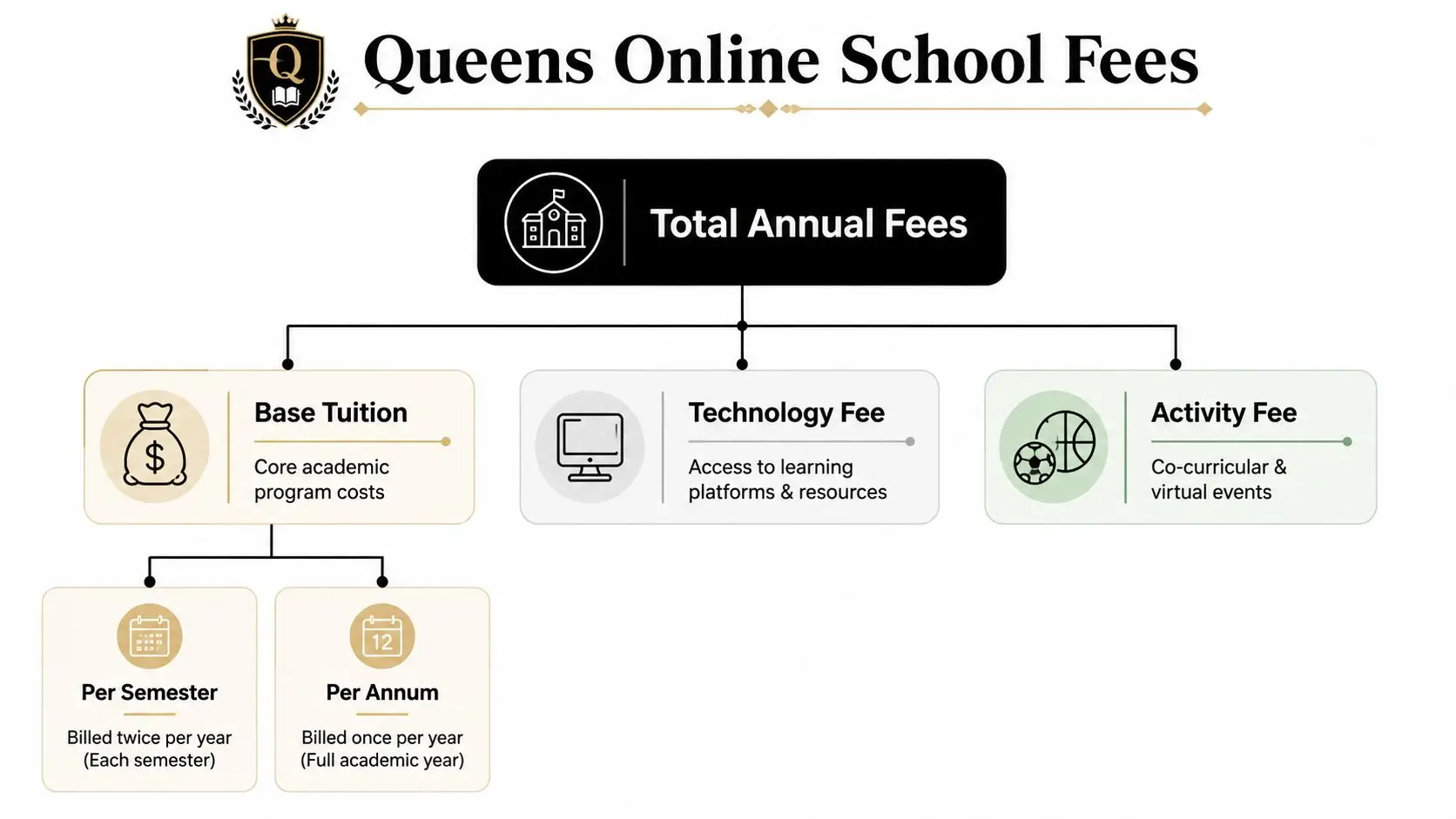
School fees can look complicated when they first appear on a page. They become much easier to understand when you treat them as parts of one learning plan rather than one large bill.
A useful way to think about fees is to picture a set of building blocks. Each block supports a different part of your child's experience. One covers teaching. Another supports access to digital systems. Another helps create the wider school life that keeps online learning human and engaging.
The main fee categories
Most parents are looking at three broad areas.
- Base tuition. This is the core of the educational programme. It covers live teaching, subject delivery, teacher time, lesson preparation, marking, and academic oversight.
- Technology access. Online learning depends on reliable platforms, secure systems, and digital resources that support teaching and communication.
- Activities and wider school life. These can include clubs, virtual events, enrichment, and the co-curricular experiences that help children feel part of a community.
If you're reviewing current details, the clearest place to start is the school's fees information page.
Looking past cost and seeing value
Parents often ask the same sensible question: what am I paying for?
The answer becomes clearer when you tie each fee to your child's daily experience. Tuition isn't just a line item. It's the lesson your child logs into on a difficult Monday morning and is keen to stay in. Technology isn't just software. It's the platform that lets them access resources, recorded sessions, and communication without added friction. Activity costs aren't extras in the emotional sense. For some pupils, they're part of belonging.
A child who needs structure benefits from dependable systems. A teenager preparing for formal exams benefits from subject-specialist teaching and organised assessment support. A pupil who has felt isolated in previous settings may benefit from clubs, live interaction, and a visible school community.
Fees make more sense when you connect each one to a real educational need in your child's week.
How to review fees without feeling overwhelmed
Try this order when you compare options:
- Start with your child's priorities. Do they need academic stretch, pastoral support, flexibility, or exam preparation?
- Match fees to those needs. Which part of the fee structure supports the outcomes that matter most?
- Separate core from optional. That helps you understand what's essential and what may vary.
- Check payment timing early. A good fee structure is only helpful if the due dates fit your family's cash flow.
Parents who've dealt with sports clubs, music tuition, or other recurring family commitments may already know how helpful clear fee collection can be. Some of the same practical habits appear in Vanta Sports best practices for club fees, especially around transparency and predictable billing.
Choosing the Right Payment Method for Your Family
The best payment method is the one that fits how your household already manages money. Some parents want the speed of card payments. Others prefer bank transfer because it feels familiar and easier to track from their current account.
What matters most is not choosing the “best” option in the abstract. It's choosing the option that helps you pay confidently, keep a clear record, and avoid unnecessary stress.
Comparing Your Payment Options
| Payment Method | Processing Speed | Best For | Notes |
|---|---|---|---|
| Debit or credit card | Usually immediate confirmation | Parents who want convenience and a quick checkout | Useful when you want a simple, familiar online payment experience |
| Bank transfer via Faster Payments | Processed in seconds | Families who prefer paying directly from online or mobile banking | Strong option for larger tuition payments and clear bank records |
| Recurring payment arrangement | Scheduled automatically | Households that prefer planning ahead | Helpful for spreading fees and reducing the chance of missed deadlines |
| International card or supported cross-border method | Varies by provider setup | Families paying from outside the UK | Best when the school supports secure cross-border processing and clear confirmation |
Why many families choose bank transfer
For UK families, Faster Payments can remove a lot of uncertainty. The UK's Faster Payment System allows tuition payments up to £1 million to be processed in seconds, giving parents instant confirmation and peace of mind while eliminating the 2 to 3 day waiting period of older transfer methods, according to Pay.UK's Faster Payment System overview.
That speed matters in practical ways. If you're paying close to a deadline, or if you need confirmation before term begins, quick settlement is reassuring. You don't have to spend the evening wondering whether the transfer has arrived.
How to choose without overthinking it
Ask yourself four simple questions:
- Do I want instant confirmation? If yes, card payments or Faster Payments will usually feel easiest.
- Do I want everything visible in my bank account? Direct transfer often works well for that.
- Am I paying from the UK or abroad? If you're abroad, cross-border support becomes more important than habit.
- Will I be making one payment or several? A single annual payment and a recurring plan may call for different methods.
A practical example helps. One family paying for a September start may choose debit card because they want immediate confirmation after accepting the place. Another may choose bank transfer because they're paying from a dedicated education savings account and want the reference to appear clearly in their banking records. Both choices are sensible.
If a method feels easy for you to repeat, verify, and document, it's usually the right one.
Making International School Payments Simple
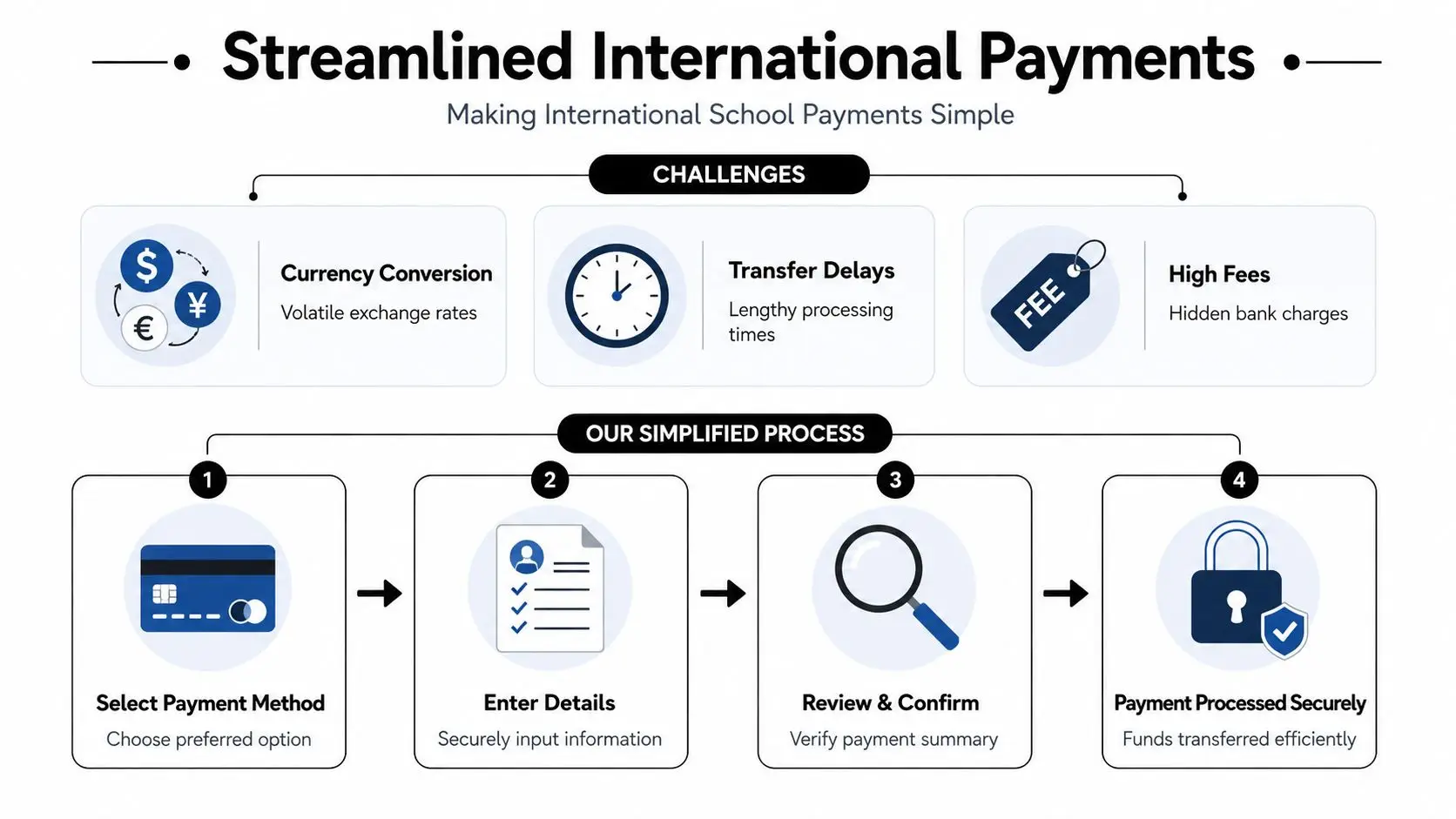
International families often face a different kind of worry. They aren't only thinking about fees. They're thinking about exchange rates, transfer delays, card acceptance, and whether a payment will arrive in time for enrolment or the start of term.
Those concerns are real. A 2022 report highlighted that 62% of international students from key countries experienced delays and friction when paying UK education fees, a problem modern online schools solve with integrated, low-cost cross-border payment solutions, according to this report on UK education payments for international students.
Where international payments usually go wrong
The friction often shows up in familiar places:
- Currency conversion confusion when the amount leaving the account doesn't match what the family expected
- Transfer timing issues when banks process payments more slowly than parents assumed
- Limited payment support if a preferred card or wallet isn't accepted
- Unclear confirmation which leaves parents unsure whether a child's place is fully secured
For a family in Dubai or Hong Kong, this can feel especially stressful. They may be managing time zone differences, school admissions paperwork, and a child's emotions about starting a British curriculum from abroad. Payment uncertainty is the last thing they need.
What a smoother process looks like
A better international payment experience is straightforward.
First, the family chooses a supported method. Then they review the amount carefully, including any currency implications shown at checkout. Next, they confirm the payment and receive clear acknowledgement. After that, they keep the receipt or transaction confirmation with their admissions records.
That sounds simple because it should be simple.
For families exploring options designed for overseas learners, it also helps to review the wider context of online high school for international students, especially if you're balancing curriculum recognition, timetable flexibility, and payment logistics at the same time.
International parents don't need a more complicated payment journey. They need a more predictable one.
When schools support modern cross-border methods properly, the payment process stops feeling like a separate obstacle. It becomes one calm administrative step in a much larger decision about your child's education, belonging, and future opportunities.
Setting Up Recurring Payments and Instalment Plans
Large school fees can feel heavy when they land all at once, even for families who have planned carefully. That doesn't mean the education is out of reach. It usually means the payment structure needs to match the way real households budget.
Recurring online school payments can make a genuine difference. Data shows that offering automated monthly payments for school tuition can reduce late payments by 30%, as it helps the 45% of UK parents who struggle with managing large, lump-sum term fees, according to education payment processing data.
Why instalments help families breathe
A monthly or termly plan doesn't just spread cost. It also spreads pressure.
For many parents, the emotional benefit is as important as the financial one. Once the plan is in place, you're less likely to spend each term start recalculating what can be moved, postponed, or dipped into. That protects family calm, and children notice that calm.
A practical example is a family budgeting for A Level study while also covering transport, tutoring in another subject, or additional home costs. Paying in instalments can make the commitment feel organised rather than overwhelming.
A simple way to set up recurring payments
Use this sequence:
- Check the payment schedule. Confirm whether monthly, termly, or annual options are available.
- Choose the plan that fits your income pattern. Salaried monthly income often pairs naturally with monthly instalments.
- Log in to the payment area. Families can usually manage practical billing tasks through the parent portal login.
- Save confirmation emails and reference numbers. Keep them in one folder so both parents or guardians can access them if needed.
What to watch before you confirm
A recurring plan works best when you review a few points first:
- Check due dates so they don't fall just before other major household commitments
- Use the same account consistently where possible, which makes tracking easier
- Set a reminder a few days before each payment even if the plan is automated
- Ask about missed-payment procedures early so there are no surprises if circumstances change
Some UK online schools also set firm payment deadlines. For example, British International Online School states that full payment must be made within 21 days prior to the start of the academic year, with some year groups able to pay termly or yearly, according to its terms and conditions. That kind of clarity is helpful because families can plan around a known date rather than guess.
How We Protect Your Online School Payments
Security language can sound technical very quickly. Parents don't need jargon. They need to know whether their card details, bank information, and personal data are being handled properly.
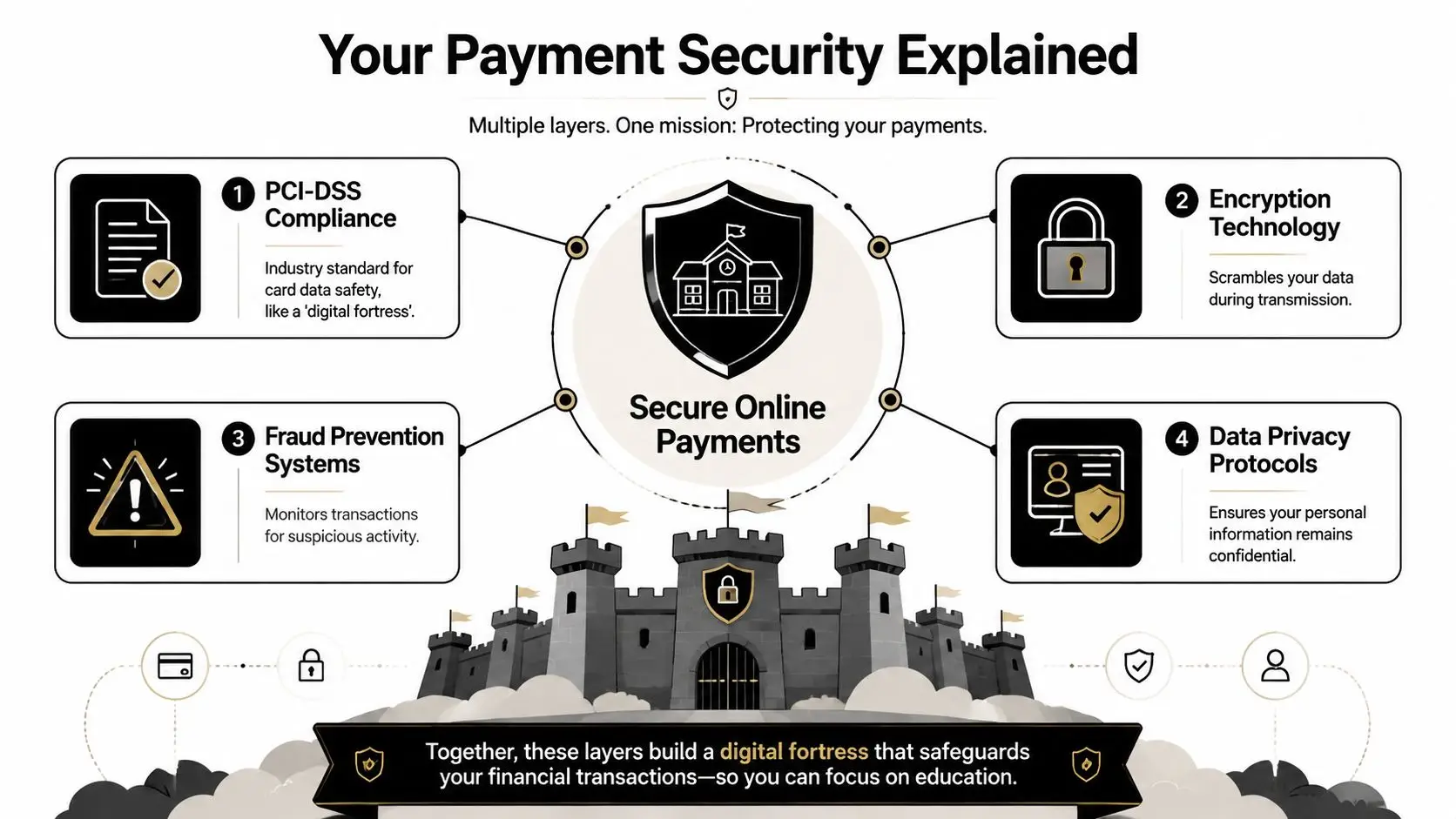
A good way to understand secure online school payments is to think of them as moving through a digital armoured system. The school does not merely take payment details and hope for the best. Strong payment systems are built to protect information at each stage.
What PCI-DSS means in plain language
PCI-DSS compliance is an industry standard for handling card payments safely. In practical terms, it means the payment environment follows recognised rules for protecting card data.
You can think of it as the difference between keeping valuables in an unsecured drawer and placing them in a managed vault. Parents may never see the technical controls behind the scenes, but they feel the benefit when payments are processed in a controlled, trustworthy way.
How encryption and tokenisation help
Encryption scrambles payment information while it is being sent, so that it can't be read in any useful way if intercepted.
Tokenisation replaces sensitive card details with a secure substitute. That substitute is far less useful to anyone who shouldn't have it. For parents, the important point is simple: the system is designed to avoid exposing real card information more than necessary.
Secure payments should feel ordinary to parents because the hard work is happening behind the scenes.
By using PCI-DSS compliant platforms with modern encryption, UK schools have reduced per-transaction management overhead by 35% and seen a 28% drop in disputed transactions, ensuring payments are both secure and efficient, according to CRB Cunninghams on digital payments in schools.
Security also means careful school practice
Technology matters, but process matters too. A careful school payment setup should include:
- Restricted access so only authorised staff handle the information they need
- Clear transaction records so families can match payments to invoices
- Consistent verification for unusual activity or payment queries
- Data privacy procedures that treat family information with the same seriousness as pupil records
Parents should expect calm professionalism here. If a school is organised with financial data, that often reflects a wider culture of responsibility and care. That's reassuring, because financial safety and educational stability are closely linked.
Your Questions on School Payments Answered
Even after the main payment process is clear, a few sensitive questions usually remain. These tend to come up late at night, after a parent has read the fee policy twice and still wants reassurance.
What happens if we need to ask about refunds
Refunds depend on the school's own terms, the timing of withdrawal, and which services or teaching periods have already been committed. The important thing is to ask for the written policy before payment, not after a problem arises.
Look for clear wording on notice periods, non-refundable charges, and how exam-related costs are handled. If your child has additional needs, ask whether any parts of the arrangement involve specialist support or reserved resources that affect refund decisions.
What if a payment is late
Late payment doesn't always mean irresponsibility. Families can face salary timing changes, international transfer delays, or unexpected household pressure. The best approach is to contact the school as soon as you know there may be an issue.
In the UK, every maintained school must publish a charging policy and remissions policy online, setting out what may be charged and when fees may be wholly or partly waived, according to government guidance on what maintained schools must publish online. Independent and online schools may have different policies, but the principle still helps parents: ask for written clarity, early.
Can financial support or flexibility be applied to fees
This varies by school. Some schools may offer flexibility through instalment plans. Others may apply bursary, scholarship, or remission arrangements through the billing process. What matters is understanding how any support is reflected on the invoice and whether it changes due dates or payment method options.
When you ask, keep your questions practical:
- How will the adjustment appear on the invoice?
- Does support apply to tuition only, or also to related costs?
- Will we still need to set up recurring payments for the remaining balance?
Ask for the payment answer your child needs, not just the one the form happens to show.
A clear payment process gives children something valuable that they rarely name directly. Security. They know where they'll be learning. They know the plan is in place. They can focus on the next lesson, the next assignment, and the next step forward.
If you're comparing options for your child and want a school that combines flexible online learning with a clear, supportive family experience, explore Queens Online School. It's a practical place to start if you're looking for British curriculum teaching, thoughtful structure, and a learning environment that keeps your child at the centre.