

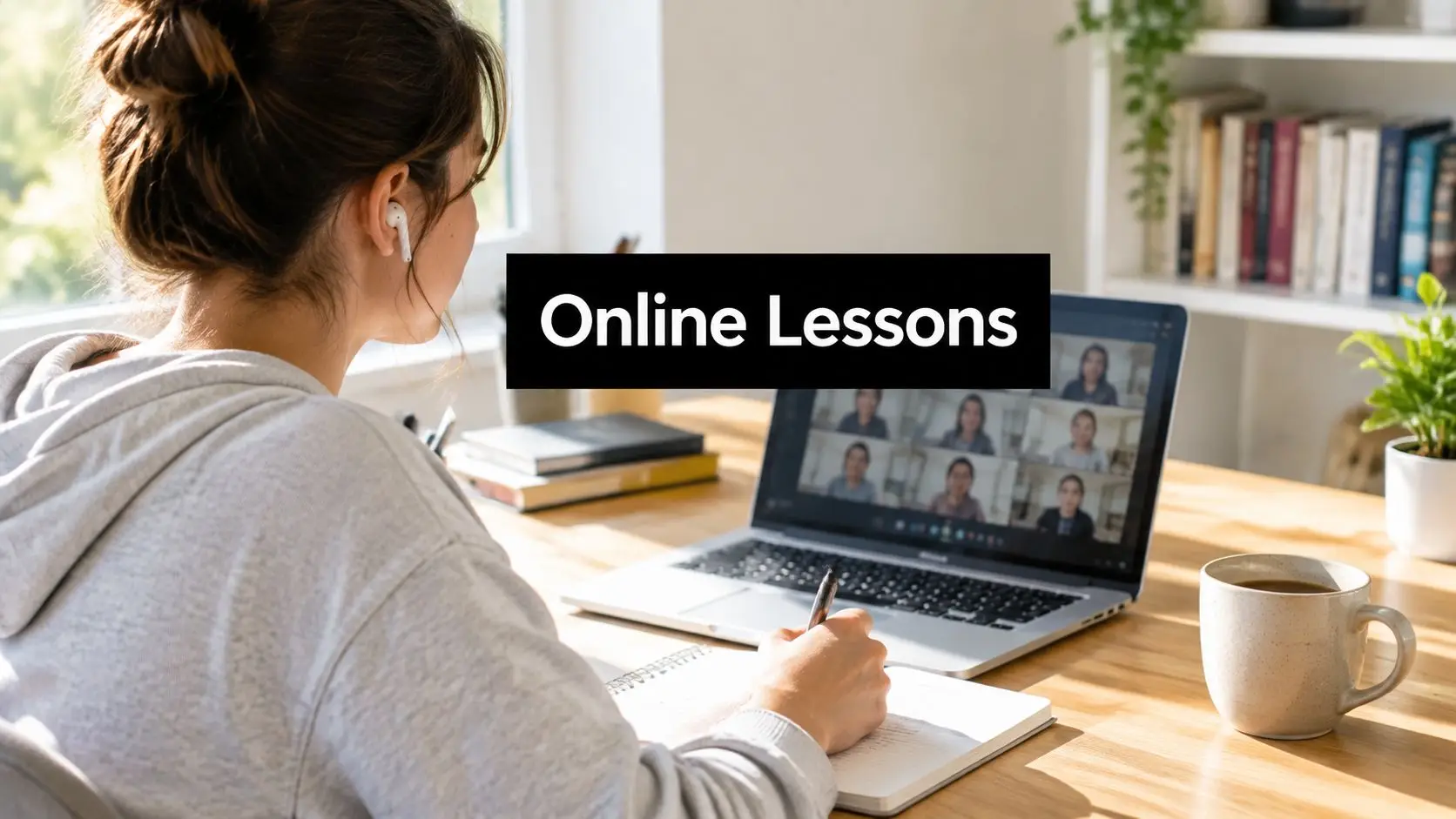
You may be wondering whether online school lessons mean your child sitting alone in front of a screen, trying to understand recorded worksheets without anyone noticing when they're lost. That fear is understandable, especially if your child is anxious, has special educational needs, or has already found a busy school environment exhausting.
A well-designed online school day looks different. Your child still meets teachers, answers questions, works with classmates, receives feedback, and follows a purposeful timetable. The difference is that learning takes place from a familiar setting, with more opportunities to adjust pace, reduce unnecessary pressure, and notice what helps your child feel safe enough to learn.
A Morning in the Life of an Online Lesson
Ava is in Year 7. At 8.45, she's still wearing her dressing gown, with one sock on and a half-eaten slice of toast beside her laptop. Downstairs, the dog barks at a delivery. She settles into her bedroom desk, puts on her headphones, and clicks into a live English lesson that has already started.
The screen shows a small grid of classmates. Her teacher has shared a whiteboard covered with sentences from the previous lesson. In the chat, one pupil has raised a virtual hand and another has typed an answer. The teacher notices Ava joining and greets her by name without making her explain herself in front of everyone.
Ava listens to the soft hum of the teacher's voice through her headphones. She opens the document on screen and highlights the adjective the class is discussing. When the teacher asks for ideas, Ava types hers into the chat first. A few minutes later, she unmutes herself and reads it aloud.
The hour feels familiar because there's a teacher, a lesson objective, questions, laughter, and work to complete. It also feels different because Ava can take a sip of water, adjust the light, and remain in a room where she feels secure. Her parent can see that she's learning without hovering over every answer.
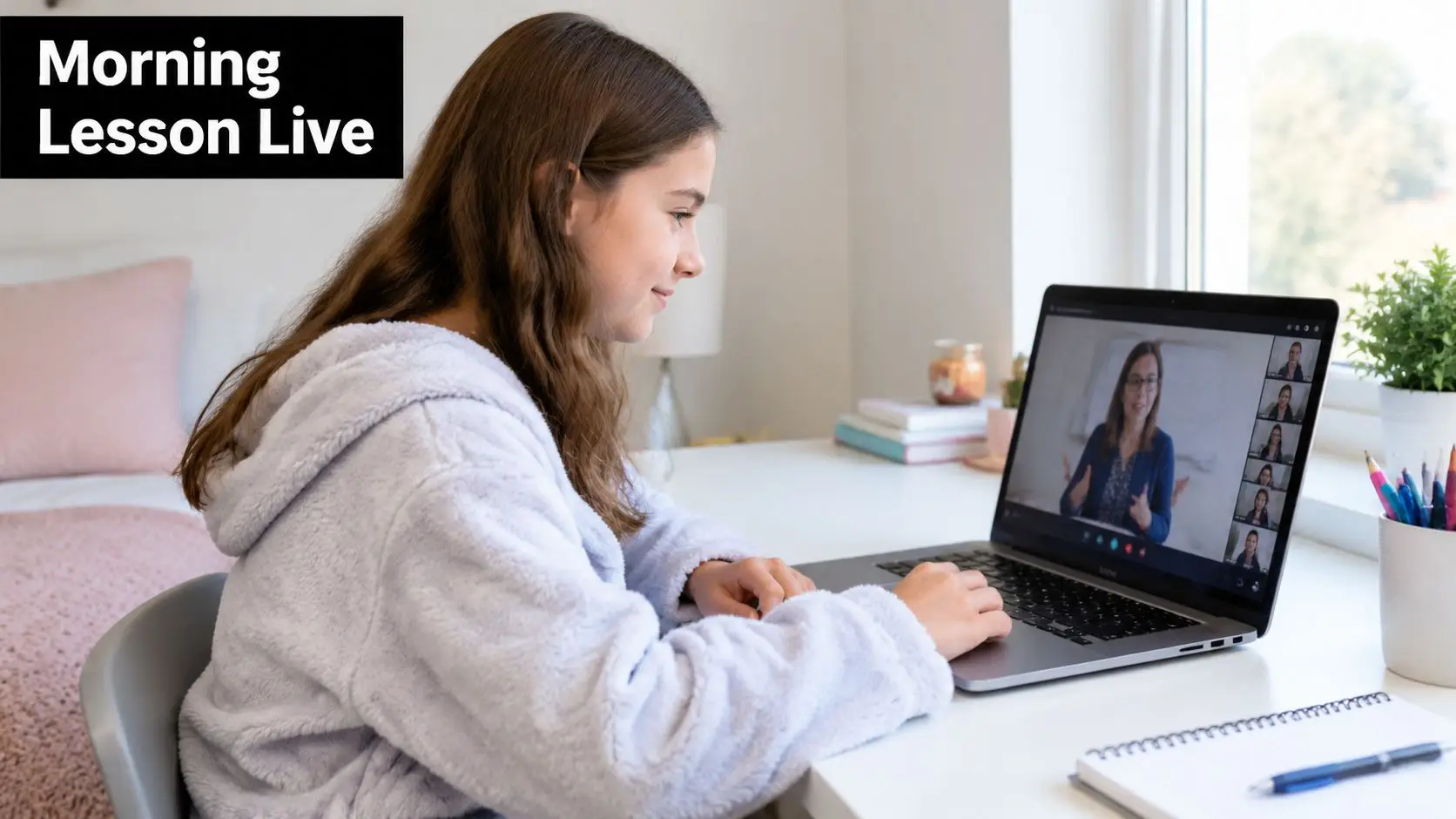
Later that evening, Ava watches part of the lesson recording. She missed a point about subordinate clauses while the dog was barking, so she pauses, rewinds, and listens again. The recording doesn't replace the live class. It gives her another chance to understand what happened without the embarrassment of asking the same question repeatedly.
What matters most: an online lesson should make a child feel present, noticed, and able to ask for help.
This is the experience many parents are looking for. They aren't asking for less education. They're asking for education that recognises the child behind the camera, including their concentration, confidence, sensory needs, and energy.
How Online School Lessons Actually Work
The phrase online school lessons covers several different teaching models, so it helps to separate them.
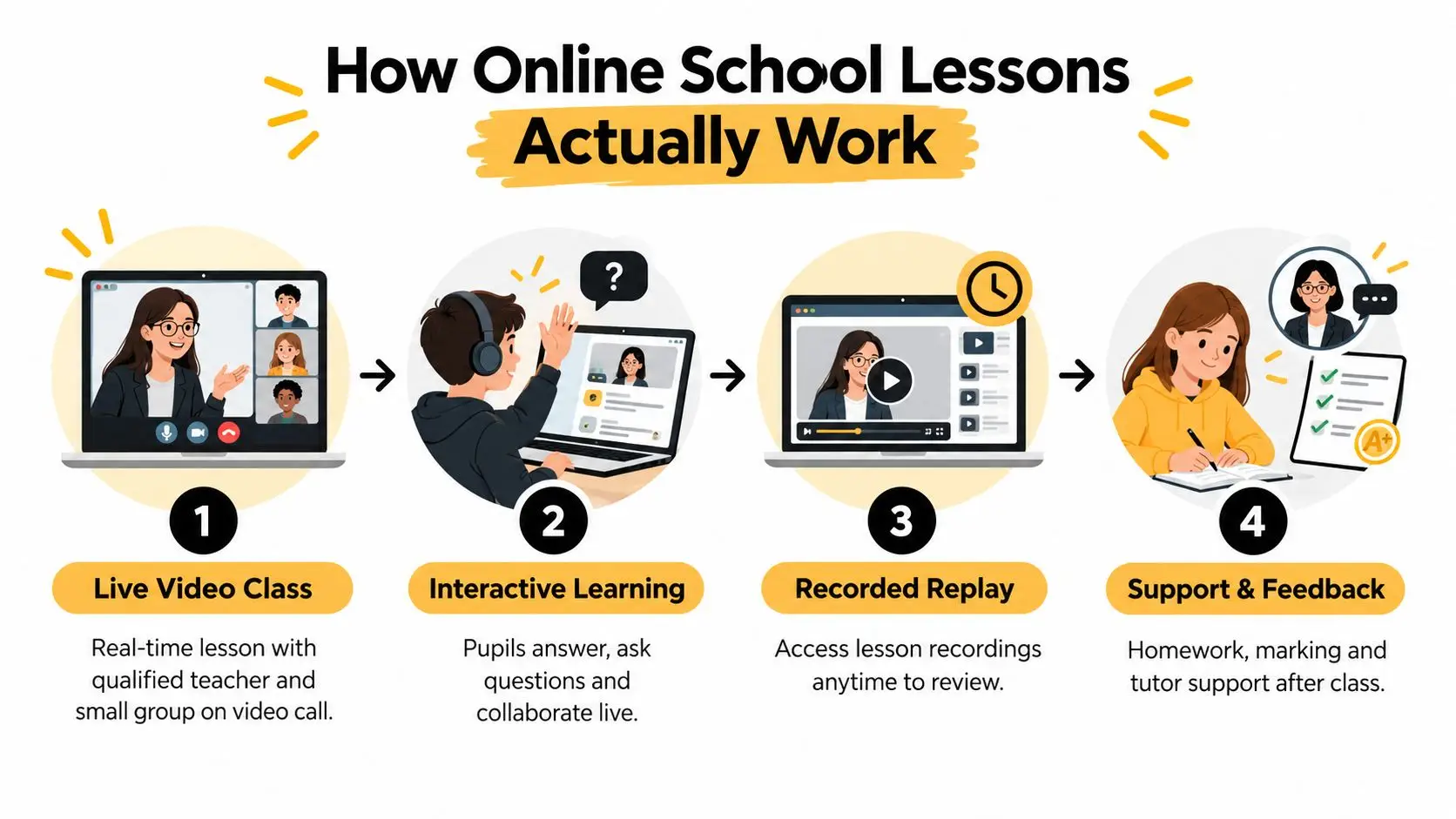
A live lesson happens in real time. A qualified teacher teaches a small group of pupils through a virtual classroom, explains new ideas, asks questions, checks understanding, and responds to answers. A recorded lesson has already been taught and is watched independently. A child might use it to catch up after illness, revisit a difficult explanation, or work at a suitable pace.
Class sizes vary between providers, but online classes are often organised around groups of 8 to 20 pupils. The important question isn't just the number. Ask whether the teacher can learn each child's voice, notice a quiet pupil, and respond when someone's confidence drops.
The shape of a live lesson
A typical lesson has a clear beginning, middle, and end:
- Starter activity: The teacher checks prior learning with a question, retrieval task, poll, or short discussion.
- Direct teaching: The new concept is explained using a shared whiteboard, slides, modelling, or worked examples.
- Guided practice: Pupils try the task while the teacher watches responses, visits breakout rooms, or answers questions in the chat.
- Plenary: The class returns to the main idea and considers what has been learned.
- Exit task: Each pupil completes a short response that helps the teacher decide what needs revisiting.
These tools only help when they serve a teaching purpose. A poll should reveal understanding, not interrupt the lesson for decoration. A breakout room should give pupils a reason to collaborate, not send them away without guidance.
Who supports the child
The class teacher plans and delivers the academic lesson. A teaching assistant may help pupils access instructions, organise materials, or contribute in a smaller group. A form tutor usually provides continuity, checks in on wellbeing, and helps a child feel known beyond individual subjects.
Attendance, participation, completed work, and homework can be recorded through the school's learning platform. Families should be able to understand what their child has attended, what remains unfinished, and where feedback is available. To see how this approach can look in practice, explore interactive online classes.
A Real School Day at Queen's Online School
At Queen's Online School, a pupil's day is designed to feel like a balanced school day, not a string of disconnected video calls. The exact timetable will vary by age and programme, but the rhythm below shows how learning, feedback, social contact, and rest can fit together.
8.45, tutor registration. A pupil joins a live check-in with their tutor. The conversation may cover the day's timetable, a practical reminder, or how everyone is feeling. For a child who often arrives at school already worried, this calm start can be more useful than being expected to move straight into difficult work.
9.00, live English. The class works with a subject teacher for 45 minutes. The teacher models a reading strategy, asks pupils to annotate a passage, and invites contributions through voice or chat. A child who needs extra thinking time can prepare an answer before speaking.
9.50, recorded numeracy task. The pupil completes a numeracy activity independently, using the explanation and instructions provided. This part of the day gives space to pause, repeat a method, and work without the pressure of keeping up with a whole group.
10.30, screen break. The pupil leaves the desk, moves around, has a drink, and looks away from the screen. This pause is part of the timetable, not a reward for finishing early.
11.00, small-group phonics or science. A primary pupil might practise sounds with close teacher attention. A Key Stage 3 pupil might complete a science investigation, discuss a result, and explain their reasoning to classmates.
1.30, enrichment. Art, debate, mindfulness, leadership activities, or a club can give the afternoon a different emotional texture. A child who has struggled with formal lessons may discover confidence while discussing an idea or creating something original.
3.30, sign-off. The pupil checks the dashboard, reviews unfinished work, and leaves the school day. Teachers mark work and return feedback according to the school's arrangements, so the child and parent can see what has been understood and what needs attention.
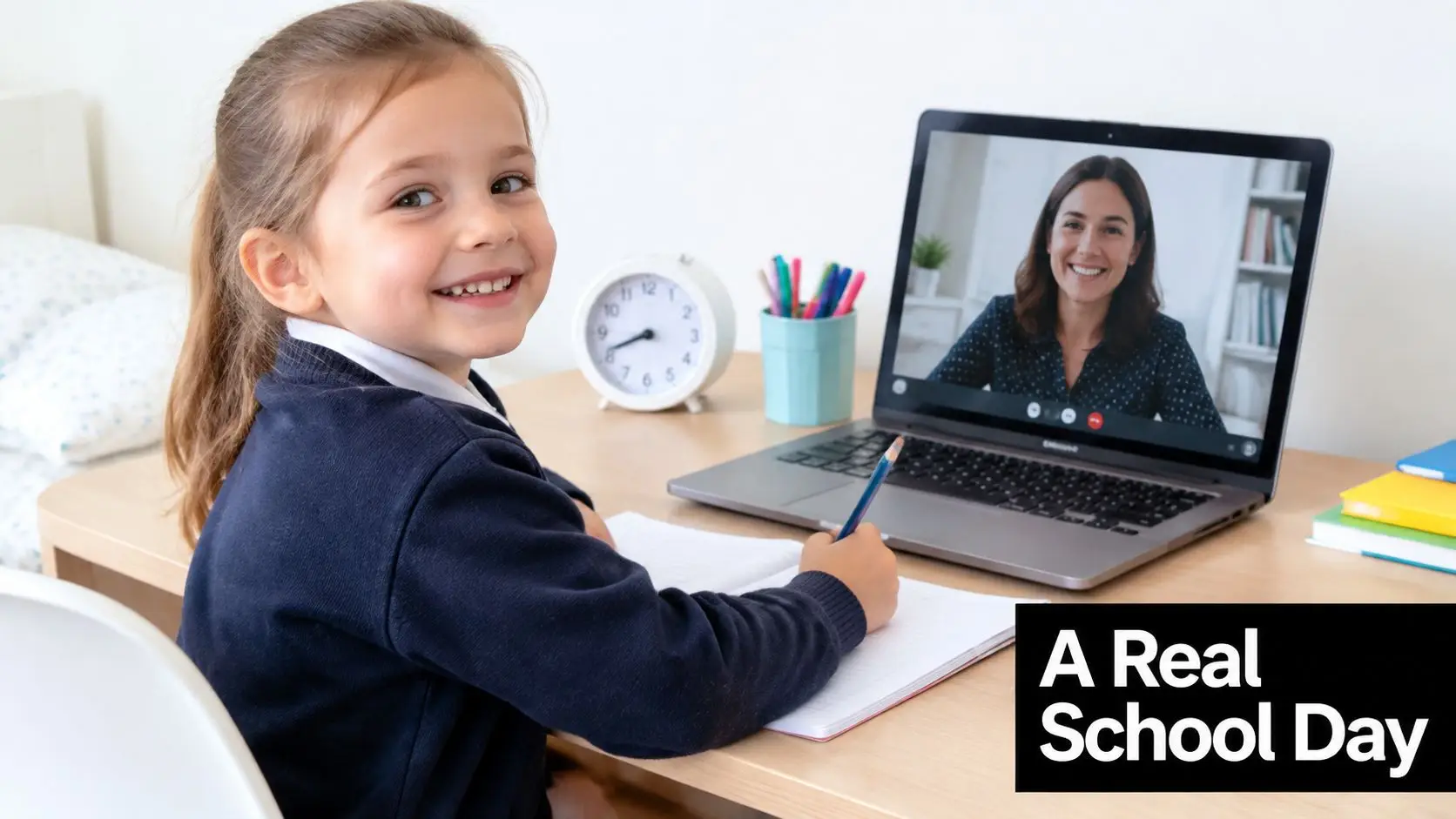
The model is live and teacher-led, with small groups, British-curriculum teaching, and planned transitions. The dashboard should help a parent understand the day without turning the home into another examination room.
Matching Lesson Formats to Different Learners
The right format depends on the child, not on a fashionable label. A pupil who thrives on routine may value a predictable live timetable, while another may need recorded material to reduce the strain of processing information in real time.
For neurotypical pupils, a familiar sequence can provide confidence. They know when registration begins, where to find resources, how to ask for help, and when the school day ends. Clear routines also help younger pupils practise independence gradually.
An anxious child or school refuser may experience the journey through a school gate as the main barrier to learning. Joining a teacher from home can remove that immediate crisis, but it shouldn't mean removing expectations. A gentle arrival routine, a trusted tutor, and low-pressure opportunities to contribute can help the child reconnect with education.
Adjusting the lesson without lowering expectations
A pupil with ADHD may need short activity changes, movement breaks, visible instructions, and frequent opportunities to respond. A teacher can use a poll, a quick verbal answer, a written task, and a stretch break to vary the lesson without making the child feel punished for needing movement.
An autistic learner may benefit from predictable language, advance notice of changes, reduced visual clutter, and an agreed way to signal discomfort. A child with SEMH needs may need adults to recognise that emotional regulation affects access to learning. That means checking in before demanding a lengthy written response.
Dyslexic readers can benefit from live reading because the teacher can model decoding, correct a misunderstanding immediately, and offer encouragement while the child is still engaged. Recorded material can complement this by allowing the pupil to pause, replay an explanation, or listen again without feeling watched.
Asynchronous learning can also help a pupil managing chronic fatigue or a long-term illness. The child may complete a carefully chosen task when their energy allows, while still receiving planned teacher contact. The guide to asynchronous learning explains why independent access can sit alongside live teaching rather than replace it.
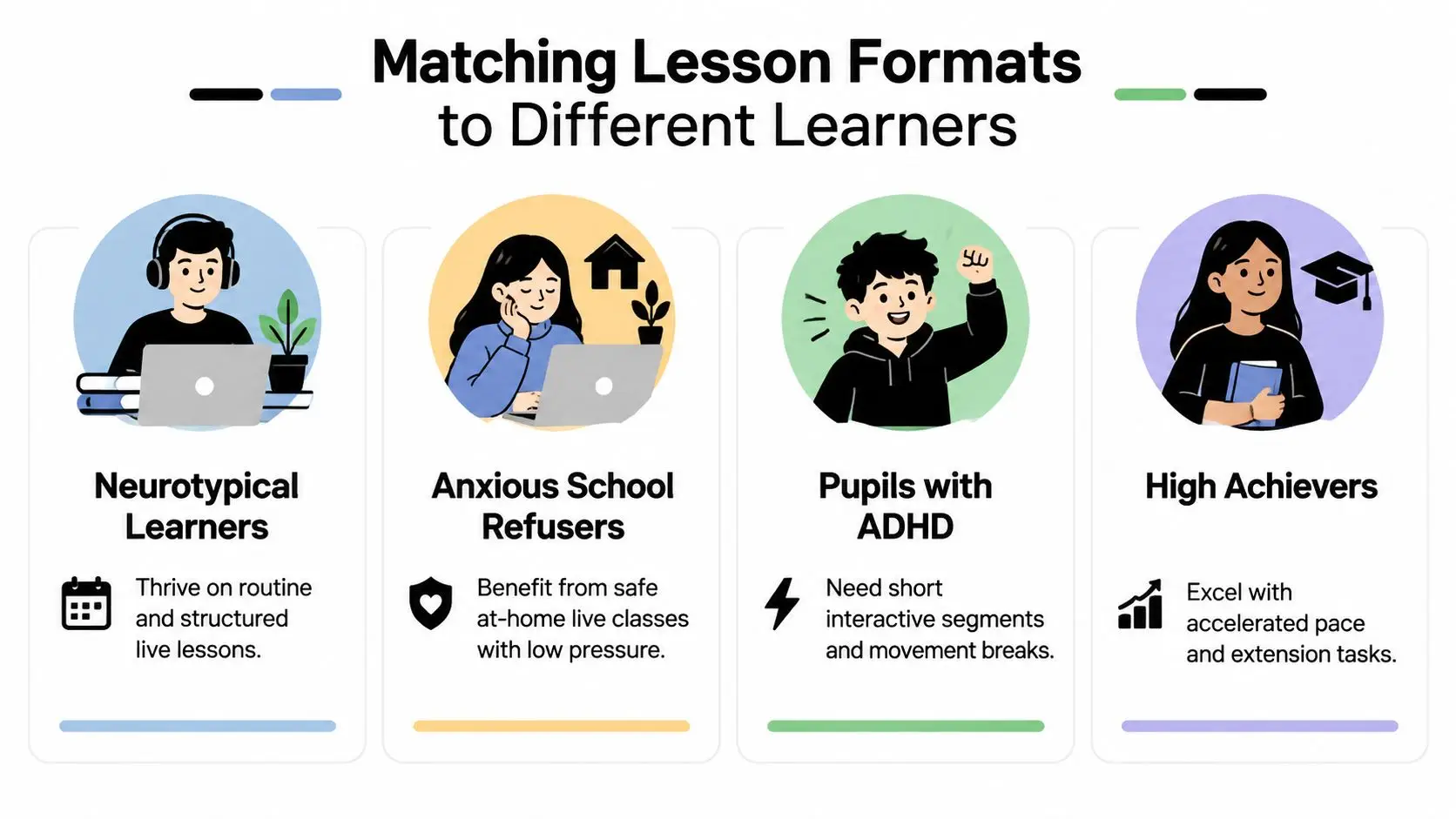
Queen's Online School describes an approach built around live groups, SENDCo oversight, differentiated teaching, breakout-room support, and quiet one-to-one catch-ups. The practical test is whether those arrangements are used thoughtfully. A sensory-sensitive child and a confident examination pupil can work in the same class when the teacher varies support, questioning, pace, and challenge without publicly labelling either learner.
The SEND Code of Practice recognises that online learning can support real-time teaching, wider curriculum access, and interaction. It also stresses the need to consider independent learning, home circumstances, SEN support, and face-to-face contact where feasible. That is the child-centred standard families should use.
Tech, Space, and Routines Families Need
Online schooling shouldn't require a house full of specialist equipment. It does need a reliable setup that allows your child to hear, speak, see the lesson, and work without constant technical frustration.
Start with the essentials
A reliable laptop or desktop is usually the most practical device. A tablet may work as a secondary option, but smaller screens can make shared documents and teacher demonstrations harder to follow. Check that the webcam and microphone work, and consider headphones if household noise makes concentration difficult.
Broadband should be stable enough for live video. A mobile hotspot can provide a sensible backup when the main connection fails. Families should also know what to do if the laptop stops working. A practical resource on students laptop breaks can help you plan a response before a technical problem becomes a morning crisis.
The school will normally identify its virtual classroom platform and required software. Your child may also need a word processor, a way to view documents, and access to the learning dashboard. Agree family rules about background tabs, games, and messaging apps before lessons begin. These rules work best when they're explained as support for concentration, not surveillance.
Make the room feel like a classroom
A desk away from the bed can help the brain recognise that learning has started. Natural light is helpful where possible, and a door that can close gives the child privacy during live teaching. Younger pupils may still need an adult nearby, but nearby doesn't have to mean sitting beside them throughout every lesson.
Use a consistent wake-up time, help your child get dressed and ready, and keep a planner for deadlines and clubs. Short breaks between lessons protect wellbeing and make the day feel purposeful. The home learning environment guide offers further ideas for organising the physical and emotional space around study.
How Online Lessons Compare to Traditional School
Neither setting automatically produces better learning. The quality of teaching, the child's needs, the level of support, and the way adults respond to difficulty matter more than the location of the lesson.
The UK's remote-learning evidence supports that distinction. The Education Endowment Foundation's review of remote learning emphasises teaching quality, access to technology, peer interaction, and guided independent practice. Passive screen time is not the same as a purposeful lesson with explanation, interaction, and feedback.
| Dimension | Online School Lessons | Traditional School |
|---|---|---|
| Daily structure | Timetabled lessons from home, with flexibility for individual circumstances | A fixed physical timetable and established classroom routines |
| Wellbeing | Can reduce travel and provide a calmer setting for some anxious or medically vulnerable pupils | Offers immediate in-person support and separation between home and school |
| Pacing | Recorded resources may allow a child to pause and revisit learning | The class usually moves together, with the teacher adapting in the room |
| Social development | Live discussions, clubs, group work, and planned social spaces can create connection | Informal friendships, playground interaction, sport, music, and shared physical experiences happen naturally |
| Feedback | Teachers can respond through live questioning, marking, messages, and dashboards | Teachers can read body language and intervene immediately in the room |
| Practical learning | Some activities can be demonstrated or adapted online | Laboratories, equipment, performance spaces, and physical collaboration are easier to provide |
The Department for Education's remote education research records how quickly remote teaching became part of mainstream school practice during the first COVID-19 closure period in England. By early February 2021, schools reported that 92% monitored pupil engagement, 84% tracked the hours set, 80% used video-call lessons, and 76% used recorded video lessons, as documented in the same research.
The Office for National Statistics study of remote schooling covers learning activity from April 2020 to June 2021. It shows that home learning and teacher-provided instruction became routine for many school-age children, while the wider lesson is clear: online provision needs design, accountability, and human contact.
Addressing the Worries Parents Carry
At open evenings, parents often raise the same concerns. Will my child be isolated? Will the screen exhaust them? Will the work be rigorous? Who is watching the lesson, and how will the school keep them safe?
These aren't difficult questions. They're signs that you're thinking about your child's whole life, not just their timetable.
Social connection needs planning
A live, small-group class gives pupils regular contact with peers, but a video grid doesn't automatically create friendship. Children need structured discussion, shared projects, breakout activities, and time to talk without an academic question attached. Breaktime social rooms, clubs, debate, art, and optional in-person meet-ups can help build a community around the lessons.
The experience won't be identical to a playground. That honesty matters. The aim is to create genuine interaction in a form that works for children who may find busy physical spaces overwhelming or unsafe.
Screen use should be active and bounded
A child who watches videos passively for hours may feel very differently from a child who answers a teacher, writes on a shared whiteboard, reads aloud, moves between activities, and takes planned breaks. Families should ask how long lessons last, where breaks happen, and whether the child is expected to look at the screen continuously.
Academic rigour depends on curriculum, subject expertise, assessment, and feedback. A live online lesson can be demanding when pupils must explain reasoning, submit work, respond to correction, and return to ideas they haven't mastered.
A safeguarding question worth asking: who can enter the lesson, how are identities checked, what records exist, and how can a parent raise a concern?
Queen's Online School presents safeguards that include DBS-checked staff, two-step identity checks, parent dashboards, and lesson recordings available on request. Families should verify the exact procedures, responsibilities, and reporting routes before enrolment. The DfE guidance on providing remote education also states that schools' best endeavours duty to secure SEN provision continues when remote education is used, and that schools must work with the local authority when a pupil has an EHCP.
A taster lesson can replace imagined worries with something observable. Watch how your child enters, responds, recovers from a mistake, and feels afterwards.
Choosing What Is Right for Your Child
Begin with your child, not the school's promotional language. Think about when they have the most energy, what makes them withdraw, whether they need movement or quiet, and how much adult prompting helps them begin a task.
SEN is not a niche consideration. Official England data record around 1.7 million pupils with SEN in 2024, representing 18.4% of all pupils, while 4.8% had an EHCP. The same source records that pupils with an EHC plan made up 26.0% of all pupils with SEN in January 2024. More recent England statistics report over 1.8 million pupils with SEN in January 2026, including 1,319,780 pupils receiving SEN support and 538,547 with an EHCP, as shown in the Education and training statistics for the UK. These figures make the practical question urgent: what support will this particular child receive during a real lesson?
Questions to take to an online school
Use this checklist during a call, tour, or trial:
- Are lessons live, recorded, or a planned combination?
- How many pupils are normally in each group?
- How often will my child speak directly with a teacher?
- How does the school identify misunderstanding?
- How frequently is work marked and feedback returned?
- What support is available for ADHD, autism, dyslexia, anxiety, or SEMH needs?
- Who coordinates SEND support, and how are parents involved?
- What happens if illness, fatigue, or distress affects attendance?
- How does the school support friendships, clubs, and belonging?
- What transition help is available if my child later returns to mainstream education?
Ask to observe a live lesson rather than relying only on a brochure. Speak to the head of year, tutor, SENDCo, or person responsible for pastoral care. Notice whether adults ask about your child's actual experience, or rush towards a generic solution.
The DfE says commissioners of full-time online education in England should use accredited providers where possible and consider whether online learning suits the child's independent learning ability, home circumstances, SEN, disability, and social, emotional, and physical development. That principle belongs at the centre of every decision.
The right choice is the one where your child feels seen, safe, and stretched. Online schooling is a tool, not a guarantee. The parent, child, and school must work together to shape the routines, teaching, support, and trust that make it useful.
Queens Online School offers live, teacher-led British-curriculum lessons in small groups, with recorded access, tutor support, and provision designed to include learners with SEN and SEMH needs. Visit Queens Online School to explore the learning model and arrange a conversation about whether it fits your child.