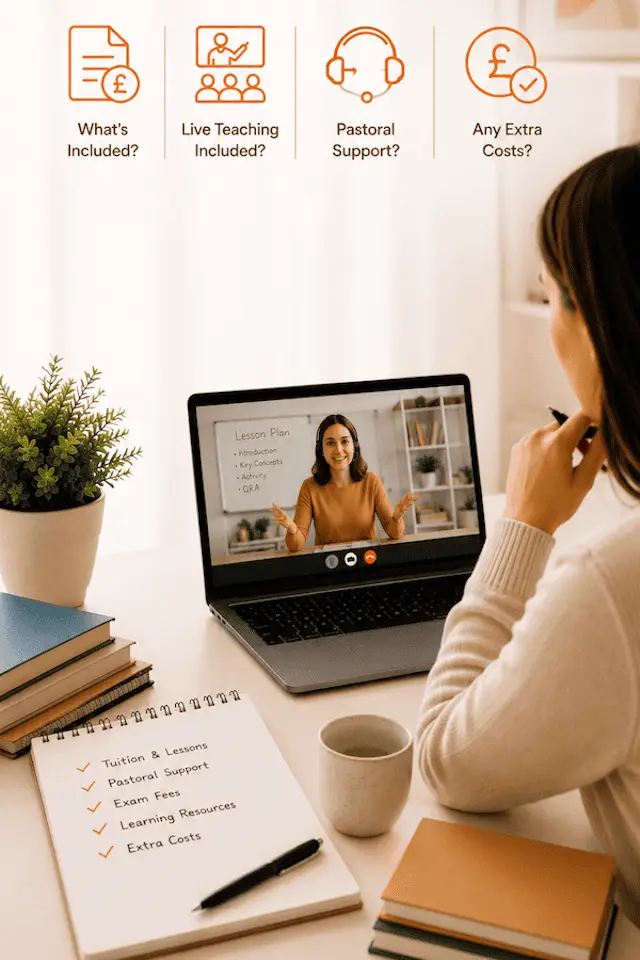

What parents should know

Families exploring online education deserve clarity.
Not all online schools are built in the same way.
Some models rely heavily on independent or self-directed learning, where students complete significant amounts of work alone outside live lessons. Flipped learning is an educational model where students are expected to learn some content independently before attending live lessons. For highly independent and intrinsically motivated learners (particularly older children/adults), this can work well.
However, many children, especially those who have struggled in traditional settings, experienced anxiety, lost confidence, or need stronger emotional support benefit most from consistent relationships, daily structure, live teacher interaction, and learning alongside peers.
At Queen’s Online School, we agree with the bulk of research and believe technology should support great teaching, not replace it.
That’s why our students receive a full live timetable taught by specialist teachers who know them personally, monitor their wellbeing, and help them rebuild confidence day by day.
We’re proud that this approach has now been recognised nationally through our inclusion in Absolutely Education’s Guide to Online Schools 2026 and our recent LuxLife award as ‘Most Engaging Online School 2026’.
Because online education should never feel lonely.
And children should never have to educate themselves to succeed.
A family hears:
…but may not realise this can often mean:
For some learners, particularly older, mature children/adults that model can genuinely work well. However, all children need social interaction with other children and teachers, particularly when studying online.
For others, particularly anxious students, school refusers, younger learners, or children needing structure and emotional connection, a more teacher-led environment may be far more appropriate.
See the research below:

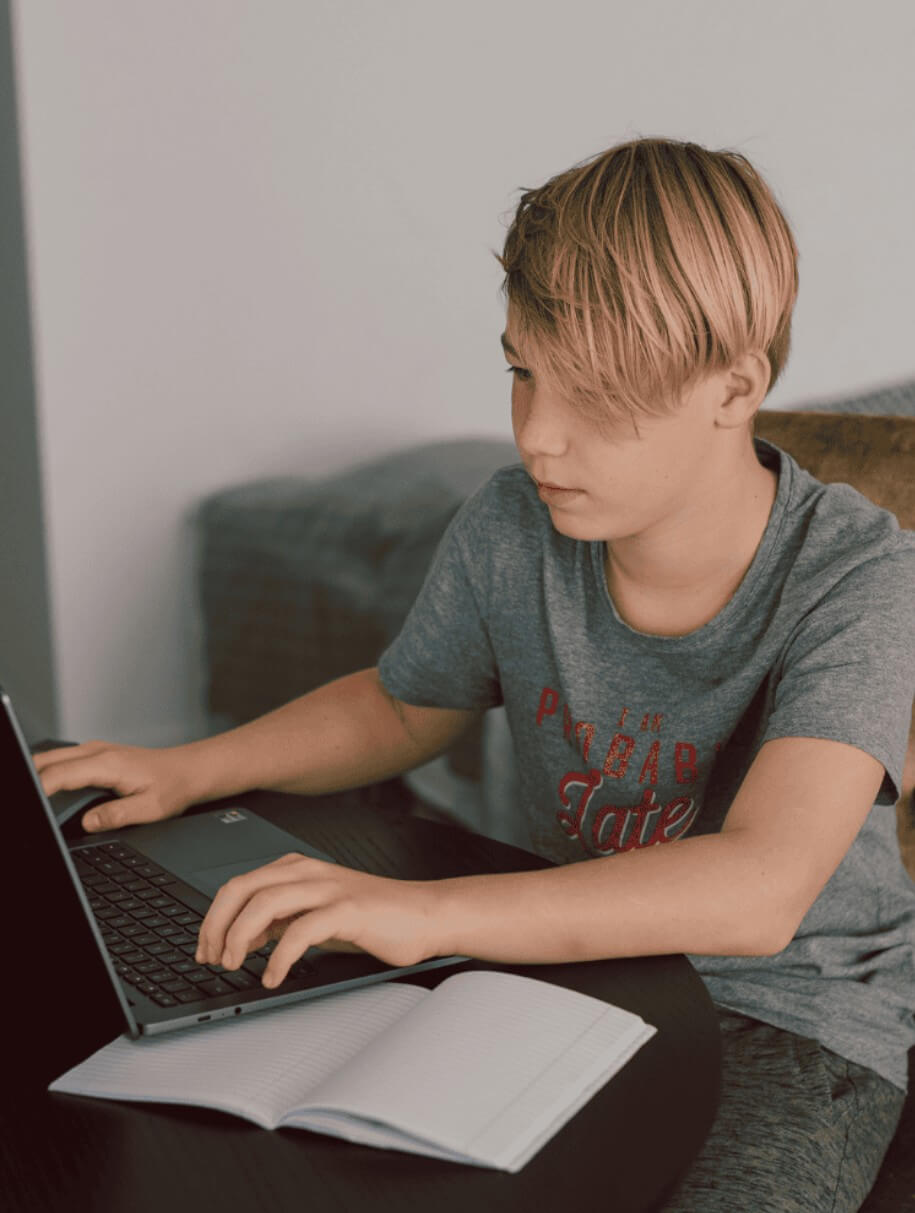
Every child has unique strengths and needs. Our flexible, student-centred approach ensures that lessons, assessments, and support adapt to each learner’s pace, preferences, and goals. We value variety and promote an inclusive environment, recognising each student’s uniqueness.
Beyond academics, we’re committed to nurturing well-rounded individuals. Our curriculum integrates emotional, social, and global awareness, empowering students to build skills for life. From mindfulness practices to leadership opportunities, our holistic approach prepares students for future success in all areas of life.
Queens Online School is dedicated to supporting students with Special Education Needs (SEN) and Social, Emotional, and Mental Health (SEMH) challenges. With specialised staff, individualised plans, and a compassionate support network, we ensure every student has access to the resources and guidance they need.
Our students connect with peers from around the world, enriching their learning experience through diverse perspectives and friendships. Interactive virtual classrooms and collaborative projects encourage teamwork, curiosity, and a greater understanding of global cultures.
We celebrate diversity and promote acceptance of all backgrounds, creating an environment in which every student feels like they belong. Our curriculum and community-building activities aim at developing empathy, understanding, and respect for one another’s diverse perspectives and cultures.
At the heart of Queen’s Online School is a shared love for learning. Our students, teachers, and families come together to create an inspiring and supportive learning environment that values curiosity, collaboration, and growth. We believe that by embracing differences and lifting each other up, our community can achieve remarkable things.
OECD – Fostering Higher-Order Thinking Skills Online
Important quote:
“In-person learning yields better or equivalent outcomes…”
OECD Review Education Policies – Teacher Practices
“Classroom teaching practices are key to student learning…”
The OECD has repeatedly highlighted that technology alone does not improve education outcomes.
Its reports emphasise:
The OECD’s Students, Computers and Learning report found no simple relationship between increased technology use and improved educational outcomes.
The OECD has also warned that digital learning approaches can widen inequalities if learners lack sufficient support or self-management skills.
Importantly, the OECD stresses that digital tools should support excellent teaching, not replace it.
EEF Metacognition and Self-Regulation Guidance Report
Useful points:
The EEF say:
“The Education Endowment Foundation (EEF) explains that metacognitive and self-regulation strategies are most effective when they are explicitly taught and carefully supported by teachers.”
Technologies are an important tool in teaching BUT for most children only when attended by:
not children being left largely to educate themselves!
We believe that teaching and learning are social activities, so we offer more live, face-to-face lessons than any other online school. This ensures students stay engaged, motivated, and receive real-time support.
Every child is unique, which is why we provide a tailored learning experience. Whether your child is excelling or needs extra support, our interactive classes adapt to their individual needs.
We are committed to offering the best value for money. If you find another online school offering the same number of live lessons for a lower fee, we’ll refund the difference! That’s our Queen’s Price Promise – ensuring you get the best education at the best price.
Our teachers are subject specialists dedicated to helping students achieve top exam results and gain admission to the world’s leading universities.
Many families exploring online education are doing so because their child has:
For these students, routine, relationships, consistency, and regular teacher interaction are often critically important.
While independent learning models may suit some learners, many children benefit from:
At Queen’s Online School, we believe technology should support great teaching — not replace it.
That is why our approach focuses on:
We believe online education should still feel like a real school experience:
with real teachers, real relationships, and real human connection.
Before enrolling, families may wish to ask:
These questions can help families choose the learning environment best suited to their child’s needs.
There is no single “perfect” online learning model for every child.
Some learners flourish with high independence and self-directed study.
Others benefit far more from structure, routine, live teaching, and close teacher support.
The key is understanding the difference — and choosing the environment where your child is most likely to feel safe, supported, motivated, and able to thrive.
If you’d like to go deeper on a specific concern, these guides cover the questions parents ask us most.
A nurturing and happy place to learn and make friends