

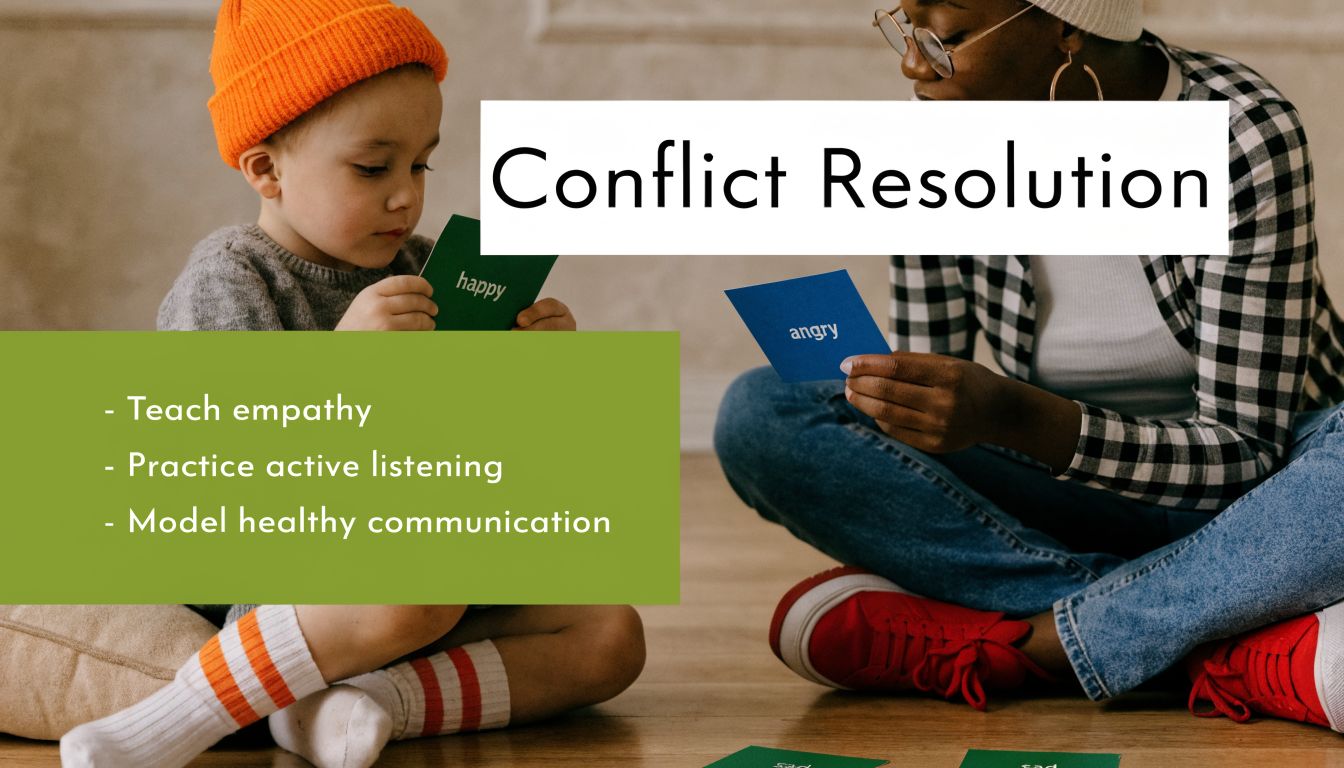
A child is crying because their brother grabbed the tablet. A class chat has gone quiet after one unkind message. Two pupils in a live lesson both insist, “It wasn’t my fault.” Most adults know this feeling. You want the upset to stop quickly, but you also know that saying “be nice” rarely changes what happens next.
Conflict is uncomfortable. It can also be one of the clearest teaching moments a child gets.
When children learn how to handle disagreement, they don’t just solve one argument. They learn how to name feelings, listen without attacking, recover after mistakes, and stay connected even when something has gone wrong. Those are life skills, not just behaviour fixes. Good conflict resolution techniques for kids help them feel safer inside themselves and kinder towards other people.
From Squabbles to Skills Why Conflict Matters
A seven-year-old slams the laptop shut during an online lesson because a classmate laughed at their idea in the chat. Two siblings argue over whose turn it is to use the tablet for homework. In both moments, the visible problem is the row. The hidden problem is a skill gap.
Conflict usually shows us what a child cannot yet do under pressure. They may struggle to wait, cope with disappointment, explain their point clearly, or recover after feeling embarrassed. Seen this way, a disagreement works like a reading error on a page. It does not mean the child is failing. It tells us what needs teaching next.
Children do not learn calm, fair behaviour from reminders alone. They learn it through guided practice in real moments of friction, with an adult close by who can slow things down, name what is happening, and show them a safer way through. That is one reason social-emotional learning in children and teens has such a strong place in both home education and school life.
This practical view matters even more in online spaces. A child in a classroom may see a teacher's face soften or hear a classmate's tone change. On a screen, those signals are easier to miss. A blunt message in chat, a muted microphone, or being left out of a breakout room can all trigger the same feelings as a playground fallout. For pupils with SEN or SEMH needs, that gap between what happened and how to respond can feel even wider. They often benefit from conflict teaching that is explicit, rehearsed, and broken into clear steps.
What children are really practising
Handled well, a disagreement gives children repeated chances to practise:
- Stopping before acting when their body wants to shout, grab, quit, or shut down
- Saying the problem out loud in words another person can hear
- Listening for meaning rather than only preparing a comeback
- Repairing trust after hurt, even if the harm was accidental
- Trying again after a social mistake instead of deciding, "I'm bad at friendships"
This is why a quick fix so often falls flat. If adults only separate children, decide who was wrong, and move on, the argument ends but the skill stays unbuilt.
Children also study our response very closely. A sharp adult voice can teach that conflict is dangerous. An over-helpful adult can teach that someone else will always solve it. A calm adult who sets limits and coaches both sides teaches something far more useful. Problems can be handled. Relationships can recover. Feelings can be strong without being in charge.
For online learners, that coaching often needs to be more visible and more concrete. A teacher might post a sentence stem in the chat, such as, "I felt left out when…" or "Can we restart that?" A parent might pause an at-home dispute and script the first line for each child. Many families and schools also find it helpful to teach practical emotional regulation strategies alongside conflict resolution, because a child who can steady their body is far more able to use the social skill they already know.
Conflict, then, is not a detour from learning. It is part of learning, especially when we treat each squabble, fallout, and sharp exchange as guided practice for the relationships children will carry into classrooms, group chats, families, and adult life.
The Emotional Foundation Naming Feelings First
A child snatches a pencil on camera, the other logs off in tears, and the adult in the room asks, “What happened?” Too often, the answer comes back as more shouting, silence, or “I don’t know.” That is not defiance. It is a sign that the child’s feelings are louder than their language.
Conflict skills rest on an emotional base. If a child cannot recognise what is happening inside them, they struggle to explain the problem, hear another person’s view, or accept help. Naming a feeling is a little like switching on the room light. The furniture was already there, but now the child can see where to step.
Children are often told to “use your words” before they have the words. “Angry” may cover disappointment, jealousy, embarrassment, exclusion, sensory overload, or panic. Those are very different experiences, and they call for different support.

Start with co-regulation for younger children
Young children usually borrow calm before they can create it for themselves. Adults set the emotional temperature. Your face, your pace, and the number of words you use all matter.
A helpful sequence is simple:
Get low and get near
Sit or crouch so your body feels safe, not imposing.Name what you notice
“Your shoulders are tight. You look really upset.”Offer safety before discussion
“I’m with you. We can sort this when your body is quieter.”Use one calming action
Breathe together, press hands, hold a cushion, or count slowly to five.
In an online lesson, co-regulation needs to be more visible. A teacher might say, “You do not need to explain it yet. Put a number in the chat from 1 to 5 for how big the feeling is.” A parent beside the screen might lower their voice, mute the microphone for a moment, and help the child settle before the conversation continues.
A distressed child does not need a long explanation. They need steadiness.
Build an emotion vocabulary children can actually use
Two tools work well at home, in school, and in virtual classrooms because they turn abstract feelings into something concrete.
Emotion thermometer
An emotion thermometer helps children rate intensity before they try to solve the disagreement. It gives adults a quick guide too. A child at a three can usually talk. A child at an eight often needs time, movement, or quiet first.
A simple version might look like this:
| Number | What it might feel like | Helpful adult response |
|---|---|---|
| 0 to 3 | Settled, okay, ready to talk | Discuss the problem |
| 4 to 6 | Frustrated, wobbly, defensive | Slow down, breathe, use prompts |
| 7 to 10 | Furious, panicked, shut down | Pause the conversation and regulate first |
For SEN and SEMH learners, visual scales are often more useful than open questions. Some children find a colour band, emoji strip, or feelings card easier than being asked, “How do you feel?” In online settings, the same scale can sit on a slide, a printed desk card, or a shared whiteboard so the routine stays familiar across environments.
Emotional weather report
Weather language can feel less exposing, especially for children who struggle with direct emotional talk.
You might ask:
- Sunny means “I feel good and open”
- Cloudy means “Something’s bothering me”
- Stormy means “I’m upset and need support”
- Foggy means “I don’t know what I feel yet”
This is especially useful at transitions. Breakfast. Tutor time. The first five minutes of an online lesson. A child who says “foggy” has still communicated something important.
Practical rule: Do not ask a dysregulated child to explain the conflict in detail first. Help them identify their internal state before you ask for the story.
For older children, move towards self-regulation
Teens usually want privacy and respect. Many will reject anything that sounds childish, even when they still need support. The answer is not fewer tools. It is better-framed tools.
Useful prompts include:
- “What feeling is strongest right now?”
- “What are you assuming the other person meant?”
- “Do you want to talk, type it, or take five minutes first?”
That third prompt matters in online learning. Some adolescents can say very little aloud but will write a clear message in chat or in a shared document. Giving that option often lowers defensiveness and improves honesty.
A short regulation menu also helps:
- Breathe slowly
- Sip water
- Stretch
- Write one sentence
- Ask for a pause
- Return when ready
For children with SEMH needs, it is often best to rehearse these choices before conflict happens. For example: “If the group work feels unfair, which reset option will you use first?” Practice outside the hard moment makes it more likely the skill will be available during the hard moment.
If you want extra support with this part, these practical emotional regulation strategies offer useful ideas for helping children and teens slow their reactions and find steadier ways to respond.
Parents and teachers who want the bigger picture may also find it helpful to read this guide to social and emotional learning in child development. It places feeling identification in the wider set of skills children use to build friendships, handle setbacks, and repair relationships.
Naming feelings first does not solve the disagreement by itself. It gives the child a starting point. Once they can say, “I felt left out,” “I was embarrassed,” or “I got overwhelmed,” the path towards repair becomes much clearer.
Building Bridges Core Techniques for Primary Years
A seven-year-old grabs a marker during an online art lesson. Another child shouts, “That was mine.” In a classroom, that moment can turn into tears. At home, it can turn into a sibling row. On screen, it can become silence, a turned-off camera, or angry chat messages. Primary-aged children need a method they can follow in the middle of the upset, not just advice they hear after it.
At this age, conflict resolution works best when it is visible, predictable, and practised often. Children are still learning how to hold two ideas at once: “I am upset” and “the other person has a need too.” A simple routine acts like stabilisers on a bicycle. It does not do the pedalling for the child, but it helps them stay upright while the skill is forming.
One useful starting point is the Stoplight Method. The colour system gives children a clear sequence to hold onto when words are hard to find.
The Stoplight Method in everyday language
Red means stop
Stop your body. No grabbing, shouting, chasing, typing in anger, or talking over someone.Yellow means think and talk
What happened? How do you feel? What might the other child be feeling or needing?Green means act
Choose one fair next step you can both try.
This can be used in a playground disagreement, a dispute over Lego on the living room floor, or a misunderstanding in a virtual breakout room. A parent might draw three coloured circles on paper. A teacher might place the colours on a classroom wall, a visual timetable, or a shared slide.
Here is a short script for a toy conflict:
- Child A: “I feel upset when you take the car because I was still using it.”
- Child B: “I wanted a turn and didn’t know you were finished.”
- Adult: “You’re at yellow. Let’s slow it down. What are two fair choices?”
One child may suggest a timer. The other may suggest swapping toys for five minutes. Both are concrete, and that matters.
Children who struggle to generate options often need this modelled many times before they can do it independently. That is one reason explicit teaching of problem-solving skills for children fits so well alongside conflict work.
A visual summary can help children remember the process.

Use the Peace Path when children need more structure
Some children can manage a three-part routine. Others need each part broken down more clearly, especially after a stressful day or when social language is still developing. A Peace Path Protocol helps because it turns an invisible skill into a physical sequence.
You can lay it out with chalk on the playground, paper squares on the carpet, or numbered boxes on a shared online whiteboard. The child moves through one step at a time. That physical movement often lowers the pressure. It also reduces the adult habit of rushing in and solving the whole disagreement.
The six steps are:
Identify the problem
“You took my ball.”Express feelings
“I feel angry because I was still playing.”Acknowledge the other person’s feelings
“How do you feel?”Brainstorm solutions
List several possibilities.Evaluate and choose
Which one is fair and workable?Agree and handshake
Commit to the plan and check in later.
A real script for ages 5 to 11
Two children want the same blue crayon.
- Child 1: “You took my blue crayon.”
- Child 2: “I needed it.”
- Adult: “Step one is the problem. Good. Now step two. Tell us the feeling.”
- Child 1: “I feel sad because I wasn’t finished.”
- Adult: “Ask the other person.”
- Child 1: “How do you feel?”
- Child 2: “I feel annoyed because I thought you were done.”
- Adult: “Let’s list three possible solutions.”
- Children: “Use a timer.” “Find another blue.” “Use it together.”
- Adult: “Which choice is fair for both of you right now?”
- Children: “Use a timer.”
For many adults, this can feel slow. For children, slow is often what makes the learning stick.
How to use these methods at home and online
Conflict practice should happen outside the heated moment too. Children learn social routines the same way they learn phonics or times tables. Through short, repeated practice.
Try one of these:
Living room Peace Path
Put six pieces of paper on the floor and let children walk through each step with your support.Toy rehearsal
Use dolls, action figures, or soft toys to act out a common disagreement before expecting children to use the language themselves.Virtual breakout role-play
In online learning, give each child a shared slide with six boxes. They type, draw, or say one sentence in each box. This works especially well for children who find face-to-face discussion too intense.Feelings cards
Keep simple cards nearby with words such as cross, disappointed, worried, left out, and embarrassed.Sentence starters for hesitant speakers
Offer prompts such as “I didn’t like it when…”, “I need…”, or “A fair idea could be…”
These adaptations are particularly helpful for SEN and SEMH learners, who may need shorter language, visual cues, extra processing time, or the option to point, type, or choose from prepared choices rather than respond on the spot. In a virtual classroom, that may mean using the chat box, reaction icons, or a drag-and-drop feelings board. At home, it may mean practising with one calm adult before trying the skill with a sibling.
A short video can also help children see what respectful conflict sounds like in action.
Where adults often get stuck
Adults usually get better results when they act as a coach rather than a judge. The goal is not to force perfect language. The goal is to help children repair the relationship and learn a repeatable process.
Common sticking points include:
- Fixing the problem too quickly before both children have spoken
- Pushing for an apology too soon before there is real understanding
- Focusing on blame instead of helping children describe what happened and what needs to happen next
- Skipping the review after an agreement is made
- Using too many words for children who are already overloaded
A child does not need polished conflict language to make progress. A child who can say, “I felt cross when you interrupted me,” has a path toward repair. That is a strong beginning.
Navigating Nuance Advanced Negotiation for Teens
A Year 10 student closes their laptop after an online lesson and says, “I’m done.” A friend posted a sarcastic comment in the class chat, two others reacted with laughing emojis, and now a group project feels impossible. By dinner time, the problem is no longer just about one comment. It is about status, trust, embarrassment, and whether speaking up will make things worse.
That is why teenage conflict needs a different approach from primary-aged disagreements. Adolescents are working hard to protect identity and independence. If a strategy sounds childish, they often reject it before it has a chance to help. They need language that respects their maturity, plus a process they can use in school corridors, family spaces, private messages, and live online lessons.
For some teens, especially those receiving SEN support in school, negotiation also needs clearer steps, more processing time, and alternatives to face-to-face discussion. A spoken conversation may work for one young person. Another may manage far better with typed responses, a shared document, or a short break before returning to the issue.

A teen-ready structure for repair
Older learners usually do better with a structure that feels calm, fair, and realistic. A useful sequence works like a map. It helps them know where to start, what to say next, and how to check whether the agreement works.
You can teach it in seven parts:
Recognise the level of emotion
Help the teen notice, “I’m too angry to solve this well yet.”Regulate before discussing
That might mean a short walk, water, headphones off, or putting the phone aside for twenty minutes.Explain the impact clearly
Encourage direct language such as, “I felt embarrassed when you joked about me in the group chat because other people joined in.”Reflect the other person’s view
A simple paraphrase slows the argument and reduces guessing.Generate more than one option
Repair is easier when young people can compare choices instead of defending one position.Try one plan for a set period
For teens, a same-day or next-day review often works better than a vague promise.Review and adjust
Ask, “Did this reduce the problem, or did it only pause it?”
This kind of structure matters in online settings as much as in physical ones. In a virtual classroom, “regulate first” may mean turning off self-view, stepping away from the keyboard, or sending the teacher a private message that says, “I need five minutes before I reply.” At home, it may mean agreeing that difficult conversations happen after everyone has eaten, not in the heat of the moment.
Teach listening as a skill with visible proof
Teenagers often say they listened because they stayed quiet. Real listening is closer to holding up a mirror. The other person should be able to hear their meaning reflected back accurately.
One sentence stem works well:
- “What I hear you saying is…”
That phrase is especially helpful because it does not force agreement. It asks for accuracy first.
A project dispute might sound like this:
- Teen A: “I was furious because I ended up finishing the slides alone.”
- Teen B: “What I hear you saying is that you felt left with all the pressure and thought I had checked out.”
- Teen A: “Yes, that’s it.”
- Teen B: “I did miss the deadline, and then I avoided replying because I knew you were angry.”
That shift is small, but it matters. A teen who feels understood is more likely to stay with the problem long enough to solve it.
Scripts for common teenage conflicts
Teen conflict often becomes manageable when adults offer a script that is firm without sounding forced. The aim is not polished language. The aim is usable language.
Group chat exclusion
Helpful adult prompt:
- “Do you want to repair this friendship, set a boundary, or step back from it?”
Possible teen script:
- “I felt excluded when I realised there was another chat without me. I’m not expecting to be in every conversation, but I want to understand what happened.”
Gossip or sharing private information
Possible teen script:
- “I’m upset that something personal was repeated. I need you to be honest with me about what was said and what you are willing to do to repair it.”
Collaborative schoolwork conflict
Possible teen script:
- “I’m willing to restart, but I need the work divided clearly this time. I cannot do the whole task again.”
Tension after a live online lesson
Possible teen script:
- “When you wrote that in the lesson chat, I felt singled out. If you’re frustrated with me, say it privately rather than in front of everyone.”
That last example is particularly useful for virtual classrooms, where public comments can spread quickly and feel permanent.
What to do when a teen refuses the conversation
Refusal usually means the young person feels flooded, trapped, or certain they will be blamed. Adults get better results when they keep accountability in place and widen the route into the conversation.
| Situation | Unhelpful response | Better response |
|---|---|---|
| Teen refuses to talk | “You will sit here until you speak.” | “You can talk now, type it in notes, or come back at 6pm. The issue still needs attention.” |
| Teen uses sarcasm | “Drop the attitude.” | “I can hear you’re angry. Say it plainly and I will listen.” |
| Teen blames the other person for everything | “That’s wrong.” | “Start with your view. Then we will look at the other person’s experience as well.” |
For SEN and SEMH learners, those choices can be the difference between shutdown and participation. Some teens will speak more openly while walking side by side, typing in a shared document, or responding to sentence starters on screen. Others may need a visual scale, a shorter exchange, or permission to pause and return later. Similar ideas appear in broader guidance for neurodivergent relationship issues, especially around reducing pressure and making communication more explicit.
Teenagers do not need adults to solve every social problem for them. They need a reliable process, calm coaching, and language that protects dignity while still asking for responsibility.
Inclusive Solutions Adapting for SEN and SEMH Learners
A Year 4 pupil is upset because a classmate grabbed the shared whiteboard tool during an online lesson. The teacher asks, “Tell him how you feel.” The child looks away, goes silent, and then logs off. In that moment, the problem is not a lack of character. The problem is that the language demand came before the child was ready to use it.
Some children cannot reach a standard conflict script while stressed, even if they can explain it perfectly well later. A child with speech and language differences may lose words under pressure. A child with autism may struggle with indirect language, eye contact, or sudden changes in routine. A child with SEMH needs may shift into fight, flight, or shutdown within seconds.
That is why inclusive conflict resolution starts with access.

Many pupils need a different route into the same skill. For families who want a clearer picture of how schools organise that help, this guide to SEN support explains the wider framework.
Why usual methods can break down
Conflict asks children to do several hard things at once. They have to notice feelings, manage body signals, understand another person’s point of view, find words, and stay socially safe. For some SEN and SEMH learners, that stack of tasks is too high in the heat of the moment.
A good comparison is a staircase with missing steps. The child is still expected to reach the top, but the route needs to be rebuilt so success is possible.
Usual approaches often break down when a child:
- cannot process spoken language quickly under stress
- needs visual structure rather than long verbal explanations
- becomes overwhelmed by sound, facial cues, or unpredictability
- finds perspective-taking much harder during conflict than during calm teaching
- experiences direct discussion as exposing or shaming
Children with SEMH needs often need regulation first, communication next, and reflection later.
What to use instead
The goal stays the same. We still want children to express needs, listen, repair harm, and solve problems. We change the tools.
Visual emotion charts
Instead of asking an open question such as “How do you feel?”, offer choices. A chart with faces, colours, numbers, or symbols lowers the language load and gives the child a clear starting point.
Useful adult script:
- “Point, circle, or type the feeling that fits best.”
- “You do not need the perfect word yet.”
Social stories
Social stories help children rehearse a conflict before it happens. That matters because many learners do better with practice during calm periods than with explanation in the middle of distress.
A short example:
- Someone takes my turn.
- My body feels tight and hot.
- I can hold up my help card or say, “My turn next.”
- The adult helps us make a plan.
- I can calm down and try again.
Calm-down spaces and sensory tools
A quiet corner, headphones, a sensory strip, a weighted item, or a breathing prompt can work like stabilisers on a bicycle. They do not solve the conflict by themselves. They help the child regain enough balance to take part in solving it.
Limited language scripts
Short, repeatable phrases are easier to retrieve under stress than long explanations.
Try scripts such as:
- “Stop. I need space.”
- “I didn’t like that.”
- “My turn next.”
- “Help me fix it.”
For some pupils, a laminated card, on-screen choice board, or chat shortcut works better than expecting spoken language on demand.
Adapting for online learning
Online conflict brings extra pressure. Tone is harder to read. Delays can feel like interruptions. A child may miss facial cues, worry about being watched, or become dysregulated by the screen itself.
That means virtual classrooms need visible structure, not just good intentions.
Practical adaptations include:
- shared visual boards so pupils can move an icon to show their feeling
- private chat check-ins before asking a child to speak in front of peers
- camera-flexible regulation breaks for pupils who need less social intensity
- turn-taking prompts on screen so the order of speaking is clear
- digital choice cards such as “talk”, “type”, “pause”, or “ask adult”
These changes are especially helpful for children who can participate more fully by typing, clicking, or selecting than by speaking instantly. Some parents also find it useful to read broader guidance for neurodivergent relationship issues, especially when they are trying to separate communication differences from assumptions about intent.
A simple role-play for home or virtual class
Here is a practical sequence you can use with two pupils who are frustrated because one keeps speaking over the other online.
Adult: “We are going to fix the problem in small steps.”
- Ask each child to choose a feeling icon or type one word in chat.
- Give a one-minute pause with a visual timer.
- Offer a sentence frame: “I felt ___ when ___.”
- Ask each child to choose from two repair options, such as “I will wait for my turn” or “I will use the hand-raise tool.”
- Revisit the incident later, briefly and calmly, to practise the skill again.
This approach bridges theory and practice. It turns abstract advice into something a child can apply at home, in school, or on screen.
The fairest conflict strategy is the one a child can use while upset, not the one that sounds most mature to adults.
Putting It All into Practice In Your Home and Online
A single good conversation won’t change a family culture. Children learn conflict habits through repetition. They absorb what happens every day when someone is frustrated, disappointed, left out, or told no.
That’s why consistency matters more than perfection. You don’t need to respond brilliantly every time. You do need a steady pattern children can recognise.
Make the language familiar
Choose a few phrases and keep using them.
For example:
- “Pause first.”
- “Tell me what happened, not who’s bad.”
- “Use an I-statement.”
- “What needs repairing?”
When adults use the same language at home and in school, children don’t have to relearn the rules in each setting.
Create a family or classroom agreement
Keep it short. A conflict charter might include:
- We speak respectfully even when we’re angry
- We can ask for a pause
- We listen without interrupting
- We repair after hurt
- We don’t force instant forgiveness
Put it on the fridge or in a shared class slide deck. Refer to it calmly, not as a threat.
Use online tools with intention
In virtual learning, conflict resolution needs structure because children can hide, interrupt, or misunderstand more easily online.
Useful approaches include:
- Breakout rooms for guided role-play
- Shared digital whiteboards for solution brainstorming
- Private message check-ins for pupils who won’t speak aloud
- Reaction icons or polls for emotional check-ins
- Typed scripts for children who express themselves better in writing
If adults are co-parenting across households, consistency becomes harder but even more important. Shared routines and fewer last-minute misunderstandings can lower emotional strain around the child. Some families find tools to reduce co-parenting conflict helpful when they’re trying to keep communication predictable and child-focused.
How to tell if it’s working
You don’t need a complicated tracking system. Watch for signs such as:
- Arguments ending faster
- Less adult refereeing
- Children starting to use the scripts on their own
- Better recovery after hurt
- More willingness to come back and repair
A simple check-in can help. Ask, “How confident do you feel about solving this?” and let children show fist-to-five with their hand. A fist means “I’m not ready”. Five means “I think I can do this.” That gives you a snapshot without turning the moment into an interrogation.
Model what you want them to learn
Children notice when adults interrupt, blame, sulk, or apologise. If you lose your temper, repair it openly.
You might say:
- “I spoke too sharply. I’m sorry. Let me try that again.”
- “I was frustrated, but it wasn’t okay to snap.”
- “We disagree, and we can still speak with respect.”
That kind of modelling teaches more than a lecture ever will.
Frequently Asked Questions
How do I handle conflict between siblings of different ages?
A six-year-old and a twelve-year-old may be arguing about the same toy, screen, or seat, but they are not bringing the same skills to the problem. Treating them as if they should cope in the same way usually creates more resentment.
Set different expectations with the same standard of respect. The younger child often needs short, concrete language such as “My turn after you” or “I don’t like that”. The older child usually needs help with self-control, clearer boundaries, and repairing harm without using power or sarcasm. That protects the younger child without turning the older one into the child who must always give way.
Fairness works like giving each child the support they need to cross the same bridge. It is not about making every consequence or apology identical.
What if my child refuses to take part?
Refusal is often a signal, not a dead end. A child may be flooded, embarrassed, confused about what to say, or worried that the conversation will end in blame.
Start by lowering the temperature. You can say, “We are still going to sort this out. You can talk now, write it down, or come back after dinner.” That keeps the boundary clear while giving the child a manageable path in. For some children, especially in online learning or at home, speaking aloud feels too exposing. A chat box, feelings scale, drawing, or sentence starter can make participation possible.
This matters even more for pupils with SEN or SEMH needs. A child who appears oppositional may be struggling with language processing, sensory overload, demand anxiety, or shame. Before deciding a child is refusing, check whether the method fits the child.
How can we handle cultural misunderstandings in diverse classrooms?
A common school conflict looks simple on the surface. One pupil thinks another was rude in a group task. The other pupil thinks they were being direct, funny, or respectful in the way they have learned at home. Online, that gap can widen because children lose facial expression, timing, and tone.
Children need more than a reminder to “be kind.” They need adults to slow the moment down and separate intent, impact, and context. A helpful script is: “What did you mean?” “What did the other person hear?” “What would help put it right?” That structure works in classrooms, breakout rooms, and kitchen-table lessons.
Helpful responses include:
- Avoid treating one communication style as the default correct one
- Ask about family, language, faith, humour, and social expectations when they are relevant
- Use role-play scenarios that reflect the pupils in front of you
- Teach children how to clarify meaning without accusing
- Address misunderstandings about eye contact, turn-taking, volume, and timing directly and respectfully
For example, a teacher might say, “I can see you both understood that moment differently. Let’s check the meaning before we decide the motive.” That single sentence often reduces shame and keeps children curious rather than defensive.
For virtual classrooms, role-play helps turn theory into action. Try a short scenario in which one pupil types in all capitals, another thinks they are shouting, and both practise repair: “I was trying to be clear, not harsh.” “I read it as angry. Next time, can you add a full sentence or emoji so I understand your tone?” For SEN learners, keep the script visible on screen and rehearse it more than once.
What if one child is always the peacemaker?
The child who smooths everything over can look impressively mature. Sometimes they are. Sometimes they have learned that harmony is safer than honesty.
Watch for patterns such as quick apologies, frequent “It’s fine”, or a habit of giving up needs before anyone has asked them to. Those children need explicit permission to disagree, ask for repair, and say no without feeling disloyal. In group settings, rotate responsibility so one child is not always the fixer, translator, or emotional buffer.
A useful line is, “Keeping the peace is not your job on your own. Your job is to tell the truth kindly.” That helps children see conflict resolution as shared work, not emotional caretaking.
If you’re looking for a school that treats emotional wellbeing as part of a child’s education, not an optional extra, Queens Online School offers a supportive British curriculum environment with live teaching, personalised attention, and inclusive support for learners from primary through sixth form.