

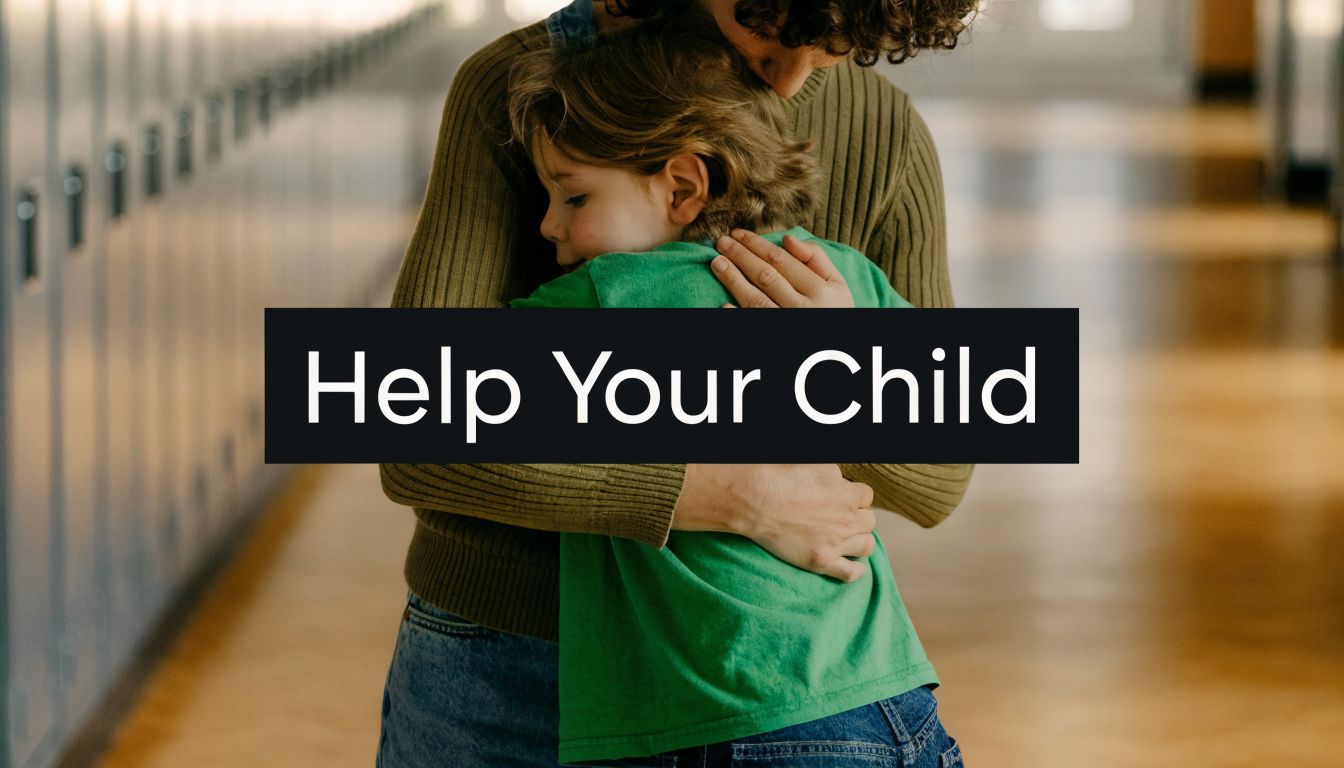
When a child is bullied at school, parents often notice the change before they know the reason. A once-chatty child goes quiet in the car. A teenager who used to leave their phone on the kitchen table now keeps it face down and within reach. Mornings become battles. Sunday evenings become heavy.
That instinct matters.
Bullying rarely arrives as one obvious event. More often, it shows up as a pattern that chips away at safety, confidence, and trust. For some children it looks loud and visible. For others it looks like “banter”, exclusion, screenshots, whispers, or silence. If you’re reading this because something feels wrong, you don’t need to wait until you have every detail before taking your child seriously.
According to the Anti-Bullying Alliance’s bullying prevalence data, almost 1 in 4 pupils in the UK report being bullied frequently, and only 44% tell an adult. Many children try to minimise what’s happening because they feel ashamed, frightened of retaliation, or convinced that nobody can help.
The most useful response is calm, steady, and practical. Start with safety. Then gather facts. Then push for action. And if the school environment remains unsafe, it’s reasonable to look at a different path that protects both learning and wellbeing.
Recognising the Subtle and Overt Signs of Bullying
A child can walk through the front door, drop their bag, and say, “School was fine,” while every part of their behaviour says otherwise. Parents often see the pattern before they hear the story.

What bullying can look like now
Bullying is not limited to open aggression in the corridor or playground. I regularly see children struggling with repeated exclusion, whispered comments, “jokes” that humiliate, mocking of appearance or special educational needs, pressure in friendship groups, and messages that keep the distress going long after the school day ends.
Online bullying changes the feel of the problem. Home used to offer a clearer break. For many children, it does not. A child may be targeted in class, then face screenshots, group chat comments, gaming messages, or social media posts later that evening. That constant drip of stress can leave them keyed up, watchful, and reluctant to put the phone down even when the phone is part of the problem.
Some signs are overt. Others are easy to dismiss as tiredness, hormones, friendship fallouts, or ordinary school stress. The job at this stage is not to prove the full case. It is to notice a pattern early enough to protect your child.
Signs in speech, behaviour, and daily routines
Look for change across a week or two, especially if it shows up in more than one area of life.
- School avoidance. Morning headaches, stomach aches, tears, panic, or repeated requests to stay home.
- Social withdrawal. Pulling out of clubs, avoiding parties, going quiet about friends, or spending break times alone.
- Verbal clues. “It’s nothing.” “They’re only joking.” “I don’t want to make it worse.” “Everyone’s against me.”
- Emotional shifts. Anger after school, tearfulness, shame, clinginess, irritability, or a sudden drop in confidence.
- Changes around food, sleep, or belongings. Lost items, damaged uniform, poor sleep, nightmares, comfort eating, or no appetite.
- Digital changes. Deleting messages, hiding screens, leaving chats, making new accounts, or panicking when notifications appear.
The strongest clue is often avoidance. Children start steering around the people, places, and devices linked to the harm.
Pay attention to what your child stops doing. A child who used to enjoy school may suddenly dread Mondays. A teenager who loved football may quit without a clear reason. A younger child may become unusually clingy at bedtime because the day has left them feeling unsafe.
Repeated verbal cruelty also leaves a mark, even when adults around the child call it banter. If you want more context on that, Verbal abuse and child mental well-being explains why persistent harmful language can affect confidence, mood, and stress levels.
A quick check you can do this week
Use a simple three-part scan for several days. You are looking for patterns, not a perfect timeline.
| Area | What to notice | Small example |
|---|---|---|
| Before school | resistance, physical complaints, delay tactics | “I feel sick” or taking far longer than usual to get ready |
| After school | shutdown, anger, tears, exhaustion | goes straight to their room and will not talk |
| Online | dread, secrecy, compulsive checking, sudden account changes | leaves a group chat, deletes apps, or flinches at notifications |
If several of these signs are showing up together, treat that as meaningful. You do not need to wait for bruises, a witness, or a full confession before taking action.
If you want a fuller checklist to compare against what you are seeing at home, this guide on common signs of bullying in children is a useful place to start. It can also help you judge whether the issue looks like a difficult patch that may respond to school intervention, or whether the school setting itself is no longer offering enough safety. In some cases, a different educational environment, including specialist online schooling, becomes a positive next step for recovery and steady learning, not merely a last option after things have fallen apart.
Your First Steps to Ensure Immediate Safety
The first day you realise your child may be bullied at school isn’t the moment to interrogate them, contact five people, and demand a full timeline. First, help their nervous system settle. A frightened child won’t give you a clear account if they think they’re in trouble, if they feel pressed, or if they expect you to explode.
What to do in the first 24 hours
Start with presence. Sit beside them, not opposite like an interview. Keep your voice low. If your child talks better while doing something else, try a car journey, a walk, folding laundry, sketching, or making toast together.
Use openers that lower pressure:
- “You don’t seem like yourself lately. I’m here and I’m listening.”
- “Has someone been making school feel unsafe or unkind?”
- “You won’t be in trouble for telling me the truth.”
- “We can take this one step at a time.”
Avoid questions that sound like blame, even if you don’t mean them that way. “What did you do back?” or “Why didn’t you tell me sooner?” often shuts children down. So does rushing to “You need to stand up for yourself” before they feel heard.
First priority: your child needs to know three things. You believe them. It isn’t their fault. You’re going to help.
Build a temporary bubble of safety
That bubble won’t solve the whole problem, but it steadies the child while you decide what comes next.
Try these practical steps straight away:
- Reduce immediate exposure. If group chats are upsetting, mute them or remove access for the evening with your child’s agreement.
- Create a calm landing space after school. Snack, quiet time, shower, favourite hoodie, low-demand conversation.
- Name one safe adult at school. Ask who they can go to tomorrow if they feel unsafe.
- Watch tonight carefully. If your child seems highly distressed, can’t settle, or says anything that suggests they might harm themselves, seek urgent professional support immediately.
For younger children, reassurance often needs repeating. For teenagers, support may need to sound less overt. A teen may reject “comfort” but still need practical closeness, such as you being nearby, checking in by text, or helping them script what to say the next day.
What children often need to hear
Children who are bullied at school commonly assume the bullying says something true about them. Counter that directly.
Say it plainly:
- “Being targeted doesn’t mean you deserved it.”
- “You are not weak because this hurt.”
- “We don’t have to solve everything tonight.”
That last line matters. Calm comes before strategy.
How to Document Every Incident for the School
At 9 pm, your child finally tells you what has been happening. By the next morning, parts of the story are blurred. They cannot remember which day it was, who was there, or whether the teacher heard the comment. That is normal under stress. Good documentation fills in those gaps and gives the school something concrete to act on.

The Anti-Bullying Alliance’s prevalence findings help explain why records matter. Bullying is often repeated, underreported, and easy for adults to misread when they only hear about one incident at a time. A clear record shows pattern, frequency, and impact.
In school meetings, the families who get traction are usually the ones who can show specifics calmly. Anger is understandable. A dated record is more persuasive.
What to record every time
Use one entry for each incident, even if it feels minor. Small incidents often reveal the pattern more clearly than the worst single event.
Record:
- Date and time. An estimate is still useful.
- Location. Classroom, corridor, school bus, changing room, lunch queue, WhatsApp group, gaming chat.
- What happened. Use the exact words if your child remembers them.
- Who was involved. Name pupils, witnesses, and any staff member told.
- What happened next. Did your child leave class, stop eating, go to medical, ask to come home, or refuse an activity?
- What you did. Email sent, screenshot saved, account blocked, tutor informed.
Keep the language plain. Write, “Sam said, ‘You can’t sit here’ in the lunch hall” rather than “Sam was deliberately humiliating and abusive.” The first version is easier for a school to log, investigate, and act on.
Choose a format you will actually keep up
A notes app is fine. So is a spreadsheet, email folder, or notebook kept by the kettle. The best system is the one you can maintain when you are tired and upset.
A simple table works well:
| Date | Incident | Witnesses | Impact on child | Action taken |
|---|---|---|---|---|
| Monday | Mocked in lunch queue about speech | two classmates | refused lunch, cried after school | emailed Head of Year |
| Tuesday evening | Messages in group chat excluding child | screenshot saved | poor sleep, asked to miss school | muted chat, noted evidence |
If the situation later needs a formal complaint, this guide to making a school complaint effectively shows how to turn your notes into a clear written case.
Save digital evidence properly
Online bullying often disappears quickly. Posts are deleted. Messages are edited. Children leave chats out of panic.
Use a simple routine:
- Screenshot the full exchange, including usernames, dates, and timestamps where possible.
- Save everything in one folder with labels such as "Year 8 group chat 14 March".
- Keep original files if you can, rather than copying text into a new document only.
- Write one line of context if the content is confusing on its own. For example, “This followed an argument at lunch when they hid her bag.”
- Do not force your child to reread upsetting material repeatedly. Review it yourself where possible.
That last point matters. Evidence helps the case. Your child’s nervous system still needs protecting.
Record the impact on daily life
Schools sometimes respond faster when they can see how the bullying is affecting attendance, learning, and emotional safety, not just peer relationships.
Make a note of changes such as:
- Attendance problems. reluctant mornings, late arrival, asking to stay home
- Physical symptoms. headaches, stomach aches, nausea, poor sleep
- Learning changes. missed homework, inability to focus, avoiding certain lessons
- Behaviour changes. tearfulness, anger, withdrawal, checking phones fearfully
- Loss of normal routines. stopping clubs, eating alone, refusing the bus
This part is easy for parents to understate. Do not minimise it. If your child now dreads Sundays, stops eating lunch, or cannot walk past a corridor without panicking, that is part of the school’s safeguarding picture.
Two mistakes to avoid
Do not wait until you have a "perfect" record before contacting school. Start the log now and add to it as you go.
Do not flood the school with pages of emotional narrative in the first email. Bring the detail with you, but lead with a short summary and attach or offer the log. Clear evidence tends to get a clearer response.
Good documentation does more than support a meeting. It helps you judge the actual trade-off in front of you. Sometimes the school responds well and the situation improves. Sometimes the record shows a harsher truth: the environment is not becoming safe enough, quickly enough. When that happens, parents can stop feeling trapped between staying put and "giving up." They can make a thoughtful decision about a safer setting, including specialist online schooling, as a positive route back to stability, learning, and confidence.
Working with the School Effectively
Parents often feel pulled between two instincts. One says, “Stay calm and work with them.” The other says, “Go in furious because they’ve already failed my child.” The second instinct is understandable, but the first usually gets better results at the start.
A school is more likely to respond well when you are clear, organised, and firm. Collaborative doesn’t mean passive. It means you keep the focus exactly where it belongs, on your child’s safety and the school’s response.
Who to contact first
Start with the person closest to the day-to-day picture. That might be the form tutor, Head of Year, pastoral lead, or designated safeguarding lead. If the situation is severe, ongoing, discriminatory, or involves threats, go straight to the safeguarding route as well as the pastoral one.
Your first message should be short and specific. For example:
“I’m contacting you about repeated bullying affecting my child’s safety and school attendance. I have a written record of incidents and would like a meeting as soon as possible to agree immediate protective steps.”
That wording matters. It signals pattern, impact, and expectation.
What to bring into the meeting
Bring your incident log, screenshots, and a short written summary. Keep that summary to one page if you can. Schools absorb information better when the key facts are visible.
Useful headings include:
- What has happened
- How often
- Impact on my child
- What I am asking the school to do now
- When I expect an update
Don’t let the meeting drift into abstract discussion about “friendship issues” if your evidence shows targeted repeated harm.
Ask for actions, not reassurance
Parents are often offered warm words with no mechanism behind them. “We’ll keep an eye on it” isn’t a plan. Ask what the school will do, who is responsible, and when it will be reviewed.
A practical meeting often covers:
- safe arrival, break, lunch, and departure arrangements
- staff who’ve been informed
- seating changes or supervised spaces
- how incidents will be recorded internally
- how your child can get help during the day
- when you’ll receive a written follow-up
“Please outline the immediate steps being taken to keep my child safe this week, and who will monitor whether those steps are working.”
That sentence keeps the conversation anchored to accountability.
Ask about restorative justice carefully
If the school uses restorative practice, it can be worth asking how they apply it. The Education Policy Institute review of bullying evidence notes that restorative justice programmes have a 79% success rate in stopping bullying recurrence when implemented consistently, compared with 58% in schools without such programmes.
That doesn’t mean every child should be placed in a face-to-face meeting with the child who hurt them. Restorative work only helps when the school uses it properly, with trained staff, good preparation, and attention to power imbalance. If your child is frightened, highly vulnerable, or at risk of being intimidated, safety comes first.
A good question is:
- “Do you use restorative practice, and if so, how do you make sure it is safe, voluntary, and properly facilitated?”
What works and what usually doesn’t
This is the trade-off parents need to understand. Starting cooperatively gives the school room to act well. But staying vague for too long often leads nowhere.
A useful way to frame it:
| Approach | Likely result |
|---|---|
| Calm, documented, specific | clearer response, easier follow-up |
| Emotional but unfocused | sympathy, but limited action |
| Aggressive from the first contact | defensiveness, slowed communication |
| Too patient without deadlines | drift, delay, repeated incidents |
You’re not there to win an argument. You’re there to make sure your child is safe in school.
Supporting Your Child’s Mental Health and Resilience
Even after the bullying stops, many children don’t bounce back quickly. They remain on alert. They scan rooms. They overread jokes. They assume the next group will reject them too.
That reaction isn’t overdramatic. It’s what happens when a child has learned that ordinary school life can suddenly turn unsafe.

For children with additional needs, the emotional cost can be even higher. The Children’s Society data referenced here shows that 41% of children with SEND experienced bullying versus 27% without, and children with SEMH needs are 2.5 times more likely to self-harm due to victimisation. When a child already finds social life exhausting, repeated targeting can cut into the very skills they’re still trying to build.
How the aftermath can look at home
A primary-aged child might become clingy, tearful, or suddenly frightened of minor separations. A teenager may look completely different. They might snap at everyone, refuse school discussion, or claim they’re “fine” while sleeping badly and isolating themselves.
Parents sometimes misread this phase as defiance. It’s often protection.
A child who was laughed at in class may now refuse to answer any question in any setting. A child who was excluded from a friendship group may insist they hate people and don’t need friends. A child whose messages were screenshotted may panic whenever someone takes out a phone nearby.
Healing usually starts when the child experiences repeated safety, not one reassuring conversation.
Rebuilding confidence in small, believable ways
Big speeches about confidence rarely land. Children believe what they experience, not what they are told once.
Try practical rebuilding instead:
- Return agency where you can. Let them choose small things. Route to school, haircut, lunch, evening routine, whether to talk while walking or sitting.
- Create one reliable success experience. Music lesson, coding club, baking, swimming, art, Lego, reading to the dog. Pick something where they can feel competent.
- Use specific praise. “You handled that awkward moment well” works better than “Be confident.”
- Protect recovery time. Don’t overload them socially because you want them to “get back out there.”
If your child’s self-worth has taken a real hit, some families find structured activities helpful alongside professional care. This collection of mental health support for self-worth can offer simple ideas to use at home.
When outside support is needed
Some children need more than family support, especially if they remain highly anxious, withdrawn, or distressed. Counselling or therapy can help them name what happened, challenge shame, and rebuild a sense of safety.
Look for someone experienced with children or teens, and if relevant, with SEND, autism, ADHD, anxiety, or trauma. The right fit matters. A child doesn’t need a perfect explanation of what happened before support begins. They need a place where they don’t have to carry it alone.
This short video can also help parents think about emotional support in a practical way.
A steadier story for your child
Children often internalise bullying as identity. “I’m weird.” “I’m annoying.” “Nobody likes me.” Recovery means helping them build a different, truer story.
Try language like:
- “Something harmful happened to you. It isn’t who you are.”
- “Your reactions make sense.”
- “We’re looking for people and places where you can feel safe and respected.”
That last phrase matters because resilience isn’t built by forcing children to tolerate mistreatment. It grows when adults protect them, believe them, and help them reconnect with belonging.
Knowing Your Rights and Escalation Options
If the school’s response is weak, inconsistent, or dismissive, you’re not stuck. Escalation works best when it is deliberate. Don’t jump every level at once. Move through the proper route, keep records, and make each complaint specific.
When to escalate
Escalate if any of the following are happening:
- The bullying continues despite reporting
- The school minimises repeated incidents as conflict
- Agreed actions aren’t carried out
- Your child’s safety, attendance, or mental health is worsening
- The issue involves discrimination, assault, threats, or serious online harassment
At that stage, write formally rather than relying on phone calls. Verbal conversations disappear. Written complaints create a trail.
Who to contact beyond the first staff member
A typical route is:
| Stage | Who to contact | Why it matters |
|---|---|---|
| School complaint | Headteacher or principal | formal review of handling and safety measures |
| Governors or trust | governing body or academy trust | oversight when school response is inadequate |
| Local authority | especially for maintained schools | further support and complaints guidance |
| External regulator | Ofsted concerns process where relevant | safeguarding and wider practice concerns |
If your child has additional needs, keep their support framework in view as well. This overview of what SEN support can include is useful when you need to explain why a generic response isn’t enough for a child who needs individualized provision.
A strong complaint is calm, chronological, and evidence-led. It asks for remedies, not just acknowledgement.
Where policy ends and law begins
Some bullying sits within school behaviour and safeguarding procedures. Some crosses into matters that may require police involvement or urgent legal advice, such as assault, credible threats, hate incidents, stalking-type behaviour, sharing sexual images, or harassment that becomes severe.
You don’t need to be a lawyer to recognise seriousness. If a reasonable adult would consider the behaviour dangerous, criminal, or highly intrusive, seek advice quickly. Keep all evidence. Don’t negotiate privately with other parents if doing so could place your child under more pressure.
The key point is simple. Your child has a right to education in an environment that is safe enough for them to learn.
Exploring Safer Schooling and Thriving Alternatives
Sometimes the best outcome isn’t persuading a child to return to the same environment and cope better. Sometimes the best outcome is a different environment altogether.
That isn’t giving up. It’s problem-solving.
A child who has been bullied at school may no longer experience the building as neutral. The corridor where it happened, the lunch area, the changing room, the bus, the friendship group, even the notification sound on their phone can all become reminders. Some children can recover within the same school if support is strong and the response is effective. Others can’t, and forcing the issue often deepens the damage.
When a fresh start becomes the healthier choice
Parents often delay alternatives because they worry a move will “let the bullies win”. In practice, children don’t usually experience a well-chosen move as defeat. They experience it as relief.
A safer educational setting can help when:
- your child remains hypervigilant despite intervention
- attendance is collapsing
- the school cannot reliably supervise or protect them
- friendship dynamics are entrenched and public
- your child has SEND or SEMH needs that are being poorly supported
- learning has become impossible because safety is gone
The question isn’t whether your child should tolerate the situation. The question is where they can learn, recover, and grow.

What a safer model can change
A different schooling model can remove some of the conditions that allow bullying to flourish. In a well-run online setting, there is no jostling in corridors, no lunch table politics, no intimidating journey home, and no unsupervised physical gathering point where tensions build.
For many families, the strongest advantages are practical:
- Live teacher presence in lessons, which keeps interaction visible
- Smaller classes, where withdrawal or distress is easier to spot
- Recorded sessions, so a child who feels overwhelmed doesn’t lose everything
- Flexible routines, which help children rebuilding attendance and confidence
- Distance from local peer networks, which can break the cycle of daily intimidation
- Clear digital behaviour expectations, which are often easier to monitor in a structured platform than in informal school social spaces
This matters especially for children who have spent months bracing themselves. Once they feel safe, many begin to sound like themselves again. They answer questions. They attempt work without panicking. They make friends more slowly, but more honestly.
Choosing from strength, not fear
A school move should never be sold to a child as escape because they’re too fragile. It should be framed truthfully. You deserve an education where you can think, participate, and feel safe. We are choosing the setting that gives you the best chance to do that.
That shift in language changes everything. It moves the child from passive victim to active participant in a better plan.
If your family is weighing whether a fresh start could help, Queens Online School offers a British online education with live lessons, small classes, and a structured approach designed to support both wellbeing and academic progress. For children who no longer feel safe in a traditional setting, it can be a positive next step, not a last resort.