When a child starts dreading Sunday evening because Monday feels too heavy, parents notice long before a report card says anything. Sometimes it's anxiety. Sometimes it's boredom. Sometimes it's a quiet sense that school and child aren't matching well anymore. In Northern Ireland, many families reach this point and feel torn between carrying on as things are and stepping into something unfamiliar.
That unfamiliar option is often online learning.
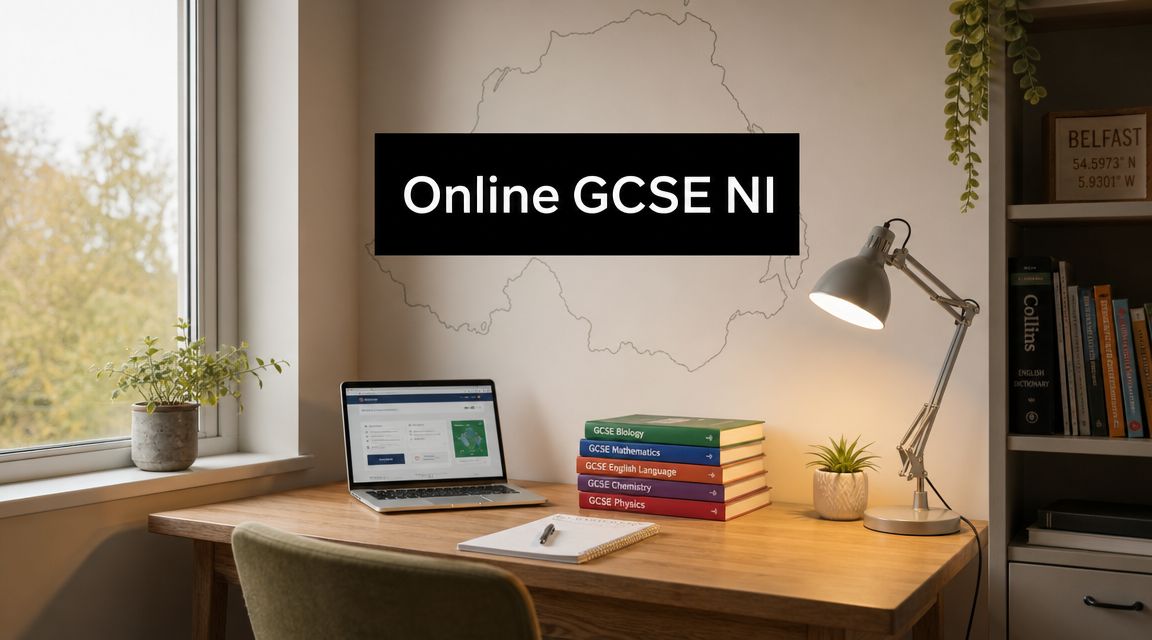
If you're looking into online gcse courses northern ireland, you're probably not chasing novelty. You're trying to protect your child's confidence, keep their options open, and find a route that still leads to recognised qualifications. That's a sensible goal. It's also one that needs clear local guidance, because Northern Ireland families face a slightly different set of questions from families elsewhere in the UK.
Is There a Better Way for Your Child to Learn
A mother once described the school run to me as “the hardest part of the day, and we haven't even reached first period yet.” Her son was bright, capable, and fully able to learn. But the rhythm of a busy school building, the pressure of keeping up in every lesson, and the feeling of always being slightly behind had chipped away at his confidence.
That story isn't unusual.
Some children need a quieter environment. Some need more challenge. Some need more time to think before answering. Others are dealing with friendship difficulties, poor attendance, health needs, or a long period of feeling that they're failing when really the system around them just isn't fitting well.
Online learning shouldn't be treated as a last chance. For the right child, it can be the first setting that actually makes learning feel possible again.
In Northern Ireland, families are used to hearing about school places, transfer pressure, exam expectations, and results. It can feel as though there's one accepted path and every other route is risky. But online GCSE study can be a practical, calm, well-planned alternative when a traditional setting isn't serving your child well.
When parents usually start looking
Most families don't begin this search because everything is fine. They start looking when something has become hard to ignore.
- Your child is capable but unhappy. They may still be achieving, but the emotional cost is becoming too high.
- Attendance has slipped. This could be because of anxiety, illness, bullying concerns, or simple overwhelm.
- Your child needs catch-up. They may have gaps in learning and need lessons paced more carefully.
- A mainstream timetable isn't working. Some learners do better when the day is structured differently.
A useful question to ask is not, “Can my child cope if we leave things as they are?” It's, “Where will my child learn best over the next year?”
That small shift matters. It moves the conversation away from fear and towards fit.
Understanding Online GCSEs in the NI Context
A Northern Ireland parent often reaches this point with one practical question in mind. If my child studies online, will these GCSEs count in the same way as the ones offered in local schools?
In most cases, yes. The course is taught online, but the qualification is still a formal GCSE, provided it comes through a recognised awarding body and your child is entered for exams correctly. That distinction matters. Families are not choosing between a “real” qualification and an online substitute. They are choosing a different way of learning for the same level of qualification.
Northern Ireland is also more familiar with home-based learning than some parents first assume. The Open University in Northern Ireland outlines wide-ranging home study access on its free online learning page for Northern Ireland. Online GCSE study is not identical to adult learning, of course, but it does help place remote education within a setting that already makes sense here.

Why exam boards confuse parents
This is usually the first stumbling block for NI families.
In many local schools, parents are used to hearing about CCEA. Many online schools, however, teach GCSEs through AQA or Edexcel. That can sound like a problem at first, especially if your child may later apply to a local sixth form, FE college, apprenticeship, or training route.
The simpler way to view it is this. CCEA, AQA, and Edexcel are different awarding bodies, rather like different road signs leading to the same destination. The sign looks different, but the route still gets your child to a recognised GCSE, as long as the subject is accepted and the exam is sat through an approved centre.
| Question | What to check |
|---|---|
| Which board is used | Many online schools use AQA or Edexcel rather than CCEA |
| Will local colleges and sixth forms accept it | Usually yes, if it is a recognised GCSE in the right subject |
| What matters most | The subject, the grade, and correct exam entry arrangements |
If you are comparing providers, this guide to online GCSE courses available across the UK can help you see how awarding bodies, teaching style, and subject choice differ.
A point that often reassures parents is this. Admissions teams usually care far more about whether a pupil has a recognised GCSE in English, maths, science, or another required subject than about whether the certificate came through CCEA, AQA, or Edexcel. The details still matter, especially for specific progression routes, but the board name is rarely the whole story.
What this means for a child in Northern Ireland
Northern Ireland families tend to be well aware of exam standards and grade expectations. The Northern Ireland GCSE grade profile on Statista gives a recent picture of how closely results are watched here. That is useful context. It reminds parents that an online course must do more than provide worksheets and a login.
Your child needs clear teaching, regular feedback, a revision plan, and adults who notice early if confidence slips. A good online GCSE works like a steady timetable with a smaller audience. The pace can be calmer, but the academic expectations should still be clear.
For some pupils, that change is exactly what helps learning click again.
Parents should also be ready for one NI-specific practical point. Even if the teaching is fully online, exams are usually sat in person as a private candidate. That means checking early which local centres in Northern Ireland accept external candidates for AQA or Edexcel subjects, not only CCEA entries. Schools that use organised systems to track student progress and scores efficiently often make this process easier for families because progress, mock outcomes, and exam readiness are easier to review before entry deadlines arrive.
The right online GCSE option should fit your child's learning needs and still keep doors open in Northern Ireland.
The Essential Checklist for Choosing an Online School
A glossy website can make every provider sound similar. They aren't. The right choice depends less on branding and more on how your child will spend each week.
Before enrolling, families in Northern Ireland should verify the exact awarding body, whether tutor support is included, and whether exam entry is arranged or left to the family, as noted on the NEC online GCSE course information page.

Start with the child, not the course list
Some parents begin by asking, “Do they offer history and biology?” That's understandable. But first ask, “What kind of learner is my child right now?”
A child who's self-directed and organised may cope well with more independent study. A child who's lost confidence may need live teaching, regular deadlines, and adults who notice quickly when work isn't being submitted.
Ask yourself:
- How much prompting does my child need? If the answer is “quite a lot,” avoid providers that are mostly self-study.
- How well do they learn on screen? Some pupils thrive online. Others need shorter sessions and more direct interaction.
- What has gone wrong before? If school hasn't worked because your child felt invisible, don't choose a model where they can disappear again.
The questions I'd ask any provider
Not all questions matter equally. These ones usually tell you the most.
- Who teaches the course? You want subject specialists, not just content access.
- How are lessons delivered? Live classes often suit teenagers who need routine and accountability.
- What happens if my child falls behind? Good schools have a process for follow-up, support, and re-engagement.
- How is progress tracked? Families should be able to see whether understanding is improving, not just whether homework was uploaded.
If you're a parent who values clear reporting, it can help to see how education teams track student progress and scores efficiently so monitoring doesn't become guesswork.
Support often matters more than subject breadth
A long subject list looks impressive, but support is what changes outcomes for many children.
Consider the difference between these two experiences:
| Provider style | Daily reality for the student |
|---|---|
| Large, mostly self-study course | The student logs in alone, works through material, and must ask for help independently |
| Structured online school with live teaching | The student is expected in class, can ask questions in real time, and is noticed when they struggle |
For a confident and independent learner, the first model may be enough. For a child who needs rebuilding, the second is often much kinder and more effective.
Don't skip SEN and emotional support questions
If your child has SEN, SEMH needs, anxiety, or a history of school avoidance, ask very direct questions.
- How do teachers adapt lessons?
- Can my child access recordings if they're overwhelmed live?
- How is communication handled if attendance dips?
- Is there pastoral support, or only academic support?
Practical rule: If a provider only talks about flexibility and never talks about relationships, ask harder questions.
Children who need catch-up or confidence building usually need more than worksheets and a login. They need adults who can combine structure with encouragement.
Exam arrangements need plain answers
Many families get caught out. Some providers teach well but leave all exam administration to parents. Others offer clearer support around exam booking and centre contact.
Ask for a plain-English answer to each of these:
- Which exam board is used for each subject?
- Do you help us find a centre in Northern Ireland?
- Are there any subjects with extra assessment requirements?
- Who reminds us about deadlines?
If a school answers vaguely, that's a warning sign. Families need operational clarity, not marketing language.
Navigating GCSE Exams as a Private Candidate in NI
The phrase private candidate sounds more intimidating than it is. It means your child is studying outside a mainstream school and needs to sit exams through an approved centre.
That's the blended reality of many online GCSE pathways in Northern Ireland. Learning can happen at home, but exams still happen in person.

Northern Regional College gives a useful example of this model. It states that students can study GCSE Maths online but must attend college to sit the examinations, as explained in its GCSE Maths online announcement. That's a helpful reminder that online learning and physical exam attendance usually go together.
How to find an exam centre in Northern Ireland
Parents often assume there must be one official list that solves everything. In reality, finding a centre usually means contacting approved centres and asking whether they accept private candidates for your child's specific subjects and exam board.
A sensible approach is:
- Ask the online school first. They may already know centres that regularly accept their students.
- Check the exact board and subject code before contacting anyone.
- Ask early whether practical elements apply. This matters most in some science pathways and other assessed components.
- Get confirmation in writing once a centre agrees.
If your family is also weighing broader home education routes, this guide to home education GCSE pathways can help you think through what support you'll need around exams.
What to ask the exam centre
Don't just ask, “Do you do GCSEs?” Ask more precisely.
| Ask this | Why it matters |
|---|---|
| Do you accept private candidates for AQA or Edexcel GCSEs? | Centres may not offer every board |
| Do you handle my child's chosen subjects? | Availability can differ by subject |
| What documents do you need from us? | This avoids last-minute confusion |
| What are your internal deadlines? | Centre deadlines may come before public exam deadlines |
A short phone call can save weeks of stress later.
Many parents find it easier once they can see the process being talked through clearly:
The emotional side of exam planning
Children often hear “private candidate” and worry it means they're on their own. They're not. They still need revision planning, practice papers, calm communication, and an adult helping them hold the pieces together.
The exam centre is where your child sits the paper. It shouldn't be the first place anyone has to think carefully about exams.
The best time to sort exam entry is early enough that your child can spend spring focusing on revision rather than admin.
Your Step-by-Step Enrolment and Exam Entry Plan
When parents feel overwhelmed, a sequence helps. Most successful families move through this process steadily rather than trying to solve everything in one weekend.

A calmer order to do things
Shortlist realistic options
Use the checklist above. Ignore any provider that can't explain its exam route clearly.Attend an open event or speak to admissions
Listen for whether they ask about your child as a person, not just desired subjects.Check the teaching model carefully
Is it live, recorded, independent, or mixed? A child who needs routine usually needs a timetable, not just access.Ask about onboarding
Good onboarding includes platform access, teacher introductions, and a clear first-week plan.
Secure the exam piece early
This is the step families most often postpone, and it's the step that causes the most avoidable worry.
- Confirm the exam board for every subject
- Ask where recent students in Northern Ireland have sat exams
- Contact possible centres early
- Store every email and deadline in one place
For parents new to alternative education, a broader guide on how to be homeschooled can also help frame the practical side of planning, routine, and documentation.
Then settle your child into learning
Once enrolment is complete, attention should shift from administration to habit.
A useful first month often includes:
| Focus area | What good practice looks like |
|---|---|
| Workspace | Quiet, simple, and free from constant interruptions |
| Routine | Clear lesson times, breaks, and homework windows |
| Communication | Parent, child, and school all know who to contact |
| Early review | Check after the first few weeks whether the pace feels right |
The aim isn't perfection. It's stability.
How Queen's Online School Delivers for NI Students
A parent in Belfast or Derry may reach the same point after weeks of research. Your child needs a calmer way to learn, but you still want proper teaching, recognised GCSEs, and clear answers about how the Northern Ireland exam process will work in practice.
That is the gap Queen's Online School is designed to fill.
For NI families, the attraction is usually not "online" on its own. It is the combination of live lessons, subject teachers, recorded access when a lesson needs revisiting, and a school structure that feels closer to guided schooling than to being left alone with a bank of videos. For a child who has fallen out of step with a local classroom, that distinction matters. Online learning works best when it still has rails, much like a train that runs smoothly because the route is set out clearly.
Queen's Online School offers GCSE-level study through the British curriculum and teaches through live interactive classes rather than relying only on self-study materials. It also provides recorded lesson access and support for pupils who need a more personalised pace. For families in Northern Ireland, that can be helpful because many are comparing AQA and Edexcel options with the local familiarity of CCEA, and they need a school that understands the difference between studying online and being properly prepared for formal exams.
Why that matters for Northern Ireland families
Northern Ireland has high academic expectations, and parents are right to take standards seriously. As noted earlier, local GCSE outcomes show a strong culture of attainment. A good online school for an NI pupil should reflect that reality with regular teaching, steady feedback, and revision habits that build over time instead of being rushed near exam season.
That is often where families feel most relieved. They are not looking for a shortcut. They are looking for a setting in which their child can show what they know.
A useful way to judge Queen's Online School is to ask whether it solves the practical problems that push NI families towards online study in the first place. Can a pupil attend live lessons from home and still feel known by their teachers? Can they replay a lesson after a difficult day? Can they follow AQA or Edexcel courses with enough structure that finding an exam centre in Northern Ireland later feels manageable rather than stressful?
The fit question still comes first
No school is right for every child. The better question is whether the model matches the pupil in front of you.
Queen's Online School may suit an NI student who needs:
- live interaction rather than independent course access alone
- smaller classes and clearer teacher attention
- recorded lessons to revisit hard topics or cover absences
- a more thoughtful pace because of SEN, SEMH, health needs, or reduced confidence
For those pupils, a structured online school can work like a well-run small classroom brought into the home. The teacher sets the pace, checks understanding, and notices when a child starts to wobble.
That is often the difference that makes online GCSE study realistic for a Northern Ireland family.
Frequently Asked Questions for Parents in Northern Ireland
Will universities and colleges accept online GCSEs
They can, provided the qualifications are properly awarded through recognised exam boards and your child has completed the required exams through the correct process. The important thing is not that learning happened online. It's that the qualification itself is valid and suitable for the next step.
Is online learning a good option for a child who needs to catch up
It can be, but only if the provider offers more than content access. Learners who need catch-up or confidence building usually do best with structured live teaching, progress monitoring, and motivational support, which reflects the gap often seen between simple course delivery and real educational mentorship on the Learndirect GCSE course category page.
What if my child lacks confidence
That's one of the most common reasons families look at online GCSEs. A calmer setting, more direct teacher contact, and fewer classroom distractions can help. But the school still needs to notice when confidence drops, not just wait for the child to ask for help.
Can my child still move on to A-levels, apprenticeships, or college
Yes, if they have the right subjects, recognised qualifications, and grades needed by the next provider. This is why subject choice and exam board checks matter at the beginning, not the end.
What about science subjects
Ask the provider and exam centre early about assessment requirements. Don't assume every subject works identically online. Science pathways sometimes need extra planning, and it's much easier when that's discussed before enrolment.
How do I know if my child is suited to online study
Look at behaviour, not hope. Can they attend lessons regularly with support? Do they benefit from a quieter environment? Do they engage better when pressure is reduced? If your child needs routine, choose a provider that supplies it.
If your family is weighing whether a more structured online pathway could help your child feel safe, capable, and academically stretched in the right way, it's worth exploring Queens Online School and asking detailed questions about teaching, support, and exam arrangements before making any decision.