

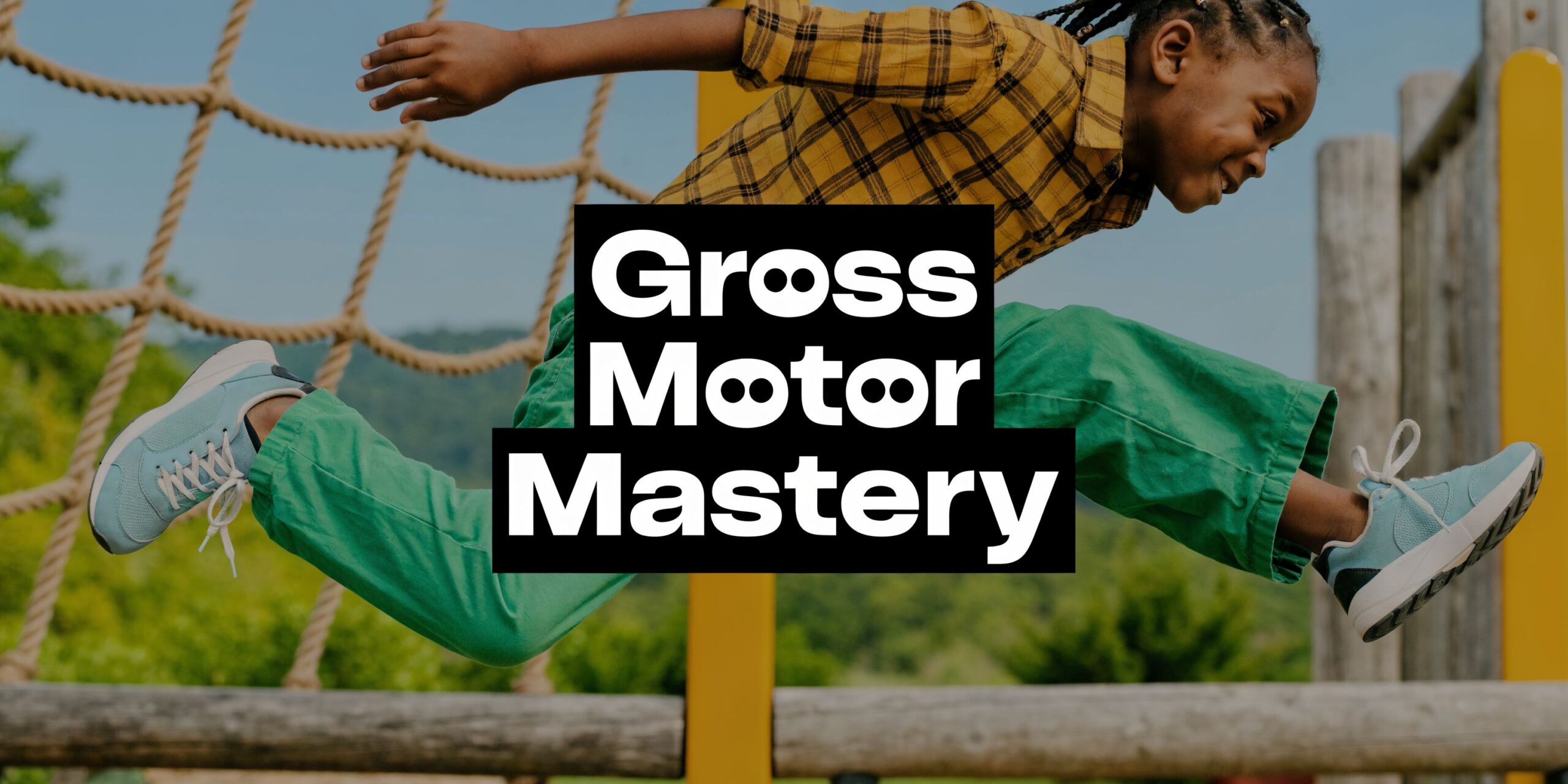
You watch your child race across the garden, trip on nothing at all, then pop back up as if the wobble never happened. In that small moment, you are seeing something important. Strength, balance, timing, confidence, and determination are all working together.
Gross motor skills are the large body movements children use to move through the world. Running, jumping, climbing, throwing, dancing, and kicking all belong here. They matter in obvious ways, such as sport and play, but also in quieter ways. A child with stronger movement skills often finds it easier to join in, sit with better posture, manage energy, and feel more at home in their own body.
For many families, this feels more urgent now because learning often happens around screens, timetables, and indoor routines. In the UK, delays in gross motor skills such as running, jumping, and kicking affect around 10 to 15% of children aged 4 to 11, and the Millennium Cohort Study reported that by age 11, 14.8% scored below the 15th percentile on standardised gross motor assessments, with links to lower physical activity and higher BMI in this UK overview of gross motor development.
That can sound worrying, but it should also feel hopeful. Gross motor skills can be practised in ordinary, joyful ways at home.
If you want extra ideas for younger children, these fun gross motor activities for preschoolers are a good place to start.
1. Running and Sprinting
Running is often the first gross motor skill example parents recognise straight away. It looks simple. It is not. A child has to coordinate arms and legs, shift weight smoothly, keep balance, judge space, and manage speed.
For online learners, running can be a brilliant reset. After a long lesson, a short burst of movement can help a child return calmer and more focused.

What it looks like in daily life
You might see this skill in:
- Park races: A child runs to the gate, slows, turns, and runs back.
- Online school breaks: A five-minute garden dash between live lessons.
- PE practice: Shuttle runs, relay games, or simple interval jogging.
- Clubs and events: Athletics sessions, fun runs, or cross-country.
Running also supports children who love sport and need flexibility around training. Families exploring a more individualized route can look at the student athlete pathway at Queen’s Online School.
How to build confidence
Some children run boldly. Others hold back because they feel awkward, slow, or unsure. Start small.
Try one clear task, such as running to a tree and back. Then vary the challenge. Run fast one way, walk back slowly. Add turning. Add a gentle slope. Add a beanbag to carry.
Keep the focus on how running feels, not just how fast it looks. Children stay engaged when adults notice effort, breathing, posture, and recovery.
If your child tires quickly during online learning days, place movement breaks at natural points. Before maths. After reading. Between lessons. The routine matters as much as the activity.
A child does not need to become a sprinter to benefit from running. They need chances to practise moving with freedom and trust in their own body.
2. Jumping and Hopping
Jumping asks for power. Hopping asks for control. Together, they create one of the clearest gross motor skill example pairs in childhood.
Children use these skills when they leap over puddles, bounce in playground games, or hop along pavement cracks while chatting about their day. It looks playful because it is playful, but it is also hard work for the body.
Why these movements matter
Jumping and hopping strengthen legs, improve balance, and build body awareness. They also teach children how to land safely.
NICE guidance notes that by age three, 95% of UK children can balance on one foot for three seconds and jump forward 20cm, yet 1 in 7 do not meet these milestones by school entry, according to the same UK overview linked earlier. That gap often shows up later in PE, playground confidence, and willingness to try new movement challenges.
Simple ways to practise at home
You do not need specialist kit. Try:
- Tape lines on the floor: Jump over them with two feet together.
- Cushion islands: Create a safe indoor route to hop across.
- Hopscotch: Use chalk outdoors or masking tape indoors.
- Skipping rope: Start with stepping over the rope before full jumps.
If your child is nervous, begin with two-footed jumps. Hopping on one foot is harder because it demands strength and balance at the same time.
A helpful trick in online schooling is to use jumping as a short energiser. Ten star jumps before a lesson. Five forward jumps after writing. A hop challenge before lunch. Small bursts feel manageable and often prevent the afternoon slump.
Some children laugh through these tasks. Others get frustrated quickly. If that happens, lower the demand without lowering the encouragement. Let them hold a chair while practising hops. Let them jump shorter distances. Success builds willingness.
3. Climbing and Balancing
A child logs off a maths lesson, walks across a taped line on the floor, wobbles halfway, then tries again. In online schooling, that small moment matters more than it seems. Climbing and balancing help children organise their bodies, judge risk, and build the kind of physical confidence that carries back into learning.
A climbing frame, a low wall, a balance beam, or even a strip of masking tape can reveal a lot. Some children move quickly and trust their bodies. Others pause at the first shift in weight. Neither response is a problem on its own. It is useful information about how secure a child feels in space.

Why these skills matter day to day
Climbing and balancing are part of ordinary life. A child uses them while stepping into the bath, getting out of the car, walking upstairs with a book, or changing direction during play. In school, they also support posture, confidence in PE, and willingness to join active games.
The Royal College of Paediatrics and Child Health highlights gross motor milestones such as stair climbing and early riding skills in its overview of child development, as summarised in this guide to RCPCH developmental milestones. These early stability skills form the base for harder movements later, much like a strong foundation helps a house stay steady when the upper floors become more demanding.
Online learners often need this support even more. Long stretches at a desk can reduce chances to practise balance naturally, so short movement breaks become part of good teaching, not an optional extra.
Safe ways to practise at home
Start with success. Children build balance best when the challenge feels manageable.
- Use a line on the floor: Walk forward slowly, then heel to toe.
- Change one thing at a time: Try walking backwards or carrying a light object.
- Create stepping paths: Use cushions, rolled towels, or floor markers.
- Build climbing strength safely: Visit a playground, use soft play, or practise on low supervised equipment.
If a child struggles, it helps to picture balance as the body's internal sat nav. It needs clear messages about where the head, feet, and trunk are. Some children get those messages easily. Others need more repetition, slower pacing, and stronger visual cues.
This is also where teaching style matters. Some children copy a movement after watching once. Others need spoken instructions, hand-over-hand support, or a simple visual model. Parents and teachers can adapt practice more effectively when they understand how different learning styles can show up in everyday learning.
For some children, especially those with sensory differences, balancing tasks can feel far harder than they look. A child may appear hesitant or awkward while working intensely to process body position and movement. In a UK example from The School Psychology Service case study on gross motor skills, a pupil with sensory processing difficulties needed targeted support with balance, coordination, playground participation, and classroom engagement.
Praise bravery and persistence. “You kept your feet on the line for longer that time” gives a child something clear, calm, and encouraging to build on.
4. Throwing and Catching
Few skills reveal coordination as quickly as throwing and catching. A child must track an object, time a response, stabilise the body, and control force. That is a lot to organise in a few seconds.
This gross motor skill example often grows best through games rather than drills.
Make it easier first
Many children struggle when adults start with a tennis ball and high expectations. Begin with success.
- Use a scarf or balloon: Slower movement gives the brain more time.
- Choose soft foam balls or beanbags: These feel less threatening.
- Stand close together: Distance can come later.
- Use a wall: Solo rebound play works well between lessons.
You can set up quick games at home. Throw beanbags into a laundry basket. Bounce a ball against a wall and catch it after one bounce. Toss a balloon and keep it off the floor.
Different children take in movement instructions differently. Some copy best by watching. Others need spoken steps. Others need to feel the movement with guided practice. Parents interested in how children absorb information can explore different learning styles and what they can look like in practice.
What to watch for
A child who throws wildly may need help with body position. A child who flinches while catching may need a larger, softer object and calmer pacing.
Try one cue at a time:
- For throwing: “Point, step, throw.”
- For catching: “Watch, hands ready, soft elbows.”
Keep sessions short. A few good throws are better than a long, discouraging practice. In online schooling, this can be a perfect movement break because it feels active without needing a large space.
Children often open up when the activity feels playful. “Can you knock down the plastic bottles?” goes further than “Practise your overarm throw.”
5. Cycling and Pedalling
Cycling gives many children a powerful feeling. They are moving under their own steam. They are steering, balancing, and making choices in real time. For some, that first smooth pedal is a proud milestone they talk about for weeks.
As a gross motor skill example, cycling brings several skills together at once. Leg power, rhythm, balance, trunk control, and spatial awareness all have to work as a team.
Why cycling can be beneficial
A child who dislikes team sports may love the independence of a bike. A child who feels boxed in by indoor learning may thrive on regular rides outdoors.
Pedalling also helps children who need repetitive movement to regulate their energy. After lessons, a short ride around a quiet park can shift the whole mood of the day.
In practical terms, use the simplest setup possible. A properly fitted bike matters more than an expensive one. The child needs to reach pedals comfortably and feel stable getting on and off.
Teaching without rushing
Use this order:
- Start on flat ground: Empty playgrounds and quiet parks work well.
- Practise steering and stopping first: Control comes before speed.
- Add short pedalling bursts: A little, then rest.
- Introduce gentle turns and slopes later: Confidence grows in layers.
Safety stays at the centre. Helmet on. Supervision close by. Calm environment. Clear rules.
For younger children, tricycle riding is one of the early milestones noted in the milestone guide linked earlier. If your child is not ready for a bike yet, scooters, trikes, and ride-on toys still build useful foundations.
Cycling can fit beautifully into an online school routine because it offers fresh air, independence, and a clear break from sitting. It does not need to be long to be worthwhile. A short, predictable ride can do more than an ambitious outing that ends in tears.
6. Dancing and Movement to Music
Some children do not respond to “exercise” at all. Say “dance break”, and everything changes.
Dance is a joyful gross motor skill example because it mixes movement with emotion. Children are not only strengthening muscles. They are expressing themselves, copying patterns, building rhythm, and releasing tension.

Why dance works so well online
Dance suits digital-first learning because it can happen in a bedroom, living room, or small study space. It needs very little equipment and can be adapted for different ages and needs.
At Queen’s, families often value activities that support the whole child, not only academic grades. That wider picture is part of why extracurricular activities matter so much in a child’s development.
If your child feels self-conscious, start privately. Let them move to favourite songs with no audience. If they enjoy structure, follow a simple routine with repeated steps. If they need release, free movement may work better.
Easy dance ideas
Try:
- Freeze dance: Move when the music plays, stop when it pauses.
- Copy me sequences: Clap, step, turn, jump.
- Cultural dance clips: Explore traditions from around the world.
- Action songs: Excellent for younger children.
For children with SEN, online adaptations matter. One overview notes that many families still struggle to find adapted gross motor support online, especially for pupils who need more personalized approaches, as discussed in this NHS Forth Valley gross motor resource.
A guided option can help children get started:
Dance also reaches children emotionally. A child who has had a difficult morning can sometimes reset through two songs and a laugh. That matters.
7. Swimming and Water-based Activities
Water changes the experience of movement. Children who feel heavy, awkward, or cautious on land often move more freely in a pool. That freedom can be reassuring.
Swimming is a full-body gross motor skill example. Arms, legs, trunk, breath control, timing, and confidence all come together. It also teaches safety, which gives it a special place among childhood movement skills.
A gentle path into the water
Do not rush towards perfect strokes. Start with comfort.
A child may first need to:
- Enter the pool calmly
- Blow bubbles
- Hold the side
- Float with support
- Kick while holding a board
Those small steps matter. They teach trust.
For some children with physical or sensory needs, water-based sessions can feel less demanding than land-based exercise. The support of water can reduce fear and make practice more manageable.
Why consistency matters
Weekly swimming often helps more than occasional intense sessions. Children build familiarity through repetition. The same entry. The same warm-up. The same encouraging adult voice.
School swimming has long held an important place in British education because it combines skill, safety, and confidence. For online school families, local leisure centres and swimming clubs can provide that practical element alongside digital learning.
If your child is anxious, validate it. Pools can be loud, cold, bright, and unpredictable. Bring routine to the experience. Pack the same towel. Visit at quieter times. Keep the first goal simple.
Children remember how movement made them feel. A calm, successful water experience often opens the door to future progress.
Swimming is not only for sporty children. It can become a refuge for children who need a lower-impact way to build strength and self-belief.
8. Kicking and Footwork Skills
A child finishes an online lesson, stands up from the desk, and taps a ball across the room toward a cushion goal. In that small moment, you can see several movement skills working together. Balance on one leg. Eyes tracking the ball. Timing. Force control. Recovery after contact.
That is why kicking deserves more attention than it often gets. A clean kick is not a simple leg swing. It works like a chain of linked actions, with each part supporting the next. If one link is shaky, the whole movement feels awkward.
Kicking and footwork also give children a different kind of movement practice than throwing or catching. The feet must guide, stop, and redirect an object while the body stays organised. For children learning partly or fully online, this makes footwork especially useful. It fits well into short movement breaks, needs little equipment, and helps release the stiffness that can build after long periods of sitting.
A child does not need a large playing field to improve. A hallway, garden, or cleared corner can be enough.
Try simple practice like this:
- Target kicks: Aim for a laundry basket, taped square, or cushion.
- Trap and stop: Roll the ball, then stop it gently with the sole of the foot.
- Pass through gates: Set two shoes apart and kick the ball through the gap.
- Side-step dribbles: Tap the ball left and right while staying in a small space.
- Both-feet practice: Alternate feet so one side does not do all the work.
For younger children, a larger or softer ball often helps. It rolls more slowly and gives the child a better chance of making solid contact.
Some children avoid ball games because footwork feels exposing. They may miss the ball, lose balance, or feel clumsy in front of others. As noted earlier in the article, many children are still developing these foundational movement patterns well into the primary years. Difficulty here usually points to a skill that needs teaching and repetition, not a lack of effort.
Start privately if confidence is low. A child who practises four calm minutes at home may learn more than a child who spends twenty minutes worried about getting it wrong in a group.
Use one cue at a time. “Stand beside the ball.” Then, “Look at the target.” Then, “Swing through.” This step-by-step approach helps the brain organise the movement without overload. In online schooling, that matters. Children are already processing screens, instructions, and transitions throughout the day. Clear physical cues keep practice manageable.
Footwork can become part of the school routine, not an extra task. A teacher can set a two-minute dribbling challenge between lessons. A parent can use target kicks after maths. Queen's Online School's whole-child approach reminds families that learning is not only academic. Children focus better when the body has regular chances to move, coordinate, and reset.
Small, steady practice builds confidence. Then confidence builds willingness. And willingness is often the doorway to real skill.
8-Point Gross Motor Skills Comparison
| Activity | 🔄 Implementation Complexity | ⚡ Resource Requirements | 📊 Expected Outcomes | 💡 Ideal Use Cases | ⭐ Key Advantages |
|---|---|---|---|---|---|
| Running and Sprinting | Low – simple progressions; supervision for young children | Minimal – good footwear and safe space (indoors/outdoors) | Improved cardiovascular fitness, lower-body strength, speed/endurance | Movement breaks in online lessons; PE, athletics, clubs | High effectiveness for cardio; adaptable and low-cost |
| Jumping and Hopping | Low–Medium – progress from two-foot to single-leg; monitor landing | Minimal – clear indoor space; optional skipping rope | Explosive leg power, balance, coordination, bone strength | Energizers for primary pupils; rhythm and indoor activities | Highly engaging for young children; space-efficient |
| Climbing and Balancing | High – requires staged progression, instruction and safety planning | Moderate–High – climbing structures, mats, qualified supervision | Upper/lower strength, core stability, spatial problem-solving, confidence | PE modules, adventure playgrounds, confidence-building sessions | Exceptional strength and resilience development; motivating |
| Throwing and Catching | Low–Medium – skill progression and partner/practice drills | Minimal – balls/beanbags, targets; walls for rebounds | Hand‑eye coordination, timing, arm strength, social interaction | Interactive online breaks, foundational sports training, games | Easy to scale and social; adaptable to ability levels |
| Cycling and Pedalling | Medium – balance and steering learning curve; road awareness | Moderate – bike, helmet, safe paths; possible cost for equipment | Cardiovascular fitness, leg strength, balance, independence | Outdoor exercise, commuting, Bikeability courses, clubs | Low-impact, transferable life skill; enjoyable outdoors |
| Dancing and Movement to Music | Low–Medium – teach basic steps then freestyle; confidence support | Minimal – music playback and clear space; optional videos | Rhythm, coordination, body awareness, emotional expression, cardio | Short online dance breaks, performing arts lessons, wellbeing sessions | Highly engaging and inclusive; supports creativity and stress relief |
| Swimming and Water-based Activities | Medium–High – technical instruction and strict safety needs | High – pool access, qualified instructors, safety equipment, cost | Full-body strength, breath control, cardiovascular endurance, water safety | School lessons, hydrotherapy, low-impact fitness, competitive swimming | Low-impact full-body benefits; excellent for inclusion and safety skills |
| Kicking and Footwork Skills | Low–Medium – technique progression; emphasis on stance and balance | Minimal – ball/targets and space; can be adapted indoors | Lower-body power, balance, accuracy, sport-specific footwork | Football/martial arts drills, quick movement breaks, skill sessions | Foundational for many sports; easily scalable and game-relevant |
Building a Foundation for a Lifetime of Movement
When parents ask what matters most, I rarely think first about perfect technique. I think about confidence. I think about the child who finally joins in a game at the park. The child who climbs one step higher than last week. The child who stops saying “I can’t” quite so often.
That is the deeper value of every gross motor skill example in this guide. Running builds stamina, yes. Jumping builds power. Throwing improves coordination. Swimming develops control. But all of them also shape how a child feels in their own skin.
This matters in school more than many people realise. Movement supports attention, emotional regulation, social participation, and readiness to learn. Children are not designed to stay still for long stretches and then somehow feel their best. They need chances to move, reset, and reconnect with their bodies.
For families in online education, this takes intention. It helps to build movement into the day rather than waiting for motivation to appear. A short run before lessons. A dance break after writing. A ball game at lunch. A swim in the evening. These ordinary rhythms can make home learning feel healthier and more human.
Be especially gentle if your child is hesitant, delayed, or easily discouraged. Some children need more repetition. Some need adapted activities. Some need privacy before they are willing to try in front of others. Progress still counts when it is quiet. Progress still counts when it comes with wobbling, frustration, or extra support.
Parents do not need to be expert coaches. Children need encouragement more than perfection. They need adults who notice effort, protect their dignity, and create safe opportunities to practise. Very often, the breakthrough comes after many small, unremarkable tries.
Queen’s Online School believes strongly in this whole-child approach. Academic success and physical well-being belong together. A child who feels capable, regulated, and included is better placed to engage fully with learning and with life.
If you want more active inspiration beyond the basics, you can also explore a variety of drills and adapt them to your child’s age, interests, and confidence level.
Keep it simple. Keep it regular. Keep it warm-hearted. The aim is not to raise a perfect athlete. It is to help a child build a positive relationship with movement, one that can support health, resilience, and joy for years to come.
Queen’s Online School offers a flexible British education that values the whole child, not only exam results. With live lessons, small classes, specialist teachers, and thoughtful support for pupils with different learning and physical needs, Queens Online School helps families create a daily routine where academic progress and healthy development can grow side by side.