

Watching your child juggle homework, friendships, and the constant buzz of social media, it’s easy to feel their stress as if it were your own. The real reason why time management is important isn’t about enforcing rigid, joyless schedules. It’s about giving your child the emotional toolkit to feel calm, confident, and in control of their own life—the very foundation of their future happiness and success.
Redefining Time Management as a Superpower
Think of your child's day as a backpack. Without any real organisation, it’s just a chaotic jumble of textbooks, forgotten homework, PE kits, and crumpled notes from friends. It’s heavy, messy, and trying to find anything feels impossible. This is what a day feels like without time management—a source of constant stress, where your child always feels one step behind. You see them struggling under that weight, and you want to help lighten the load.
Time management is the skill of thoughtfully packing that backpack. It’s not about cramming more in; it’s about creating a sense of order. For example, it means knowing the Maths homework is in the front pocket, remembering football practice is on Tuesday, and, most importantly, leaving space for a favourite book or a snack just for fun. That simple act of organising transforms a heavy, chaotic burden into a tool they can manage and use effectively.
More Than Just Ticking Boxes
At its heart, understanding why time management is important is about protecting your child’s emotional wellbeing. When a child learns to plan their time, they learn they are capable. They see first-hand that they can tackle a big project, revise for a test, and still have time left for their hobbies and friends. This isn't just about getting things done; it's about building self-trust and resilience.
This sense of control is especially vital today. Every ping from a phone or last-minute assignment can feel like another item being shoved into their already-full backpack. By mastering their schedule, your child learns to decide what gets their attention and when. They are no longer controlled by their day; they are in control of it.
This shift from being reactive to proactive is where the magic happens. It’s the difference between feeling constantly overwhelmed and feeling empowered to handle whatever comes their way. It’s about creating space not just for homework, but for joy, rest, and genuine growth.
Ultimately, this guide redefines time management from a chore into a superpower. It’s a skill that helps your child:
- Reduce Daily Anxiety: With a clear plan, the fear of the unknown and the panic of last-minute deadlines begin to fade.
- Build Lasting Confidence: Every task completed on time is a small victory that proves to them, "I can do this."
- Create Room for Happiness: Effective planning carves out protected time for passions, friendships, and family—the things that truly nurture them.
Boosting Grades and Reducing Exam Stress
Ever watched your child revise for exams and felt that knot of worry in your own stomach? You see them pouring in hours of effort, but the knowledge just seems to leak away, leaving them exhausted, frustrated, and deeply anxious. It's heartbreaking to watch them try so hard and feel like they're failing.
That’s exactly what studying without a plan feels like. It’s inefficient, demoralising, and a huge source of stress. This is precisely why time management is important for academic success; it helps turn their hard work into results they can feel proud of.
When a student learns to manage their time, they’re essentially trading that overwhelming anxiety for a well-organised toolkit. Each study session has a clear purpose, every revision topic has its place, and progress becomes something they can actually see and feel good about. Instead of facing a mountain of work that makes them want to shut down, they learn to see a series of small, manageable hills they can confidently climb one by one.

From Last-Minute Panic to Proactive Progress
The biggest academic win from good time management is its power to kill off the dreaded last-minute cramming session. We’ve all seen it: those frantic, sleepless nights before an exam that leave our kids looking pale and defeated. Not only are they incredibly stressful, but they’re also almost useless for long-term learning. Information memorised under duress rarely sticks.
Effective time management flips this script completely. It encourages a proactive approach where revision is spread out over weeks or even months. This gives concepts the time they need to move from short-term memory into deep, lasting understanding. This is where your child trades anxiety for genuine achievement.
A structured plan helps them see the big picture and break it down. For instance, a student preparing for GCSE History can transform the overwhelming topic of the Cold War into focused, 25-minute study blocks dotted throughout the week. This makes the material far less intimidating and much easier to absorb. It's no coincidence that learning how to improve GCSE grades often starts with mastering a revision timetable.
A quick look at the table below shows just how big a difference a simple plan can make.
From Chaos to Control A Student's Weekly Transformation
| Activity | Without Time Management | With Time Management |
|---|---|---|
| Monday | Starts History revision, gets distracted by social media, feels overwhelmed. Achieves very little. | 2 x 25-min History sessions on specific topics. Feels accomplished and has the evening free. |
| Tuesday | Panics about a Maths test on Friday and crams for 3 hours straight. Feels burnt out. | 30 mins of targeted Maths practice. Attends online Debate Club to unwind. |
| Wednesday | Remembers a Science project is due. Stays up late trying to finish it. | Scheduled project time. Works for a focused hour, makes good progress, and gets a full night's sleep. |
| Thursday | Tries to revise for everything at once. Jumps between subjects and retains nothing. | Reviews Tuesday's Maths, then does a 25-min Physics session. Feels prepared for Friday's test. |
| Friday | Exhausted and anxious. Does poorly on the Maths test. Feels like a failure. | Calm and confident for the Maths test. Achieves a good score. Enjoys a relaxing weekend. |
The contrast is stark. One path leads to stress and disappointing results, while the other builds confidence and delivers real academic progress.
A Practical Example in Action
Let's imagine an A-Level student, maybe your own, faced with mastering complex concepts in Physics and feeling completely swamped. A time management strategy like the Pomodoro Technique can be a total game-changer here.
It’s a simple but powerful method:
- Choose a single task: For example, "Understand Newton's Laws of Motion."
- Set a timer for 25 minutes: They work on nothing but that topic. No phone, no distractions.
- Take a short 5-minute break: This allows their brain to rest and reset.
- Repeat the cycle: After four sessions, they take a longer break of 15-30 minutes.
This technique doesn't just manage time; it manages focus and energy. It helps your child make steady, measurable progress, which is a powerful motivator in itself. They see their knowledge building with each focused session, turning fear of the exam hall into a feeling of genuine preparedness.
The goal isn’t to create a rigid, unforgiving schedule. It’s to build a flexible framework that empowers your child to make conscious choices about their time, fostering a sense of ownership over their learning and dialling down the anxiety that comes from feeling powerless.
This organised approach leads directly to better mock exam scores, calmer exam-day performance, and a profound boost in academic confidence. More importantly, it shows your child that they are capable of tackling big challenges through consistent, planned effort. This is a skill that’s not just for passing exams; it's a foundational tool for success in university and whatever comes next.
Nurturing Emotional Wellbeing and Building Resilience
There’s more to time management than just better grades and exam results. It goes much deeper, right into the heart of a child’s emotional world. The weight of constantly feeling behind is a heavy burden for a young person to carry. It's a quiet, persistent anxiety that whispers, "you're not keeping up," slowly chipping away at their self-esteem and turning school into something to dread, not discover.
Picture a student—we’ll call her Maya—who loves art but is completely overwhelmed by her GCSE coursework. Every evening, she sits down to a mountain of tasks with no idea where to start. The pressure to do everything at once leaves her paralysed. Before she knows it, she's just scrolling on her phone, feeling guilty and even more anxious. For Maya, this isn't just about being disorganised; it feels like a personal failure, reinforcing a damaging belief that she simply isn't capable.
This cycle of overwhelm and avoidance is emotionally exhausting. It can lead to burnout, poor sleep, and a real reluctance to even engage with school. The true cost isn't a missed deadline; it's the slow erosion of a child's confidence and their natural joy in learning.
Creating Space for a Balanced, Joyful Life
This is where time management becomes a powerful act of self-care. It’s not about cramming every single minute with productive tasks. Quite the opposite. It’s about intentionally carving out protected time for rest, connection, and hobbies—the very things that refuel a child's spirit and make all the hard work feel worthwhile.
For Maya, the change started with a simple shift in mindset. Instead of seeing her schedule as a long list of obligations, she began to see it as a blueprint for a balanced week. She learned to block out specific, manageable times for her coursework, but crucially, she also started scheduling in the things she loved.
This new approach included:
- Guilt-Free Downtime: She scheduled an hour every evening for "nothing." No homework, no revision—just time to listen to music or chat with friends without that nagging feeling she should be doing something else.
- Protected Hobby Time: Maya ring-fenced two hours every Saturday morning just for her art. This wasn't a reward for finishing homework; it was a non-negotiable part of her week that nourished her creativity and reminded her who she was beyond her schoolwork.
- Planning Social Connections: She started actively scheduling video calls with her grandparents or a walk with a friend. This helped her maintain the important relationships that gave her support and a sense of belonging.
By planning for joy as seriously as she planned for revision, Maya took back control. She started to see that she could handle her responsibilities and still have a life. Her self-perception began to shift from "incapable" to "empowered."
From Overwhelm to Empowerment
This newfound sense of control is the very bedrock of emotional resilience. When children learn they can manage their commitments without sacrificing their wellbeing, they build an internal belief that they can handle whatever challenges come their way. They discover that stress is manageable and that feeling overwhelmed is a temporary state, not a permanent identity.
This is a crucial life lesson. By mastering their schedule, children learn that they have agency over their feelings. They see that proactive planning can directly reduce anxiety, transforming them from passive worriers into active problem-solvers.
A key part of nurturing emotional wellbeing is the ability to build mental resilience and face setbacks without crumbling. Time management is a practical, hands-on tool that helps develop this exact skill. Each week your child successfully navigates their schedule is another piece of evidence proving they are competent and resourceful. This builds a powerful foundation of self-trust that will support them through A-Levels, university, and the complexities of adult life, giving them the strength to thrive in any environment they choose.
Essential Time Management Skills For Every Age
Knowing why time management is important is one thing, but the real magic happens when you find the right strategies for your child’s age and stage. You wouldn't hand a seven-year-old a complex digital planner, would you? It's all about matching the tool to the child. Good time management isn't a rigid, one-size-fits-all system; it's a skill that needs to grow and adapt right alongside them.
Putting your child’s needs first is everything. The aim isn't to create a hyper-organised mini-adult, but to give them age-appropriate tools that dial down their anxiety and build up their confidence. It's about empowerment, not control.
For Primary School Children (Key Stage 2)
At this age, time can feel like a big, fuzzy concept. The best way to make it concrete is to make it visual and, most importantly, fun. Forget complicated schedules—think of it as creating a colourful map for their day.
- Visual Timetables: A simple chart on the fridge with pictures or magnets for "Homework," "Playtime," and "Dinner" can completely change their grasp of a routine. When your child physically moves the "Playtime" magnet after finishing their reading, they get a small, satisfying sense of accomplishment. It gives them a predictable structure they can actually see, which is incredibly reassuring.
- Turn Tasks into Missions: Instead of saying, "You have an hour for homework," reframe it. Try something like, "Let's set a timer for a 15-minute spelling mission! I'll be your mission control." This tactic breaks down daunting tasks into playful, bite-sized chunks and builds a positive feeling around focused work.
For Secondary Students (GCSEs)
As the academic pressure ramps up, your child needs tools to help them juggle multiple subjects and deadlines. The focus shifts from simple visual routines to something more sophisticated: prioritisation and planning.
This is when they trade in that simple map for a more detailed "GPS" to navigate the maze of their timetable. Using a digital planner like Google Calendar or a student app lets them see their whole week at a glance, which can be a game-changer.
The most crucial skill for this age group is learning to prioritise. Encourage them to rank tasks not just by when they're due, but by how difficult they are. For example, if Maths makes their stomach clench with anxiety, it’s far better to tackle it with a fresh mind than to leave it until 10 PM when they're already exhausted.
This approach empowers them to make smart choices about where to put their energy, cutting down the panic that comes from feeling like everything is equally urgent. Learning to manage these competing demands is a massive step towards academic independence.
For Sixth Formers (A-Levels)
By Sixth Form, students are on the brink of adulthood, and their time management needs to match. The focus broadens from just planning the week ahead to managing long-term projects and balancing independent study with all of life's other demands.
They're no longer just following a map; they are learning to chart their own course. This involves:
- Long-Term Project Planning: Breaking down a huge coursework project or A-Level revision plan into monthly, weekly, and daily goals. For instance, an EPQ (Extended Project Qualification) can be broken down: Month 1 is research, Month 2 is outlining, Month 3 is drafting. This prevents that last-minute panic.
- Balancing Commitments: Figuring out how to schedule independent study around a part-time job, social life, and those all-important university applications.
- Energy Management: Starting to recognise their own peak productivity hours and scheduling their toughest study sessions for when they're at their best.
These aren't just skills for getting through A-Levels; they are the foundation for succeeding at university and in their future careers.
Empathetic Support For Children With SEN
For a child with Special Educational Needs (SEN), the world can often feel chaotic and overwhelming. Time management skills, when tailored to their needs, aren't just helpful—they're a lifeline that provides much-needed structure and predictability.
For example, a simple sand timer can make "five more minutes" a tangible concept for a child with ADHD, helping to reduce the anxiety that comes with switching tasks. A colour-coded schedule, where each subject has its own colour, can help a dyslexic student quickly see what they need for the day without getting lost in words. For more comprehensive support, specialised personalized executive function coaching for time management helps students develop crucial habits for lifelong success.
The environment at Queen’s Online School makes a real difference here. For SEN learners, whose challenges can be amplified by poor time management, our small classes and real-time feedback provide the patient, tailored support they need to build these skills one step at a time. For more practical ideas, check out our guide on time management for students.
This diagram helps to illustrate how resilience and balance are the bedrock of a child's overall wellbeing.
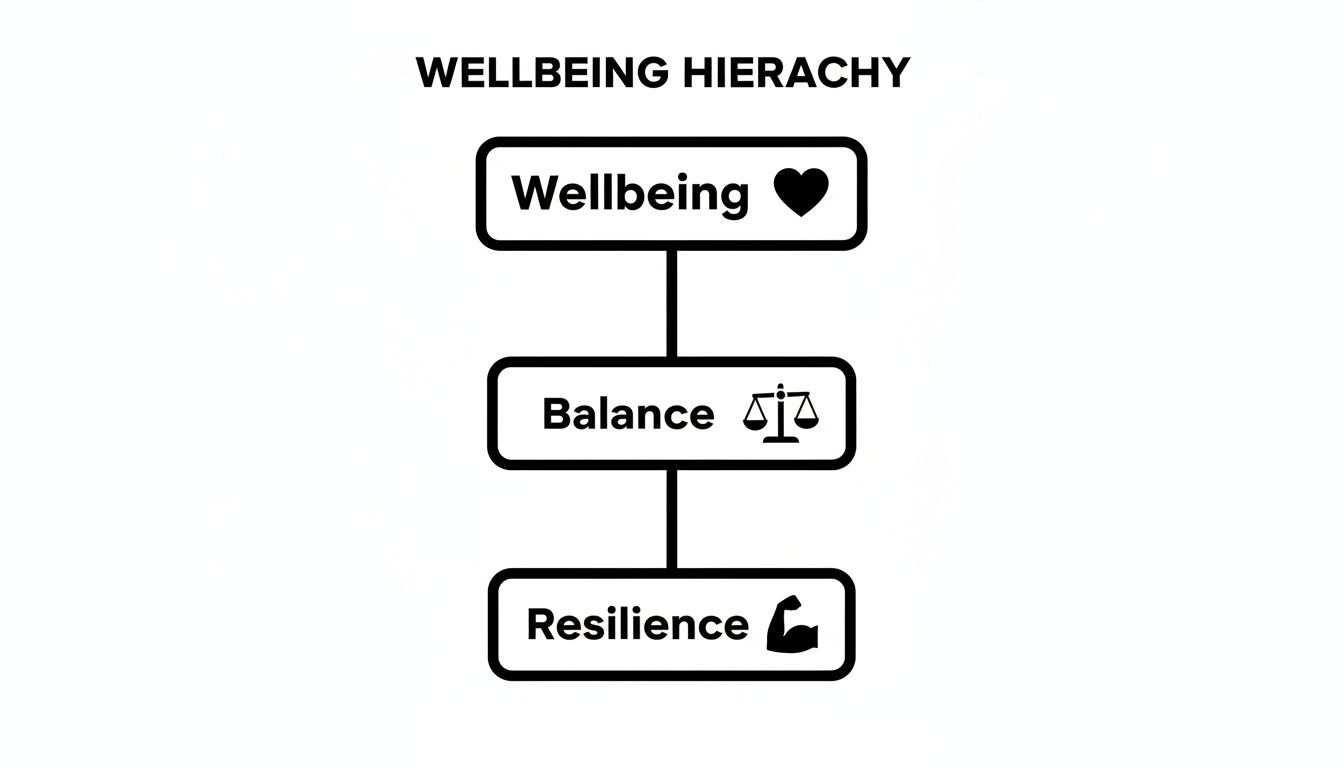
As you can see, true wellbeing isn't just a vague feeling of happiness. It's built on the very real skills of creating balance and fostering resilience—both of which are direct results of learning to manage time effectively.
How Online Learning Builds Real-World Self-Management Skills
In a traditional school, a child's day is dictated by the clock. A bell rings, a lesson starts. Another bell rings, a lesson ends. While this rigid structure offers predictability, it doesn’t teach a child one of the most vital life skills: how to manage their own time and energy. This is where the flexibility of online learning gives your child a powerful, real-world advantage.
Online education isn’t about removing structure. It’s about swapping a rigid, imposed timetable for a flexible framework that teaches genuine self-management. It’s a subtle but profound shift. Your child goes from being a passenger in their education to the driver, making conscious choices about their learning journey. This environment naturally fosters independence and resilience, showing them exactly why time management is important for their success and wellbeing.
Turning Revision From Reactive to Proactive
One of the biggest sources of stress in a traditional school is the constant scramble to keep up. If a child misses a complex idea in a live lesson, they can quickly fall behind, feeling confused and anxious. With online learning, features like recorded lessons completely change this dynamic.
Imagine your child is wrestling with a tricky A-Level Physics equation. Instead of the anxiety of asking the teacher to repeat it in front of the whole class, they can simply pause, rewind, and re-watch the explanation as many times as they need. This simple feature transforms revision from a panicked, reactive scramble into a calm, proactive process. They build confidence by mastering topics at their own pace, taking ownership of their understanding.
Learning to Work With, Not Against, Their Energy
We all have natural daily rhythms. Some of us are sharp and focused first thing in the morning, while others only hit their stride in the afternoon. A traditional school timetable ignores this biological reality. It forces a child who is a slow starter to tackle their most challenging subject at 9 AM, often setting them up for a struggle.
Online learning empowers your child to develop crucial self-awareness by understanding their own energy levels.
- The Morning Learner: A student who feels most alert in the morning can schedule their toughest subjects, like Maths or Chemistry, for that peak time.
- The Afternoon Thinker: Another child might use the morning for lighter tasks or creative work, saving their deep-focus study for after lunch when their brain feels most engaged.
This flexibility allows them to align their work with their natural energy flows, making learning more efficient and far less stressful. They aren't just learning a curriculum; they are learning how their own mind works best—a skill that will serve them for the rest of their lives. For more insights on this, you can learn more about virtual learning environments in our detailed article.
A Story of Gained Confidence
Consider a student who always felt overwhelmed by the noise and pace of a busy classroom. The constant interruptions made it impossible to focus, and their confidence took a hit. Switching to online learning at Queen's Online School was a turning point. With a quieter environment and the ability to structure their day, they began to thrive.
They scheduled short breaks after tough lessons to recharge and used recorded sessions to go over anything they weren't sure about. Slowly but surely, they built a routine that worked for them. The result wasn't just better grades; it was a profound shift in self-belief. They learned they were capable and in control, transforming from a passive student into a confident, independent learner.
Online schooling doesn’t just deliver an education; it teaches the art of self-management. It provides the tools and flexibility for children to build independence, confidence, and a deep understanding of their own learning style.
This focus on proactive self-management has never been more important. The TUC reports that 1 in 2 UK workers now face gruelling intensity at work, a trend that is unfortunately spilling over into education. At Queen's, our recorded sessions and zero-tolerance wellbeing policy are designed to provide a vital counterbalance. We help students avoid an unbalanced workload and build sustainable study habits, which is especially crucial for learners with SEMH needs.
Right, you understand why time management is so crucial. It’s not about rigid schedules or taking the fun out of childhood. It's about giving your child the tools for a calmer, more confident life—one where they feel in control of their day, not overwhelmed by it.
So, where do you begin? The good news is that you don’t need a massive, complicated overhaul of your family’s routine. The journey to mastering time starts with a few small, deliberate steps. Think of it less as a lecture and more as a partnership.
Ready to get started? Here are a few simple things your family can try this week.
A Simple Checklist to Get Going
These aren’t giant commitments. They’re small habits designed to open up a conversation and build momentum, showing your child that an organised life is not only possible but feels a whole lot better.
Hold a 10-Minute Weekly Huddle: Pick a time, maybe Sunday evening, for a quick, relaxed chat about the week ahead. What homework is due? Any after-school clubs or birthday parties? Getting it all out on the table makes the week feel predictable and manageable, not like a series of surprises.
Create a Shared Digital Calendar: Use a simple tool like Google Calendar to map out everyone’s commitments. Colour-coding is a game-changer here—give each family member their own colour. It turns a boring schedule into a visual map of the week, helping everyone see how their own plans fit into the bigger family picture.
Celebrate the Small Wins: This one is huge. Did your child get their homework done before dinner without a single reminder? Make a point of noticing. A simple, "I was so impressed with how you managed your time this afternoon" does more than you can imagine. It reinforces the behaviour and makes them feel capable and seen.
These first steps are all about building positive momentum. They prove to your child—and to you—that a calmer, more organised way of life is completely within reach. By tackling it together, you’re not just teaching a skill; you’re laying the foundation for their future success and wellbeing.
Frequently Asked Questions
Understanding the ‘why’ behind time management is one thing, but making it work in a busy family home is another. Here are some of the most common questions we hear from parents, with practical answers that always put your child’s emotional wellbeing first.
How Can I Help My Child With ADHD Manage Their Time?
The key here is collaboration, not control. A child with ADHD often experiences time in a more abstract way, so your first job is to make it tangible. Visual aids are brilliant for this—think a sand timer for a block of homework time, or a vibrant, colour-coded checklist for their morning routine. For instance, you could have pictures for 'Brush Teeth', 'Get Dressed', and 'Pack Bag'. When they complete a task, they get to flip the picture over, giving them a satisfying sense of progress.
When a big project looms, the feeling of being overwhelmed is a major hurdle. Break it down into tiny 'micro-steps' that feel achievable. And instead of only celebrating the finished task, praise the effort along the way. Acknowledging that they started, or that they managed ten focused minutes, builds the confidence they need. It shows them that progress, not just perfection, is what really counts.
My Teenager Resists Any Attempt to Structure Their Time. What Should I Do?
For teenagers, autonomy is everything. If you try to impose a rigid schedule, it will almost certainly backfire and turn into a power struggle. The trick is to shift your role from ‘manager’ to ‘consultant.’ Your teen needs to see time management not as your agenda, but as a tool to get more of what they want.
Start by asking about their goals. Is it more time with friends? More gaming? More time to practise their guitar? Frame the conversation around their own desires. You could say something like, "I can see you really want to hang out with your friends on Saturday. Let's look at your revision and see if we can get it done by Friday night so your weekend is totally free. How could we make that happen?" By co-creating a flexible framework, you respect their growing independence while gently guiding them toward smarter choices.
At What Age Should My Child Start Learning Time Management?
You can start laying the groundwork as early as ages five to seven. At this stage, it’s not about complex schedules or deadlines. It’s about creating simple, predictable routines that help your child feel secure and competent.
Begin with small, consistent habits. A picture chart showing the evening routine—dinner, bath, story, bed—is a fantastic first step. Another great habit is teaching them to pack their school bag the night before. This simple act can transform a frantic morning scramble into a calm, prepared start to the day. For example, before they get their pyjamas on, you can make a game of it: "Let's be school-ready detectives! Do we have the reading book? Is the water bottle full?" It’s not about one big lesson; it’s about weaving dozens of small, empowering habits into the fabric of daily life.
At Queen’s Online School, we build these essential self-management skills right into our learning approach, empowering students to take control of their education in a supportive, flexible environment.
Learn how our small classes and personalised feedback can help your child thrive by exploring our programmes at https://queensonlineschool.com.