
Have you ever found yourself wondering, "How does my child actually learn?" It’s a question almost every parent asks, often with a lump in their throat when they see their child getting frustrated with a maths problem or zoning out during a history lesson. This simple question is the start of a journey to understand your child’s unique world, and the theory of learning styles often feels like the perfect roadmap.
The Learning Styles Question Every Parent Asks
The theory suggests that children absorb information best when it's presented in a way that matches their natural preference—whether that’s by seeing it (visual), hearing it (auditory), or doing something with their hands (kinaesthetic).
That quiet question you ask yourself comes from a powerful mix of hope and worry. You see your child struggling, their shoulders slumping with a quiet sigh, and your first instinct is to find a way to make it easier for them. You want to give them every advantage, and the idea of a specific 'learning style' feels like a key that could unlock their true potential and bring back their spark.
It’s a comforting thought, isn't it? Maybe your child isn’t finding it difficult; maybe they just haven’t been taught in the right way for them. This idea puts your child’s needs front and centre, shifting the focus from, "Why can't they get this?" to, "How can we help them understand?"
Understanding the Appeal
The concept of learning styles is so popular because it feels personal and empowering. It offers a simple explanation for why one child can recall every detail from a nature documentary (a classic visual learner), while their sibling needs to build a model of a volcano to understand how it works (a classic kinaesthetic learner). It gives you a tangible way to feel like you're actively supporting their education and easing their frustrations.
For many parents, this leads to a series of important realisations:
- You start spotting patterns. You might notice your child always doodles while listening or that their eyes light up when they watch a video tutorial instead of reading a manual. These are clues to what makes them feel engaged and happy.
- You look for solutions. You begin seeking out tools and methods that seem to align with these strengths, hoping to transform learning from a battle into a moment of connection.
- You become their advocate. It gives you a language to talk to teachers about what your child needs, like asking, "Could we try showing her more diagrams? She seems to really connect with them."
"The desire to identify a child's learning style comes from a place of deep care. It's about wanting to see and honour our children as the unique individuals they are, and to find the most effective path to their success."
In this guide, we're going to explore this concept together. We’ll look at the most common models, separate the helpful insights from the persistent myths, and find what truly helps children thrive. The goal isn't just to label a learning style, but to channel that powerful parental instinct into practical, effective strategies that genuinely support your child's journey.
Unpacking the Popular VAK Learning Model
When parents first start exploring learning styles, the framework they almost always encounter is the VAK model. It’s a simple, intuitive idea that groups learning preferences into three main categories: Visual, Auditory, and Kinaesthetic.
But it’s important not to see these as rigid labels for your child. Instead, think of them as observable tendencies—beautiful clues that help you appreciate your child’s unique way of engaging with the world.
Imagine your child is learning to bake a cake with a grandparent. One child might want to watch a video first, carefully observing how the baker mixes the ingredients (visual). Another might prefer their grandma to talk them through the recipe step-by-step (auditory). A third would just want to get their hands in the flour and learn by doing, feeling the dough between their fingers (kinaesthetic).
None of these methods are wrong; they're just different paths to the same delicious result. This is the heart of the VAK model. It honours that children connect with information differently and encourages us to pay closer attention to their natural inclinations.
The Visual Learner: Seeing to Understand
A visual learner isn't just a child who likes drawings; they are the ones who truly need to see information to make sense of it. Their world is often organised by colour, shape, and spatial relationships. You might notice this in the child who instinctively reaches for coloured pens or highlighters to organise their homework, turning a daunting page of text into something beautiful and clear.
For them, a lecture on the water cycle might feel like a confusing jumble of words. But show them a detailed chart with arrows and colourful illustrations, and you can almost see the lightbulb go on above their head. It suddenly clicks. They’ll remember the face of a historical figure from a portrait or the layout of a battlefield from a map, because their memory is so often tied to what they have seen.
- A practical example: During a history lesson about ancient Egypt, a visual learner will remember the intricate details of a diagram showing the inside of a pyramid far better than a spoken explanation of its construction. They connect with the visual evidence, picturing the secret passages in their mind.
The Auditory Learner: Hearing to Remember
Next, we have the auditory learner. These children process the world through sound, rhythm, and speech. They are often fantastic listeners who can recall conversations and stories with surprising accuracy, sometimes repeating something you said weeks ago!
You might have an auditory learner if your child hums multiplication facts to a self-made tune or can perfectly recite dialogue from a film they've only heard once. An auditory learner thrives on conversation—they benefit from talking through a problem with you, hearing a story read aloud, or participating in a group discussion. For them, the spoken word is the key to unlocking understanding and feeling connected.
- A practical example: When learning a new language, an auditory learner benefits immensely from hearing and repeating new words. The sound and rhythm of the language are what stick, much more so than seeing the words written on a page. Hearing you say "bonjour" with a smile is more memorable than seeing it in a book.
The Kinaesthetic Learner: Doing to Learn
Finally, there’s the kinaesthetic learner—often called the "hands-on" learner. These children learn by doing, touching, and moving. For them, learning is a full-body experience. They need to physically engage with their environment to process new concepts. This is the child who needs to build the model volcano, not just read about it, feeling the thrill of the eruption they created themselves.
They might seem fidgety in a traditional classroom, but that movement is often how they concentrate. They remember information best when it's connected to a physical action—conducting the science experiment, acting out a historical event, or using blocks to solve a maths problem.
You’ll often see a kinaesthetic learner using their hands when they talk, pacing while they think, or taking things apart just to see how they work. This isn't distraction; it’s their brain making connections through physical action.
- A practical example: To truly grasp the concept of fractions, a kinaesthetic learner needs to physically cut a pizza or a cake into slices. The act of dividing the whole into parts with their own hands creates a lasting memory that a worksheet simply can't replicate.
Understanding these tendencies isn't about putting your child in a box. Instead, it’s about opening your eyes to how they experience their world, giving you a richer, more compassionate insight into their learning journey.
The Surprising Truth Behind Learning Styles
We've all heard about finding a child's specific learning style—that single, magic key that promises to unlock their academic potential. As parents, the idea feels personal, intuitive, and deeply caring. It's a concept that makes so much sense on the surface. But this is where we hit the big, surprising question: does matching teaching to a single style actually work?
While the theory is certainly appealing, the overwhelming scientific consensus is that there's very little evidence to suggest it improves learning. This can feel confusing, maybe even a little disheartening. After all, if it feels so right, how can it not be true?
A More Nourishing Approach to Learning
Let’s try a simple analogy. Think of your child’s mind as a growing body that needs a balanced diet to become strong and healthy. Now, imagine you discover that your child absolutely loves carrots. Carrots are great for them, so you might be tempted to start serving carrots with every single meal.
Of course, insisting your child only eats their favourite food would quickly lead to malnourishment. They also need proteins, grains, fruits, and healthy fats to truly thrive. A healthy, growing mind is exactly the same; it needs a rich and varied diet of inputs to make strong connections.
“Focusing only on a single 'learning style' is like serving only one type of food. A truly healthy mind needs a variety of learning experiences—visual, auditory, and hands-on—to build strong, flexible connections.”
This isn't about throwing out the idea of individual preferences. It’s about moving from a fixed, labelled approach to a much more flexible and powerful one. The goal isn't to find the one "right" way your child learns, but to give them a whole toolbox of different ways to approach any subject, so they never feel stuck or helpless.
This chart breaks down the popular VAK model, which sorts learners into visual, auditory, or kinaesthetic categories.
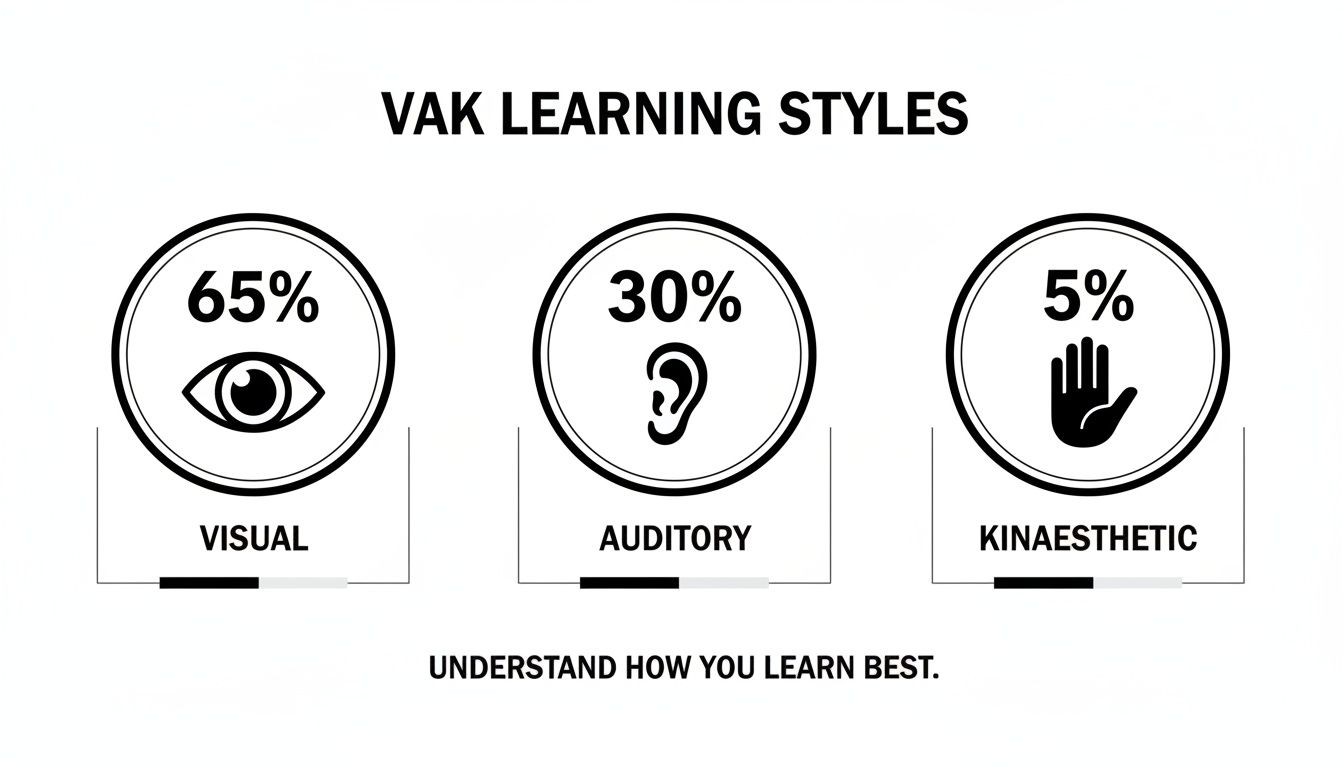
While these labels can help us notice our children's preferences, the most effective learning actually combines elements from all three.
What the Science Actually Supports
The real issue isn’t whether preferences exist—we all have them. It's the "matching hypothesis," the idea that a student will learn better if the teaching method is perfectly matched to their preferred style. Study after study, both in the UK and internationally, has concluded there is little reliable evidence to back this up.
Despite this, belief in learning styles remains incredibly high. Some studies show that around 89.1% of educators still believe in the matching hypothesis. Yet, well-controlled experiments consistently fail to show any real benefit. In the UK, evidence bodies like the Education Endowment Foundation have even classified learning-styles interventions as having low impact due to the limited evidence. You can read more about the research findings on learning styles.
So, what does work? Research points to a much more effective strategy: presenting information in multiple ways.
This is often called a multimodal approach. Instead of boxing a child into a single style, we expose them to various methods. This strengthens their understanding from all angles.
Here’s what this looks like in practice for your child:
- For a history lesson: A student might read a chapter about the Roman invasion (reading), watch an exciting documentary showing Roman soldiers (visual/auditory), and then join a group project to build a model of a Roman fort (kinaesthetic).
- For a maths concept: A teacher could explain a formula on the whiteboard (visual), talk through the steps with your child (auditory), and have them use physical blocks or even coins from a piggy bank to solve problems (kinaesthetic).
This approach doesn’t just cater to a preference; it builds a far richer, more robust understanding of the topic. By engaging multiple senses and cognitive pathways, we help children create stronger, more lasting memories and develop greater mental flexibility. The focus shifts from, "What is my child's style?" to, "What are all the different ways we can explore this idea together?"
Why We Still Believe in Learning Styles
If the science is so clear, why does the idea of learning styles still have such a powerful hold on parents and teachers? The answer has very little to do with academic data and everything to do with our hearts. The theory comes from a place of deep care—that fundamental desire to see and honour every child as a unique individual.
When your child is struggling with their homework, it’s a painful experience. You see their frustration, their slumped shoulders, and that look of defeat in their eyes. In that moment, the idea that there might be a simple key, a "learning style," that could unlock their understanding is incredibly comforting.
It offers a straightforward explanation for the messy, complex process of learning. More importantly, it gives you a tangible way to feel like you're helping. Believing your child is a "visual learner" gives you a clear action plan: find more diagrams, use more colours, watch educational videos. This sense of agency is a powerful emotional anchor for any parent navigating the uncertainties of their child's education.
The Heart Behind the Belief
Wanting to find ‘the secret’ to your child’s learning is a natural and loving part of parenting. It’s an expression of your commitment to them. It reframes a challenge from, "Why can't my child get this?" to, "How can I better support my child?" This shift is not just compassionate; it's a vital part of building a child’s confidence and resilience.
The enduring appeal of learning styles isn’t about ignoring science; it’s about a parent's profound need to understand their child on a deeper level. It's a testament to the hope that with the right approach, every child can feel seen, valued, and successful.
This emotional pull is so strong that it has shaped expectations right across the education sector. In the UK, a large-scale review of over 15,000 educators found that a staggering 89.1% agreed that people learn better when teaching is matched to their preferred style. This belief persists despite overwhelming evidence that this "matching" has little to no real impact on learning outcomes. For parents and school leaders, this just goes to show how widespread the demand for personalised approaches really is.
Channelling Care into Effective Strategies
The goal isn't to dismiss these good intentions—it’s to channel that same caring energy into strategies that actually work. Recognising your child's preferences is a wonderful starting point for connection and engagement. If your child loves hands-on projects, that's a fantastic insight into what excites them and gets them fired up.
But true support comes from building a broad toolkit of learning strategies, not from boxing them into a single "style." This is the foundation of a genuinely supportive and fair learning environment. Providing varied tools and methods is a core component of what inclusive education truly means for students.
So instead of trying to pigeonhole your child, we can use their interests as a gateway to introduce multiple ways of learning. The same caring instinct that draws us to learning styles can be redirected toward fostering flexibility, curiosity, and a love for learning in all its forms. This honours the child's individuality while giving them the diverse skills they need to thrive.
A Better Way to Support Your Child's Learning
It’s time to move beyond the comforting but restrictive labels of learning styles. Let's step into a world of practical, evidence-based strategies that truly empower your child.
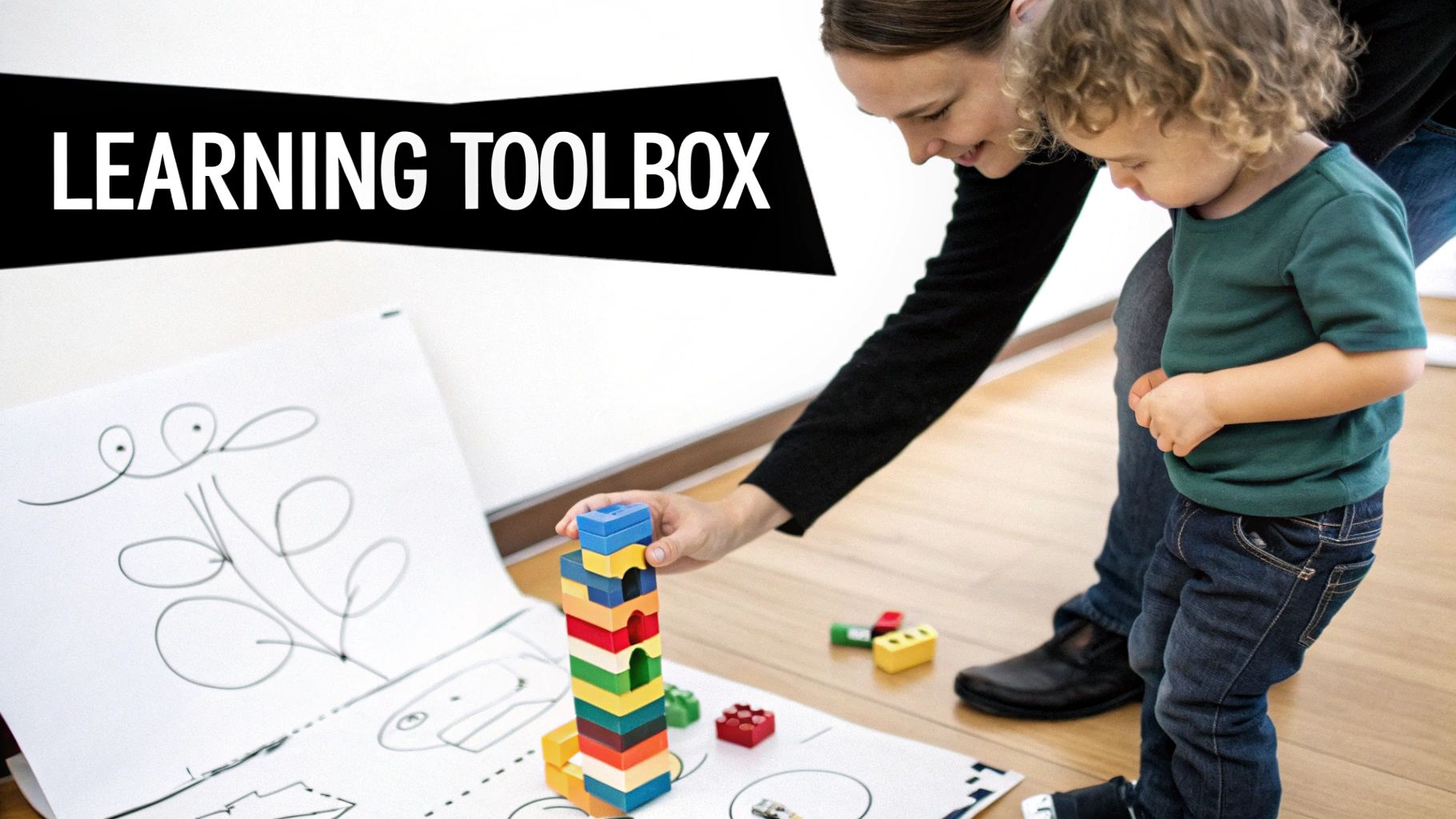
Instead of trying to fit them into a single box—visual, auditory, or kinaesthetic—imagine giving them a complete toolbox, filled with different ways to approach any learning challenge so they never feel helpless again.
This powerful idea is known as multimodal learning. It’s based on a simple but profound truth: presenting information in many different ways strengthens understanding for everyone. It’s not about finding the one "right" way your child learns; it’s about creating a rich, adaptable environment where they can always find a way to connect with new ideas.
This isn’t just a theory; it reflects how children naturally learn. UK-based research has shown that very few students have one single, dominant style. When surveyed, a huge number report having multimodal preferences, meaning they learn best with a mix of approaches.
In fact, some studies show that students who prefer two, three, or even four different methods make up a significant portion of the classroom—often far more than those who identify with just one. This evidence sends a clear message: focusing on a single declared style risks oversimplifying what our children truly need to thrive.
Building Your Child's Learning Toolbox
So, what does this look like in the real world, sitting at the kitchen table on a Tuesday night when your child is close to tears over homework? It’s all about being creative and flexible.
Forget rigidly sticking to one "style." A much better way forward is to use a range of active learning strategies for students, which are proven to boost engagement and memory for absolutely everyone.
Here are some practical examples of how to fill that toolbox:
- For history homework on the Tudors: Don't just read the textbook. Draw a funny, colourful timeline of Henry VIII's wives (visual), watch a snappy documentary about the era (auditory), and maybe even use building blocks to construct a model of the Tower of London where they were imprisoned (kinaesthetic).
- For a tricky science concept: Go for a walk and talk through the water cycle as you see clouds and puddles (auditory and kinaesthetic). When you get home, grab some coloured pens and draw a diagram of it together on a big sheet of paper (visual).
- For a challenging maths problem: Move beyond the worksheet. Use coins, buttons, or even pieces of pasta to physically represent the numbers and work through the problem hands-on (kinaesthetic). Then, have your child explain the steps back to you out loud, like they're the teacher (auditory).
Varying the approach like this is a cornerstone of brilliant teaching. It’s about giving every child multiple entry points to an idea—a key principle you can learn more about in our guide on what differentiated learning is.
A Naturally Inclusive Approach
The "toolbox" method is naturally more inclusive and is a game-changer for children with Special Educational Needs (SEN). It removes the pressure for them to learn in one specific way that might not work for them.
Instead, it creates a flexible and supportive space that honours their individual needs without putting a ceiling on their potential.
By focusing on a toolbox of strategies rather than a single label, we empower our children to become adaptable, resilient learners. We teach them that if one tool doesn’t work, there’s always another they can try. This builds their confidence and lets them know it's okay to find things hard.
This shift in perspective is incredibly freeing for both parent and child. It moves the conversation from "What is my child's learning style?" to "What are all the wonderful ways we can explore this topic together?"
This doesn't just help them get homework done; it builds their confidence and nurtures a genuine, lifelong love of learning.
How Online Learning Can Nurture Every Child
So, if rigid labels aren't the answer, what does a truly supportive education look like? It’s an environment that naturally embraces what we know works best: presenting ideas in many different ways and, most importantly, knowing each child as an individual.
This modern, flexible approach is right at the heart of online learning. It’s about moving beyond theory and into a space where your child feels seen, heard, and deeply understood. This is where the real magic of learning happens—not by trying to match a style, but by nurturing a person.
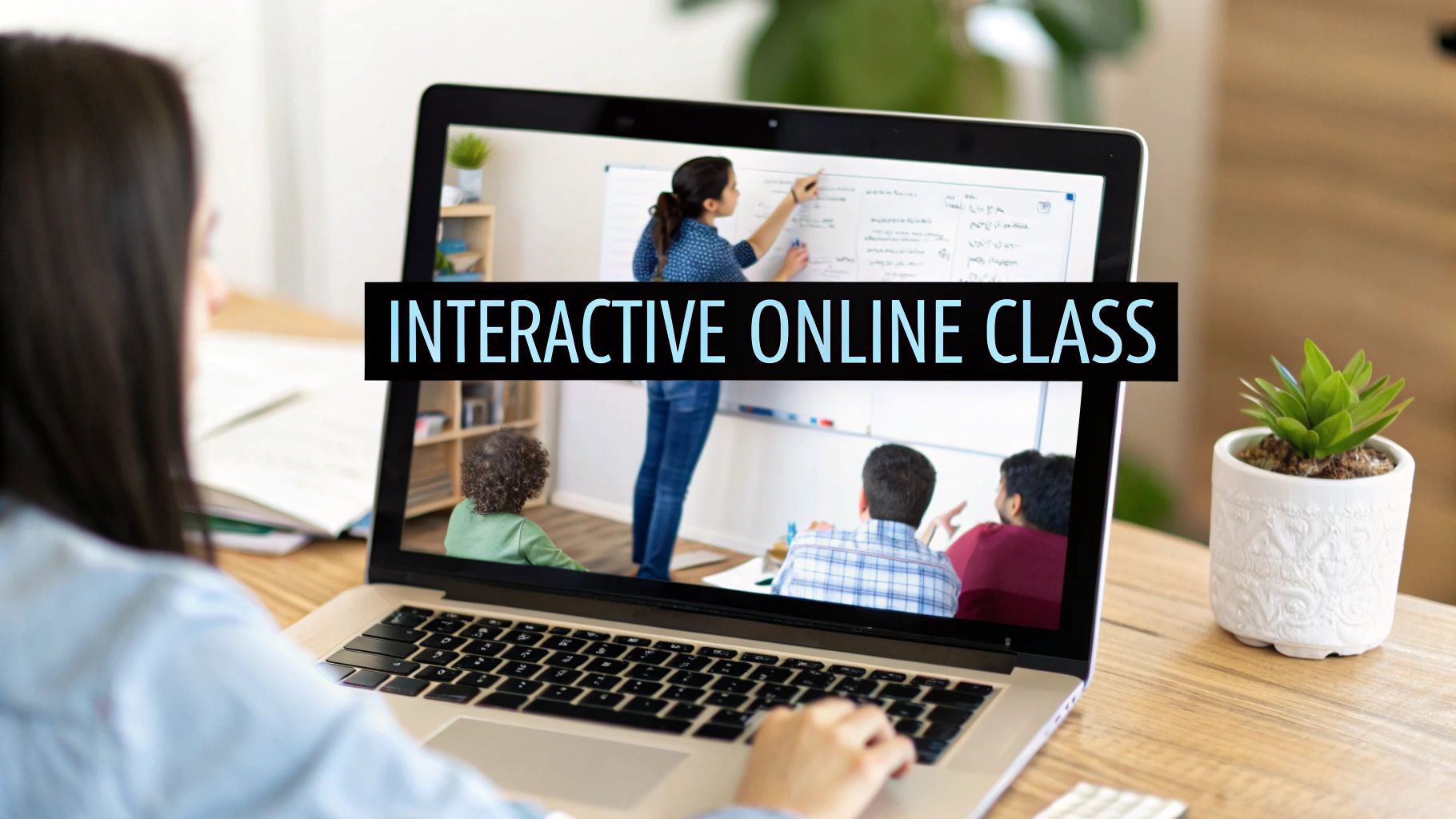
Multimodal Teaching in Every Lesson
In our live, interactive classes, multimodal teaching isn’t some fancy add-on; it's woven into the very fabric of every single lesson. We instinctively use a rich blend of methods because, quite simply, it’s the most effective way to engage young minds and make them feel excited to learn.
Think about a science lesson on the solar system. Our teachers don’t just talk about it; they bring it to life from every possible angle:
- Visually: They might use a digital whiteboard to sketch out the planets' orbits, share breathtaking NASA images, and play animated videos that capture the sheer scale of the universe.
- Auditorily: They’ll explain complex ideas like gravity with clear, engaging language, encouraging students to jump in with questions and debate theories together.
- Kinaesthetically: They could launch an interactive poll where students vote on planetary facts or split the class into breakout rooms for a collaborative project designing a mission to Mars.
This approach ensures every child has multiple ways to connect with the material, building a far deeper and more memorable understanding than a one-size-fits-all lecture ever could.
Beyond Generic Styles to Personalised Support
But the most valuable part of our approach isn't just the variety of tools we use. It’s what our small class sizes make possible: genuine, personalised support.
When a teacher only has a handful of students, they can move beyond generic learning styles to provide something much more powerful. They get to know your child’s unique personality, their strengths, and the specific areas where they might need a little more encouragement.
A teacher who truly knows a child can offer specific feedback that transforms their learning journey. They can say, "I remember you found fractions tricky, so let's try drawing this problem out," or "You explained that historical event so clearly, why don't you lead the discussion?" This is the kind of support that builds real, lasting confidence.
An Inclusive Space for Every Learner
This flexible and personal online environment is especially powerful for students with Special Educational Needs (SEN). For a child who finds a busy classroom overwhelming, learning from the comfort and safety of home can be a game-changer. For another who needs extra time to process information, the ability to re-watch recorded lessons is invaluable.
Our platform is designed from the ground up to be an empowering and inclusive space. It's a place where every learner feels seen and valued for who they are, not for a label they've been given. We focus on building a strong foundation of skills and confidence, which is a key part of our vision for effective learning in virtual environments.
Ultimately, it’s about creating an education where every single child can thrive.
Your Questions on Learning Styles Answered
Navigating the world of education can feel overwhelming. As a parent, you just want what's best for your child, and after exploring the myths and realities of learning styles, you might still have a few practical questions.
This section is all about getting those questions answered clearly and compassionately. It’s about turning theory into action and focusing on the most important takeaway: supporting your child means giving them a whole toolbox of flexible strategies, not just one fixed label.
What Should I Do Instead of Trying to Pinpoint My Child’s ‘Style’?
Rather than hunting for a single label, shift your focus to two things: observation and variety.
Pay close attention to what genuinely captures your child's imagination. Do their eyes light up when you watch a documentary together? Do they grasp maths concepts faster when they can use physical objects like LEGO bricks to count and sort?
Use these observations not to label them, but to make learning more exciting and effective. The goal is to build a rich and varied ‘learning diet’. Introduce them to visual charts, talk through ideas out loud, get hands-on with projects. This multi-faceted approach builds resilience and shows them there are many ways to tackle a problem.
How Should I Talk to My Child's Teacher About This?
When you speak with their teacher, try framing the conversation around your child's specific needs and interests instead of using the language of learning styles.
For example, you could say, "I've noticed Sam really understands a concept after we've built a model of it at home. He feels so proud of what he's made," or, "She seems to remember her history facts much better when we watch a short, fun video about them."
This approach is collaborative and genuinely helpful. It gives the teacher concrete, actionable information about what engages your child, opening up a dialogue about creating a supportive and flexible classroom environment. It’s about partnership, not prescription.
My Child Has SEN. Does This Advice Still Apply?
Absolutely. In fact, a flexible, multi-sensory approach is often even more crucial for children with Special Educational Needs (SEN). Rigidly sticking to one supposed "style" can be incredibly limiting for a child who may already be navigating learning barriers.
By providing multiple ways to access information—seeing it, hearing it, and doing it—you give them more opportunities to connect with the material in a way that works for them on any given day. This focus on variety, patience, and individualised support is at the very heart of creating a truly inclusive learning experience where every child feels empowered to succeed.
At Queens Online School, we believe in nurturing the individual, not labelling the learner. Our small, interactive classes and evidence-based, multimodal teaching methods create a supportive environment where every child is seen, understood, and given the tools they need to flourish. Discover our approach to personalised online learning.