
Every parent's greatest fear is that their child is suffering in silence. Bullying is a deeply painful experience that leaves emotional scars long after any physical ones have faded. However, children and teenagers often lack the words or the courage to say, "I'm being bullied." Instead, they show us through subtle, often confusing, shifts in their behaviour, mood, and even their physical health. It's that gut-wrenching feeling when you know something is wrong but can't quite put your finger on it. Distinguishing a bad day from a cry for help can feel impossible, making the ability to recognise the signs of bullying a critical skill for any parent or guardian.
This guide is organised to help you tune into those signals. We will move beyond the most obvious indicators to uncover the nuanced changes that truly matter, putting your child's emotional needs at the very centre of the conversation. You won't find generic advice here. Instead, you'll discover a detailed list covering everything from unexplained psychosomatic complaints to sudden changes in their digital footprint. Each point is accompanied by practical, real-world examples and compassionate, actionable steps you can take today. Your observation and understanding are the first, most crucial steps in creating a shield of support around your child, empowering them to reclaim their sense of safety and self-worth.
1. Unexplained Physical Injuries
Among the most direct and alarming signs of bullying are physical injuries that your child cannot, or will not, explain. These are not the typical scrapes from playing outside; they are often recurring marks like bruises, scratches, or cuts that appear without a plausible story. Imagine your son coming home with a bruise on his arm for the third time in a month, or your daughter’s favourite jacket being mysteriously ripped. These physical indicators are a critical warning sign because they often point directly to physical violence or assault.
When a child consistently comes home with injuries they dismiss with a vague "I fell" or "I don't remember," it's time to pay closer attention. Fear, shame, or a desperate desire to protect themselves from further harm can prevent them from telling you the truth. Seeing your child hurt is deeply distressing, and your heart sinks with worry. Creating a safe, non-judgemental space for them to open up is the first step toward understanding the situation and getting them the help they need.
What to Look For and How to Respond
It is vital to approach the situation with care and document everything methodically, always putting your child's sense of safety first.
- Frequent and Unexplained Marks: Be alert for bruises, cuts, or scratches that appear regularly. For example, they might have marks on their back from being pushed into lockers.
- Damaged Belongings: A backpack with a broken strap, "lost" lunch money, or a cracked phone screen can be another form of physical bullying.
- Vague Explanations: A child who is usually talkative becoming evasive about how they got hurt is a significant red flag. They may look away or change the subject when you ask.
When you notice these signs, gently ask open-ended questions like, "That looks like it really hurts, can you tell me what happened?" instead of accusatory ones. This shows them you are on their side. Document every injury with a dated photograph. This evidence can be crucial if you need to involve the school or other authorities.
2. Social Withdrawal and Isolation
When a child who once thrived on social interaction begins to pull away, it is a significant emotional warning sign. This social withdrawal isn't just a preference for quiet time; it's a marked change in behaviour where they actively avoid friendships, family gatherings, and activities they used to love. You might notice them quitting the football team they adored, declining invitations to birthday parties, or spending every lunchtime hiding in the library. This retreat is often a coping mechanism to avoid the source of their distress, making it one of the most powerful signs of bullying.
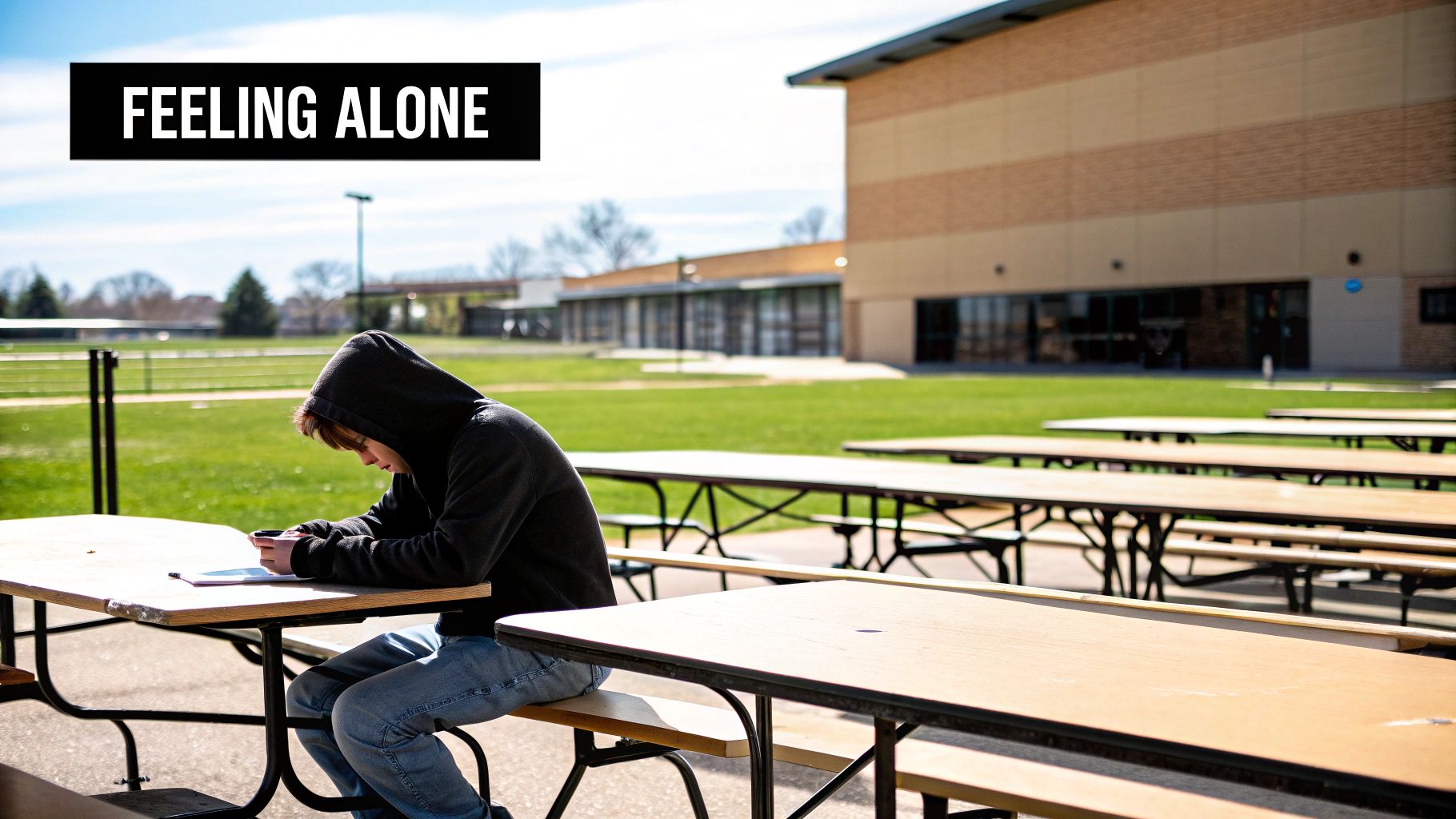
The psychological pain of being ostracised or tormented can make social situations feel overwhelming and unsafe. A child might isolate themselves out of fear or a plummeting sense of self-worth, believing they are the problem. Seeing your vibrant, chatty child retreat into themselves is heart-wrenching. It feels like watching a light dim. It is crucial to recognise this as a silent cry for help and approach them with empathy to gently uncover the root cause of their isolation.
What to Look For and How to Respond
Observing and responding to social withdrawal requires a delicate and supportive approach to help your child feel safe enough to share their experiences.
- Sudden Change in Social Habits: Pay attention if your child stops talking about their friends or suddenly has no interest in school clubs. For instance, they may no longer mention their "best friend."
- Avoidance of Social Events: Consistently making excuses to avoid school trips, parties, or even family get-togethers is a major red flag.
- Increased Time Spent Alone: A noticeable increase in time spent in their room, preferring the solitude of their own company over interaction with family or peers.
Start conversations in a low-pressure environment, perhaps while cooking together or during a drive. Use gentle prompts like, "I've noticed you haven't been hanging out with Sam lately, is everything okay?" Your goal is to create an atmosphere where your child feels safe, heard, and deeply loved, reminding them that they don't have to face this alone.
3. Sudden Decline in Academic Performance
A sudden and significant drop in academic performance is one of the most measurable signs of bullying. When a child who was once engaged and successful in school begins to struggle, it's often a symptom of underlying distress. The constant stress, anxiety, and fear associated with being bullied can make it nearly impossible for a student to concentrate on their studies, leading to poor grades, incomplete homework, and a general loss of interest in school.
Seeing your child's grades fall is concerning, but it's important to look beyond the report card. This academic decline is not a reflection of their ability or intelligence; it's a cry for help. Imagine the pain of seeing your previously high-achieving student suddenly receiving failing marks, or a once-curious learner now appearing completely disengaged. Their mental and emotional energy is being consumed by the bullying, leaving little room for learning.
What to Look For and How to Respond
Connecting academic struggles to social and emotional well-being is key. A collaborative approach with the school can help uncover the root cause.
- Sharp Drop in Grades: Look for a pattern of decline, such as a straight-A student suddenly bringing home C's and D's across multiple subjects.
- Loss of Interest: Notice if your child stops talking about school, avoids homework, or expresses a desire to skip classes they once enjoyed, saying things like, "History is boring now."
- Teacher Feedback: Pay attention to comments from teachers about a lack of focus, participation, or preparedness in class.
When discussing grades, focus on their well-being first. Ask questions like, "I've noticed school seems to be a real struggle for you lately. Is there anything happening that's making it hard to focus?" This opens a dialogue about the cause, not just the symptom. Your child needs to know you care more about their happiness than their grades.
4. Anxiety, Fear, and Panic Symptoms
One of the most profound signs of bullying is the emergence of persistent anxiety, fear, or panic that seems to have no other cause. This emotional turmoil is the psychological wound left by repeated torment. A child might develop an intense dread of going to school, start having panic attacks on Sunday evenings, or express excessive worry about social situations they once enjoyed. These are not just fleeting nerves; they are sustained emotional responses to a perceived, constant threat.
When a child's sense of safety is shattered, their nervous system can go into overdrive. This can manifest as physical symptoms like stomach aches or headaches, especially before an anticipated encounter with bullies. It's a deeply visceral fear. Validating their feelings is paramount. Dismissing their anxiety as an overreaction can deepen their sense of isolation and shame. Creating a supportive environment where their fears are taken seriously is the crucial first step toward helping them regain their emotional footing and addressing the bullying at its source.
What to Look For and How to Respond
Addressing the deep-seated fear caused by bullying requires a gentle, validating, and strategic approach.
- Sudden Dread of School: A previously happy student who begins to plead to stay home, often complaining of non-specific illnesses like a tummy ache that magically disappears by 10 AM.
- Panic Symptoms: Noticeable signs like a racing heart, shortness of breath, or trembling, particularly when discussing school or getting on the bus.
- Excessive Worry: Constant anxiety about being humiliated, being left out, or having their belongings taken. They might ask you repeatedly, "What if they say something mean about my new shoes?"
When you observe these behaviours, take them seriously. Reassure your child that their feelings are valid and you are there to help. Practising simple grounding techniques together, like focusing on breathing, can offer immediate relief during moments of panic. Your calm presence can be the anchor they need in their emotional storm.
5. Negative Self-Talk and Low Self-Esteem
One of the most insidious signs of bullying is the way it erodes a child's sense of self-worth, leading to persistent negative self-talk and low self-esteem. When a child is constantly targeted, they often begin to internalise the hurtful messages they hear. This emotional damage manifests as a harsh inner critic, where the child starts believing the negative things being said about them. You might hear them making self-deprecating comments, expressing feelings of worthlessness, or dismissing their own achievements.

Hearing your child say things like "I'm so stupid" or "Nobody likes me anyway" is absolutely heartbreaking and a significant indicator that something is wrong. They may even believe they deserve the mistreatment, which can make it incredibly difficult for them to speak out. This shift in self-perception is a powerful sign of bullying because it reflects the deep psychological impact of the torment, showing that the abuse has moved from an external threat to an internalised belief system.
What to Look For and How to Respond
Addressing this requires a delicate and supportive approach focused on rebuilding their confidence and sense of worth.
- Self-Critical Language: Listen for frequent self-deprecating remarks such as "I can't do anything right" or "It's all my fault."
- Dismissing Praise: Pay attention if your child brushes off compliments by saying, "You're just saying that because you're my mum," as they may feel they don't deserve it.
- Hopeless Outlook: Notice expressions of hopelessness about themselves or their future, which can be a direct result of feeling trapped and devalued.
When you hear these statements, gently challenge the negative thought. You could respond with, "That sounds like a really tough thought to have. Can you tell me why you feel that way?" Actively highlight their strengths and past achievements—like how kind they were to their sibling, or how hard they worked on that art project—to provide concrete evidence against their negative beliefs. Remind them of who they truly are.
6. Changes in Sleep and Eating Patterns
The emotional turmoil caused by bullying often manifests physically, disrupting a child's most basic routines. Significant and sudden changes in sleep or eating habits are powerful signs of bullying because they reflect a deep-seated anxiety or stress that the child may be unable to articulate. You might notice your once-hearty eater now just pushes food around their plate, or your teenager who used to sleep soundly is now battling insomnia and frequent nightmares. These shifts are not just mood swings; they are physiological responses to persistent distress.
When a child's internal world is in chaos, their body often keeps score. They might complain of constant stomach aches to avoid the school canteen, a place of social anxiety, or use food as a way to cope with their feelings, leading to either under-eating or binge-eating. Similarly, fear and worry can make it impossible to switch off and sleep. When bullying disrupts a child's rest, it can have serious consequences. To understand more about these impacts, you can read about the profound effects of sleep deprivation on overall health.
What to Look For and How to Respond
Observing these patterns requires a gentle, supportive approach that puts your child's wellbeing first.
- Disrupted Sleep: Look for difficulty falling asleep, waking up frequently during the night, nightmares about school, or seeming constantly exhausted and even falling asleep in class.
- Altered Appetite: Notice if your child is suddenly skipping meals, claiming they aren't hungry, or conversely, engaging in emotional or stress-eating. They might come home from school ravenous because they were too scared to eat lunch.
- New Physical Complaints: Frequent headaches or stomach aches, especially before school or around mealtimes, can be physical symptoms of anxiety related to bullying.
Begin by tracking these changes in a diary to identify clear patterns. Approach your child with warmth, saying something like, "I've noticed you haven't been sleeping very well lately, is something on your mind?" It’s also wise to consult a healthcare provider to rule out other medical causes. Creating calming bedtime routines and offering favourite, comforting meals without pressure can help re-establish a sense of safety and open the door for conversation.
7. Excessive Device Use and Digital Footprint Changes
In our hyper-connected world, bullying has moved beyond school grounds into the digital realm, making a child's online behaviour a crucial indicator. One of the key signs of bullying is a sudden, dramatic shift in how a child uses their devices. They might become compulsively attached to their phone, anxiously checking notifications, or spend excessive hours online, often late at night. Conversely, they might abruptly abandon their digital life, deleting social media accounts or completely stopping online activities they once enjoyed. These changes often signal that their online world has become a source of fear and distress.

This digital retreat or obsession is a modern-day cry for help. A teenager who was once a keen gamer suddenly avoiding their console, or a child who deletes their TikTok account without warning, is likely reacting to a painful online experience. The pervasiveness of cyberbullying means there is often no escape; the harassment follows them home, into their bedroom, into their personal space. Understanding these digital footprints is essential for spotting a problem and offering the support they desperately need.
What to Look For and How to Respond
Observing a child's digital life requires a balance of awareness and respect for their privacy. Your goal is to support, not to spy.
- Sudden Changes in Online Presence: Notice if a once-active child suddenly deactivates their social media profiles, stops posting, or makes all their accounts private.
- Obsessive Device Checking: Be aware if they seem constantly on edge, jumping at every notification, hiding their screen when you walk in, or are unable to put their device down.
- Emotional Reactions to Devices: A strong negative reaction, like anger or sadness, after using their phone or computer is a significant red flag.
Start a non-judgemental conversation about their online experiences with questions like, "I've noticed you haven't been on your gaming chat lately, is everything okay?" Teach them to screenshot any hurtful messages as evidence. It's vital to report cyberbullying to the relevant platforms and, if necessary, the school or authorities. Learn more about effective strategies to protect children online.
8. Psychosomatic Complaints Without Medical Cause
When a child’s emotional distress becomes overwhelming, it can manifest physically. One of the more subtle yet powerful signs of bullying is the emergence of psychosomatic complaints: real physical symptoms like headaches, stomach aches, or nausea that have no identifiable medical cause. These ailments are not "faked"; they are genuine physical responses to the intense anxiety and stress that bullying creates.
These physical pains often serve as an unconscious coping mechanism, providing a legitimate reason to avoid the source of their fear, such as school or a social club. If your child frequently feels unwell on school day mornings but seems perfectly fine on weekends or holidays, it’s a significant indicator that something is wrong in their environment. Your child isn't being manipulative; their body is trying to protect them. It is crucial to validate their physical pain while also exploring the emotional turmoil that may be causing it, putting their wellbeing at the centre of your investigation.
What to Look For and How to Respond
Validating your child's feelings while seeking the root cause is essential. A methodical approach can help you understand the connection between their physical symptoms and emotional health.
- Pattern-Based Ailments: Note if headaches or stomach aches consistently appear before school or specific activities but disappear during safe times like weekends. For instance, they always have a stomach ache before PE class.
- Unclear Medical Results: Multiple trips to the doctor that result in "no physical cause found" can be a strong clue that the issue is psychological.
- Sudden Onset: The sudden development of chronic complaints in a previously healthy child warrants closer attention to their daily emotional experiences.
Always start by taking their symptoms seriously and consulting a GP to rule out any underlying medical conditions. Keep a symptom diary, noting the date, time, and circumstances of each complaint. Gently ask questions like, "I've noticed you often feel poorly before school. Is there anything happening there that makes you feel worried?" This approach shows you care about both their physical and emotional health, creating a safe space for them to share their struggles.
9. Defensive or Aggressive Behavioural Changes
It may seem counterintuitive, but sometimes a child who is being bullied doesn't withdraw; instead, they become uncharacteristically aggressive or defensive. This shift happens when a child feels a constant need to protect themselves, leading to a "fight" response rather than "flight." They might lash out verbally at family over minor issues, become quick to start arguments, or react with hostility to innocent questions. These behavioural changes are often a coping mechanism, a desperate attempt to regain a sense of control and power in a situation where they feel utterly helpless.
When a previously calm and cooperative child suddenly becomes irritable or combative, it's a significant red flag pointing to underlying distress. This new aggression isn't who they are; it's a symptom of the emotional turmoil they are experiencing. Understanding that this behaviour is likely rooted in fear and hurt, rather than malice, is crucial. It allows you to look past the difficult exterior and see the vulnerable child who needs support, not punishment.
What to Look For and How to Respond
Addressing this behaviour requires seeing the cause, not just the symptom, and responding with empathy.
- Sudden Irritability: A child who is now constantly on edge, quick to anger, or starts fights over small provocations, like what to watch on TV.
- Verbal Lashing Out: Using unexpectedly harsh or hurtful language with friends and family members, perhaps even starting to bully a younger sibling.
- Defensiveness: Immediately becoming defensive or argumentative when asked simple questions like, "How was your day?"
When you see these signs of bullying, try to de-escalate confrontations calmly. Instead of reacting with anger, create a quiet moment to ask, "I've noticed you seem really angry lately. Is something happening that's making you feel this way?" It’s important to distinguish this defensive aggression from primary aggression. Your child needs to feel that home is a safe place where they can let their guard down.
10. Reluctance to Discuss School or Social Activities
One of the more subtle but powerful signs of bullying is a sudden and persistent unwillingness to talk about their day. A child who once enthusiastically shared stories about friends, classes, or lunchtimes may become evasive, quiet, or vague. This shift in communication is often a defence mechanism, used to hide distressing events and avoid reliving the pain or fear associated with them. They might be trying to protect themselves, or you, from the upsetting truth.
When questions about school are met with a short "it was fine" or "nothing happened," it’s easy to dismiss it as typical teenage behaviour. However, if this is a new pattern accompanied by a change in mood, it signals that something is wrong. This silence is a protective wall built out of fear, embarrassment, or the belief that talking about it will only make things worse. It's heartbreaking to feel your child shutting you out. Creating a low-pressure environment where they feel safe to share is essential to gently dismantling that wall.
What to Look For and How to Respond
Patience and gentle persistence are key to understanding what's happening behind their silence.
- Vague or Monosyllabic Answers: Notice if detailed accounts of their day have been replaced with one-word replies. "Who did you sit with at lunch?" might be met with just a shrug.
- Changing the Subject: A child who quickly pivots the conversation away from school or specific classmates may be avoiding a painful topic.
- Emotional Shutdown: They might not just be quiet but seem emotionally distant or "zoned out" when school is mentioned.
Instead of direct interrogation, try opening a conversation by sharing something about your own day. Use indirect questions like, "I've been thinking about your art class, what's the most interesting thing you've been working on lately?" Listen as much for what isn't said as what is. The goal is to show you're a safe harbour, ready to listen without judgement whenever they feel ready to talk.
10 Signs of Bullying: Quick Comparison
| Indicator | Detection Complexity (🔄) | Resources Required (⚡) | Expected Reliability / Impact (⭐📊) | Ideal Use Cases (💡) | Key Advantages (⭐) |
|---|---|---|---|---|---|
| Unexplained Physical Injuries | Moderate 🔄 — visible but may be concealed | Low–Moderate ⚡ — photos, logs, reporting | High ⭐📊 — strong concrete indicator when repeated | Investigations of suspected physical harm | Tangible evidence; actionable for authorities |
| Social Withdrawal and Isolation | Low 🔄 — observable social changes | Low ⚡ — observation, staff reports | Medium ⭐📊 — sensitive but not specific | Early screening in schools and clubs | Early intervention opportunity |
| Sudden Decline in Academic Performance | Low–Moderate 🔄 — trackable via grades | Moderate ⚡ — grade monitoring, teacher coordination | Medium–High ⭐📊 — measurable; suggests underlying issues | Educator-led monitoring and referral | Concrete data to prompt support |
| Anxiety, Fear, and Panic Symptoms | Moderate–High 🔄 — may be episodic or hidden | Moderate–High ⚡ — clinician referral, counseling | Medium ⭐📊 — strong indicator but needs assessment | When emotional distress or avoidance is reported | Signals acute psychological harm; guides clinical care |
| Negative Self-Talk and Low Self-Esteem | High 🔄 — often internalized, subtle | Moderate ⚡ — conversations, counseling | Medium ⭐📊 — serious sign; overlaps with depression | Mental health screening, suicide-risk assessment | Reveals deep psychological impact; informs therapy |
| Changes in Sleep and Eating Patterns | Low–Moderate 🔄 — observable at home/school | Low ⚡ — diaries, caregiver observation | Medium ⭐📊 — physiological signs, nonspecific | Family monitoring; primary care visits | Easily tracked; indicates distress affecting health |
| Excessive Device Use & Digital Footprint Changes | Moderate 🔄 — requires digital checks/documentation | Moderate–High ⚡ — archiving, privacy-safe monitoring | High ⭐📊 — digital records provide concrete proof | Cyberbullying investigations and evidence preservation | Documentable evidence; supports reporting to platforms |
| Psychosomatic Complaints Without Medical Cause | Moderate 🔄 — recurring physical complaints tied to events | Moderate ⚡ — medical exclusion, symptom diary | Medium ⭐📊 — real indicator after medical ruling-out | Recurrent school absences or unexplained somatic symptoms | Links emotional stress to physical health; prompts holistic response |
| Defensive or Aggressive Behavioral Changes | Low–Moderate 🔄 — noticeable shifts in behavior | Low–Moderate ⚡ — behavior reports, counseling | Low–Medium ⭐📊 — can be misread as primary aggression | Discipline reviews with trauma-informed approach | Visible cue to investigate root causes rather than punish |
| Reluctance to Discuss School or Social Activities | Low 🔄 — conversational pattern change | Low ⚡ — patient, non‑judgmental dialogue | Medium ⭐📊 — common but useful for rapport building | Building trust; gentle investigation of hidden issues | Easy to notice; opens pathway for supportive conversations |
Your Next Step: Building a Bridge from Awareness to Action
Navigating the journey of parenthood means learning to read the unspoken language of our children. The emotional, behavioural, and physical indicators we have explored are more than just a checklist; they are urgent signals, quiet pleas for help that can be all too easy to miss in the rush of daily life. From the unexplained bruises and sudden academic decline to the heart-wrenching retreat into social isolation, each of these signs of bullying paints a piece of a larger picture. Recognising them is the critical first step, transforming you from a passive observer into an informed and empowered advocate for your child.
Your role now is not to solve every problem single-handedly, but to become a steadfast anchor in your child’s storm. This is a time for empathy, not interrogation. When your child finally opens up, listen without judgement. Your calm, reassuring presence reinforces the most important message they need to hear: "You are not alone, this is not your fault, and we will get through this together." This validation is the foundation upon which their healing and resilience will be built.
From Recognition to Resolution
Awareness must now translate into concrete, thoughtful action. Protecting your child involves a multi-faceted approach that extends from your home to their school and into their digital world.
- Document Everything with Care: Keep a private, factual log of incidents. Note dates, times, locations, individuals involved, and your child's account of what happened. Include screenshots of online harassment and photographs of any physical injuries. This objective record is invaluable when communicating with the school.
- Open a Dialogue with the School: Schedule a meeting with the relevant staff, such as a head of year or a designated safeguarding lead. Present your concerns calmly, supported by your documentation. Focus on a collaborative goal: creating a safe environment for your child. Enquire about their anti-bullying policy and ask for specific, actionable steps they will take.
- Reinforce Digital Safety: Many bullying incidents now have a digital component. Once you recognise the signs of potential online risks or cyberbullying, taking proactive measures is crucial. Learn more about effective strategies to protect children online to help secure their virtual spaces.
- Seek Professional Support: If your child is struggling with significant anxiety, depression, or trauma, do not hesitate to seek help from a GP, counsellor, or child psychologist. Professional guidance can provide both you and your child with the tools needed to navigate the emotional fallout.
Ultimately, your goal is two-fold: to stop the immediate harm and to help your child rediscover their sense of self-worth. By standing with them, you are not just addressing a problem; you are teaching them an invaluable life lesson about resilience, self-advocacy, and the unwavering power of family support. You are showing them that even after the most difficult experiences, they can emerge stronger, more compassionate, and more certain of their own incredible value.
If you are looking for an educational environment where student well-being is embedded into the core of its philosophy, explore Queens Online School. Our zero-tolerance anti-bullying policy and nurturing global community are designed to ensure every learner feels safe, seen, and supported on their path to success. Find out more at Queens Online School.