
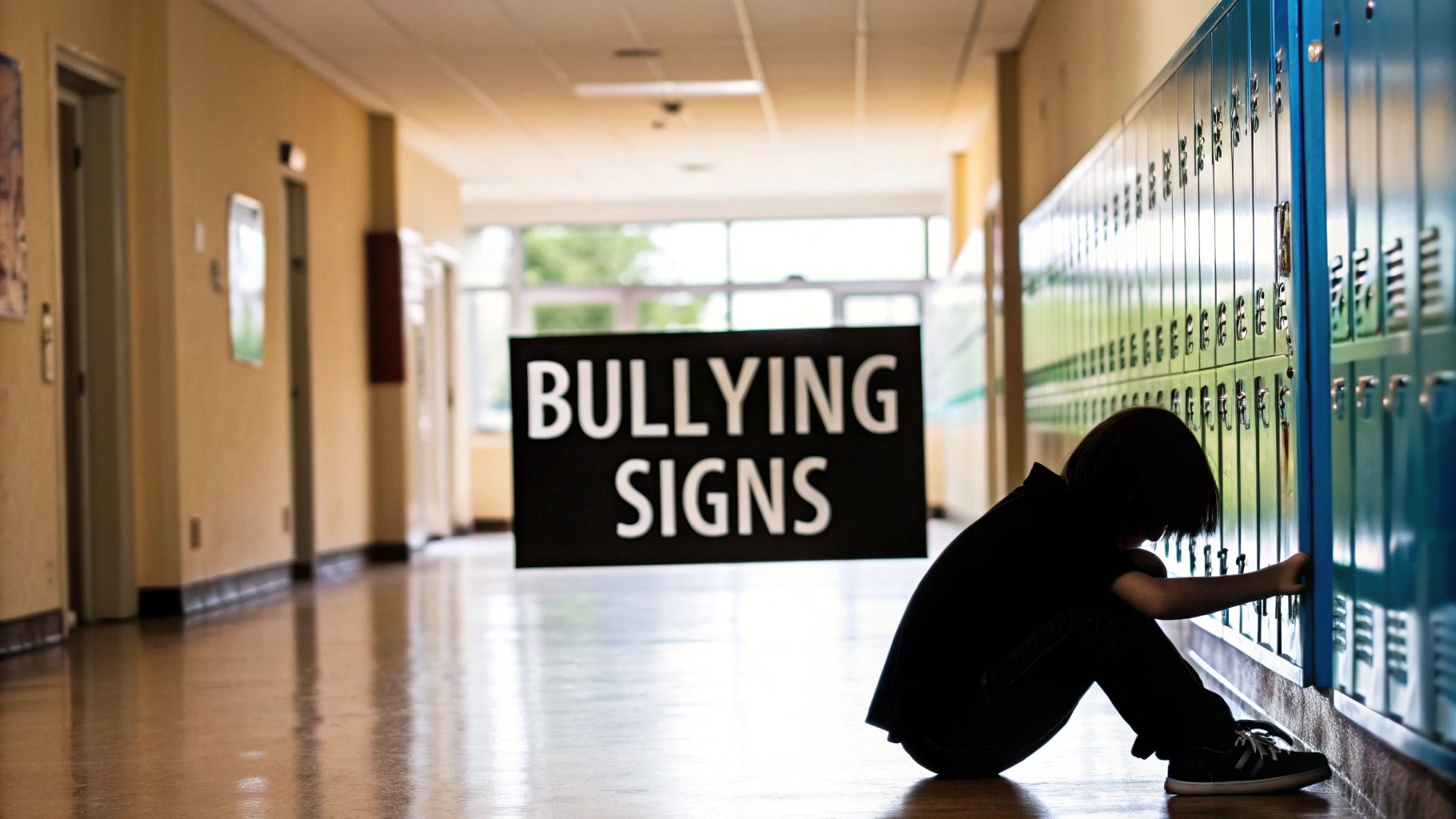
It often starts with a quiet shift you can't quite name. Your child seems distant, their usual spark has dimmed, and a subtle sadness clouds their eyes. The first sign of bullying isn't always a visible bruise or a torn school jumper; more often than not, it’s an emotional whisper—a feeling in your gut that something is deeply wrong.
Decoding Your Child's Emotional Smoke Signals
That sinking feeling you get when you look at your child? Trust it. Parental intuition is one of the most powerful tools you have for detecting distress long before a child is ready, or able, to talk about it. Bullying chips away at a child's sense of safety and self-worth, and the fallout from this emotional strain inevitably spills over into their behaviour, creating subtle but significant changes.
Think of these changes as emotional smoke signals. They might be faint, sometimes inconsistent, but they are persistent signs that a fire is burning somewhere out of sight. It's the small, out-of-character actions that often point to a much larger internal struggle.
The Most Overlooked Signs of Bullying
Recognising these early indicators is crucial. A child experiencing bullying is often trapped in a painful dilemma: they desperately want help but feel too scared, ashamed, or confused to ask for it. Their behaviour becomes their language.
Here are some real-world examples of what these smoke signals can look like:
- Sudden Physical Complaints: A child who was always healthy suddenly develops frequent, unexplained stomach aches or headaches, especially on school mornings. This is often their body's way of protesting the anxiety of facing another difficult day. Imagine your daughter, who usually loves school, clutching her stomach and pleading to stay home, the fear in her eyes more telling than any fever.
- A Shift in Social Habits: Your once-social teenager abruptly quits their favourite sport or stops wanting to see friends without a clear reason. This kind of withdrawal can be a way to avoid the source of their pain. Picture your son, who lived for football, suddenly announcing he's quit the team, offering no explanation but a hollow look.
- Changes in Sleep or Appetite: Noticeable shifts, like difficulty sleeping, frequent nightmares, or a sudden loss of appetite, are classic signs of deep-seated stress and worry. You might hear your child crying out in their sleep or notice they're just pushing food around their plate at dinner, the joy of a shared meal gone.
Bullying doesn't just happen on the playground; it follows a child home and sits with them at the dinner table. It can steal their appetite, haunt their dreams, and make them feel unsafe in their own world.
When Behaviour Is Communication
These actions are not random acts of defiance or moodiness; they are desperate communications. A child who is being targeted may not have the words to explain the complex shame or fear they are feeling. Instead, their distress shows up physically and behaviourally. To help parents decipher these complex cues, exploring resources on understanding trauma behavior as language can be incredibly insightful.
By learning to read these unspoken signs, you validate your child's silent struggle. You are telling them, "I see you, I hear you, even when you can't find the words." This is the first and most critical step in creating the safe harbour they need to finally share their story and begin to heal.
Understanding the Different Forms of Bullying
Bullying today is a complex beast. It’s often subtle and can hide in plain sight, a far cry from the old-school image of a playground scuffle. To spot the signs, you first need to understand the different shapes it can take.
Think of it like an invisible backpack your child is forced to carry. Each form of bullying adds another heavy stone, weighing them down in every part of their life. Recognising the specific type of bullying is the first step toward helping them unpack that weight. When you can name what’s happening, you can create a clear plan to tackle it and advocate for your child with confidence.
Here’s a breakdown of the different types of bullying and the signs they often leave behind.
| Type of Bullying | What It Looks Like (Examples) | Potential Impact on Your Child |
|---|---|---|
| Physical | Pushing, hitting, kicking, tripping, or damaging personal belongings. | Unexplained bruises or scratches, torn clothes, "lost" items, frequent complaints of headaches or stomach aches to avoid school. |
| Verbal | Name-calling, insults, teasing about appearance or ability, threats. | Withdrawal from social activities, low self-esteem, anxiety, reluctance to speak in class or join conversations. |
| Social/Relational | Spreading rumours, deliberate exclusion from groups (online or offline), public humiliation, encouraging others to ignore someone. | Feelings of intense loneliness and isolation, a sudden loss of friends, seeming anxious or sad after being online or with peers. |
| Cyberbullying | Sending hurtful texts or DMs, posting embarrassing photos, creating fake profiles, excluding from online groups. | Becoming secretive about device use, strong emotional reactions to notifications, deleting social media accounts, avoiding online games they once loved. |
By understanding these distinctions, you're better equipped to see what might be happening beneath the surface and start a meaningful conversation with your child.
Physical Bullying: The Most Visible Wound
Physical bullying is the most obvious form, but it’s often more than just a black eye. It's any intentional and repeated act that hurts a child’s body or damages their possessions. It's all about intimidation and asserting dominance through physical force.
The signs can be subtle, though, often masked by stories designed to protect the bully or hide their own embarrassment.
- Unexplained Injuries: These are the bruises, cuts, or scratches that come with a vague or unlikely explanation, like, "Oh, I just fell over again." Your heart sinks as you see a new mark on their arm, and their story just doesn't quite add up.
- Damaged Belongings: Keep an eye out for torn clothes, broken glasses, or school supplies that repeatedly go 'missing' and need replacing. That brand-new school bag you bought them comes home with a ripped strap, and they can't meet your eyes when you ask what happened.
- Feigned Illness: A child might suddenly start complaining of frequent headaches or stomach aches, especially on school mornings. It can be a desperate attempt to avoid the physical threat waiting for them at school.
Verbal Bullying: Words That Leave Scars
Verbal bullying uses words as weapons. This isn't just teasing; it's persistent name-calling, insults, and threats. While it leaves no physical marks, its emotional impact can be devastating, chipping away at a child's self-esteem and sense of who they are.
It’s the constant drip of negativity that erodes their confidence over time. A child might endure relentless jibes about their appearance, their family, or how well they do in school. This isn't just "kids being kids"; it's a calculated attack on their identity, leaving them feeling worthless and alone.
The infographic below shows how the emotional, behavioural, and physical signs of bullying often overlap, regardless of the specific type.
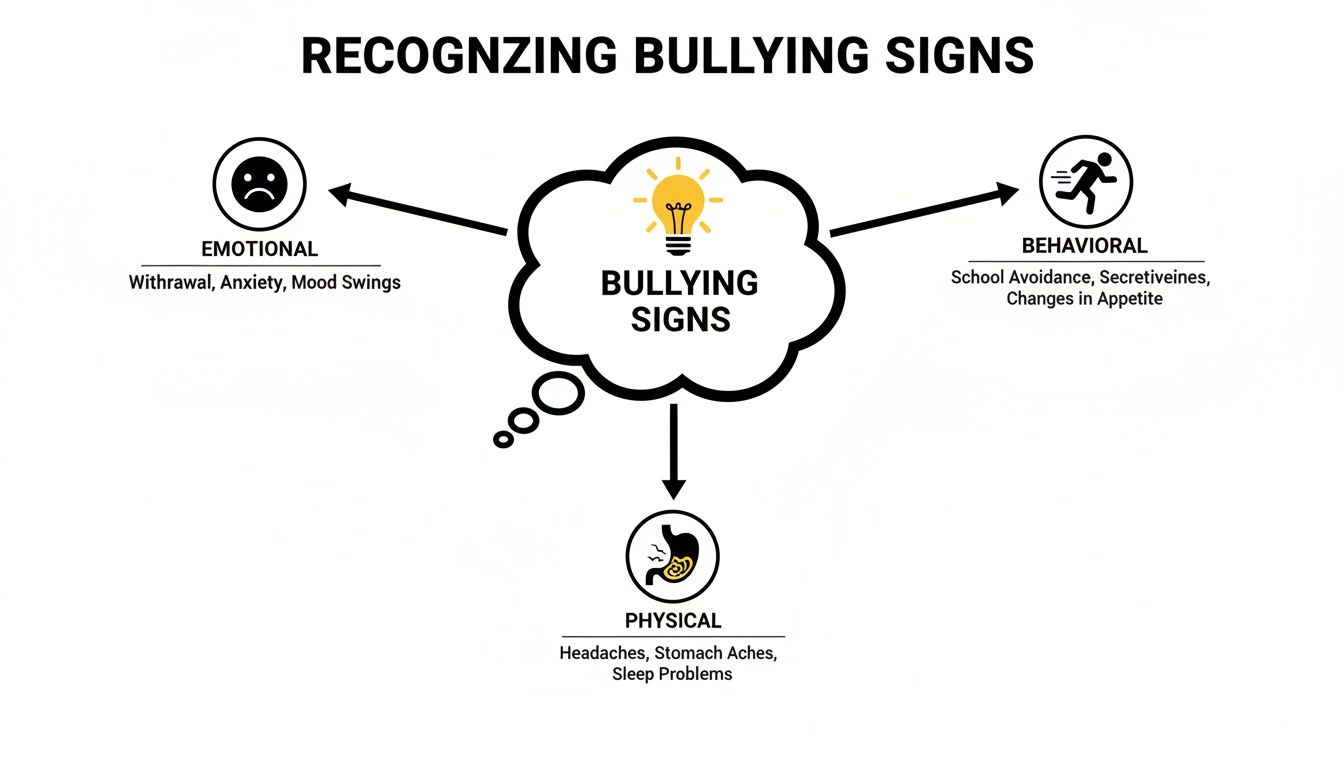
This just goes to show that a single sign, like avoiding school, could stem from any form of bullying. That’s why it’s so crucial to understand all the possibilities.
Social Bullying: The Pain of Exclusion
Social bullying, sometimes called relational bullying, is a more subtle and insidious attack on a child's sense of belonging. It’s all about deliberately harming someone's reputation or relationships. This is the quiet cruelty of being systematically ignored, excluded, and ostracised by a peer group.
Social bullying is the crushing, silent pain of seeing friends post photos from a party you weren’t invited to. It’s the agony of having rumours spread about you or being purposefully left out of group chats and playground games.
This form of bullying is especially damaging because it preys on a child's fundamental need to connect with others. Understanding and promoting a positive social environment is a key part of what inclusion in schools truly means. When a child is socially isolated, their entire school experience can feel unsafe and desperately lonely.
Cyberbullying: A Relentless Attack
Cyberbullying is harassment that happens on digital devices. It can happen 24/7, invading a child's life at home and making it impossible to escape. The non-stop nature of cyberbullying can feel particularly overwhelming.
It can take many forms:
- Sending hurtful, abusive, or threatening messages, images, or videos.
- Spreading rumours or posting embarrassing photos online.
- Intentionally excluding someone from online groups or games.
A key sign of cyberbullying is a child becoming secretive or anxious about their phone or laptop. They might suddenly delete social media accounts or have a strong, negative reaction to notifications. They are carrying that invisible backpack everywhere, and the weight of digital cruelty is always just a click away.
How Bullying Signs Change with Age
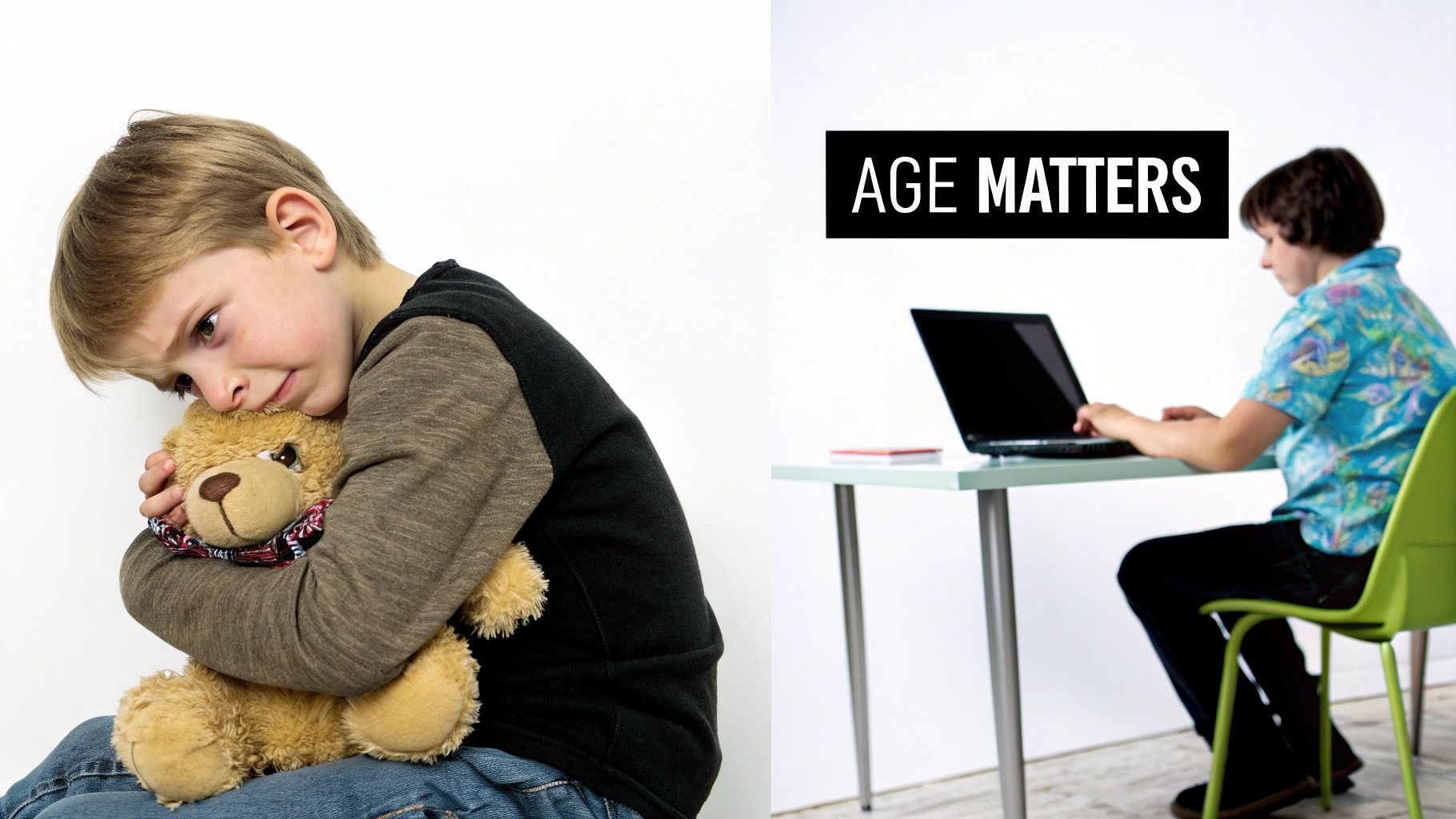
A seven-year-old’s cry for help sounds very different from a teenager’s silent withdrawal. Recognising a sign of bullying isn’t a one-size-fits-all process; it requires you to look at your child through the lens of their developmental stage. The clues they give—or don’t give—are often shaped by their age, their communication skills, and the social worlds they inhabit.
Think of it like learning a new dialect of your child's emotional language. Understanding these age-specific signs allows you to tune into the right frequency, helping you hear their distress even when it’s not spoken aloud. This way, you can see beyond surface behaviours and respond to the real turmoil underneath.
Younger Children: Primary and Junior School Age
For younger children, the world is tangible and immediate. Because they haven't yet developed the vocabulary to express complex emotions like shame or fear, their feelings often bubble up in physical ways or through clear, observable changes in their routines.
A sign of bullying at this age is often concrete. You're looking for a trail of physical and behavioural breadcrumbs that lead back to the source of their pain.
Here are some practical examples of what to look for:
- Lost or Damaged Items: Their favourite lunchbox, a new coat, or special toys repeatedly go 'missing' or come home broken with only vague explanations. You might find their beloved dinosaur toy snapped in two at the bottom of their school bag.
- Physical Complaints: There's a sudden spike in stomach aches, headaches, or trips to the school nurse, especially right before school or on Sunday evenings. That familiar Sunday night dread becomes a physical symptom as they anticipate the week ahead.
- Changes in Sleep Patterns: New difficulties falling asleep, frequent nightmares, or even a return to bedwetting can signal deep-seated anxiety. You go to check on them at night and find their pillow wet with tears.
- Increased Clinginess: A child who was previously independent might suddenly refuse to go to school or become extremely distressed when you have to separate, clinging to your leg at the school gate and begging you not to leave.
These aren't just phases. They are often the only way a small child can show you they feel unsafe and overwhelmed. Their world has been disrupted, and their behaviour is a direct reflection of that inner chaos.
Older Children and Teenagers: Secondary School and Sixth Form
As children enter their teenage years, the signs of bullying often become more complex and internalised. Their social lives are far more intricate, and the pressure to fit in is immense. Bullying at this stage feels like a direct attack on their evolving identity, and the signs are often buried under a layer of adolescent rebellion or withdrawal.
For a teenager, admitting they are being bullied can feel like a social failure. That defiant silence might not be disrespect—it could be a mask for deep hurt.
A teenager's slammed door can be a desperate attempt to shut out a world that feels hostile and judgmental. Their withdrawal isn't always about pushing you away; sometimes, it's about protecting a fragile sense of self that's under attack.
Spotting a sign of bullying in a teen requires looking for subtle shifts in their personality and how they engage with the world:
- Academic Decline: A sharp, unexplained drop in grades or a sudden disinterest in school can indicate their emotional energy is being consumed by distress. A previously diligent student suddenly stops doing homework, their report card a sea of uncharacteristically low marks.
- Social Withdrawal: They might pull away from family, drop long-standing friendships, or spend an increasing amount of time isolated in their room. Family dinners become a silent ordeal, and calls from their best friend go unanswered.
- Obsession with Online Validation: They may become fixated on 'likes' and comments or show extreme anxiety after being online, which can be a key indicator of cyberbullying. You might see them endlessly scrolling, their face falling with each notification, or find them in tears over a cruel comment on their latest post.
This problem is particularly widespread among this age group. Research from the Office for National Statistics revealed that an estimated 34.9% of children aged 10 to 15 experienced in-person bullying in the last year, while 19.1% faced online bullying. Disturbingly, children who were bullied were far more likely to feel their school handled it poorly. You can explore the full dataset in the ONS report on bullying experiences data for England and Wales.
By understanding these age-specific nuances, you’re far better equipped to see what your child is truly experiencing and offer the support they desperately need but may not know how to ask for.
Spotting Signs in Online Learners and Children with SEN
The familiar structure of a school day offers a certain kind of safety net. Teachers see the kids, interactions happen in plain sight, and problems can be easier to catch. But when a child learns online or navigates the world with Special Educational Needs (SEN), that landscape shifts dramatically. A sign of bullying can become much harder to spot, hidden behind a screen or tangled up in a child's unique way of showing distress.
For these children, the world can already feel isolating. Understanding their specific vulnerabilities is the key to creating a truly safe space where they can learn and grow without fear. It means we have to tune into a different frequency and accept that their calls for help might not look or sound the way we expect.
The Digital Veil Hiding Cyberbullying
Online learning brings incredible freedom, but it also opens a door for bullying to follow a child right into their own bedroom. Cyberbullying can be relentless, and its signs are often woven into a child's daily digital habits. You might notice a sudden, intense anxiety that simply wasn’t there before.
It’s all about spotting the subtle but significant shifts in how they behave around technology:
- Heightened Anxiety Around Notifications: Does a phone buzzing on the table make them flinch or suck in a sharp breath? This isn't just anticipation; it’s a physical reaction rooted in dread. It’s the sound of their safe space being invaded.
- Abruptly Closing Devices: Your child slams their laptop shut the second you walk into the room. It’s not because they’re hiding a game, but because they’re desperate to conceal a hurtful comment or an exclusionary group chat.
- Sudden Digital Detox: They unexpectedly delete social media accounts or abandon online games they once adored. This often isn't a healthy break; it's an act of self-preservation to escape the source of their pain.
When a child's online world becomes a source of pain, their instinct is to either hide it or run from it. Their digital footprint can reveal emotional wounds just as clearly as a physical bruise.
The persistence of this issue is a serious concern. According to the Anti-Bullying Alliance, a leading UK charity, a staggering 40% of young people experienced bullying in the last year. For many, this includes the digital world, which just goes to show how vigilant we need to be. You can discover more insights about bullying prevalence from their research.
Unique Challenges for Children with SEN
For a child with Special Educational Needs, the world is already a place they have to work harder to navigate. Add bullying to the mix, and their ability to cope can be pushed to its absolute limit. Many children with SEN struggle to put their feelings into words, which means their distress often explodes through their behaviour instead.
A sign of bullying for a child with SEN can look completely different. Their behaviour is their primary language, and a negative shift is a huge red flag signalling a deeper problem. It’s vital to understand what these specific signs might look like, as they can easily be mistaken for other challenges related to their needs. Providing the right environment is everything, and understanding what is SEN support is a critical first step for any parent or educator.
Keep an eye out for these specific changes:
- Increase in Repetitive Behaviours: A child who uses stimming (like hand-flapping or rocking) to self-soothe may start doing it far more frequently or intensely as they try to process overwhelming feelings of fear and anxiety. This is their body’s way of trying to manage an unbearable emotional load.
- Intense Meltdowns After Online Classes: The stress of a negative online interaction can build up silently until they’re back in their safe space. At that point, it can erupt into a meltdown that seems to come from nowhere, triggered by something as simple as you asking what they want for tea.
- New Fixations on Negative Comments: They might repeatedly bring up a single hurtful word or phrase someone said, unable to let it go. This fixation is their way of trying to process the pain and make sense of the cruelty.
By recognising these nuanced signs, you show your child that you see their struggle, even when they can't find the words. You become their trusted interpreter, ready to advocate for them and restore their sense of safety in a world that can often feel overwhelming.
Your Practical Action Plan After Seeing the Signs
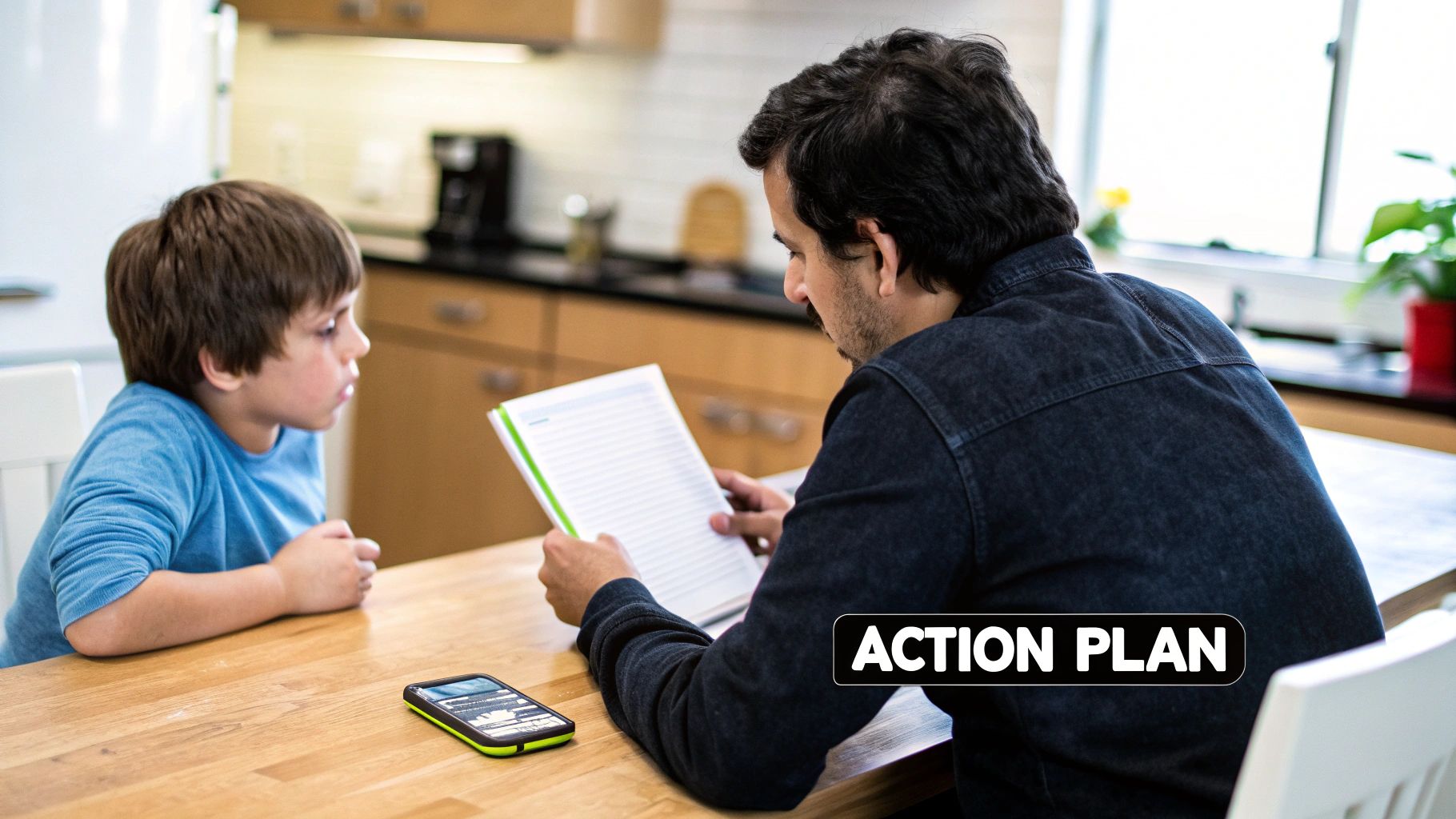
The moment you connect the dots—when a quiet mood or a lost jumper suddenly points to the painful reality of bullying—a storm of emotions can hit. Anger, fear, and a profound sense of helplessness can feel overwhelming. But that surge of emotion is also fuel. It can be channelled into calm, focused, and powerful action.
This is your guide to taking back control. It’s about showing your child, through your actions, that you are their strongest advocate and that you will walk this path with them, every step of the way.
Your first response sets the tone for everything that follows. Before you do anything else, you must create a safe harbour for your child to open up. This isn't about interrogation; it's about listening with your whole heart.
Step 1: Create a Safe Space to Listen
Your child needs to know, without a shadow of a doubt, that they can tell you anything without judgment or an explosive reaction. Find a calm, private moment where you won’t be interrupted. A car ride, a walk in the park, or just before bed can work well. The goal is to make the conversation feel natural, not like a formal, high-stakes meeting.
Start with gentle, open-ended questions that don't demand a confession.
- "I've noticed you seem a bit quiet after school lately. Is everything okay?"
- "How have things been going with your friends at lunchtime?"
- "I’m always here for you, no matter what. You can tell me anything, and we’ll figure it out together."
Let them lead. If they start to talk, just listen. Resist the urge to interrupt, offer instant solutions, or express anger towards the other child. Right now, your only job is to be their anchor. Validate their feelings with phrases like, "That sounds so difficult," or "I'm so sorry that happened." Reassure them of your unconditional love and support. Your calm presence is the most powerful tool you have.
Step 2: Become Their Gentle Investigator
Once your child has shared their story—or even if they haven’t, but you strongly suspect something is wrong—your next step is to gather information calmly and methodically. This isn’t about building a legal case; it’s about creating a clear, factual record that will be invaluable when you approach the school.
Keep a simple log in a notebook or a private document. For each incident, note down:
- Date and Time: When did it happen?
- Location: Where did it take place (the playground, a specific classroom, an online chat)?
- What Happened: A brief, factual description of the event. Use your child’s words where possible.
- Who Was Involved: Note any other children or adults who were present.
- Screenshots: For cyberbullying, screenshots are non-negotiable. Capture hurtful messages, exclusionary posts, or fake profiles immediately.
This log turns vague feelings into concrete facts. It transforms "he's always mean to me" into "On Tuesday at 11 am, during break time, he pushed me and took my lunch money." That kind of clarity is essential for a productive conversation with the school.
Step 3: Approach the School Collaboratively
Contacting the school can feel daunting, but it’s a critical step. The key is to frame the conversation as a collaborative effort to ensure your child’s safety and well-being. You are not there to accuse, but to partner with them to find a solution.
Request a meeting with your child's form tutor, head of year, or the school's designated safeguarding lead. Come to the meeting prepared with your documented log.
"When you present a school with a clear, factual log of incidents—dates, times, and specific actions—you move the conversation from an emotional appeal to a practical problem-solving session. It empowers them to take effective action."
Start the meeting by stating your goal: "I'm here today because I'm concerned about my child's well-being, and I'd like to work with you to find a positive solution." This simple sentence sets a collaborative tone right from the start.
Bullying remains a persistent issue in schools, directly affecting a child's ability to learn and thrive. A recent UK Department for Education survey revealed that 21% of pupils in years 7 to 13 reported being bullied in the past 12 months, which often leads to a reduced motivation to learn. You can read the full government report about pupil behaviour for a deeper look at the data. This evidence underscores just how important a swift and effective school partnership really is.
During the meeting, ask to see the school's anti-bullying policy and discuss what steps they will take. Before you leave, agree on a date for a follow-up call or meeting to review progress. By following this plan, you transform your initial feelings of helplessness into a series of powerful, supportive actions. You show your child they are not alone. You are their champion, and together, you will navigate this challenge.
Building a More Resilient and Confident Future
Dealing with the immediate problem is the crucial first step, but the journey toward healing is a longer, more gentle path. Once you’ve spotted a sign of bullying and taken action, the focus has to shift to your child’s long-term well-being. This is where you help them move past the incident and rediscover their strength, turning a painful experience into a source of resilience.
This process is all about rebuilding what was damaged: their confidence, their sense of safety, and their trust in others. It's about empowering them to not just recover, but to truly thrive.
Nurturing Their Self-Worth
Bullying can leave deep emotional scars, often making a child question their own value. Your role now is to help them see themselves in a positive light again, separate from the hurtful words or actions of others. The goal is to fill their emotional well with positive experiences that remind them of their inherent worth.
Consider these practical strategies to help them reconnect with their strengths:
- Encourage Passion Projects: Diving into a hobby they love—whether it's art, coding, sport, or music—gives them a space where they feel competent and successful. This helps them rebuild their identity around what they can do, not what was done to them.
- Reconnect with Trusted Friends: Gently facilitate time with friends who make them feel good about themselves. A simple sleepover or a trip to the park with a kind friend can be a powerful antidote to the pain of exclusion.
- Celebrate Small Wins: Acknowledge their effort and perseverance, not just the outcome. Praising their courage for simply going to school or their kindness to a sibling reinforces their best qualities and shows them you see their strength.
Fostering Resilience and Emotional Strength
Resilience isn't about being immune to hurt; it's about knowing how to bounce back from it. This is a skill that can be taught and nurtured. It’s about giving your child the tools to navigate future social challenges with far greater confidence and self-assurance.
Helping your child heal is not about erasing the memory of what happened. It is about helping them write a new, more powerful story for their future—one where they are the hero, not the victim.
A key part of this is developing their emotional toolkit. Empowering children with strategies to build their own emotional strength is crucial. Learning how to be emotionally strong and build resilience provides foundational skills for lifelong well-being.
Ultimately, these experiences are central to a child's overall growth. You can explore what is Social Emotional Learning to better understand how these competencies are developed. By focusing on healing and resilience, you are equipping your child with the strength to face the future, confident in who they are and secure in the knowledge that they are unconditionally loved and supported.
Still Have Questions? Let's Tackle Them
When you first suspect your child is being bullied, your head can swim with questions and uncertainty. It's a distressing time, and knowing the right steps to take can feel overwhelming. Here are some clear, practical answers to the most pressing concerns parents face.
What if My Child Won't Talk to Me About It?
It’s one of the most painful parts of this experience: you can see your child is hurting, but they just won't open up. This silence isn't a rejection of you; it’s usually rooted in fear, embarrassment, or a feeling that talking will only make things worse. Pushing them for answers can cause them to pull away even more.
The key is to create gentle, low-pressure opportunities for them to share when they’re ready. Try bringing it up when you’re not face-to-face, like during a car ride, while walking the dog, or when you’re cooking together. You could start by talking about friendships generally, rather than asking direct questions about their situation. Above all, make it crystal clear that you are on their side, no matter what.
Your goal is to patiently hold a door open, not to push them through it. Let them know you’re a safe place to land whenever they are ready.
If the silence continues, keep noting down the signs you're seeing. It might also be time to speak with their teacher or a school counsellor to get their perspective and decide on the best way forward together.
Should I Contact the Other Child's Parents?
That protective instinct to march over and sort it out yourself is completely natural. In your shoes, any parent would feel it. But as tempting as it is, contacting the other child’s parents directly is almost always a bad idea. This approach often backfires, sparking denial and defensiveness that can escalate the entire situation and make school life even harder for your child.
The right and most effective path is to go through the school. They have an official duty of care and are trained to handle these conflicts impartially. Schools have anti-bullying policies for a reason—they provide a structured process to ensure a fair and safe resolution for everyone involved. Trust them to manage it.
How Can I Tell if It's Bullying or Just a Normal Disagreement?
This is a crucial distinction, and it’s one that many parents struggle with. The difference really boils down to two things: a power imbalance and repetition.
Normal childhood conflicts, even heated ones, happen between equals. Both children have a voice, and while feelings might get hurt, the issue is usually resolved and they move on.
Bullying is different. It's a one-sided, repeated behaviour where one child intentionally uses their power—be it physical size, social status, or something else—to harm another who struggles to defend themselves. If the behaviour is persistent and you can see a clear aggressor and a target, you’re dealing with bullying, not just a playground spat.
At Queens Online School, our zero-tolerance anti-bullying policy is central to creating the safe and inclusive learning environment every child deserves. Our small class sizes and attentive teachers ensure that students feel seen, heard, and supported, allowing them to thrive without fear. Learn more about our approach at https://queensonlineschool.com.