
An online English GCSE course is a modern, flexible programme that covers the full UK curriculum for English Language and Literature. It leads to the exact same globally recognised qualification your child would get in a traditional school, but with one crucial difference: it’s built to adapt to your child, not the other way around.
Is an Online English GCSE Course the Right Choice for Your Child?
Watching your child navigate the pressures of secondary school can be a heart-wrenching journey. You see their potential, their unique spark, but you might also see them struggling in a system that doesn’t quite fit. The thought of them feeling lost in a crowded classroom, anxious about keeping up, or having their confidence slowly chipped away is enough to keep any parent up at night.
If you’re looking into an online English GCSE course, it’s probably because you believe there has to be a better way for them to learn and, more importantly, to feel happy and thrive.
This guide is for parents like you. It’s about setting aside the anxieties and exploring how a supportive, flexible, and academically rigorous path can help your child rediscover their love for learning.
A Modern Path to a Crucial Qualification
An online GCSE in English isn't just about convenience; it’s about putting your child’s well-being and academic success at the very centre of their education. This approach has gained serious momentum in the UK.
The growth of online learning has been remarkable. Adult participation in online courses jumped from just 4% in 2007 to 17% by 2019, and the pandemic only accelerated this trend, with the EdTech sector growing by 72% in 2020. This shift happened alongside improving results, with the ‘strong pass’ rate for 16-year-olds in England reaching 55% in 2025. You can find more insights on UK online learning trends at chsonline.org.uk.
What this means for your child is that they can tap into an educational model that is both proven and built for today’s world. It’s a solution designed to cater to different learning styles and circumstances, ensuring no one feels left behind. For example, a child who is a gifted athlete can train during the day without the constant stress of missing vital lessons and falling behind their classmates.
An online course is more than an alternative; it's a conscious choice to provide an environment where your child can feel seen, heard, and empowered to succeed on their own terms.
Consider this your first step. We’re not just going to talk about how this approach teaches English; we’re going to explore how it can rebuild confidence, nurture critical thinking, and prepare your child for a bright, happy future.
So, What Will My Child Actually Be Learning?
It’s easy to get bogged down in syllabus codes and assessment objectives. Let’s put that aside for a moment and focus on what truly matters: the skills and confidence your child will build. An online English GCSE course isn't just about passing an exam; it's about giving your child a "communication toolkit" they'll use for the rest of their lives, feeling empowered to express themselves clearly and understand others deeply.
At its core, the course is split into two connected areas: English Language and English Literature. Think of them as two sides of the same coin, both essential for helping your child find their place in the world and shape it with their words.
Building a Lifelong Communication Toolkit
English Language is all about practical, real-world skills. Imagine your child watching a powerful speech online. This course teaches them not just to hear the words, but to see how the speaker uses rhythm, tone, and specific phrases to stir emotions. They'll then learn to use these same techniques to write a persuasive letter that gets results—perhaps to a local councillor about a park they care about—or an article that captivates a reader from the very first sentence.
English Literature, on the other hand, is about building empathy. When your child steps into the world of Shakespeare's tragedies or analyses modern poetry, they're learning to see life from another's point of view. It’s a deeply emotional journey that develops critical thinking and emotional intelligence in a way few other subjects can. A live online lesson might involve a vibrant debate on a character’s motives in An Inspector Calls, making a story written decades ago feel immediate and completely relevant to their own lives.
For a deeper dive into preparing for both sides of the subject, check out our detailed article on how to revise for GCSE English.
This isn't about memorising quotes. It's about your child finding their own voice and learning to understand the voices of others, building a foundation for confidence and connection that will serve them for life.
Beyond the curriculum, an online English GCSE course helps your child develop crucial independent learning skills. Understanding how to study for exams effectively with science-backed methods is one of the most important benefits they’ll gain, reducing exam anxiety and boosting their self-belief.
GCSE English Language vs Literature At a Glance
To make it even clearer, here’s a quick breakdown of how these two areas work together to build a complete skillset for your child's future.
| Component | Core Focus | Typical Tasks for Your Child | Skills Your Child Develops |
|---|---|---|---|
| English Language | Analysing and creating non-fiction texts. | Analysing newspaper articles, writing speeches, crafting creative stories. | Persuasion, clear communication, spotting bias, building powerful arguments. |
| English Literature | Exploring fiction, poetry, and drama. | Debating Shakespeare, analysing 19th-century novels, interpreting modern poetry. | Empathy, critical analysis, understanding context, seeing the world through others' eyes. |
As you can see, one side focuses on crafting and deconstructing real-world communication, while the other explores the human condition through stories. Together, they create articulate, empathetic, and critical thinkers ready for whatever comes next.
Why Online Learning is a Lifeline for Different Kinds of Learners
As a parent, your biggest question is probably, "Will this environment really get my child? Will they feel like they belong?" It's the question at the heart of every school choice, and the honest answer is that a traditional, one-size-fits-all classroom can often create more problems than it solves, leaving some children feeling invisible or overwhelmed.
This is where a thoughtfully designed online English GCSE course can make all the difference. It’s not about just putting lessons on a screen; it’s about rebuilding the entire learning experience with your child’s needs—both academic and emotional—right at the centre.
A Calm Space for Focused Learning
For a child with Special Educational Needs (SEN) or Social, Emotional, and Mental Health (SEMH) challenges, the average classroom can feel like a sensory minefield. The constant noise, movement, and social pressures can put up a huge barrier to learning before the teacher has even started the lesson. It's heartbreaking to know your bright child isn't learning because their environment is just too much.
Now, picture your child learning from the quiet, predictable, and calm space of their own room. By removing those overwhelming distractions, they can finally channel all their energy into the lesson itself, not into just trying to cope. A child with autism, for instance, can use their preferred fidget toys without feeling self-conscious, allowing them to focus fully on the analysis of a poem. This simple, dependable routine can dramatically lower anxiety and give their confidence a much-needed boost.
The real magic of online education is its ability to offer quiet, discreet support. A teacher can send a private message to a student who's feeling anxious during a live class, offering a word of encouragement or a quick explanation without anyone else knowing. That tiny act builds a massive amount of trust and safety.
This kind of one-to-one attention ensures help is always there, allowing your child to engage with their studies on their own terms.
Bringing a World-Class British Education to Your Doorstep
The power of online learning stretches far beyond the UK. For international families, an online English GCSE course is a direct pathway to a prestigious British education, without the enormous upheaval and cost of relocation. It completely removes geography from the equation, giving students anywhere in the world access to the exact same high-quality curriculum, which is a huge relief for parents who want the best for their child without uprooting the family.
Here’s a simple breakdown of what the GCSE English qualification involves.
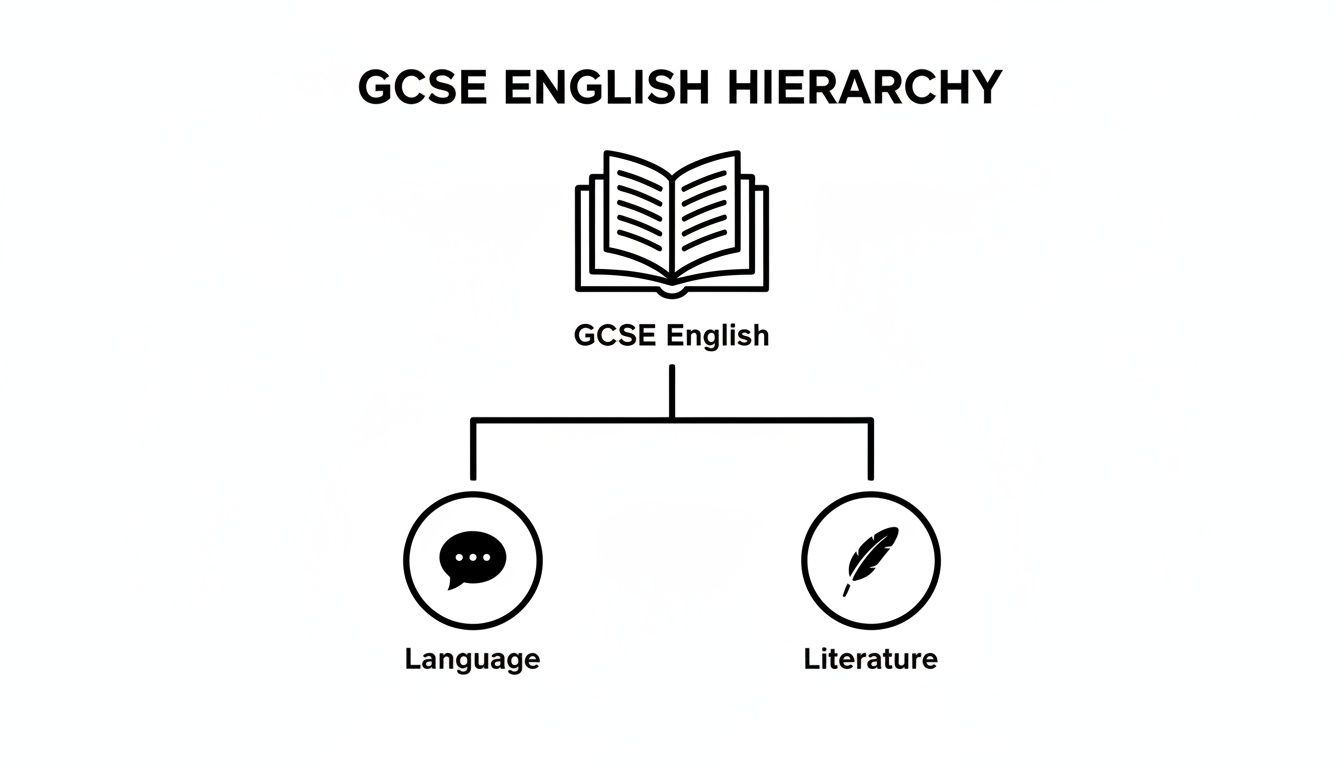
As you can see, the single GCSE English subject is built on two core pillars—Language and Literature. This structure ensures students gain a well-rounded and highly respected qualification.
But it's about more than just academics; it’s about building a genuine global community. In live lessons, your child will connect with classmates from completely different cultural backgrounds, sharing perspectives that bring their learning to life. For example, when studying a poem about identity, they might hear insights from a classmate in Japan or Brazil, enriching their understanding in a way that simply isn't possible in a local school. They’re not just studying in isolation; they’re growing up in a multicultural environment that prepares them for a globally connected world.
This powerful sense of belonging is what a successful education is built on. By understanding the unique benefits of learning in virtual environments, you can see how this model doesn't just educate a student—it nurtures the whole person.
Why Go Online for an English GCSE? The Real-World Benefits
Choosing the right educational path for your child often feels like an impossible balancing act between their academic needs and their personal wellbeing. But what if you didn't have to choose? An online English GCSE course isn't just an alternative; for many learners, it's a far better option, blending top-tier teaching with a genuine respect for a child's individual pace and passions.
The flexibility is a game-changer. Think about a talented young athlete or musician. Instead of the constant stress of missing classes for training or practice, they can schedule live lessons around their commitments. If they do miss one, high-quality recordings are there to help them catch up. For a child who suffers from a chronic illness, this means they can learn from home on days they don't feel well, removing the anxiety of falling behind and allowing them to focus on their health and their education.
Pacing That Puts Your Child in Control
Beyond the schedule, the most powerful benefit is personalised pacing. In a traditional classroom of 30 students, it’s impossible to cater to everyone. One child might click with poetic devices instantly, while another needs more time to let the concepts sink in. That quiet child who is afraid to ask for help can quickly get left behind.
Online, that pressure vanishes. A student can pause a tricky lesson on Shakespearean language, re-watch it as many times as they need, and work through the examples until it finally makes sense. There are no impatient classmates and no fear of looking "slow." This self-directed approach builds true mastery and, just as importantly, protects their fragile confidence.
When a child is given the space to learn at their own speed, they don't just understand a topic better—they learn that they are capable, resilient, and in control of their own success. It’s a lesson that lasts a lifetime and rebuilds a child's belief in themselves.
Building Skills for a Modern World
This way of learning does more than just teach English; it prepares your child for the future. By managing their own timetable, taking part in digital discussions, and using online learning platforms, they are naturally developing skills that are essential today.
These aren't just buzzwords; they're practical competencies that will set them apart:
- Digital Literacy: Navigating online resources and communication tools with confidence.
- Self-Discipline: Taking ownership of their learning and managing their time effectively, a skill that reduces parental stress.
- Independent Thinking: Developing the ability to research, analyse, and solve problems on their own.
These are the exact skills that universities and modern employers are crying out for. Choosing an online course is a forward-thinking decision that equips your child not just for their exams, but for the world that awaits them after.
How to Choose the Right Online School for Your Family
Deciding to go with an online school can feel like a huge step, but finding the right educational partner for your child doesn't have to be overwhelming. This isn't just about picking a course off a shelf; it's about finding a school you can trust—one that shares your values and is genuinely committed to your child’s long-term success and happiness.
Think of it as building a partnership. You're looking for a provider that sees and cares for the whole child, not just their academic results. Your child deserves an environment where they feel safe, seen, and genuinely inspired to learn again.
The Non-Negotiables for Your Child’s Success
As you start your research, you’ll find some features are simply non-negotiable. These are the core elements that separate a high-quality online English GCSE course from a passive, unengaging one.
First, ask how the lessons are taught. Your child should be learning in live, interactive lessons led by a real, subject-specialist teacher—not just watching pre-recorded videos on their own. For example, a good lesson on Macbeth would involve a live debate where students can argue about Lady Macbeth's motivations, not just listen to a lecture. This is crucial because it means they can ask questions in the moment and feel like they’re part of a proper class.
Next, look at class sizes. Small groups are vital for giving your child the personal attention they need to thrive. In a smaller, more intimate setting, teachers can actually get to know your child's unique personality—their sense of humour, their anxieties, their strengths—and provide the tailored support that builds real confidence.
The goal is to find a school that feels like a community, not just a service. It's about ensuring your child is supported emotionally and socially, as well as academically. This is where they'll build friendships and learn life skills far beyond the syllabus.
Looking Beyond the Classroom Walls
A truly great online school knows that education is about so much more than just grades. It’s also about creating a warm, supportive community where your child feels they belong and can finally be themselves.
Look for signs of strong pastoral care. Does the school have a clear and robust anti-bullying policy? Do they offer wellbeing support or mindfulness sessions? For instance, a weekly 'wellbeing check-in' can provide a safe space for your child to talk about non-academic worries. These aren't just nice extras; they're proof of an institution that puts your child's mental and emotional health first.
Then, get a feel for the school’s community spirit.
- Virtual Clubs: Are there extracurriculars like a debate club, a creative writing group, or an art club where your child can explore their passions?
- Social Events: Does the school put on virtual social events where students can just hang out and connect outside of lessons?
- Global Community: Is the student body diverse, with learners from different countries and backgrounds offering a rich, multicultural experience?
The data confirms that effective online schools play a huge role in student success. The UK's GCSE pass rate (grades 4/C or higher) stood at 67.4% in summer 2025, and high-quality online learning is a significant contributor to these outcomes. With a rise in retake entries and a growing need for personalised pacing, online schools offering a recognised British curriculum are becoming essential for both UK and international families.
When looking into providers, families naturally have questions about the curriculum and how to enrol. Many schools now offer live chat support options to get you answers quickly. Choosing a Pearson Approved Centre like Queen's Online School also gives you peace of mind that you're selecting an officially accredited provider. For more details on what we offer, you can learn more about our English GCSE online courses.
Costs, Enrolment, and a Look at the Weekly Timetable
Now, let’s get down to the practicalities. Thinking about fees, application forms, and what the school week actually looks like can feel a bit overwhelming, but a good online school will make this whole process straightforward and supportive for your family. The aim here is to give you a real sense of how this new chapter might look and feel day-to-day for your child.
Your very first conversation with an admissions advisor should feel like a partnership, not just a paperwork exercise. It's your chance to ask absolutely everything on your mind and for the school to get to know your child—their unique personality, their needs, and what they hope to achieve. This is where you can explain, for instance, that your child has dyslexia and ask exactly what specific support will be put in place for them.
A Clear View of Costs and What’s Included
When it comes to fees, transparency is non-negotiable. Investing in an online English GCSE course is an investment in your child’s future, and you have every right to know exactly what that covers.
Typically, the tuition fees will include:
- All live, interactive lessons with specialist English teachers.
- Full access to all learning materials, from digital textbooks to resource libraries.
- Consistent feedback and marking on your child’s assignments and regular progress reports.
- Pastoral care and wellbeing resources to make sure they feel supported and happy.
So, what isn't included? Usually, the only extra cost is the external examination fees. These are paid directly to the exam centre where your child will physically sit their final papers. A trustworthy school will be completely upfront about this from your very first conversation, so there are no upsetting surprises later.
What Does a Week Actually Look Like?
It’s one thing to hear about the flexibility of online learning; it's another to see it in action. A well-designed timetable gives your child a healthy routine, helping them balance focused academic work with plenty of time for their own passions and hobbies, preventing the exhaustion so common in traditional schooling.
A great timetable isn’t just a schedule; it’s a framework for your child’s day that fosters self-discipline, supports wellbeing, and encourages a genuine love for learning without the risk of burnout.
Here’s an example of what a typical week could look like for a GCSE English student. You can see how core subjects are blended with essential downtime and community-building activities.
| Day | Morning Session (9:00 – 12:00) | Afternoon Session (13:00 – 15:00) | After School (15:00+) |
|---|---|---|---|
| Monday | Live English Lesson & Maths | Independent Study & Science | Creative Writing Club |
| Tuesday | Live Maths Lesson & History | Live English Lesson & Geography | Personal Project Time |
| Wednesday | Live Science Lesson & Art | Wellbeing Session & Independent Study | Free Time / Hobbies |
| Thursday | Live English Lesson & Maths | Live History Lesson & French | School Assembly |
| Friday | Live Science Lesson & Review | Independent Study & Project Work | Social Hangout / Games |
This structure shows how an online English GCSE course fits neatly into a balanced life, making the whole idea feel less abstract and much more manageable for your family's routine.
Still Have Questions? Let's Talk Them Through
Choosing the right educational path for your child is a big decision, and it’s completely normal to have a few lingering questions. It’s all about feeling confident and hopeful that you’re creating the best possible environment for them to succeed. Let’s tackle some of the most common concerns parents have.
How Does My Child Sit Their Final Exams?
This is often the first question parents ask, and it’s a crucial one. Rest assured, the qualification is just as valued and the assessment process is every bit as rigorous as in a traditional school.
Throughout the course, your child will complete regular assignments and mock exams. This isn't just about testing them; it’s about giving them detailed, constructive feedback so they know exactly where they are and how to improve. For example, a teacher might leave a voice note on an essay, warmly explaining how to strengthen an argument, which feels far more personal and encouraging than red pen on a page.
When it comes to the final exams, accredited online schools are either approved examination centres themselves or will walk you through the straightforward process of registering your child as a private candidate at a local exam centre. It's a well-trodden, seamless path to an officially recognised qualification.
How Do You Keep My Child Engaged Online?
The image of a child staring blankly at a screen is a genuine worry for many parents. But true engagement in a quality online course isn't about flashy graphics; it comes from real, human interaction and a feeling of success.
Our live, small-group lessons are a world away from passively watching pre-recorded videos. They require active participation, whether that’s through lively discussions or collaborative work on a shared whiteboard. When your child feels their teacher knows them personally and that the learning is happening at their pace, they build a powerful sense of achievement. That feeling is the most natural motivator there is.
When a child feels truly seen and supported, their desire to learn sparks naturally. Engagement isn't about forcing focus; it's about creating an environment where their curiosity can flourish without fear of judgement.
Will My Child Miss Out on Making Friends?
We know that socialising is a fundamental part of growing up, and online schools build their communities with this firmly in mind. While it’s different from the chaos of a busy schoolyard, the social interaction is often richer and more meaningful, especially for children who find large groups overwhelming.
Students connect with peers in focused classroom discussions and through a whole host of virtual clubs, from debate to creative writing. Here, a shy child who loves fantasy novels can find their tribe in a book club, bonding over shared interests. They build real friendships with classmates from diverse backgrounds all over the world, developing valuable communication skills in a safe, moderated, and genuinely inclusive space.
At Queens Online School, we build a supportive community where your child can achieve their academic goals while feeling a true sense of belonging. Explore our online school and start your journey with us today.