
Facing GCSEs can feel like staring up at a mountain, not just for your child, but for you too. It’s a time filled with pressure, anxiety, and a thousand questions. But the secret to reaching the summit isn't just about working harder. It's about working smarter, with heart. The real key lies in creating a smart, supportive plan that’s built around your child's unique needs, a flexible revision schedule that respects their life, and a genuine focus on their well-being throughout the whole emotional journey.
Your Guide to Navigating the GCSE Journey
The road to GCSE success can feel overwhelming for students and parents alike. It’s easy to get lost in a sea of well-meaning advice telling your child to simply "study more," but that can often lead to tears and frustration. Real, lasting progress comes from a thoughtful and personalised approach. This guide is designed to be your partner, moving beyond generic tips to help you build a strategy that puts your child's well-being and emotional needs right at the centre.
We'll explore how to craft a plan that acknowledges the very real pressures students face today, focusing on emotional intelligence and building habits that last. Instead of a rigid, one-size-fits-all solution that causes more stress, this journey is built on four core pillars.
The Four Pillars of GCSE Success
Success isn’t built overnight; it’s constructed piece by piece, day by day, with patience and understanding. These four pillars provide a steady foundation for your child to lean on, ensuring they feel supported and capable, not just stressed and overwhelmed.
Before we dive into the details, let's get a quick overview of what these pillars are and why they matter so much. This table offers a clear roadmap of the core areas we'll be covering, giving you a framework for building a comprehensive and genuinely supportive GCSE plan for your child.
The Four Pillars of GCSE Success at a Glance
| Pillar | Why It Matters for Your Child | First Actionable Step |
|---|---|---|
| Understanding Their Learning Style | Makes revision effective and less of a chore by playing to their natural strengths, reducing frustration and building confidence. | Have an open chat: Ask, "When you really get something, is it because you saw it, heard it, or tried it yourself?" Listen to their answer. |
| Building a Flexible Revision Plan | Prevents the dread of burnout by integrating study around hobbies and downtime, fostering consistency without the stress. | Sit down together with a calendar. Block out the fun stuff first—like gaming, sports, or seeing friends—then find the gaps for study. |
| Mastering Effective Study Techniques | Moves beyond passive highlighting to active recall methods that actually embed knowledge, giving them that "I've got this" feeling. | Introduce them to "blurting"—after reading a page, they close the book and scribble down everything they remember. It’s a fun, low-pressure test. |
| Managing Exam-Related Stress | A calm, confident mind performs better. This pillar focuses on building resilience and a positive mindset, showing them their worth isn't tied to a grade. | Schedule regular "check-in" chats that aren't about grades. Ask, "How are you feeling today?" and truly listen to the answer. |
By focusing on these four fundamental areas, you're not just helping your child prepare for an exam; you're providing a supportive framework that empowers them to take control of their own learning, feeling seen and understood.
It's also crucial to remember that passing is a very achievable goal. In recent results, the grade 4 'standard pass' rate reached 70.5% for 16-year-olds in England. This shows that with the right preparation and support, success is well within reach. You can read the full analysis of recent GCSE trends to learn more.
Creating a Revision Plan That Actually Works
Let’s be honest: the most effective revision timetable isn’t the one with the most highlighters. It’s the one your child will actually use without feeling a sense of dread. It's time to move beyond those rigid, colour-coded schedules that look impressive but often lead to burnout and arguments before the first week is over. The real goal is to build a flexible plan that adapts to your child's life, not the other way around.
Success in passing GCSEs comes down to a sustainable approach that respects their energy levels, their need for a social life, and their existing commitments. It's about finding their unique rhythm. This flexible strategy is central to building a strong foundation for the entire GCSE journey.
As you can see below, a personalised revision plan is a crucial second step, building directly on an understanding of your child's individual learning style.
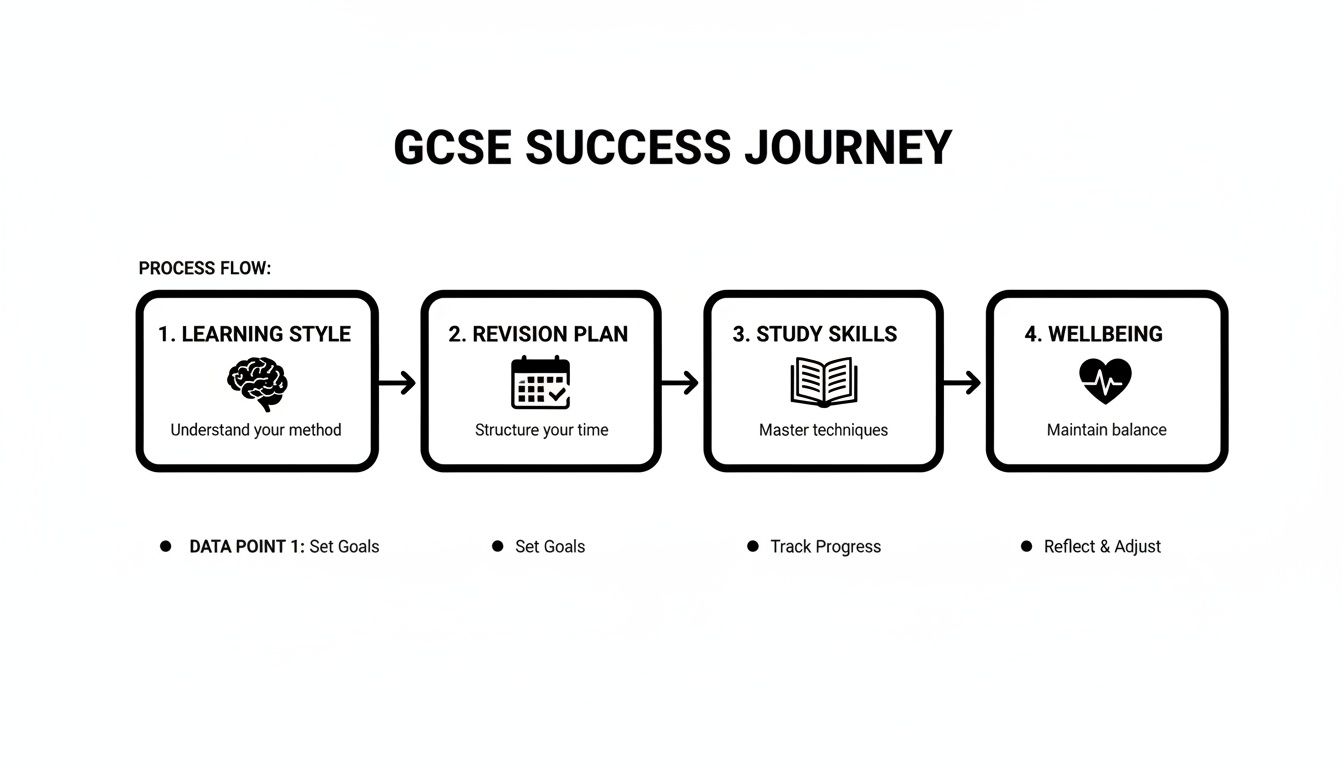
The key takeaway here is that each pillar supports the next. Without a realistic plan that feels good to them, even the best study skills will falter under the pressure and emotional strain.
Finding Their Natural Rhythm
Some students are early birds, thriving on a focused session before school. Others are night owls who do their best work after dinner. There is no right or wrong way. The secret is to work with their natural energy cycles, not against them, which reduces conflict and empowers them.
Why not introduce the Pomodoro Technique? It’s perfect for the child who feels overwhelmed by big tasks. They work in focused 25-minute intervals, followed by a five-minute break to grab a snack or check their phone. This feels far less intimidating than facing a two-hour block of revision. After four "pomodoros," they earn a longer break of 15-30 minutes.
This method brilliantly breaks down mammoth subjects into manageable chunks. It transforms the daunting thought of "I have to revise all of history" into the simple, doable action of "I'll just do one 25-minute session on the Cold War." That first step feels so much easier.
Building a Plan Around Their Life
A revision timetable that ignores real-life commitments is destined to fail from the start, leaving your child feeling like a failure. The first step is to sit down together and map out all the non-negotiables.
- School Hours: When are they in school or travelling back and forth?
- Hobbies and Clubs: What activities are essential for their wellbeing and happiness, like football practice, music lessons, or drama club? These are vital for their mental health.
- Family Time: When are the important moments like family dinners or weekend outings?
- Downtime: This is absolutely crucial and non-negotiable. Schedule time for relaxing, seeing friends, or just scrolling on their phone guilt-free.
Once these are on the calendar, you can see the genuine windows of opportunity for revision. This changes the dynamic entirely—revision starts fitting into their life, rather than taking it over and causing resentment.
A realistic plan respects a student’s energy and puts them in control. The goal is consistency, not intensity, which prevents last-minute panic and fosters long-term memory retention.
For instance, imagine your daughter has dance class on Tuesday and Thursday evenings and sees her friends on Saturday afternoons. A rigid plan might try to force an hour of revision in after a tiring class, which only leads to exhaustion and tears.
A more compassionate approach would be to schedule shorter, 30-minute sessions on those days and a longer, more focused two-hour block on Sunday morning when she's fresh. This respects her commitments and energy, making her feel understood and far more likely to stick to the plan.
From a To-Do List to a Done List
The final piece of the puzzle is to be specific. "Revise Maths" is a vague and overwhelming task that can cause instant anxiety. Instead, work with them to break it down into concrete, actionable items that can be ticked off.
Instead of a generic entry, a weekly plan might look something like this:
| Day | Time | Subject | Specific Task |
|---|---|---|---|
| Monday | 6:00 – 6:45 PM | Maths | Complete 10 algebra practice questions from page 52. |
| Tuesday | 7:30 – 8:00 PM | English Lit | Create 5 flashcards for 'Macbeth' quotes about guilt. |
| Wednesday | 6:00 – 7:00 PM | Biology | Watch the class video on cell division and make a one-page summary. |
This approach gives your child a clear target and a real sense of accomplishment when they tick it off. It builds confidence and momentum, turning a dreaded chore into a series of small, manageable wins on their journey to pass their GCSEs.
Mastering Active Revision Instead of Passive Reading
It’s a familiar sight: your child, head down, textbook open, highlighter in hand. It looks like productive work, and it can feel that way too. But often, this creates a false sense of security. The brain sees the familiar words on the page and thinks, "Yep, I know this," but when it comes to the exam, the mind goes blank. It’s a heartbreaking feeling.
This is the classic trap of passive reading. It doesn’t forge the strong neural connections needed to recall information under pressure. True, lasting learning comes from active revision.
Active revision means properly engaging with the material, forcing the brain to do the heavy lifting of pulling information from memory and applying it. It’s the difference between watching a video on how to bake a cake and actually getting your hands messy with flour and eggs.
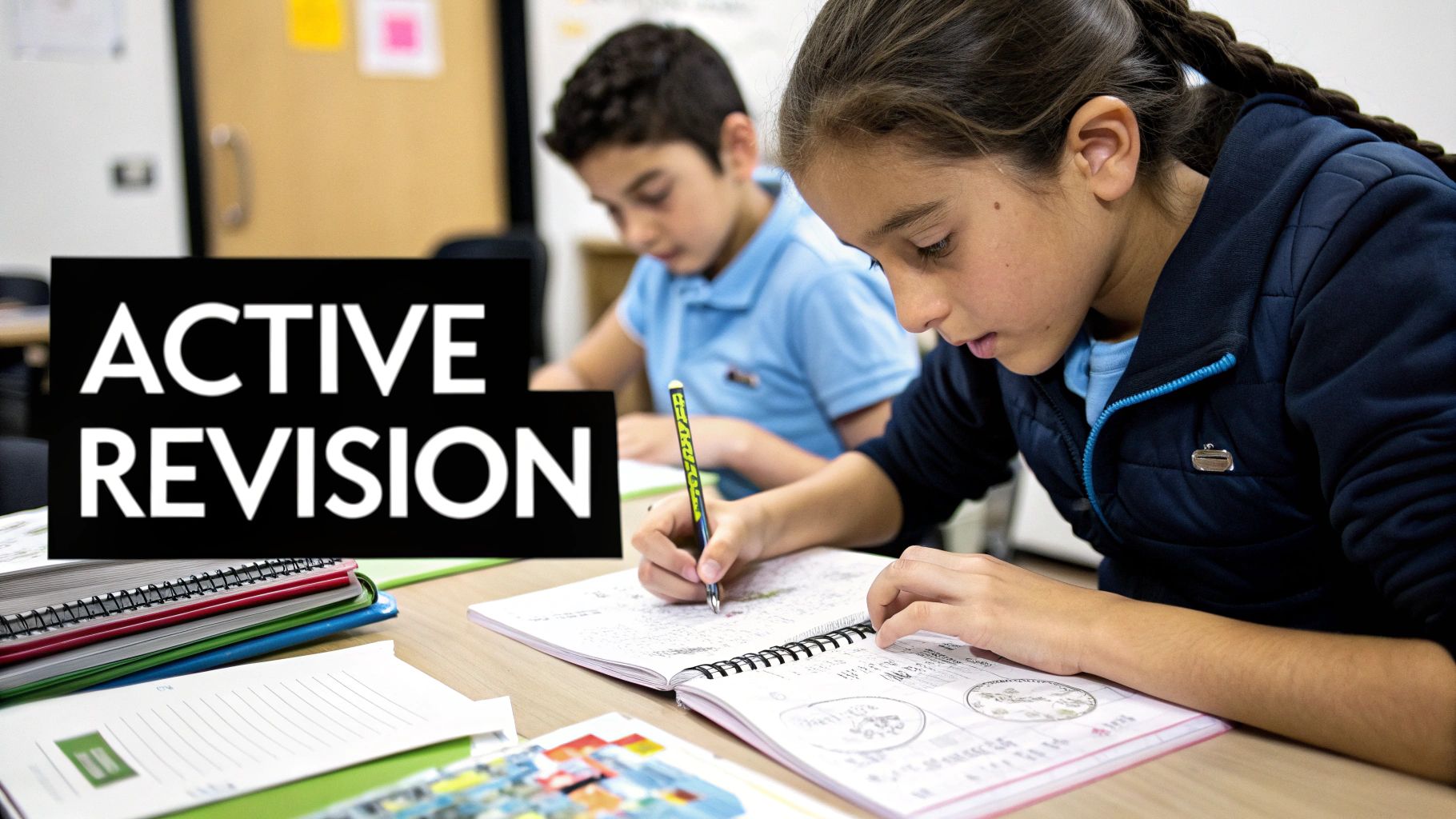
Making this shift is genuinely one of the most powerful changes a student can make. It transforms revision from a mind-numbing chore into an empowering process of building real, lasting confidence that they can feel in their gut.
From Highlighting to Explaining with the Feynman Technique
One of the best litmus tests for genuine understanding is the Feynman Technique. It’s a beautifully simple but incredibly potent method built on a single idea: you don’t truly understand something until you can explain it in simple terms. This is perfect for a child who says, "I get it," but can't put it into words.
Encourage your child to give this four-step process a go:
- Choose a Concept: They pick a single topic from their notes—anything from electrolysis in Chemistry to dramatic irony in An Inspector Calls.
- Teach It: Next, they explain the concept out loud as if teaching it to you or a younger sibling. The key is to use simple language, no jargon. This act of verbalising can feel silly at first, but it's where the magic happens.
- Find the Gaps: Whenever they get stuck, stumble, or say "you know, that thingy," that's a knowledge gap. This isn't a failure; it’s a brilliant discovery. They’ve just pinpointed exactly what needs more attention.
- Review and Simplify: They should then dive back into their textbook or notes to fill that gap. Afterwards, they try explaining it again, simplifying the language until it feels easy and clear.
Imagine them trying to explain photosynthesis to you. If they can't clearly articulate why chlorophyll is essential or what the chemical equation actually represents, they know exactly where their revision needs to be focused, and you can help them find the answer.
Unlock Memory with Blurting and Mind Maps
Another brilliant active recall method is "blurting." It’s a low-stakes brain dump that gets the job done without the pressure of a formal test, perfect for a child who fears the blank page.
Here’s how it works in practice:
- Your child picks a topic, like the causes of World War One.
- They put all their notes and books away—out of sight.
- For 5-10 minutes, they just write. They scribble down everything they can remember on a blank piece of paper.
- Structure, spelling, and neatness don’t matter. It’s about the relief of getting information out of their head and onto the page.
When the timer goes off, they grab their notes and a different coloured pen. They can then check their "blurt" against the real material, correcting what they got wrong and, crucially, adding in what they missed. It’s an instant visual guide to what’s solid and what’s shaky, which feels empowering.
Active revision techniques like blurting and the Feynman method do more than just test memory; they build it. Each time a student forces their brain to retrieve a piece of information, they strengthen that memory, making it easier to access in the exam hall.
For your more creative, visual child, this can be adapted into a mind map. If they are studying Macbeth, they could put his name in the centre and branch out from memory with key themes, relationships, and fatal flaws. Afterwards, they check it against their notes to see which key quotes or plot points they forgot. This feels much more like play than work.
This turns revision into an active, engaging, and even creative exercise. It shifts your child from being a passive consumer of information to an active owner of their knowledge—building the deep understanding needed to walk into their GCSEs with confidence.
Using Past Papers to Think Like an Examiner
Past papers are your child’s secret weapon for exam success, but they can also be a huge source of anxiety. Too often, they become a tool for last-minute cramming, which does little more than increase panic.
The real power of past papers is in demystifying the exam, getting your child to think like an examiner—to see exactly what earns marks and why. Instead of a frantic rush, we’ll break this down into a practical, three-stage approach that builds their confidence step by step. This method is designed to build familiarity, stamina, and, most importantly, the ability to think critically about their own performance. It’s a process that transforms past papers from a terrifying test into a powerful learning tool.
Start with Open-Book Papers
The first stage is all about removing the pressure. When your child first tackles a past paper, the goal isn’t a high score; it’s about making it feel less scary. Encourage them to do their first few papers for each subject as an open-book exercise.
With their notes and textbooks right beside them, they can focus entirely on understanding the questions without the anxiety of a memory test. This gentle introduction helps them to:
- Get used to the question format: They'll see how questions are structured and that they aren't trying to trick them.
- Identify the command words: They'll begin to notice the difference between words like 'describe', 'explain', and 'evaluate'.
- Understand the scope of the paper: It gives them a feel for the breadth of topics, so there are no surprises on the day.
This process turns a terrifying unknown into a familiar puzzle. For example, a student doing a Biology paper might not remember the exact stages of mitosis, but with their textbook open, they can find the information and apply it to the question, building a positive association with the exam format.
Move to Timed Conditions
Once they’re comfortable with the format, it’s time to simulate the real exam environment. This means doing past papers under strict, timed conditions. This step is crucial for building stamina and practising that all-important pacing, but it's important to frame it as a practice run, not a final judgement.
Find a quiet space, set a timer for the exact duration of the exam, and let them work without interruptions. It might feel stressful at first, but it teaches them invaluable lessons about time management. This is often when a student has a lightbulb moment, realising they’re spending far too long on lower-mark questions, leaving no time for the high-value ones at the end.
This isn't just about testing knowledge; it's a dress rehearsal. It helps your child learn how to allocate their precious minutes, when to move on from a tricky question, and how to handle the rising pressure of a ticking clock in a safe space.
It's worth noting that consistent practice makes a real difference for every student. Recent GCSE data shows the gender gap in top grades is narrowing, with boys achieving grade 7+ increasing from 19.8% to 20.5%, while girls' attainment remained steady at 25.5%. This just goes to show that dedicated preparation benefits everyone. You can discover more insights about these GCSE grade trends on FFT Education Datalab.
Meticulously Review the Mark Scheme
This final step is the most important of all, and it’s the one most often skipped. Simply completing a paper isn’t enough. The real learning happens when your child sits down with the official mark scheme and analyses their answers like a detective.
They should go through their paper question by question, comparing their answer to what the mark scheme was looking for. For example, a student might see they lost marks on a History question. It wasn't because their knowledge was wrong, but because they failed to 'evaluate' when the question explicitly asked for it—they simply described the events instead. This isn't a failure; it's a specific skill they can now practise.
This detailed review helps pinpoint precise weaknesses. By analysing where marks were won and lost, they can turn practice paper results into a powerful roadmap for targeted revision. This process is so effective that it forms a core part of preparing for any test, including the practice runs offered by mock GCSE exams. This strategic approach is fundamental to learning how to pass GCSEs with confidence.
Managing Exam Stress and Prioritising Wellbeing
Let's be honest: an anxious mind can't learn. When your child is overwhelmed with worry, their ability to revise, recall information, and perform under pressure plummets. Looking after your child’s mental health during the GCSE period isn’t a ‘nice-to-have’—it’s the absolute foundation of their success. The pressure is immense and very real, so giving them practical strategies to manage it is one of the most powerful and loving things you can do.
This isn't about getting rid of stress completely. A little bit of pressure can be a great motivator. It’s about giving them the tools to keep it in check, so they feel in control. Think of it as building a personal 'wellbeing toolkit' together, filled with simple, effective techniques they can turn to when their heart starts racing.
Building a Practical Wellbeing Toolkit
This is like a mental first-aid kit. It needs to be packed with simple, go-to techniques they can use anywhere—especially in those nerve-wracking moments just before walking into an exam.
A brilliant place to start is the 4-7-8 breathing exercise. It’s incredibly straightforward and scientifically proven to calm the nervous system right down.
- Breathe in quietly through the nose for a count of four.
- Hold your breath for a count of seven.
- Breathe out completely through your mouth with a whoosh sound for eight.
Try doing this with them a few times when things are calm. They'll quickly feel how it brings a sense of peace. The aim is to make it an automatic, comforting habit long before they’re standing outside the exam hall feeling that wave of panic.
The Non-Negotiables: Sleep, Nutrition, and Movement
All the revision timetables and past papers in the world won't help if your child's brain isn’t physically ready to perform. During GCSEs, three areas are absolutely non-negotiable for peak cognitive function and emotional balance.
- Sleep: A tired brain can't create new memories or solve problems. Students need a solid 8-10 hours per night. This might mean gently encouraging them to put their phone away an hour before bed and creating a relaxing routine. For many, learning how to calm anxiety before bed is the first crucial step.
- Nutrition: Brain food is a real thing. Making sure they have meals full of omega-3s (like fish), antioxidants (berries), and slow-release carbs (oats and whole grains) will keep their energy stable. A water bottle should be their constant sidekick, as even mild dehydration can kill concentration.
- Movement: Just 20 minutes of activity—a brisk walk with the dog, dancing in their room, or kicking a ball around—can boost focus and slash stress levels. It’s the perfect reset button for a brain overloaded with information.
Prioritising wellbeing isn't about cutting down on revision; it’s about making every minute of revision count. A well-rested, well-fed, and calm student will achieve more in one focused hour than a stressed and tired student will in three.
Reframing Negative Thoughts Together
Picture this: it’s the night before a big mock exam. Your child is spiralling, saying, "I'm going to fail. I can't remember a thing." The natural instinct is to say, "Don't be silly, you'll be fine," but that can feel like you're dismissing their very real anxiety.
Instead, you can gently guide them to reframe those thoughts. It’s a powerful technique that builds resilience and shows you're on their team.
Help them catch that catastrophic inner voice and consciously shift it to something more constructive and kind.
| Instead of This… | Try Guiding Them Towards This… |
|---|---|
| "I'm going to fail tomorrow." | "This is my chance to show what I know and find out what I need to work on. It's not the final exam." |
| "I can't remember anything." | "I feel like I can't remember anything right now because I'm anxious. I'll focus on what I do know." |
| "Everyone is smarter than me." | "I'm on my own journey. My goal is to do my personal best, and that's enough." |
This approach validates their feelings while helping them find a more empowering perspective. It helps them walk into that exam hall feeling capable and supported, not just stressed. A positive mindset is a crucial part of any strategy and is often the secret ingredient to improving GCSE grades.
How Personalised Online Learning Can Pave the Way to Success
For many students, the traditional one-size-fits-all classroom just doesn’t provide the tailored support they need to feel safe and shine. When a child feels lost in a sea of faces, or afraid to ask a "stupid" question, their confidence can shrink, and their true potential often goes untapped. This is where online learning offers a powerful alternative, creating a flexible and personalised environment that can make a profound difference to GCSE outcomes.
Imagine a student who is brilliant but too anxious to raise their hand in a class of thirty. In a smaller online group, they might finally feel safe enough to ask that crucial question that unlocks their understanding. Or think of a child who processes things differently; the ability to pause and re-watch recorded lessons allows them to master complex topics at their own pace, free from the pressure of keeping up with everyone else.
This approach puts the child's individual needs and emotional comfort right at the centre of their education, creating a supportive pathway to achieving their full potential.
Tailoring Education to the Individual
The core strength of online schooling is its ability to adapt. Instead of forcing a student to fit into a rigid system, the system adapts to them. This creates a focused, often distraction-free setting that nurtures growth and confidence.
This adaptability makes a real difference in several key areas:
- Paced Learning: Students can move through material at a speed that works for them, ensuring they fully grasp a concept before moving on. This removes the shame of feeling 'left behind'.
- Increased Participation: Smaller class sizes and different ways to communicate (like private chat functions to the teacher) encourage quieter students to engage more and ask for help without fear.
- Accessibility: It removes geographical barriers, giving every child access to high-quality specialist teachers, no matter where they live.
The impact of a student’s learning environment on their results is clear. Regional performance in GCSEs shows a significant gap, with London achieving a 71.6% grade 4+ pass rate compared to just 62.9% in the West Midlands. This shows just how much location and access to resources can play a role.
The Technology Behind Personalised Learning
Modern online schools use sophisticated platforms to deliver this individualised experience. These digital classrooms are built on powerful tools, and it helps to understand what a Learning Management System actually is. It’s the central hub where students access live lessons, submit assignments, and get direct, timely feedback from their teachers.
By putting a child’s unique learning style and emotional well-being first, online education empowers them to take control of their studies. This builds not just knowledge, but the confidence and resilience needed to pass GCSEs and succeed beyond them.
This student-centric model is a game-changer, especially for those who find the social pressures or sensory overload of a large school overwhelming. By providing a calm, controlled environment, it allows them to focus purely on their learning. Exploring flexible options like GCSE online courses in the UK can open up a new world of possibilities for students who need a different way to shine.
Right then, let’s tackle some of the big questions that always come up around GCSEs. It’s a stressful time for students and parents alike, so getting clear, practical answers can make all the difference.
How Many Hours Should My Child Revise Each Day?
Honestly, there’s no magic number here, and focusing on one can create more anxiety. What really matters is the quality and consistency of the revision, not just the hours they clock in. A good starting point for most is 1-2 hours of properly focused, active revision on a school night, with more flexibility on the weekends.
The key is balance. This study time absolutely must be broken up with regular breaks, and I always advise keeping at least one full day a week completely free of revision. This isn’t being lazy; it’s an act of self-care, essential for preventing burnout and keeping their mind sharp.
What Should We Do If My Child Fails a Mock Exam?
First things first: give them a hug and take a deep breath. A disappointing mock result feels like the end of the world to them, but it's actually a gift. It's a practice run, not the final verdict, and its real value is showing you exactly where the gaps are before it counts.
Sit down with them calmly—not when emotions are high—and go through the paper together. Look for patterns. Was it a specific topic that tripped them up? Did they run out of time? Were they just having an off day? This feedback is pure gold. It allows you to build a laser-focused revision plan that turns those weak spots into strengths, transforming a moment of panic into a plan of action.
A tough mock result isn’t a failure; it’s a roadmap. It shines a spotlight on precisely where to focus your energy next, making the rest of your revision time far more effective and less overwhelming.
My Child Has No Motivation to Revise. What Can I Do?
This is incredibly common, and it’s heartbreaking to watch. The usual "just get on with it" approach rarely works and often leads to conflict. Motivation doesn't just appear; it often follows action. The trick is to start small—impossibly small.
Help them break a huge, overwhelming subject into a tiny, non-threatening task. Instead of "revise Chemistry," try, "Let's just create five flashcards for the reactivity series," or "How about we watch one ten-minute YouTube video on photosynthesis together?" Ticking off these small wins builds momentum and a sense of "I can do this."
It also helps to gently connect the dots between their studies and their future goals, reminding them why they are doing this. And finally, check in on their wellbeing. What looks like a lack of motivation is often just sheer emotional and physical exhaustion. Make sure they’re sleeping and have proper downtime. A rested child is a much more willing one.
At Queens Online School, we know that every child’s path to success is different. Our small, live online classes and dedicated support from subject-specialist teachers create an environment where students can build real confidence and feel understood.
Find out how we can create a supportive learning journey for your child at https://queensonlineschool.com.