

Before you even start looking at how to homeschool, the first and most important question is why. This journey begins with a heartfelt reflection on your child's unique spirit, what your family can realistically manage, and whether this big change truly aligns with your deepest hopes for their happiness and growth. It’s a commitment that goes far beyond just academics.
Is Homeschooling Right for Your Child?
Deciding to homeschool is rarely a snap decision. It usually starts with a nagging feeling that the current school system just isn’t working for your child. Maybe you've noticed the spark dimming in a child who feels lost in a class of thirty. Or perhaps you have a child with a serious passion—like competitive gymnastics or coding—that a rigid school timetable simply can't support.
This feeling is becoming more and more common. A recent survey revealed that a staggering 32% of British parents are now seriously considering homeschooling. The main reasons aren't just about grades; they’re about a child's wellbeing. Concerns over bullying, mental health, and a lack of one-on-one attention are topping the list.
Tuning Into Your Child's Needs
The most critical question to ask is: "What does my child really need to thrive?" This isn't just about exam results; it’s about their happiness, their confidence, and the feeling of being safe enough to be themselves.
-
The Overwhelmed Learner: Think about a child like Leo. He's bright, but the constant noise and social pressure of a busy classroom leave him drained and anxious. He comes home with no energy left for actual learning. For a child like him, the quiet, focused environment of home could be the sanctuary he needs to get his confidence back and truly enjoy learning again.
-
The Mismatched Pace: Or what about Maya? She picks up new ideas quickly and then spends hours bored and switched off, waiting for everyone else to catch up. Homeschooling would let her fly through subjects she excels in and dive deep into topics that fascinate her, keeping her challenged and engaged.
The goal of education is not to fill a pail, but to light a fire. Homeschooling gives you the unique opportunity to find the exact kindling that will ignite your child's passion for learning.
A Realistic Look at Family Life
Putting your child’s needs first also means taking an honest look at your own family’s resources. And this isn’t just about money. It’s about time, patience, and emotional energy. Are your work schedules flexible enough? Are you ready for the intensity of being both parent and teacher?
It helps to remember that homeschooling doesn’t mean you have to recreate a school day at the kitchen table. The most successful homeschool setups are the ones that respect the natural rhythm of family life, weaving learning into everyday activities rather than boxing it into a 9-to-3 schedule. For example, a trip to the supermarket can become a maths lesson on budgeting, or a family walk can turn into a nature study.
For many, exploring the benefits of home education can help clarify how this approach can be adapted to fit different family structures. The whole point is to create a bespoke educational experience—one that honours your child as an individual and, ultimately, strengthens your family.
Navigating the Legal Landscape
So, you’ve weighed the pros and cons and feel a surge of hope that homeschooling is the right path for your child. The next step is tackling the legal side of things. This part can feel a bit intimidating, full of official jargon and procedures, but I promise it's more straightforward than it looks.
Think of it less as a hurdle and more as laying a solid, official foundation for your family's new educational adventure.
You’re certainly not alone in making this decision. Over the last decade, the number of homeschooled children in the UK has skyrocketed, climbing from around 34,000 in 2015 to an estimated 153,300 during the 2023-2024 academic year. This huge jump points to a real shift in how families view education, often driven by a desire for a more personalised and nurturing learning environment. You can get a better sense of the numbers and what’s behind them in this in-depth look at homeschooling statistics.
The First Step: De-registering from School
If your child is currently enrolled in a mainstream school in England or Wales, your first official move is to write a letter of de-registration to the headteacher. You don’t need to ask for permission; you are simply informing them of your decision to take full responsibility for your child's education. This process is officially known as Elective Home Education (EHE).
Your letter can be short and to the point. Here’s a simple template you can adapt:
Dear [Headteacher's Name],
Re: [Child's Full Name], [Date of Birth], [Current Class/Year Group]
This letter is to formally notify you that I am withdrawing my child, [Child's Full Name], from [School's Name] with immediate effect, as I have decided to take on the responsibility for their education at home.
Please remove [Child's Name] from the school roll as of [Date].
Yours sincerely,
[Your Name]
Once the school receives this, they are legally required to remove your child's name from their register. They'll also notify the Local Authority (LA) for you. It's as simple as that. For many parents, sending that letter is an emotional moment—a mix of relief and a touch of nervousness, marking the start of a new chapter.
The decision to homeschool often comes down to meeting a specific need, whether that's academic or social-emotional. This diagram helps to visualise those core reasons.
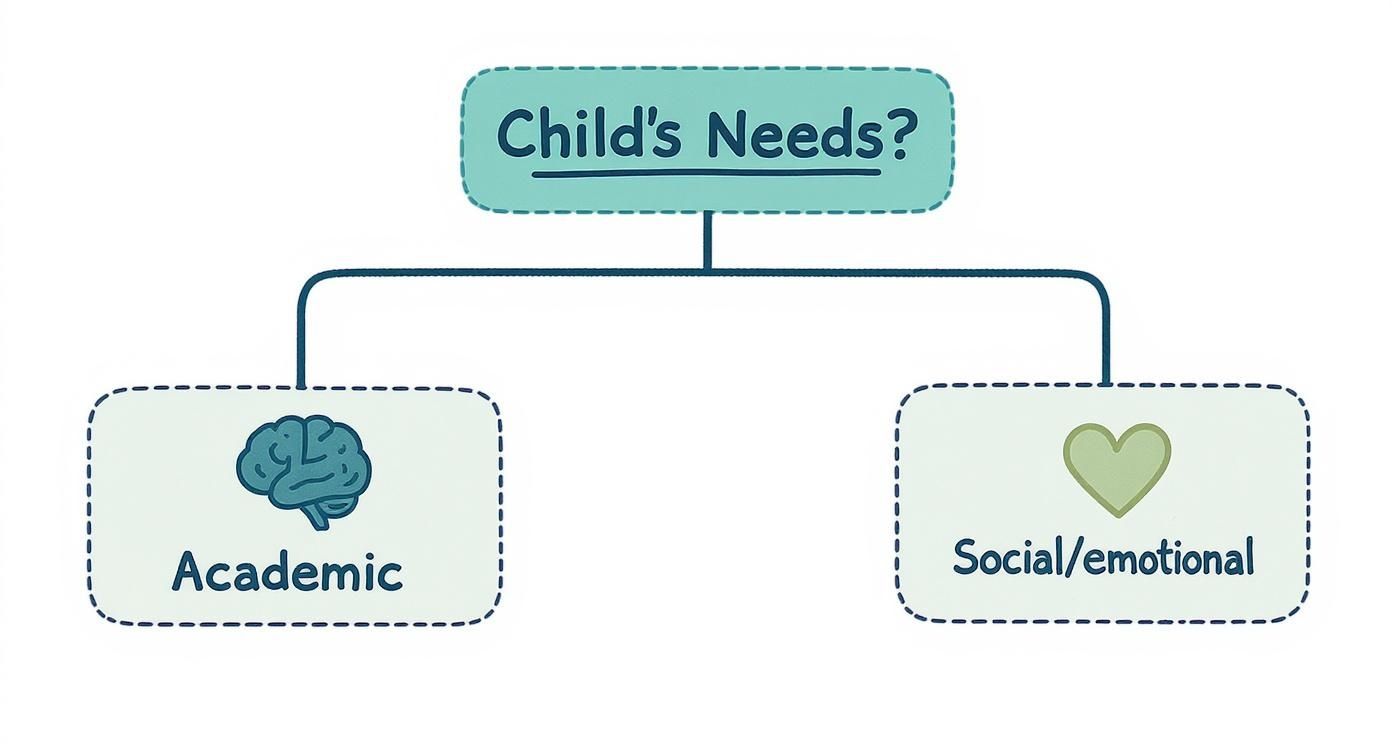
It’s a good reminder that whether your child needs a bigger academic challenge or just a safer, kinder space to learn, homeschooling puts you in the driver's seat.
Understanding Regional Differences
It’s really important to know that the rules for homeschooling change slightly depending on where you are in the UK.
- England and Wales: The process is exactly as I've described above. You write the letter, and the legal responsibility for providing a suitable education becomes yours.
- Scotland: Here, you must get consent from your Local Authority before you can withdraw your child from school. They will want to feel satisfied with your educational plans.
- Northern Ireland: You need to notify the Education Authority (EA) of your plans to homeschool. The EA has a duty to make sure the education you provide is suitable for your child.
You’ll hear the phrase "suitable education" a lot. This doesn't mean you have to recreate a school classroom in your living room or rigidly follow the national curriculum. It simply means providing an education that fits your child's age, ability, and aptitude.
For a child who was riddled with anxiety in a formal setting, a "suitable" education might look like project-based learning in the garden and far fewer formal lessons. It’s all about fitting the education to the child, not forcing the child to fit the education.
Designing a Curriculum That Ignites Curiosity
With the legal paperwork out of the way, you get to the most exciting part: shaping a learning journey that truly connects with your child. This is your chance to move beyond the one-size-fits-all model of traditional schooling. You're no longer just a teacher delivering facts; you're a facilitator of curiosity, helping your child discover the joy of learning on their own terms.
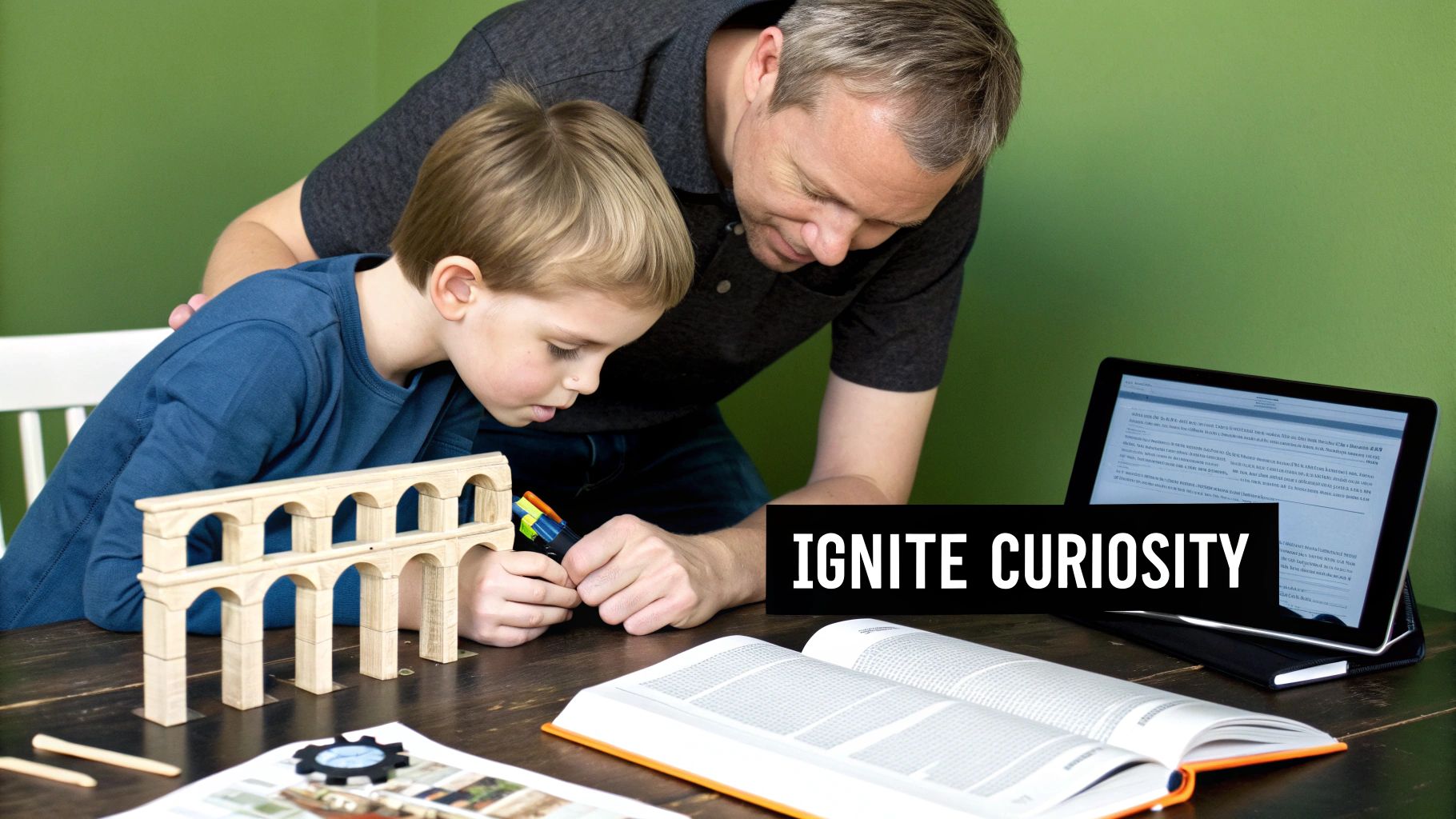
Think about it. You could teach Roman history to a hands-on learner by spending an afternoon building a working model of an aqueduct in the garden. For a tech-savvy child, exploring physics could mean designing a simple video game from scratch. This is the heart of bespoke education—finding what makes your child tick and fanning that spark into a flame.
Understanding Different Homeschooling Philosophies
Before you rush out to buy textbooks, it's worth exploring the different educational philosophies that guide many homeschooling families. These aren't rigid rulebooks but rather guiding principles that can help you find a style that fits your family's values and, crucially, your child's personality.
Each approach offers a unique way of looking at education. For instance, the Charlotte Mason philosophy is built around learning through "living books"—beautifully written stories instead of dry textbooks—alongside nature study and short, focused lessons. It’s a wonderful fit for a child who is captivated by stories and loves being outdoors.
On the other hand, a Classical education follows a highly structured, three-part process called the Trivium, which is designed to match a child's cognitive development. It’s language-focused and rigorous, making it a great choice for an analytical child who enjoys logic, patterns, and debate.
The most powerful curriculum isn't something you buy off a shelf. It's a living, breathing framework you build around your child's innate curiosity, passions, and unique way of seeing the world.
Choosing the right approach is a deeply personal decision. To help you navigate the options, the table below breaks down some of the most common philosophies.
Comparing Homeschooling Educational Philosophies
This table compares common homeschooling philosophies to help you identify which approach might best suit your child's learning style and your family's values.
| Philosophy | Core Principle | Best Suited For Children Who… | Example Activity |
|---|---|---|---|
| Montessori | Child-led, hands-on learning in a prepared environment. | Are independent, self-directed, and learn best by doing. | Learning fractions by physically cutting a pizza or cake into equal parts. |
| Unschooling | Learning is driven entirely by the child's interests. | Are highly curious, self-motivated, and thrive without structure. | A fascination with dinosaurs leads to visiting museums, reading palaeontology books, and creating clay models. |
| Classical | A structured, language-focused approach based on the Trivium. | Enjoy logic, debate, and a deep, systematic study of subjects. | Learning Latin to understand the roots of scientific and legal terminology. |
| Charlotte Mason | Education is an "atmosphere, a discipline, a life." | Love stories, nature, art, and thrive with gentle routines. | Keeping a detailed nature journal with sketches and observations from weekly walks. |
Each philosophy offers a different starting point, but remember that you have the freedom to adapt and combine them to create something uniquely yours.
Building Your Bespoke Curriculum
The best part of knowing how to homeschool effectively is that you don't have to stick to just one philosophy. Most families end up with an eclectic, mix-and-match approach that works for them. You might follow a structured online maths programme but take an "unschooling" approach to history, letting your child's curiosity lead the way.
Here’s a simple way to start building your child’s curriculum:
- Look and Listen: Pay close attention to what makes your child light up. Is it building with LEGOs, devouring fantasy novels, or watching science documentaries? Their natural interests are your best asset.
- Set Your Core Subjects: Decide on the non-negotiables. For most families, this means Maths, English, and Science. You can then weave other subjects like History, Geography, and Art around their passions.
- Gather Your Resources: Your curriculum can be a rich blend of different tools. This could include library books, documentaries, online courses, and local museum workshops.
Imagine your child is obsessed with space. A week of learning could look like this:
- Science: Researching the life cycle of a star using library books and watching a documentary.
- Maths: Calculating the distances between planets with an online tool.
- English: Writing a short story about an alien encounter.
- Art: Painting a watercolour of the Orion Nebula.
This way, learning stops being a list of disconnected subjects and becomes a meaningful, interconnected adventure. You’re not just teaching facts; you’re teaching your child how to ask questions, chase their curiosity, and develop a genuine love for learning that will last a lifetime.
Finding Your Family's Homeschooling Rhythm
One of the biggest mistakes new homeschooling families make is trying to replicate a traditional school day at the kitchen table. The real secret to success is letting go of that rigid 9-to-3 mindset and discovering a rhythm that actually works for your family. This is about building a routine that nurtures learning without leading to burnout, leaving plenty of room for rest, play, and those magical, spontaneous moments of discovery.
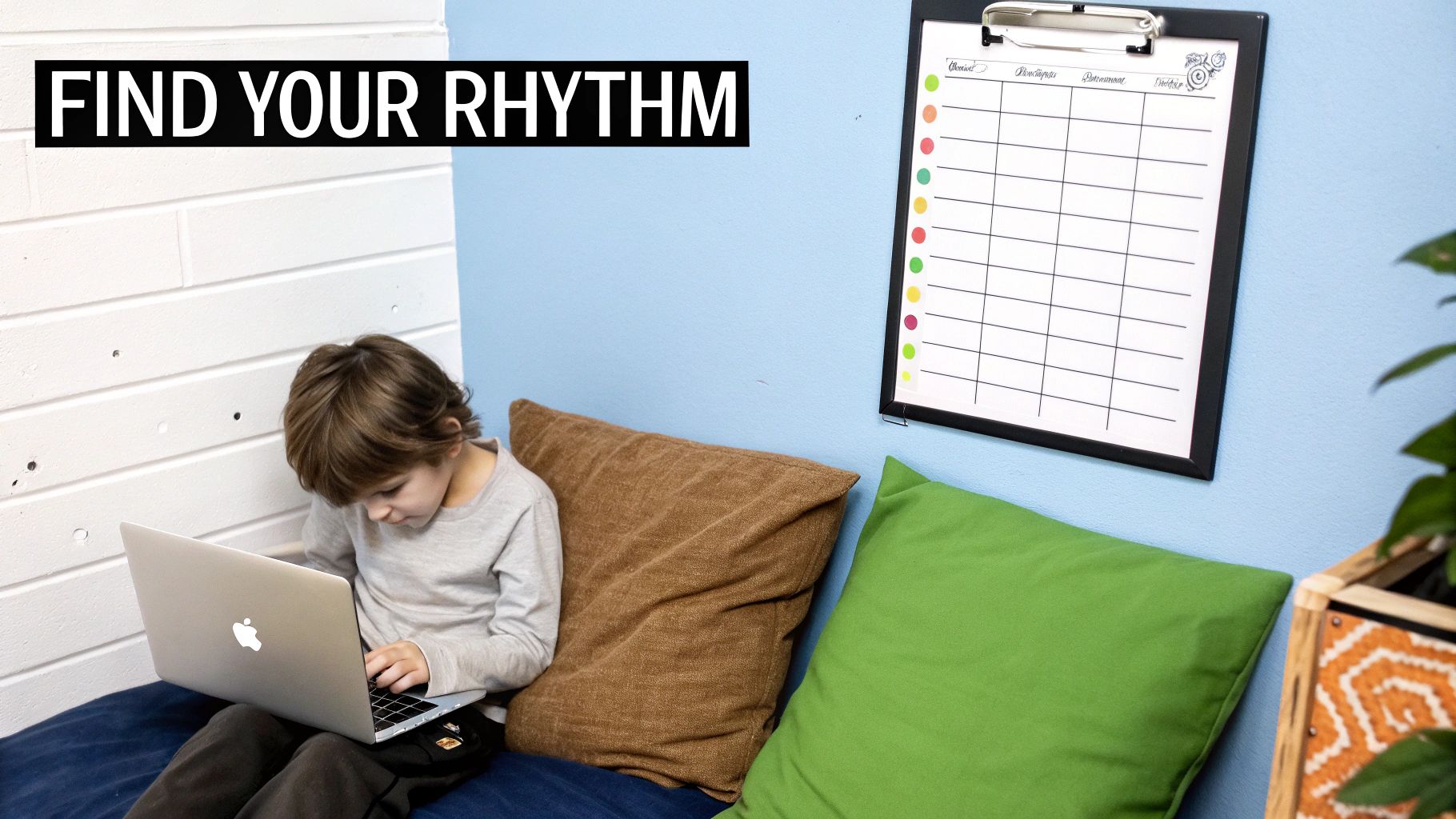
The goal isn't a strict timetable, but a predictable flow. When children know what to expect, they feel more secure and the day runs with far less friction, freeing up everyone’s mental energy for what really matters: connection and learning.
Crafting a Schedule That Breathes
Forget trying to cram every subject into every single day. One of the greatest gifts of homeschooling is the freedom to structure your time in a way that respects your child’s natural energy and focus. Let's look at a few popular approaches real families use.
-
Block Scheduling: Instead of juggling five subjects daily, you dive deep into just one or two. Monday might be a dedicated "History Day," where you read historical fiction, watch a documentary, and build a model related to the period. This method is brilliant for children who dislike constant task-switching and thrive on deep immersion.
-
Loop Scheduling: This is a fantastic, pressure-free way to cover complementary subjects like art, music, or geography. You simply create a list of these subjects and work through it in order, doing the next thing on the list whenever you have time. If a child is unwell and you miss a day, there's no feeling of being "behind"—you just pick up where you left off.
Finding your rhythm is a process of observation and gentle adjustment. It's about asking, "When is my child most alert for maths?" or "What pace feels challenging but not overwhelming?" The answers will shape a routine that truly serves them.
For younger children especially, a visual guide can work wonders. A simple picture-based chart on the fridge showing "Reading Time," "Park Visit," and "Maths Game" can empower them to take real ownership of their day and reduce transition-time struggles.
Designing an Inspiring Learning Space
You don’t need a dedicated, Pinterest-perfect classroom to create an environment that invites learning. It's about thoughtfully organising your home to make learning a natural, accessible part of daily life. The key is to integrate resources into your living spaces in a way that feels appealing, not clinical.
Think beyond a desk and chair. Your entire home can become a learning landscape.
-
The Living Room Hub: A comfy sofa with a basket of quality "living books" nearby encourages reading. A dedicated, well-organised shelf with art supplies, puzzles, and building blocks within easy reach invites creativity during quiet moments.
-
The Kitchen Laboratory: The kitchen is a natural spot for hands-on science and maths. Measuring ingredients for a recipe teaches fractions, watching water boil explains states of matter, and growing herbs on the windowsill is a lesson in biology.
-
Embracing the Outdoors: Your garden, a local park, or a nearby woodland can be your most valuable learning space. It's the perfect setting for nature studies, physical education, and sensory exploration. A simple walk can turn into a lesson on identifying trees, observing insects, or discussing the changing seasons.
Ultimately, the most important element of your learning environment is the emotional atmosphere. A home filled with curiosity, where questions are welcomed and mistakes are seen as learning opportunities, will do more to foster a love of learning than any expensive equipment. It's this feeling of safety and encouragement that allows a child to truly flourish.
Nurturing Social Skills and Emotional Wellbeing
Let's tackle the biggest myth about homeschooling head-on: the idea that it creates isolated, unsocialised children. From my experience, the reality couldn't be more different. The social world of a homeschooled child isn't smaller; it's just built differently. It's often richer, more varied, and founded on genuine connections rather than the forced proximity of a classroom.
More importantly, homeschooling can be a true sanctuary for a child’s mental and emotional health. For children who have struggled with the pressures of school, it offers a unique space to heal, build resilience, and rediscover their self-worth. This proves that a child's happiness and their academic progress are truly two sides of the same coin.
Building a Vibrant Social World
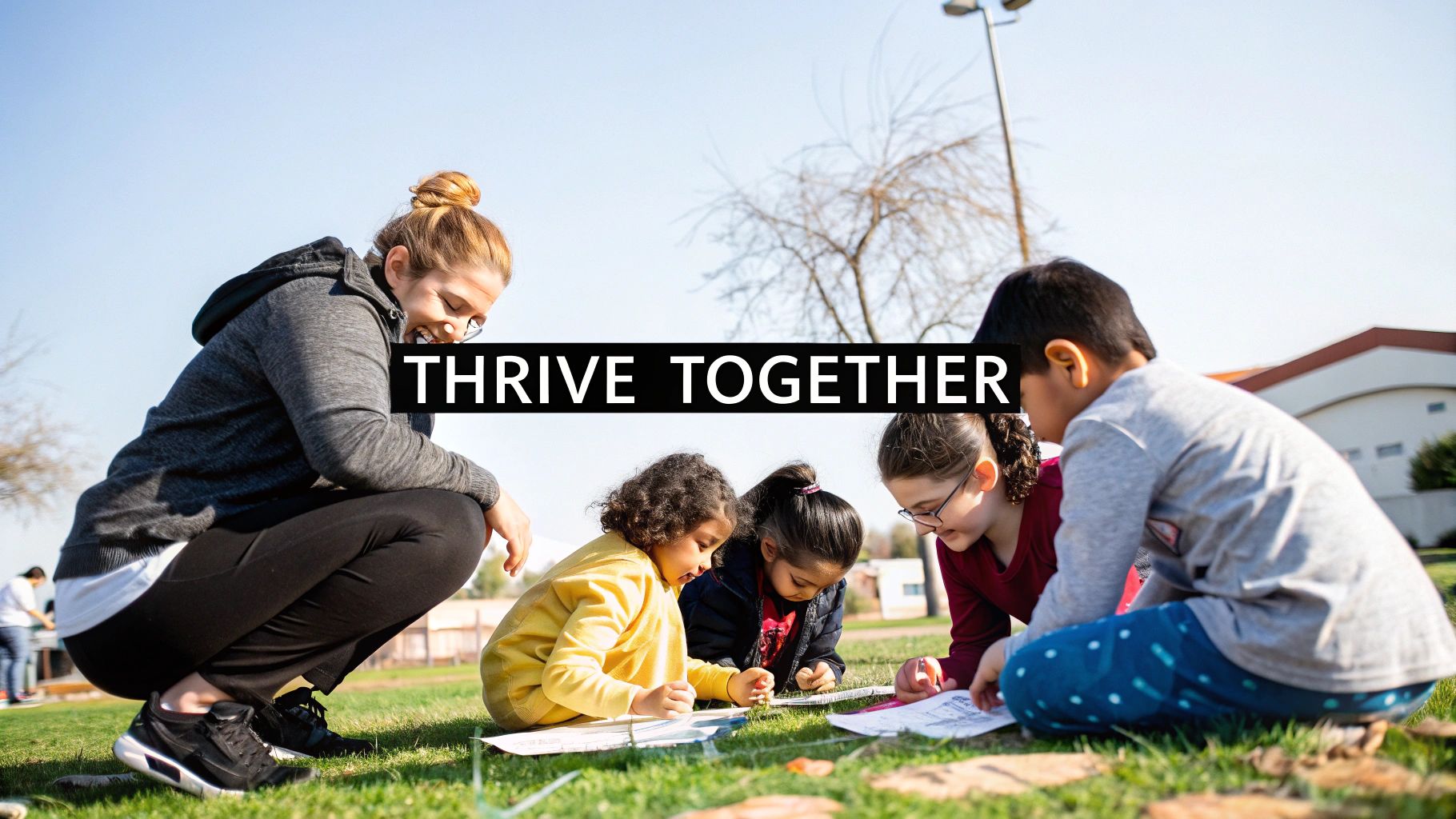
Socialisation for homeschooled children is an active, intentional process. Instead of being limited to a single peer group of the same age, they have countless opportunities to interact with people of all ages and backgrounds.
This creates a far more realistic social environment, mirroring the world they will one day work and live in.
- Home Education Co-ops: These are fantastic groups where families pool their skills and resources to organise classes, field trips, or social events. Your child might learn chemistry from a parent who is a scientist or drama from someone with a theatre background.
- Community and Volunteering: Getting involved in local projects—whether it's helping at an animal shelter, maintaining a community garden, or joining a park clean-up—teaches invaluable life skills and fosters a real sense of belonging.
- Interest-Led Groups: Is your child obsessed with chess, robotics, or Japanese art? I can almost guarantee there’s a club for it. These groups allow them to form deep friendships based on shared passions, which are often far more meaningful than fleeting playground acquaintances.
A Sanctuary for Emotional Health
Beyond social skills, homeschooling provides a powerful environment for nurturing emotional wellbeing. For a child who has struggled with anxiety, bullying, or the relentless pressures of a competitive school environment, home education can be a lifeline.
Think about a child who became withdrawn and anxious due to constant playground politics. After moving to homeschooling, they didn't become more isolated—they blossomed. Free from that daily stress, they had the emotional energy to join a small coding club and a local theatre group. They formed two deep friendships with peers who actually shared their interests, replacing a world of social anxiety with one of genuine connection.
Homeschooling allows you to tailor the social and emotional environment just as you tailor the academic one. It’s about creating a safe space where your child feels seen, heard, and valued for exactly who they are.
This protective setting is especially critical for children with Special Educational Needs (SEN) or Social, Emotional, and Mental Health (SEMH) needs. The flexibility to learn at their own pace, take sensory breaks when needed, and work in a calm, predictable environment can dramatically reduce stress and restore a child's confidence.
Cultivating the Whole Child
Knowing how to homeschool successfully means recognising that you're cultivating a whole person, not just chasing an academic record. Their emotional state directly impacts their ability to learn and engage. A child who feels safe, happy, and understood is a child who is ready to absorb new ideas and take on challenges.
Here are a few practical ways to place wellbeing at the centre of your homeschooling day:
- Prioritise Downtime: Don't fall into the trap of overscheduling. Make sure there is plenty of unstructured time for free play, daydreaming, and simply being a kid.
- Model Healthy Coping: Be open about emotions. When you feel stressed or frustrated, talk about it and show them healthy ways to manage those feelings.
- Follow Their Lead: If your child is having a tough day, be willing to put the lesson plans aside. Sometimes the most productive thing you can do is something restorative, like baking, going for a walk, or reading a favourite book together.
This approach doesn't just benefit your child; it strengthens the entire family. By prioritising emotional health, you're not only creating a better learner but also fostering resilience, self-awareness, and a strong sense of security that will support them for the rest of their lives.
Tracking Progress and Planning for the Future
One of the quiet worries for many new home-educating parents is, "How will I know if it's working?" The good news is that you can finally step off the treadmill of constant tests and formal exams. In home education, tracking progress is a much gentler, more meaningful process. It’s all about celebrating your child's individual growth and effort, not just their marks.
This move away from the traditional school system is a fast-growing trend. In the UK, the number of children in elective home education hit 111,700 in autumn 2024, a huge 21.4% jump from the previous year. Families are actively seeking more personalised learning, free from the constraints of large class sizes or the rising private school fees, which are set to increase with a 20% VAT. Academically, homeschooled students often excel, proving this is a powerful and effective path. You can find more insights on the growth of homeschooling in the UK on MyEdSpace.co.uk.
Celebrating Growth Beyond Grades
Instead of stressful exams, you can use methods that truly reflect your child’s learning journey. These approaches focus on what they can do and how they’ve grown, building their confidence along the way.
-
Learning Portfolios: Imagine a beautiful scrapbook or a digital folder showcasing your child’s best work. For a creative child, this might include their favourite paintings, a short story they’ve written, or photos of a model castle they built. It's a tangible celebration of their achievements.
-
Simple Learning Journals: This can be as easy as a shared notebook where you jot down key moments. You might note a breakthrough in maths ("Finally understood long division today!"), a thoughtful question they asked during a nature walk, or their excitement at finishing their first chapter book. It’s a powerful way to see progress over time.
Progress isn't always a straight line or a high score. Sometimes it’s the quiet confidence a child gains to ask a question, the resilience they build to solve a tricky problem, or the spark of curiosity that leads them down a new path of discovery.
Navigating the Path to Formal Qualifications
As your child gets older, the road to formal qualifications like GCSEs and A-Levels will naturally become a bigger focus. The process is actually quite straightforward: your child will sit their exams as a private candidate.
This simply means you are responsible for finding an accredited exam centre that accepts private candidates and covering the required fees. Many online schools and local colleges serve as these centres. It’s a good idea to start your search early, as places can be limited. The key is organisation—planning which subjects they will take and when, and making sure their studies align perfectly with the exam board’s syllabus. For a deeper dive into this process, our guide on navigating home education for GCSEs provides detailed, actionable advice.
Don't let anyone tell you that homeschooling is a barrier to higher education; it is often a powerful launchpad. Countless homeschooled students have excelled as private candidates, securing places at top universities. By learning at their own pace and focusing deeply on their passions, they develop an independence and love for learning that serves them incredibly well in whatever they pursue next. It's proof that a home education provides a strong and valid foundation for any future your child chooses.
Your Homeschooling Questions Answered
Taking the leap into home education naturally comes with a lot of questions. It's a big decision, and it’s completely normal to want clarity on the details. Let's tackle some of the most common queries we hear from families across the UK.
Do I Need to Be a Qualified Teacher?
Not at all. There is absolutely no legal requirement for you to hold any formal teaching qualifications. What the law asks is that you provide an education that’s 'suitable' for your child's age, ability, and aptitude.
Honestly, your dedication, your deep understanding of your own child's heart and mind, and your willingness to learn alongside them are far more powerful than any certificate on a wall.
How Much Does Homeschooling Really Cost?
This is a "how long is a piece of string?" question. The cost can vary dramatically from family to family, and it all comes down to your approach.
You can create a wonderful and rich education very affordably by leaning on free resources from local libraries, community groups, and the wealth of materials online. On the other hand, you can invest in comprehensive online curriculums, private tutors, or specialised classes. There’s no right answer or one-size-fits-all budget; it’s about finding what’s sustainable and effective for your family.
Can My Child Still Get GCSEs and A-Levels?
Yes, absolutely. This is a very well-trodden path. Homeschooled students take their exams as private candidates.
The process involves finding and registering with an exam centre that accepts private candidates. It’s a standard procedure that gives your child access to the exact same qualifications as their peers in school, paving a clear route to college, apprenticeships, or university.
What truly matters is not whether you can replicate a school at home, but whether you can create an environment where your child feels safe, seen, and inspired to learn. That is the heart of a successful home education.
If you're looking for a structured, supportive, and accredited path that blends the freedom of home education with the rigour of expert-led teaching, take a look at Queens Online School. Discover our live, interactive classes and vibrant global community at https://queensonlineschool.com.