

Choosing the right curriculum for homeschooling is one of the biggest, most heartfelt decisions you’ll make as a parent. It’s not just about picking books off a shelf; it’s about finding the perfect set of tools to help your child thrive, feel understood, and fall in love with learning. This guide is here to walk you through that journey, step by step.
Your Homeschooling Curriculum Journey Starts Here
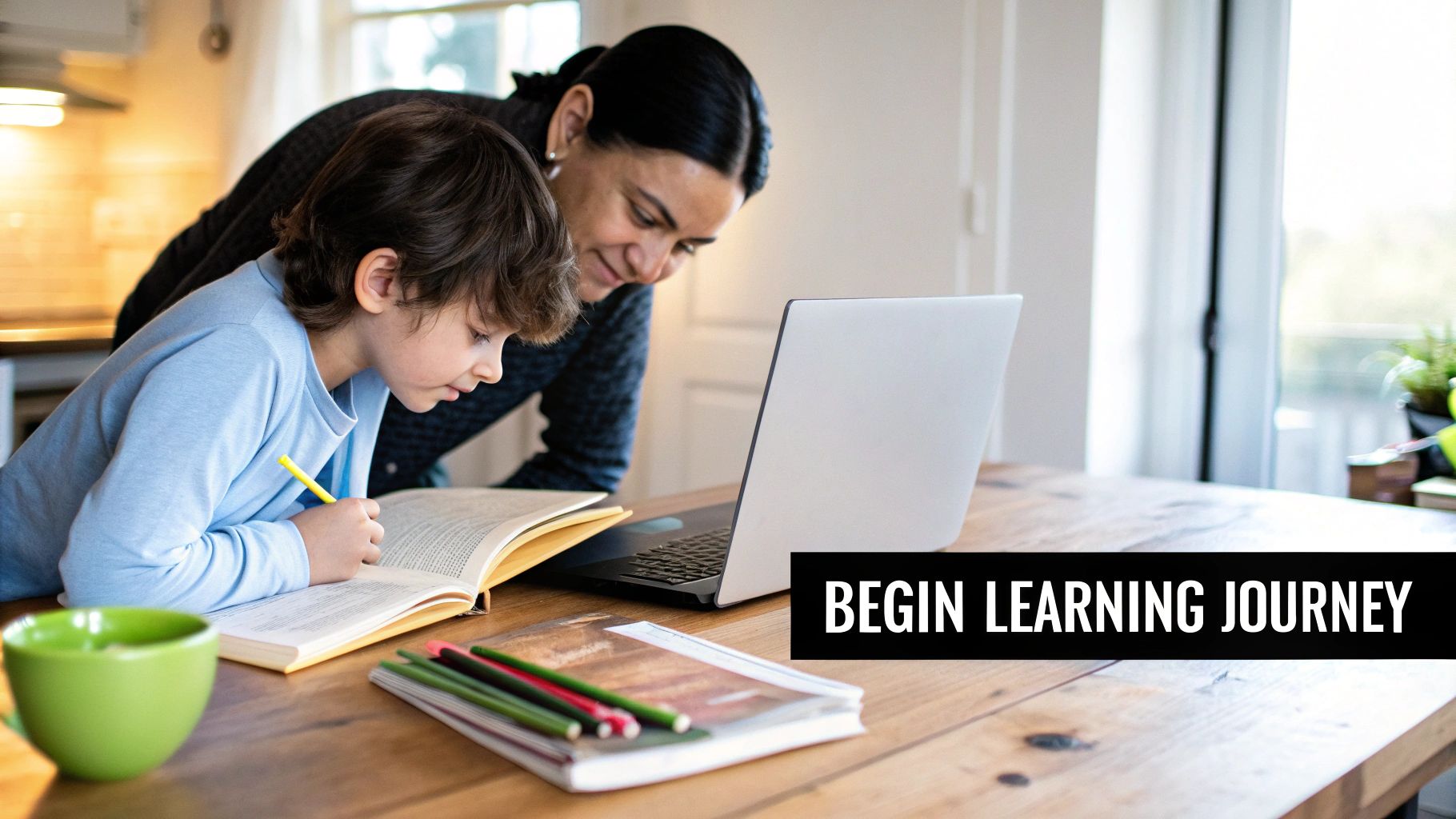
Deciding to homeschool your child is a huge step, usually filled with a mix of excitement, hope, and let’s be honest, probably a little bit of anxiety. You’ve put your child’s needs first, but that big question inevitably follows: how on earth do I choose the right curriculum?
It can feel like a monumental task, but try to think of it differently. A curriculum isn’t a rigid rulebook you have to follow to the letter. It’s more like a flexible toolkit, designed to spark your child’s unique curiosity, build their confidence, and grow their knowledge in a way that feels natural and joyful for your family.
And you’re certainly not alone. The homeschooling community in the UK is growing faster than ever as more families seek an education that truly fits their child’s heart and mind.
Why This Decision Matters So Much
A homeschooling curriculum is about so much more than subjects and schedules. It’s about finding a rhythm that aligns with your family’s values and, most importantly, your child’s unique way of learning.
Is your child a hands-on builder who would come alive with project-based learning? Imagine them piecing together a model of a castle instead of just reading about one. Or are they a natural bookworm who would adore a literature-rich approach, getting lost in stories that bring history to life? Answering these kinds of questions is your first real step.
The numbers tell a story. In autumn 2024, local authorities in the UK counted 111,700 children in elective home education. That’s a huge 21.4% jump from the year before. This isn’t just a blip; it’s a clear signal that parents are actively seeking out more personalised, child-focused ways to educate.
A great curriculum doesn’t just teach facts; it nurtures a love for learning. It respects your child’s pace, honours their interests, and builds a foundation for lifelong curiosity.
This guide is designed to take you from a place of confusion to one of real confidence. Of course, the rules can change depending on where you are in the world. For families living abroad, understanding the local setup is vital. For instance, this guide on homeschooling regulations and curriculum options in Dubai is a fantastic resource for expat families.
Right, let’s get into it. Together, we’ll explore the different approaches and find the perfect fit for your child.
So, What Exactly is a Homeschooling Curriculum?
Let’s clear the air and talk about the word ‘curriculum’. For many, it conjures up images of rigid timetables, daunting stacks of textbooks, and the pressure of exams. But in the world of homeschooling, a curriculum is something far more flexible, personal, and frankly, hopeful. It’s not a cage; it’s a key to unlocking your child’s potential.
Think of it as a recipe for your child’s education. Some recipes, like those built around the structured British National Curriculum, offer clear, step-by-step instructions. You know exactly what ingredients you need, and the outcome is reliable and consistent—a brilliant pathway for a child who thrives on clarity and has their sights set on qualifications like GCSEs and A-Levels.
Other approaches are more like a well-stocked pantry full of inspiring ingredients. Philosophies like unschooling don’t really give you a recipe at all. Instead, they empower you and your child to explore, experiment, and create something wonderfully unique together, led purely by their own curiosity.
The Three Core Ingredients of Any Good Curriculum
No matter the style, a truly effective curriculum for homeschooling provides a solid framework. It’s your map and your compass, giving you a sense of direction without dictating every single step of the journey. At its heart, it answers three fundamental questions about your child’s learning:
- What to Learn (The Scope): This is the ‘what’ of their education. It outlines the subjects, topics, and skills your child will explore. For a Year 7 science curriculum, the scope might include cells, forces, and the solar system. For your child, this means knowing they get to dive into the mysteries of space this term.
- When to Learn It (The Sequence): This is the ‘when’ and ‘how’—the logical order for introducing new concepts. A child needs to grasp basic addition before they can tackle multiplication. Each skill builds on the last, creating a strong, stable foundation of knowledge and preventing the frustration of feeling lost.
- How to Know It’s Working (The Assessment): This isn’t just about tests. It’s about seeing that spark of understanding. Assessment can be a gentle quiz, a project they proudly present, or simply watching them use a new maths skill to figure out their pocket money. It’s how you make sure the learning is genuinely sinking in and building their confidence.
You are the head chef in your child’s educational kitchen. You have the power to choose the recipe, adapt the ingredients, and even blend different approaches to create a learning experience that truly nourishes their mind, spirit, and future.
For instance, you might decide to follow a structured maths programme but take a completely project-based approach to history. Perhaps your child is fascinated by Roman Britain. Instead of just reading a chapter, they could build a model of a Roman villa, cook a Roman-inspired meal, and write a diary from the perspective of a young Celt. Learning becomes an adventure they feel part of.
This is the beautiful freedom of homeschooling. It’s about putting your child at the very centre of their education and crafting a path that honours who they are and who they are becoming. The right curriculum is simply the tool that helps you do it with confidence.
Comparing Popular Homeschooling Curriculum Models
Navigating the world of homeschooling can sometimes feel like you’re learning a whole new language, especially when it comes to the curriculum. Each model comes with its own unique philosophy about what education should look like, and the real secret is finding the one that speaks to your family’s heart and your child’s spirit.
This isn’t about chasing the “best” curriculum—it’s about finding the best fit for the child you know and love. Let’s walk through some of the most respected approaches out there, from highly structured, globally-recognised paths to more gentle, child-led philosophies.
Structured Curriculums: The British and Cambridge International Paths
For many families, the goal is a clear, predictable route to higher education. This is where curricula like the British National Curriculum and the Cambridge International Curriculum really shine. They offer a sense of security and a proven roadmap that parents can trust, which can be incredibly comforting.
Think of these as the architectural blueprints for your child’s education. Every single stage is planned out, from the foundational blocks in primary school all the way to the final flourishes of A-Levels. This creates a logical, sequential path that ensures there are no gaps in knowledge, which is deeply reassuring for parents and often comforting for children who thrive on routine.
- Who is this for? This approach is a fantastic match for an academically motivated child who enjoys clear goals and is aiming for university. It’s also the perfect choice for families who want qualifications that are instantly recognised by universities and employers all over the world.
- A practical example: Imagine a 14-year-old who dreams of becoming a veterinarian. Following the Cambridge pathway, she would focus on specific science subjects for her iGCSEs, like Biology and Chemistry. The curriculum provides a detailed syllabus, past papers, and transparent assessment criteria, giving her a direct and unambiguous route towards the A-Levels she’ll need for veterinary school. She can see her dream becoming a reality, step by step.
The real power of a structured curriculum lies in its clarity. It removes all the guesswork, providing a meticulously planned educational journey that culminates in respected qualifications like iGCSEs and A-Levels, opening doors to a world of future opportunities.
You can think of any curriculum as a kind of recipe, breaking down what to learn, the order to learn it in, and how to check on progress along the way.
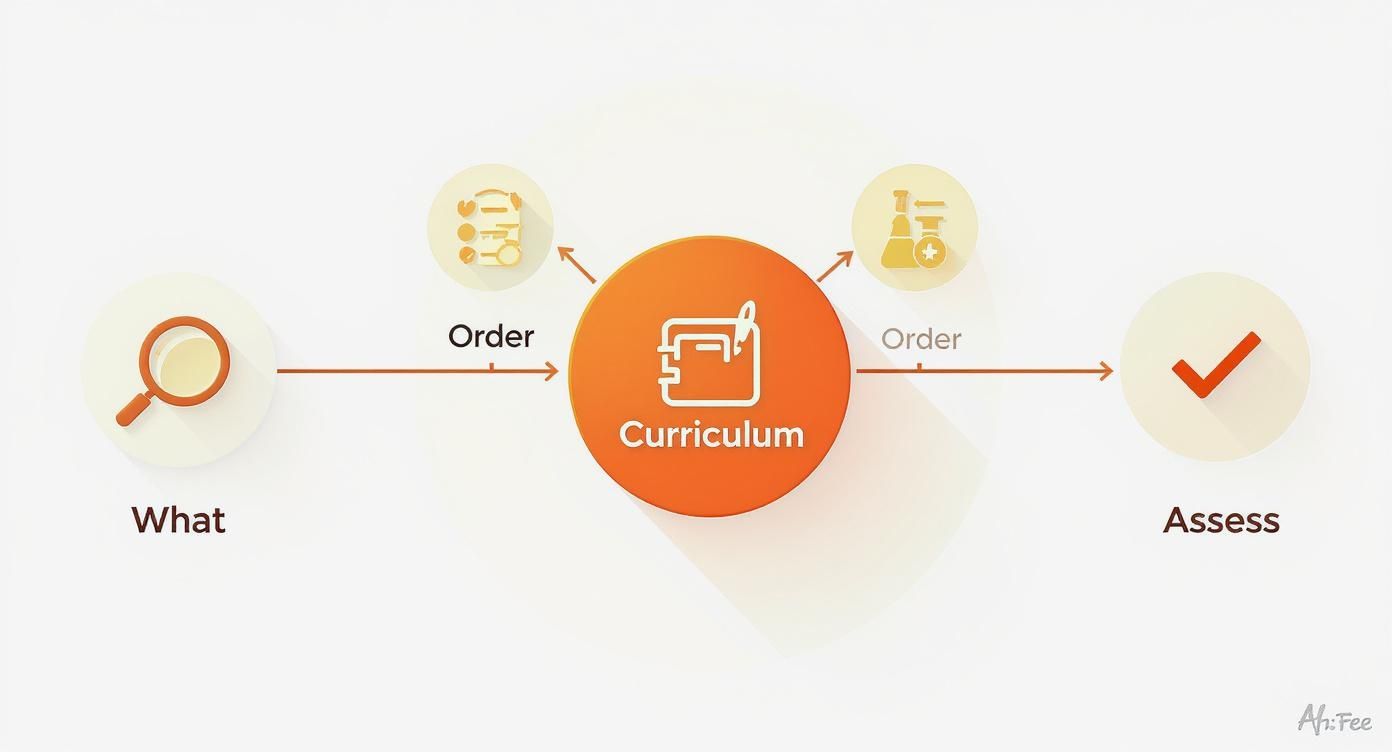
This visual shows that even the most comprehensive curriculum is simply a plan covering scope, sequence, and assessment—a framework you can then bring to life for your child.
The Charlotte Mason Method: A Living Education
In beautiful contrast to the structured models is the Charlotte Mason philosophy. This approach is built on the belief that children are whole people who deserve a rich, inspiring education filled with what she called “living books,” nature, art, and music.
Instead of dry textbooks, a child learns history through compelling biographies and historical fiction. Science is explored on nature walks, through journaling, and by observing the world first-hand. It’s a gentle, holistic approach that aims to cultivate a genuine, lifelong love of learning and a sense of wonder.
- Who is this for? This method really clicks with creative, curious children who love stories and the outdoors. It suits families who value character and wonder just as much as academic facts.
- A practical example: A seven-year-old learning about ancient Greece wouldn’t be filling out a worksheet. Instead, he might listen to captivating myths, look at pictures of Greek pottery, and then narrate back what he learned in his own words. This process of storytelling solidifies his understanding in a way that feels natural and engaging, honouring his voice.
Unschooling: The Ultimate Child-Led Approach
At the other end of the spectrum, you’ll find unschooling. This is a philosophy that places a child’s natural curiosity at the absolute centre of their education. There’s no set curriculum at all; learning happens organically, driven entirely by the child’s own questions and interests.
This model requires a deep trust in your child’s innate desire to learn. The parent’s role shifts from teacher to facilitator—someone who provides resources, answers questions, and creates an environment rich with learning opportunities.
- Who is this for? Unschooling works best for self-motivated, inquisitive children and for parents who are comfortable with an unstructured, interest-led lifestyle.
- A practical example: A child fascinated by video games might be encouraged to learn coding to build their own game (maths and logic), design the characters (art), and write the storyline (creative writing). Their passion becomes the engine for learning across multiple subjects, all without a single formal lesson plan. You’re following their joy.
Ultimately, each of these models offers a different way to honour your child’s unique needs. Whether you choose the reliable structure of the Cambridge curriculum or the gentle freedom of the Charlotte Mason method, the goal is always the same: to create a learning experience that truly feels like home.
How to Choose the Right Curriculum for Your Child
This is the moment where everything changes. It’s time to put aside the glossy catalogues, the endless online reviews, and what you’ve heard other families are doing. The real expert in choosing the right curriculum for homeschooling isn’t a company or a consultant—it’s the child sitting right in front of you.
This process is less about ticking boxes and more about getting to know your child on a deeper level. It’s about observing, listening, and trusting your gut as a parent. We’re not just selecting subjects; we’re honouring your child’s unique way of seeing the world and building an education that feels like it was made just for them. That connection is what makes homeschooling so powerful.
Start with Your Child, Not the Curriculum
Before you even glance at a curriculum provider, take a moment to really think about the person you’re designing this education for. Every child learns differently, and spotting their natural style is the most critical first step. A curriculum that fights their instincts will feel like a constant battle, but one that aligns with them will feel like a shared adventure.
Start by asking a few simple but powerful questions:
- How do they learn best? Are they a kinesthetic learner who needs to get their hands dirty—building, touching, and moving? Or are they a visual learner who soaks up information from diagrams and videos? Maybe they’re an auditory learner who thrives on stories and discussions.
- What truly sparks their curiosity? What topics could they talk about for hours? Do they lose track of time drawing, coding, or digging in the garden? Their passions are your greatest teaching tool, so lean into them.
- What is their ideal learning environment? Do they need quiet and structure to concentrate, or do they come alive with flexibility, freedom, and a bit of background noise?
Choosing a curriculum is an act of love. It’s about seeing your child for who they are and building their education around their strengths and dreams, rather than asking them to squeeze into a pre-made box.
Matching the Curriculum to Your Child
Once you have a clearer picture of your child, you can start to see how different curriculum models might fit. This is where the theory meets real life, and you can begin to imagine a learning experience that feels both authentic and effective.
Think about two different children. First, a creative, hands-on 11-year-old who absolutely loves building things. For him, a rigid, textbook-heavy curriculum would be completely draining. Instead, his parents might choose a project-based model. When they study ancient Egypt, he won’t just read about pyramids; he’ll design and build a detailed model, learning about engineering, history, and maths all at once. The learning sticks because it speaks his language.
Now, imagine a 15-year-old who is academically driven and dreams of studying medicine at a top university. For her, a structured and rigorous path like the Cambridge curriculum could be a perfect fit. It provides the clear syllabus, demanding content, and globally recognised iGCSEs and A-Levels she needs to reach her goal. The structure gives her confidence and a clear roadmap to her future.
Practical Steps for Making the Final Decision
Thinking about your child is the heart of the process, but there are also practical things to consider. Your family’s lifestyle, resources, and long-term goals all play a huge part in finding a curriculum that you can stick with.
- Try Before You Buy: Most reputable curriculum providers offer sample lessons or trial periods. Use them! Work through a sample history lesson or a maths module together. Watch your child’s face. Are their eyes lighting up with interest, or are they sighing with boredom? Their reaction will tell you far more than any online review ever could.
- Consider Your Family’s Rhythm: Be realistic about your own time and energy. Some curricula demand a lot of parent-led instruction. Schools, like Queen’s Online School, provide live lessons with subject-specialist teachers, which frees you up to be a supporter and guide rather than the main instructor.
- Embrace Flexibility: Remember, a curriculum is a tool, not a life sentence. It’s okay to tweak it, add to it, or even switch to something completely new if it isn’t working. The goal is to find what works for your child right now. Their needs will change, and your approach can, too.
Ultimately, this choice can make a profound difference. Research consistently shows that a well-chosen home education can lead to fantastic outcomes. One study revealed that UK homeschooled students achieve graduation rates of approximately 66.7%, a significant step up from the national average of 57.5%. You can read more about these findings and learn how personalised learning contributes to student success.
By putting your child at the centre of this decision, you’re doing more than just choosing a curriculum—you’re creating an educational world where they can truly thrive.
Adapting a Curriculum for Special Educational Needs
For many families, homeschooling is more than just an educational choice; it’s a sanctuary. For a child with Special Educational Needs (SEN), the flexibility of home education can feel like taking a deep breath after years of trying to fit into a system that wasn’t built for them.
The single greatest strength of a curriculum for homeschooling is its boundless adaptability. This isn’t about finding a magical “SEN curriculum.” Instead, it’s about taking any curriculum and lovingly reshaping it to honour your child’s unique way of thinking, learning, and experiencing the world. It’s about putting their needs at the absolute centre of their education, every single day.
Putting the Child First: Practical Strategies
Adapting a curriculum starts with seeing your child’s strengths, not just their challenges. It’s a shift in perspective that transforms how you approach every lesson. Instead of asking, “How can I get my child to do this?”, you begin to ask, “How can I present this material in a way my child can connect with?”
This is where your creativity and love as a parent become your most powerful teaching tools. Let’s imagine a few real-world scenarios:
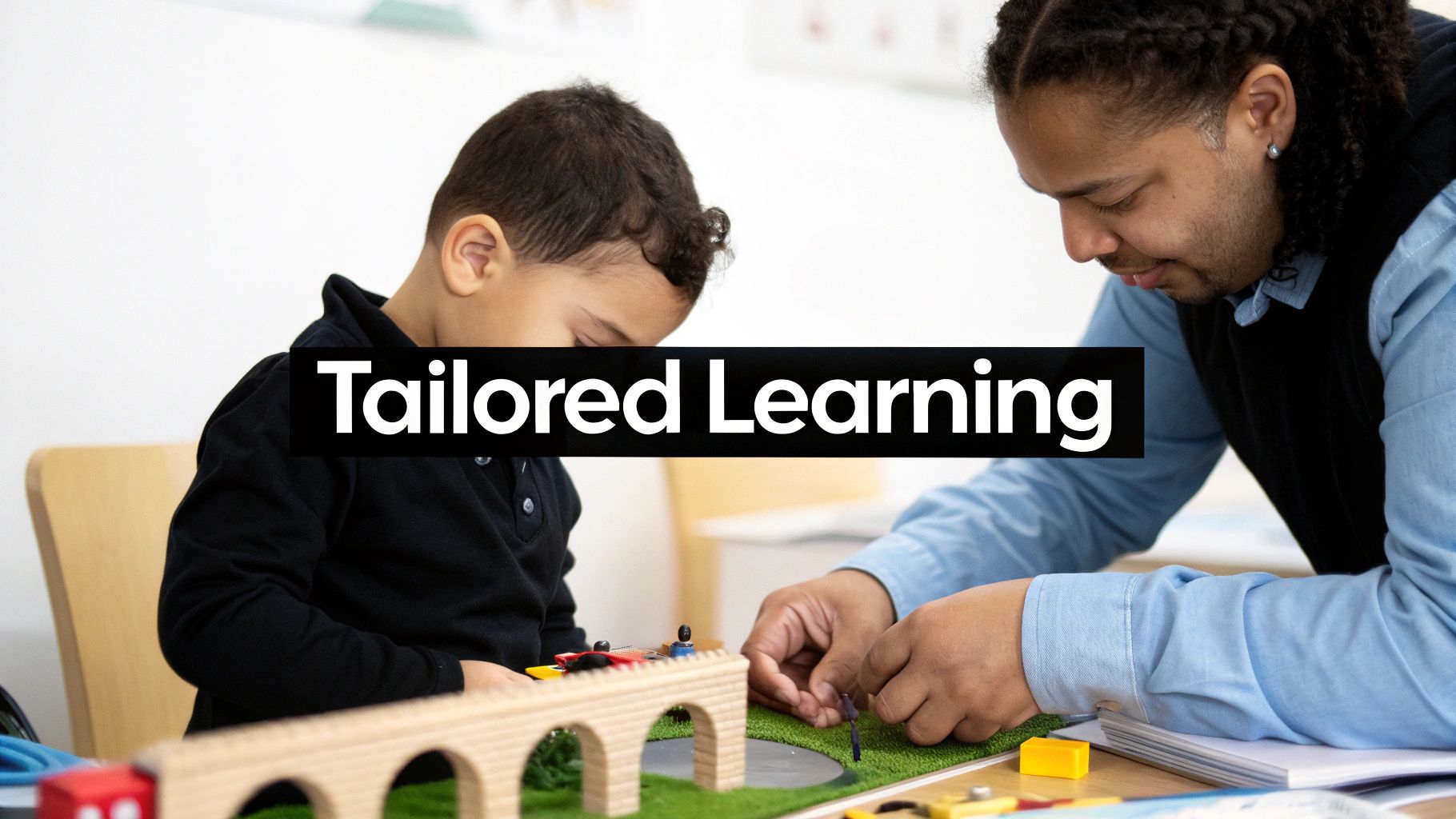
- For the Hands-On Historian: You’re studying Roman Britain. A standard curriculum might demand a long essay—a daunting task for a child who struggles with writing. So, you build a model of a Roman aqueduct together, cook a meal from authentic Roman recipes, or stage a mini-play about Boudicca’s rebellion. They absorb history through action and experience.
- For the Reader with Dyslexia: A literature-heavy curriculum can feel like an impossible mountain to climb. But you can adapt. Use brilliant audiobooks, watch film adaptations to discuss plot and character, or turn phonics into a game with interactive apps. The goal is a love of stories, not a battle with text.
- For the Energetic Scientist with ADHD: Expecting them to sit through a long science lesson is a recipe for frustration. Instead, break the topic—say, the life cycle of a butterfly—into short, 15-minute bursts. Watch a quick video, then get outside to look for caterpillars (a built-in movement break!), and finish by drawing the stages. Short, focused, and active learning always wins.
The most profound shift in homeschooling a child with SEN is realising you are not just their teacher; you are their educational architect. You have the freedom to knock down walls, build new pathways, and design a learning environment where they feel safe, understood, and brilliantly capable.
Building on Strengths and Celebrating Progress
Progress for a child with SEN often doesn’t follow a straight line on a graph. It’s found in the small victories: the sudden spark of understanding in their eyes, their willingness to try something new, or the pride they feel after finishing a project they chose themselves.
Your role is to notice and celebrate every single one of these steps. This is what builds the confidence and resilience they need to tackle bigger challenges. You’re creating an atmosphere where it’s safe to make mistakes and where effort is praised just as much as achievement.
For parents looking for more structured support, specialised online courses can be incredibly helpful. Learning how expert teachers provide online SEN support can give you new strategies and reassurance, ensuring you and your child have all the resources you need to succeed.
At Queen’s Online School, our subject-specialist teachers are trained to adapt lessons in real-time, providing the personalised attention that helps every child flourish. We believe in shaping the education to fit the child, not the other way around.
Bringing Your Chosen Curriculum to Life
You’ve explored the philosophies, thought about your child’s unique way of learning, and finally made a choice. That’s a huge step, but it can also feel a little bit intimidating. The big question now is, how do we actually make this work in our busy, day-to-day lives?
This is where the theoretical curriculum for homeschooling meets the beautiful reality of your kitchen table. The aim isn’t to replicate a school classroom. It’s about creating a sustainable, joyful learning rhythm that works for your family, preventing burnout and keeping your connection with your child right at the heart of everything.
Crafting a Flexible Weekly Rhythm
First things first: forget rigid, bell-to-bell timetables. The real beauty of homeschooling lies in its flexibility. You have the freedom to build a schedule that honours your family’s natural energy levels, appointments, and sparks of interest.
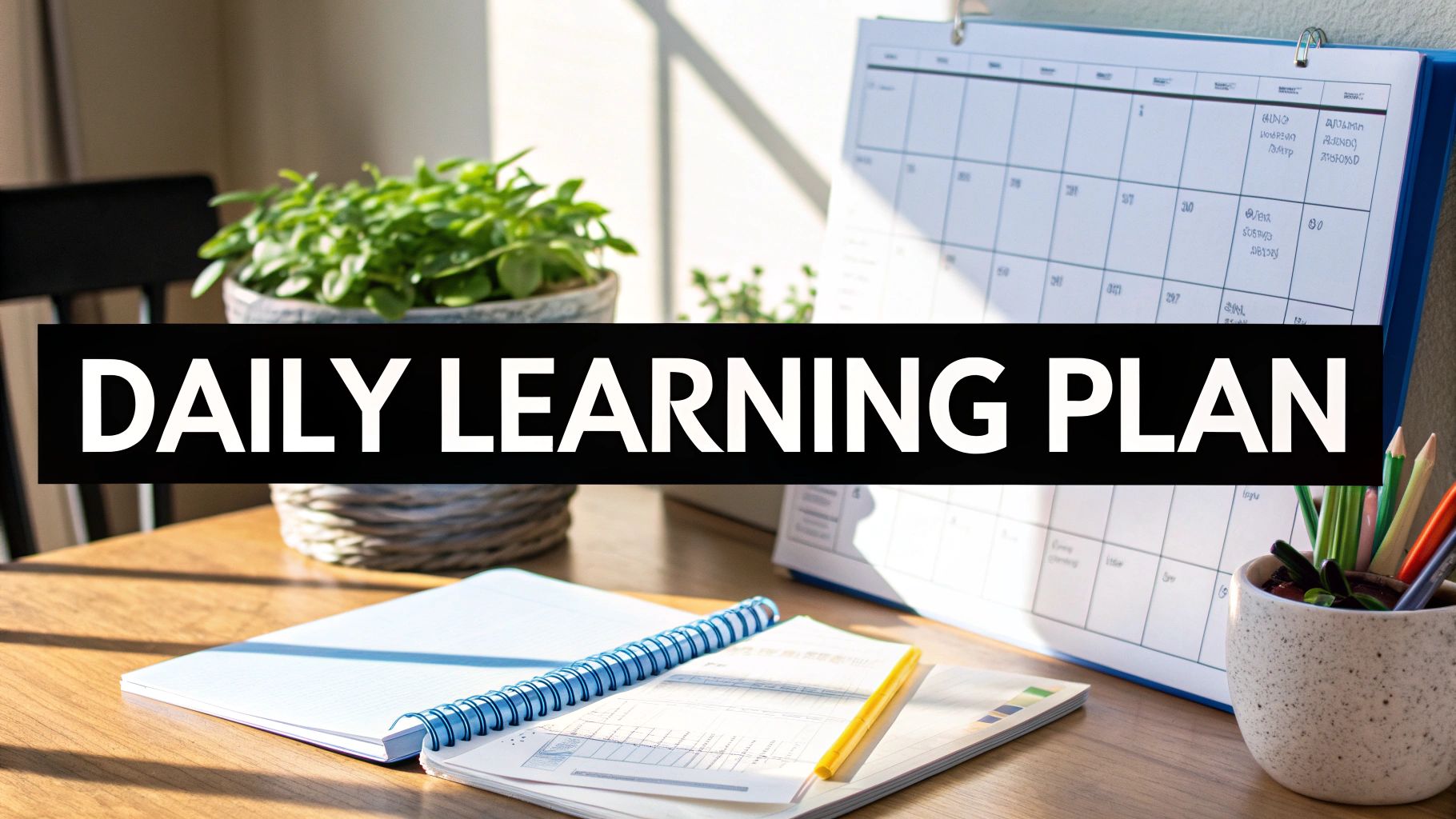
A great way to start is by thinking in ‘blocks’ rather than strict time slots. You might plan a “focused academic block” for the morning, a “creative project block” after lunch, and leave plenty of room for free play and downtime.
Sample Weekly Block Plan (Ages 7-10):
- Morning (9:30 AM – 11:30 AM): Core Skills. This is often when children are most alert. You can focus on subjects like Maths and English, breaking them into short, 20-25 minute sessions with a quick movement break in between.
- Late Morning (11:30 AM – 12:30 PM): Exploration. Time to dive into a history story, a fun science experiment, or just curl up on the sofa for a read-aloud. This is all about shared discovery.
- Afternoon (1:30 PM – 3:00 PM): Active & Creative Time. This could be anything from a nature walk and an art project to a music lesson or building with LEGO. It’s learning through doing.
This kind of structure offers predictability without being restrictive, which means you can easily adapt to how your child is feeling on any given day. If they are bursting with energy, you can swap the morning blocks and start with the nature walk.
Organising Your Space and Tools
You absolutely do not need a dedicated schoolroom to homeschool effectively. The kitchen table, a cosy corner of the living room, or a small desk can be transformed into a brilliant learning space.
The real secret is organisation. A simple trolley or a set of drawers to keep books and supplies for the day easily accessible can make a world of difference. This simple act reduces friction and makes the idea of starting lessons feel much less overwhelming for everyone. You can also enrich your weekly plan with diverse online classes that offer flexible and comprehensive learning opportunities without needing any extra physical space.
Your learning environment isn’t about having the fanciest equipment. It’s about creating a space that feels calm, inviting, and ready for curiosity. It’s a signal to your child that this is a place where their ideas matter.
The Pathway to Formal Qualifications
For older students, the journey towards formal qualifications like iGCSEs and A-Levels can feel like a big unknown. The good news is that it’s a very clear and achievable route.
Many online schools, including Queen’s Online School, are accredited examination centres. This means your child can study the full curriculum with subject-specialist teachers and then sit the official exams in a familiar and supportive setting. It completely removes the stress of finding an external exam centre and ensures a seamless journey from learning to qualification.
This integration is possible thanks to the incredible growth in educational technology. The UK’s EdTech sector is now valued at approximately £3.2 billion, following a massive 72% jump in 2020. This boom has given families unprecedented access to high-quality learning platforms, making a world-class education accessible right from home.
By building a gentle structure and using the right tools, you can truly bring your chosen curriculum to life. For a deeper dive, check out our guide on essential homeschooling resources for UK families. It’s all about creating a sustainable and inspiring educational life that allows you to focus on what truly matters: your child.
Common Questions About Homeschooling Curriculums
Choosing a curriculum is one of the biggest decisions you’ll make on your homeschooling journey, so it’s completely natural for a few worries to surface. Feeling a little uncertain is part of the process, but the right information can replace that anxiety with confidence. Here are some clear, straightforward answers to the questions we hear most often from parents.
Do I Have to Follow the National Curriculum?
This is the number one question for most UK families, and the answer often brings a wave of relief: no, you are not legally required to follow the National Curriculum.
The law simply states that you must provide a full-time education suitable for your child’s age, ability, and aptitude. You have complete freedom to choose the methods and materials you feel are best for your child. This is the very heart of homeschooling—it allows you to build an education around your child, not the other way around.
What if I Choose the Wrong Curriculum?
This is a fear that can feel paralysing, but it’s important to reframe it. A curriculum is a tool, not a lifelong contract. One of the greatest gifts of homeschooling is its incredible flexibility. If a curriculum isn’t sparking joy or your child is consistently struggling, you have the power to change it.
Viewing your first choice as a learning experience, rather than a mistake, is key. It’s simply data that helps you understand what your child needs. You can adapt it, supplement it, or switch entirely—you are always in control.
For instance, you might start with a literature-based approach and realise your child craves more hands-on science experiments. You don’t need to throw everything out. You can simply add in a project-based science kit. It’s an evolution, not a failure.
How Much Does a Homeschooling Curriculum Cost?
The financial investment can vary dramatically, and there’s no single “right” answer. It’s entirely possible to homeschool effectively using brilliant free resources from your local library and reputable online sources.
On the other end of the spectrum, a complete “all-in-one” boxed curriculum or a subscription to an online school can range from a few hundred to several thousand pounds per year. The best approach is to decide on a budget that feels comfortable and sustainable for your family first, then explore the fantastic options within that range.
At Queen’s Online School, we understand these questions because we support families navigating this journey every single day. Our structured British curriculum provides a clear, internationally-recognised path from Primary all the way through to A-Levels, taking the guesswork out of your planning.
With live lessons from subject-specialist teachers and a supportive global community, we offer the perfect balance of expert guidance and the flexibility your child deserves.
Explore how we can bring clarity and confidence to your homeschooling journey at https://queensonlineschool.com.