

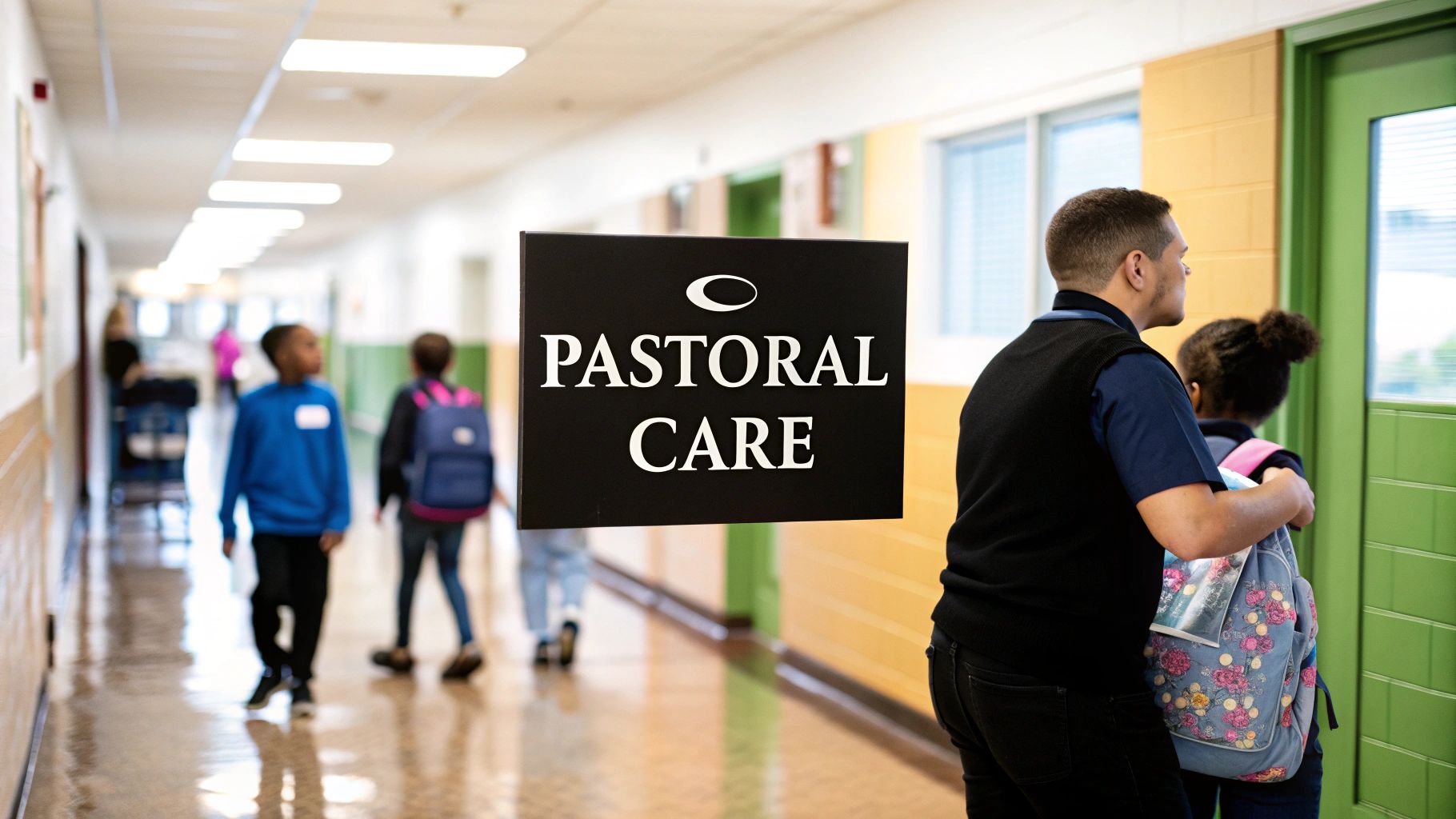
Pastoral care isn't just a bit of school jargon; it's the school's heartfelt promise to look after your child’s emotional health, social development, and personal safety. It's about nurturing your child as a whole person—not just as a student—and making sure they feel seen, heard, and valued. Imagine the relief of knowing there's a safety net of caring adults dedicated to your child's happiness.
Pastoral Care Is More Than Just A Safety Net
Let’s be honest, the term itself can sound a bit formal. But at its heart, pastoral care is about creating a support system that’s woven into the very fabric of your child’s daily school life, making them feel secure enough to be themselves.
Think of it like the support for a young, growing plant. It’s the rich soil, the steady sunlight, and the protective stakes that help a sapling grow strong and resilient. It isn't just about stepping in when something goes wrong; it’s about proactively creating an environment where your child can genuinely thrive, feeling confident and happy in their own skin.
And this proactive approach is absolutely essential. A child worried about a friendship fallout or feeling anxious about an exam simply can't focus on their algebra homework. Pastoral care acknowledges this simple truth: a child's wellbeing is the foundation on which all academic achievement is built. This focus on the whole child is a core part of building their social and emotional learning skills.
A Promise to Every Child
The need for this kind of support has never been more critical. Recent data shows a worrying rise in mental health challenges among young people, with one-fifth of children in 2023 having identifiable mental health problems. This reality makes a school’s pastoral commitment more important than ever. It’s the first line of defence, a comforting presence in a sometimes-overwhelming world.
Pastoral care is the practical expression of a school’s belief that every child matters. It’s the small, consistent actions that build trust—a teacher noticing a quiet child seems withdrawn and gently asking, "Are you okay?" or a mentor helping a student navigate the social complexities of the playground. It’s the human touch that turns a building into a true community.
Whether in a traditional classroom or an online school community, this system provides stability. It’s the promise that your child won't get lost in the crowd but will instead be guided, supported, and empowered on their unique educational journey.
To give you a clearer picture, let's break down what this support system actually looks like in practice.
Pastoral Care At A Glance
Here’s a quick overview of what pastoral care means for your child's daily school life.
| Key Area | What This Looks Like For Your Child |
|---|---|
| Emotional Support | Teachers who notice your child is feeling down or anxious and offer a listening ear. A culture where your child knows it's okay not to be okay. |
| Social Development | Helping your child navigate friendships, build positive relationships, and resolve conflicts constructively, so they never feel alone. |
| Safeguarding | Clear and robust policies to protect your child from harm, both online and offline, ensuring they feel completely safe at all times. |
| Academic Mentoring | Guiding your child with study skills and time management to help them reach their potential without the crushing weight of stress. |
| Wellbeing Programmes | Proactive initiatives like mindfulness sessions and anti-bullying workshops that give your child the tools to look after their own wellbeing. |
| Behavioural Guidance | A positive approach that helps your child understand their feelings and actions, teaching self-regulation rather than just imposing punishment. |
| Parent-School Partnership | Open communication and a true partnership, working with you to support your child’s wellbeing from all angles, so you feel part of the team. |
Essentially, these are the day-to-day actions, big and small, that create a truly nurturing school environment for your child.
The Team Looking Out For Your Child
When we talk about pastoral care, it’s easy to picture a single, kind-hearted teacher. But the truth is, effective support isn’t the job of one person. It’s a dedicated team woven into the very fabric of the school, all working together with a single goal: to ensure no child ever feels lost, alone, or misunderstood.
Understanding who these people are helps you see the collaborative promise behind your child's wellbeing.
This diagram breaks down how this holistic support focuses on a child's wellbeing, safety, and social development.
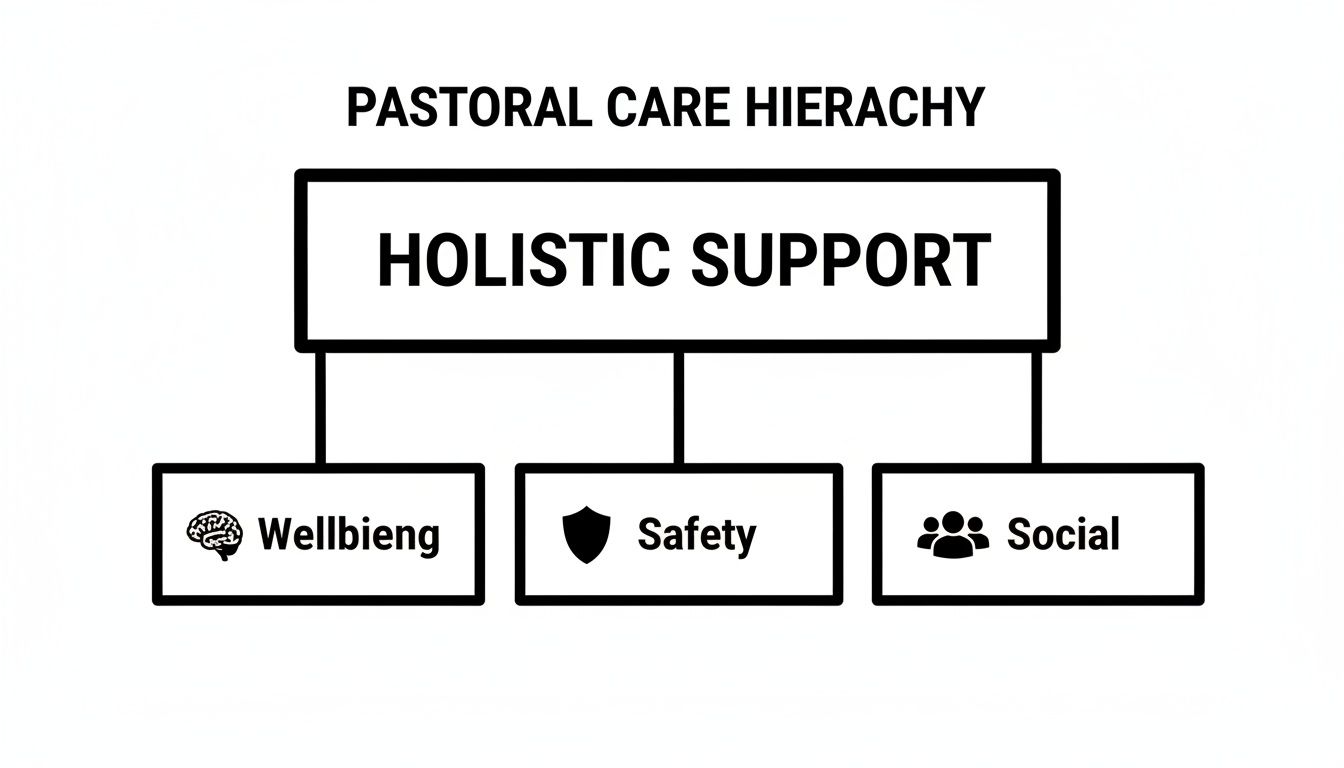
As you can see, these pillars are interconnected, showing that a child's ability to learn is directly linked to them feeling secure and happy. This structure is upheld by a network of caring professionals.
Your First Point of Contact
For most parents, the pastoral care journey begins with one key individual.
- The Form Tutor or Class Teacher: This is the person who sees your child every single day. They are the anchor in your child's school life—the one who notices a subtle shift in mood, celebrates a small victory, or offers a quiet word of encouragement. Imagine them noticing your child seems a little quieter than usual and taking a moment to check in. That simple act can make all the difference. Think of them as your first and most important port of call for any concerns.
From there, the support network widens, bringing in more specialised guidance as needed.
Broader and Specialised Support
If a situation calls for a wider view or more specific expertise, other team members step in.
The Head of Year or Pastoral Lead has a bird's-eye view of an entire year group's wellbeing. They manage more complex issues, coordinate support strategies between different teachers, and are often the next person to speak with if a concern persists. For example, if your child is consistently struggling with friendships, this person can orchestrate a plan involving multiple teachers to help them build connections.
The School Counsellor offers a confidential, safe space for children to explore their feelings. These are trained professionals who can help students navigate everything from friendship difficulties to more serious emotional challenges. Pastoral care teams play a crucial role in identifying and supporting students struggling with issues such as social anxiety disorder, helping them to navigate school life more confidently.
You might also be interested in our guide on what SEN support involves and how schools provide for students with special educational needs.
You can find that here: https://queensonlineschool.com/what-is-sen-support/
The Unsung Heroes of Pastoral Care
Beyond these more defined roles, some of the most powerful support comes from those who work most closely with students every day.
Teaching Assistants (TAs) are absolutely fundamental to delivering personalised pastoral care, making up 29% of the overall school workforce. Research shows their role is incredibly varied and vital; they deliver targeted interventions, run small group support sessions, and provide bespoke assistance to pupils with specific educational plans. You can learn more about how TAs provide this crucial, individualised support from the full research findings.
What Great Pastoral Care Looks Like In Real Life
Theory and team structures are one thing, but what does great pastoral care feel like through the eyes of a child? To really get it, we need to step into their shoes and see how a school's web of support makes a genuine, real-world difference.
These aren't just policies on a piece of paper; they are small, human moments of connection that can change the entire direction of a child’s school experience for the better.
The Quiet Child In A New School
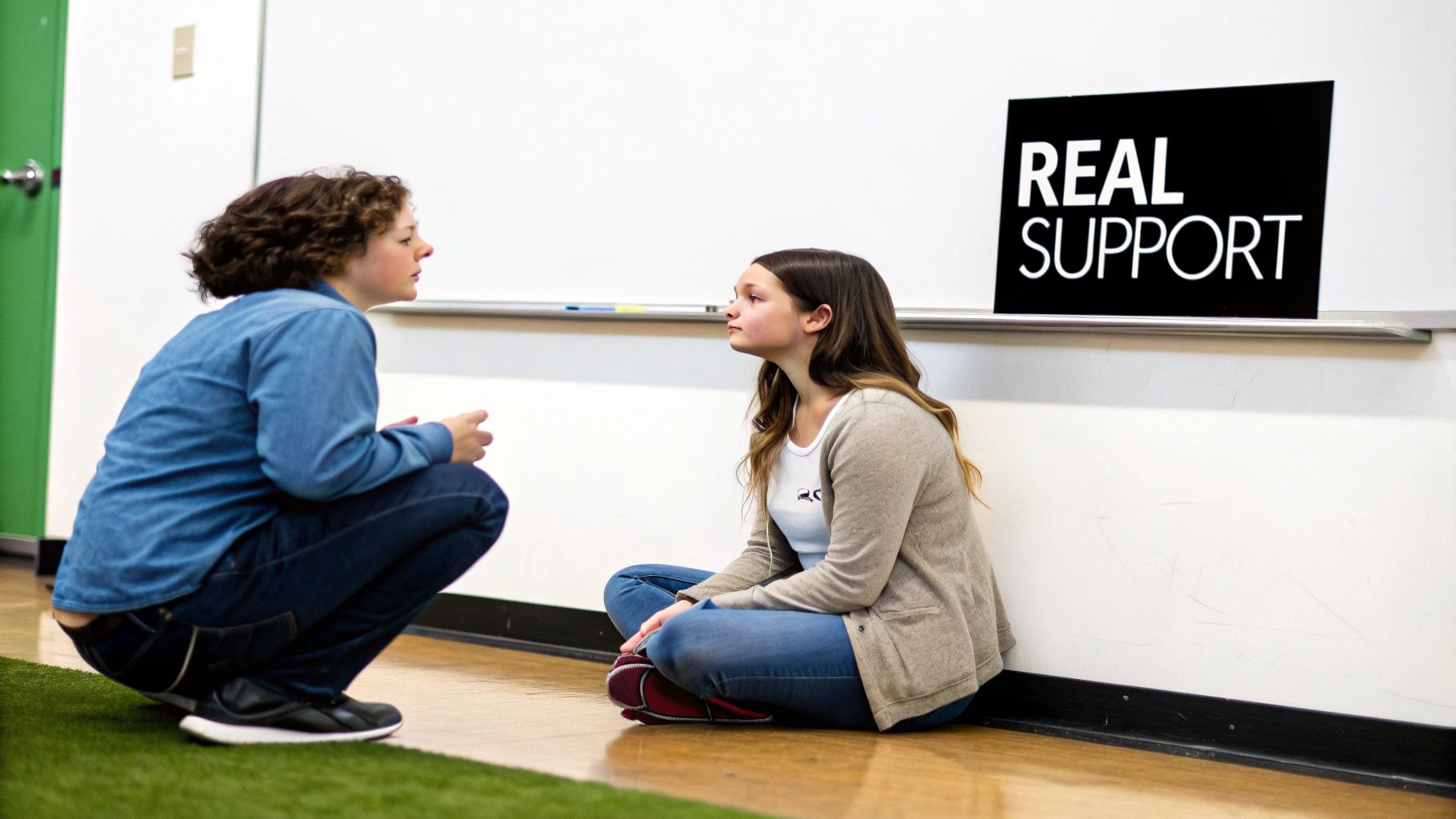
Picture a child named Leo, just starting Year 7 at a big, intimidating new school where he doesn’t know a soul. The noisy corridors and crowded lunch hall are completely overwhelming, and he spends his first week eating alone, feeling totally invisible. Your heart aches just thinking about it.
His form tutor notices he’s not speaking up in class and seems to be on his own. This is where pastoral care clicks into gear.
Instead of waiting for Leo to pluck up the courage to ask for help, the tutor pairs him with a friendly Year 8 "buddy" to show him the ropes. She also schedules a couple of quiet check-ins with him each week, just to ask how things are going. Within a month, Leo has found his feet, made friends, and feels like he finally belongs. This is the heart of pastoral care: noticing the quiet ones and building bridges for them so they don't have to walk the path alone. Sadly, without this support, a child might become a target, which is why it's so important to know the signs of bullying.
Great pastoral care is proactive, not just reactive. It doesn't wait for a crisis to happen; it creates an environment where every child feels seen and supported from their very first day.
The Student Overwhelmed By Exams
Now, think of Maya, a conscientious Year 11 student who is usually on top of all her work. As GCSEs loom, the pressure starts to mount. She begins missing deadlines, seems tearful in class, and eventually tells her Head of Year that she "can't do it anymore." It’s a moment of pure panic that every parent dreads.
A purely academic response would be to drill down on revision techniques. A pastoral response goes much deeper.
The pastoral lead sits down with Maya, not to talk about grades, but to talk about her. Together, they map out a manageable study plan, building in regular breaks for things she enjoys, and arrange sessions on stress-management techniques. Maya is reassured that her value as a person isn't defined by her exam results. This support helps her regain a sense of control, manage her anxiety, and approach her exams with quiet confidence.
The Young Carer Balancing Two Worlds
Finally, let's consider the unique and often hidden challenges faced by a young carer. This is a growing dimension of pastoral care, with over 54,000 pupils identified as young carers in UK schools in 2023/24. It’s a powerful reminder that support systems must extend beyond the school gates into complex family situations. You can discover more about the challenges faced by young carers in the latest government statistics.
For a student juggling these responsibilities, a school with strong pastoral care offers a vital lifeline. Imagine a child trying to focus on homework while worrying about a parent at home. For them, support might mean:
- Flexibility with homework deadlines when things are tough at home, offered with kindness and no questions asked.
- A designated staff member they can talk to openly, without any judgement, who becomes their trusted confidant.
- Discreet emotional and practical support to make sure they don’t fall behind and can still just be a child.
These stories show that pastoral care is a deeply personal and compassionate response. It’s the school’s way of saying to every single child, "We see you, we understand your journey, and we are here to help you succeed."
How To Spot A School That Truly Cares
Every parent wants to be sure a school's promise of great pastoral care is more than just a glossy page in a prospectus. Knowing what to look for is the key to finding an environment where your child will be genuinely seen, supported, and understood.
The signs of a school that really gets it right are woven into the fabric of its daily life. You can feel it in the atmosphere—in how people talk to each other, in the policies they’re proud to display, and in the proactive way the whole community approaches wellbeing. It’s about looking past the league tables to find the true heart of the school.
Look For The Visible Signs
When you visit a school, whether in person or for a virtual open day, keep your eyes peeled for concrete proof of their commitment. These signs show that pastoral care is an active, living priority for every child, not just an afterthought ticked off a list.
You should be able to spot things like:
- A Clear Anti-Bullying Policy: Is it up on the walls and easy to find on their website? More importantly, ask students if they know about it and believe it’s actually enforced. Does it feel like a policy that truly protects children?
- Proactive Mental Health Initiatives: Look for posters advertising mindfulness clubs, wellbeing workshops, or talks on managing exam stress. This shows the school is giving students tools for life, not just for passing tests.
- Open Communication Channels: How easy is it for you to get in touch? Is there a clear contact for raising a concern, and do staff seem genuinely approachable? A school that values partnership with parents makes you feel welcome and heard.
Ask The Right Questions
A school tour or a meeting with staff is your chance to dig a little deeper. The right questions can cut through the marketing spiel and reveal what’s really going on behind the scenes. Don't be afraid to ask for specific examples—it’s what separates a practiced speech from genuine practice.
Moving beyond generalities is key. Asking "How do you…" instead of "Do you…" encourages a much more detailed and honest response, giving you a real insight into their daily practices.
Here are a few powerful questions to have ready for a pastoral lead or headteacher:
- "Can you share an example of how you supported a student who was struggling emotionally?" This tests their ability to talk about individualised, compassionate care rather than just policy. Listen for the empathy in their voice.
- "What kind of mental health and wellbeing training do your teachers receive?" Ongoing professional development shows a serious, long-term commitment to equipping staff to support their students properly.
- "How do you gather feedback from students about their wellbeing?" This tells you if they are actively listening to the children through surveys, student councils, or even just informal check-ins. Do they truly value what your child thinks and feels?
- "How is a student's wellbeing communicated between different members of staff?" This reveals how joined-up their internal support system really is. A problem spotted by a maths teacher needs to get to the form tutor.
By looking for these signs and asking these questions, you empower yourself to find a school where the promise of care is a daily reality. You’re looking for a community that doesn't just educate your child's mind, but also nurtures their spirit.
Your Role In Your Child’s Wellbeing Partnership
When it comes to your child's wellbeing, the most powerful support system is a strong partnership between home and school. Think of yourself as a vital member of the pastoral care team, because you bring insights into your child’s world—their hopes, their fears, their little quirks—that nobody else can.
This collaborative spirit ensures your child feels consistently supported, whether they’re in the classroom or at the kitchen table. It creates a seamless net of care, catching any worries before they grow and making your child feel encircled by love and support.
True pastoral care is a whole-school effort, but it’s also deeply personal to each child's journey. By keeping the lines of communication open, you help the school see the complete picture. Don't hesitate to share your concerns early, celebrate their triumphs with their teachers, and work together to navigate any challenges that come along.
Choosing a school with outstanding pastoral care is one of the most significant investments you can make in your child’s happiness and future. It's about finding a place where they don't just learn—they flourish.
To strengthen this partnership from home, you might explore simple, proven practices that build resilience. For example, understanding the scientific benefits of meditation can give you effective tools to help your child manage stress and feel more in control, reinforcing the brilliant foundation of care you and their school are building together.
Your Questions About Pastoral Care, Answered
Navigating the world of school support can bring up a lot of questions. Here are clear, straightforward answers to some of the most common queries parents have when trying to understand what pastoral care in schools means for their child.
What’s the Difference Between Pastoral Care and Safeguarding?
It’s easy to get these two mixed up, but they play very different roles. Think of pastoral care as the entire, welcoming circle of support built around your child's wellbeing. It's the daily check-ins, the friendship guidance, and the mental health initiatives that help them feel happy and confident at school. It's the warmth and kindness your child experiences every day.
Safeguarding, on the other hand, is a specific and non-negotiable part of that circle. Its job is laser-focused: to protect children from harm, abuse, and neglect. While all safeguarding falls under the umbrella of pastoral care, the broader pastoral system is what nurtures a child's emotional and social growth, helping them to truly flourish.
How Do I Raise a Concern About My Child?
If you feel something isn't right, your first port of call should always be the person who knows your child best in the school setting: their Form Tutor or Class Teacher. They see your child every day and are perfectly placed to notice the small things and offer immediate support.
Should the issue feel more serious, or if you need to escalate it, the next person to contact is usually the Head of Year or the school's dedicated Pastoral Lead. The most important thing is to communicate openly and as early as you can. Offering gentle, specific examples of what you've noticed—"My child seems unusually quiet after school" or "They've stopped talking about their friends"—can be incredibly helpful for them.
A parent's instinct is a powerful thing. A good school will always welcome your insights and see you as a key partner in supporting your child. Your voice is essential, and you should never feel hesitant to use it.
How Is Support Provided for Special Educational Needs?
If your child has special educational needs (SEN), you’ll want to see evidence of truly personalised support that goes far beyond just ticking boxes. A great starting point is to find out if the school has a dedicated SENCO (Special Educational Needs Coordinator) and whether you can speak with them directly.
Ask them how they create, review, and adapt individual support plans like Education, Health and Care Plans (EHCPs). More than that, try to get a feel for the school’s culture. You're looking for genuine inclusivity, a place where every child’s unique needs are not just accommodated but are properly understood, respected, and championed by the entire school community, so your child can feel proud of who they are.
At Queens Online School, we place pastoral care at the very heart of our educational approach. Our dedicated team works in close partnership with parents to ensure every child feels seen, supported, and empowered to thrive. Discover our commitment to student wellbeing.