

For many families, the idea of home education doesn't start with a grand plan. It often begins as a quiet, persistent question whispered in the late hours: Is there a better way for my child?
The journey into home schooling online in the UK usually comes from a place of deep love and concern—a feeling that the traditional system just isn't nurturing your child's unique spark. You watch them come home, a little more of their light dimmed each day, and you know something has to change. This isn't just about grades; it's about giving them back their childhood and their love for learning.
Why Families Are Choosing Online Home Schooling
Imagine a bright, curious child who slowly starts to fade in a busy classroom of thirty. Perhaps they're overwhelmed by the noise, anxious about social pressures, or simply bored by a curriculum that moves too fast or too slow. They come home drained, their natural love for learning dimmed. As a parent, your heart aches seeing their confidence chip away.
This feeling is a powerful signal that something needs to change. This scenario is becoming more and more common, and it’s driving a significant shift in education. Parents are looking for alternatives that can reignite their child's confidence and passion for knowledge.
A Shift Towards Child-Centred Learning
The core motivation is simple: to put your child’s emotional and academic needs first. An online setting provides a calm, focused space, free from the distractions and social anxieties that can crush a child's spirit in a conventional school. This is especially true for children who need a different pace or have specific learning requirements.
For instance, think of a child with dyslexia who feels constant pressure in a fast-paced English class. Online, they can pause a recording, use assistive technology without feeling singled out, and take the time they need to truly understand the text. This isn't just a different way to learn; it's a lifeline.
The benefits parents are looking for often include:
- A Personalised Pace: Giving a child the freedom to spend a whole week on a tricky maths concept without feeling "behind," or to race ahead in history because they're utterly fascinated by the Tudors.
- A Safer Environment: Creating a supportive space away from bullying or overwhelming social dynamics, which is so critical for a child's mental wellbeing and self-worth.
- Flexible Schedules: Making room for a child's elite sports training, frequent medical appointments, or simply the ability to learn when they are most alert, not when a bell tells them to.
This growing movement reflects a profound change in how parents see education. It’s about prioritising a child’s happiness and wellbeing over institutional tradition and creating a learning journey that truly fits them.
The Growing Trend in the UK
This isn't just a niche movement; it's a rapidly expanding educational choice. Official UK government data revealed a staggering 111,700 children were registered for elective home education (EHE), a 21.4% increase from the year before. This explosive growth shows a clear shift in what parents want for their children.
Choosing to explore home schooling online in the UK is about reclaiming your child's education and watching them blossom in an environment built just for them. If you’re interested in a deeper dive, you can learn more about the benefits of home education in our detailed guide.
Navigating the Legal Path to Home Education
The idea of handling official paperwork can feel like the biggest hurdle when you first consider home education. It’s natural to feel a knot of anxiety, worrying about getting it right and meeting your legal obligations. But in reality, starting your journey into home schooling online in the UK is often far more straightforward and empowering than you might think.
At its core, your legal responsibility is refreshingly simple: you must provide a full-time education that is suitable for your child’s age, ability, and aptitude. Crucially, this does not mean you are legally required to follow the National Curriculum to the letter. This freedom is what allows you to find an educational path that truly fits your child, rather than trying to force them into a system where they feel lost.
This decision-tree helps to visualise the core question many parents face when they start thinking about this path.
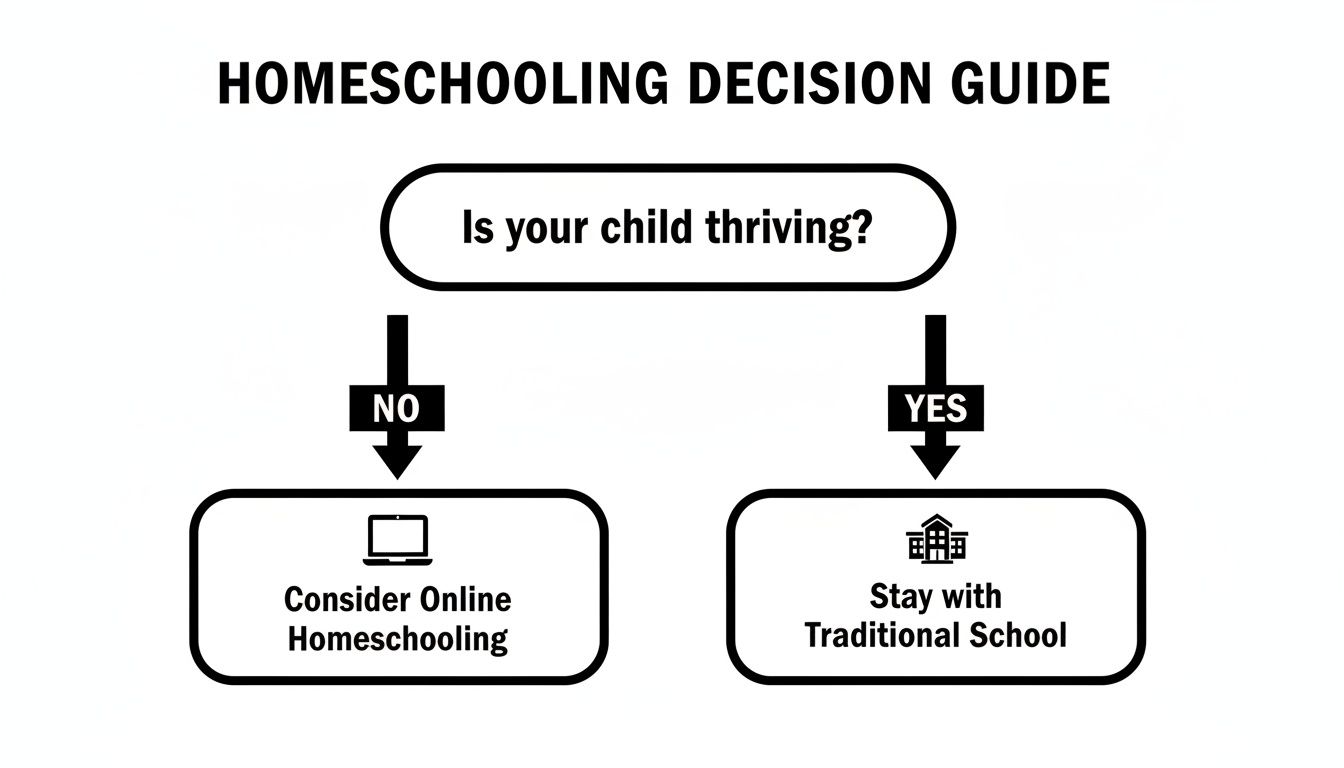
As the infographic shows, the journey often begins with a simple, honest assessment: is my child truly flourishing where they are now? For many, the answer is a painful "no," and online homeschooling becomes the positive, hopeful solution.
Taking the First Official Step
If your child is currently enrolled in a mainstream school in England and Wales, the process officially starts when you formally withdraw them. This is done by sending a straightforward de-registration letter to the headteacher. Once the school receives it, they are legally obligated to take your child off the register and notify the Local Authority (LA).
It's a step that can feel huge, but it is your legal right. For a child who has been dreading the school gates every morning, that letter can represent the first day of a new, more hopeful chapter. You aren't asking for permission; you are informing the school of your decision to take direct responsibility for your child's education.
"The moment you decide to home educate, you are stepping into the role of your child's primary educational advocate. The law supports you in this, provided the education you arrange is suitable and full-time."
The exact process does vary slightly across the UK:
- England and Wales: A formal letter to the headteacher is usually all that’s needed. The only exception is if your child attends a special school, where you will need the council's consent first.
- Scotland: Here, you must ask for consent from your local council to withdraw your child from a state school. This is a key difference, but permission is typically granted without any issues.
- Northern Ireland: You are required to notify the Education Authority (EA) directly of your intention to home educate.
Communicating with Your Local Authority
After you’ve de-registered, your LA may get in touch to ask about the educational provision you’ve arranged. Remember, your duty is to provide an education, not to replicate a school timetable down to the minute. You can simply provide an overview of your approach—for example, explaining that your child is enrolled in an accredited online school and sharing a brief outline of the curriculum to show how it meets their needs.
Maintaining a confident, professional tone is key. You are the one making the best decision for your child. For families looking for more detailed guidance on this process, our in-depth guide on how to start homeschooling covers these initial stages thoroughly. Your confidence will only grow as you watch your child begin to thrive in their new, supportive learning environment.
How Online Schools Recreate the Classroom Experience
So many parents I speak to share the same worry: will online schooling mean my child is just isolated, staring blankly at a screen all day? It’s a completely natural fear. We picture our children alone in their rooms and our hearts sink. But the reality of a modern online classroom is often a vibrant, engaging, and deeply social experience that puts a child’s needs right at the centre.
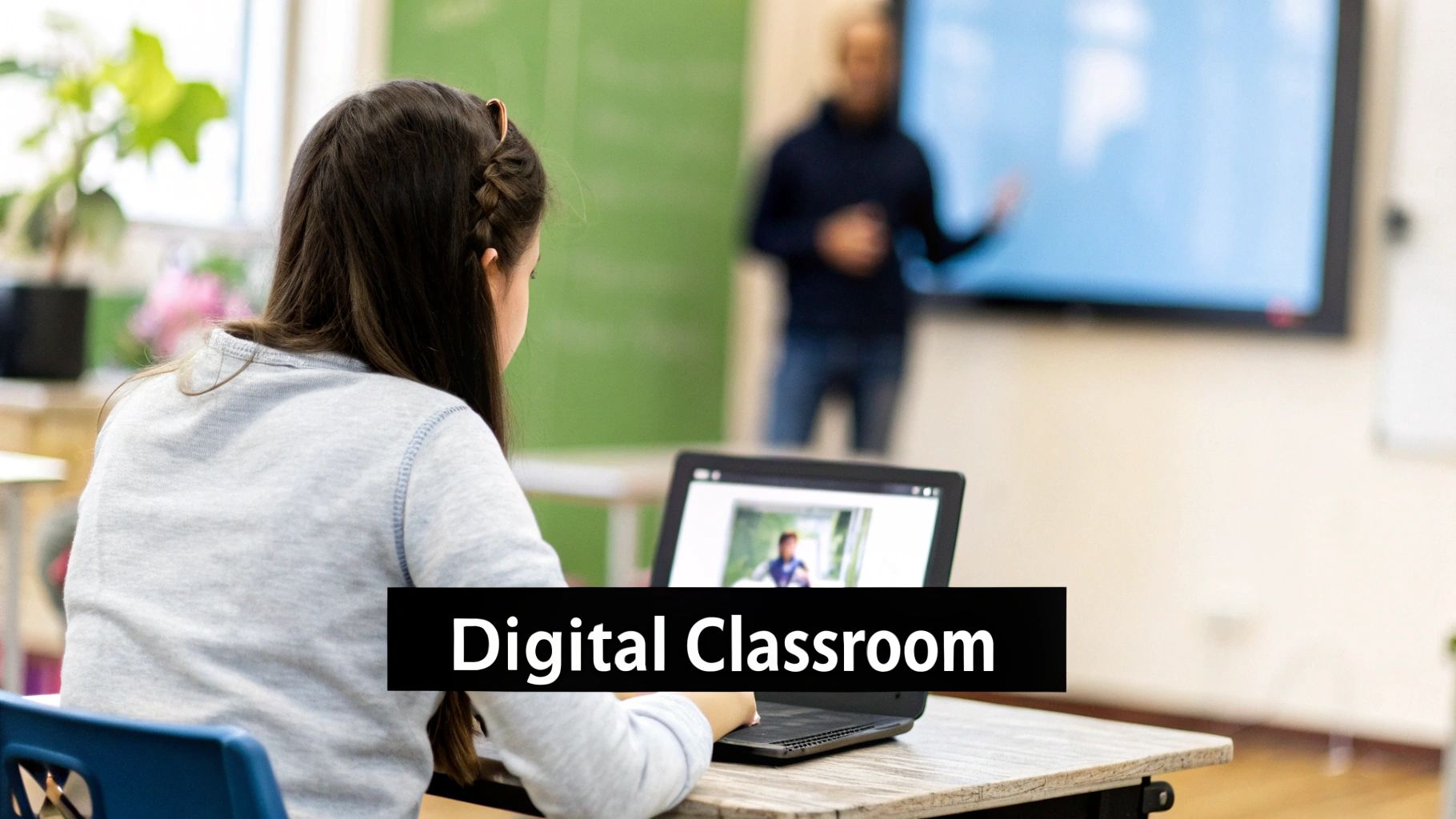
It’s time to forget that image of lonely, passive learning. Instead, picture a lively 'digital campus.' This is a space where your child logs in not just to watch pre-recorded videos, but to participate in real-time, teacher-led lessons. They can raise a virtual hand to ask a question, jump into class discussions, and get instant, encouraging feedback from their teacher, just as they would in a physical classroom.
This interactive format is specifically designed to keep children engaged and connected. It’s a million miles from the passive screen time we often dread. The goal of quality home schooling online in the UK is to build a genuine community, not just deliver information.
A Day in the Life of an Online Student
To really get a feel for how this works, let’s follow a Year 10 student named Chloe through a typical day. Her experience shows the blend of structured learning and vital social connection that defines a great online school.
Chloe’s day begins not with a stressful commute, but with a calm login from her desk at home.
- 9:00 AM – Interactive Science Lab: First up is Biology. The teacher uses a digital whiteboard to explain cell division, and students use interactive tools to label diagrams together. Chloe, who used to be too shy to speak up, is put into a virtual breakout room with three classmates to solve a problem. They laugh as they work it out together, discussing ideas just as they would around a table.
- 11:00 AM – Collaborative History Project: In History, the class is studying World War I. The teacher shares historical documents and video clips right on screen. Chloe and her project partner use a shared online document to collaborate on a presentation, building real teamwork skills as they research and write together in real time.
- 2:00 PM – Live English Literature Seminar: The afternoon brings an English lesson on poetry. The small class size means every single student gets a chance to share their interpretation of a poem. The teacher skilfully facilitates a respectful debate, encouraging critical thinking and confident communication. Chloe shares an idea, and the teacher praises her insight, making her feel seen and valued.
This structure ensures children are active participants in their education. It’s about so much more than absorbing facts; it’s about rebuilding the confidence to ask questions, learning to work with others, and rediscovering the joy of sharing ideas in a supportive community.
Building Friendships Beyond the Screen
One of the biggest emotional hurdles for parents is friendship. How can a child possibly build meaningful bonds without a physical playground? The best online schools foster this intentionally through a whole range of methods.
Breakout rooms for group projects are often where the first connections spark. Working towards a common goal helps students get to know each other’s personalities and strengths in a low-pressure way. But beyond the formal lessons, schools organise virtual clubs and social events.
Just imagine your child, who may have felt lost in the crowd at their old school, excitedly joining:
- A virtual chess club where they can finally connect with other kids who share their passion for strategy.
- An online art exhibition showcasing their work, where they receive praise and encouragement from peers and teachers.
- A student council where their voice is heard, helping to shape the school community and build their leadership skills.
These activities are the digital equivalent of after-school clubs. They provide a relaxed, fun setting for children to bond over shared interests, build lasting friendships, and develop crucial social skills. This structured approach helps recreate the incidental socialisation of a traditional school in a more focused and intentional way. Understanding the dynamics of learning in virtual environments is key to appreciating how these connections are nurtured.
For a child who found the noise and pressure of a big, busy physical school overwhelming, this can be a much gentler and more effective way to build their social confidence.
Choosing the Right Online School for Your Child
Choosing the right online school isn’t just a logistical decision; it’s a deeply personal one. You’re not just selecting a curriculum; you're finding a community where your child will feel seen, supported, and genuinely excited to learn again.
It’s easy to feel a bit lost in all the options. But think of it like finding the right doctor for your child. You need to look past the website and get a feel for the genuine care and expertise underneath. Is it a place where your child won’t just get by, but truly thrive? Trust your parental instincts—they're your most valuable guide on this journey.
Start with the Foundations: Accreditation and Qualifications
Before you get into the finer details, the first thing to check is the school's credentials. This is the bedrock of your child’s academic future and your peace of mind. Accreditation is the official stamp of approval from an external body, confirming the school meets high standards for teaching, resources, and overall quality.
For families exploring home schooling online in the UK, a name you should look for is Pearson Edexcel. As one of the UK’s largest awarding bodies, their approval is a powerful sign of a school's credibility. It’s not just a logo on a website—it means the school is authorised to deliver official courses that lead to globally recognised qualifications.
Next, have a close look at the qualifications on offer. If your child is heading towards their secondary years, you need to see a clear path to the qualifications that matter.
- International GCSEs (iGCSEs): These are respected across the globe and create a brilliant foundation for more advanced study.
- A-Levels: These are the gold standard for university entry in the UK and are highly regarded by top universities worldwide.
When an online school offers these, it ensures your child’s hard work translates into credentials that open doors, giving them the exact same opportunities as their peers in traditional schools.
Look Deeper: Teacher Expertise and Class Size
Once the fundamentals are solid, it’s time to look at the heart of the school: its teachers and the learning environment. A fantastic curriculum is only as good as the person bringing it to life. You’re not just looking for a subject expert; you need an educator who knows how to connect with your child and spark their curiosity through a screen.
Don’t be shy about asking direct questions. A great practical example is to ask: "If my child is struggling to grasp a concept in maths, what is your teacher's specific process for helping them?" The answer will reveal their approach to individual support. Are the teachers qualified UK educators with specific experience in teaching online? How does the school invest in their professional development? A passionate, well-supported teacher is what turns a lesson from something your child just watches into something they truly experience.
The magic of a great education happens when a student feels connected—to their teacher and their classmates. In an online school, small class sizes aren't a luxury; they are essential for building those vital relationships.
Small classes, often with fewer than 15 students, make genuine interaction possible. It means your child won’t ever be just another face in a digital crowd. They’ll feel confident enough to ask questions, join in discussions, and get the kind of personalised, encouraging feedback that helps them grow.
Don't Overlook Pastoral Care and SEN Support
This is where you focus on your child as a whole person, not just a student. Strong academic results are always built on a foundation of wellbeing. You know your child best—so how will this school look after their emotional and social health?
Pastoral care is that crucial support network that helps children navigate the ups and downs of school life. In a great online school, this looks like:
- A Dedicated Mentor or Tutor: A consistent point of contact who checks in regularly, not just about homework, but about how your child is feeling. Someone who notices if they seem a bit quiet in lessons and reaches out.
- Wellbeing Programmes: Easy access to resources that build resilience, teach mindfulness, and promote healthy digital habits.
- A Robust Anti-Bullying Policy: A clear, zero-tolerance approach that ensures every child feels safe and respected.
For children with Special Educational Needs (SEN), this focus becomes even more critical. A truly inclusive online school won't just accommodate SEN students; it will empower them. For instance, a child with ADHD could benefit from a PLP that includes scheduled movement breaks and uses interactive tools to maintain focus. Look for schools offering Personalised Learning Plans (PLPs), dedicated SEN coordinators (SENCOs), and teachers who are trained in adaptive teaching methods. This is how you find an environment tailored to your child’s unique needs—a space where they can finally unlock their true potential.
To help you keep track of everything, we've put together a simple checklist. Use it as you speak with different schools to compare them methodically and make an informed choice.
Your Online School Evaluation Checklist
| Feature to Check | Question to Ask the Provider | Notes/Provider's Answer |
|---|---|---|
| Accreditation | Are you accredited by a recognised UK awarding body like Pearson Edexcel? | |
| Qualifications | Do you offer a clear pathway to iGCSEs and A-Levels? | |
| Teacher Credentials | Are your teachers UK-qualified and experienced in online teaching? | |
| Class Size | What is the maximum number of students per live lesson? | |
| Pastoral Support | Is there a dedicated mentor for each student? What does your wellbeing programme include? | |
| SEN/SEMH Support | Do you have a dedicated SENCO? Can you provide an example of a Personalised Learning Plan? | |
| Technology & Platform | Can we have a demo of the learning platform? Is live tech support available for students? | |
| Social Interaction | What opportunities are there for students to socialise, like clubs or group projects? | |
| Parent Communication | How often will I receive progress reports? How can I communicate with teachers? | |
| Trial Period/Taster Day | Do you offer a taster lesson or a trial period so my child can experience the school first-hand? |
This checklist is your starting point. Remember to add your own questions based on what matters most to your child and your family. Finding the right fit is a process of discovery, and every question you ask brings you one step closer to the perfect online school for your child.
The Practicalities: Costs and Qualifications
Right, let's get down to brass tacks. For most parents, two questions loom largest when they consider online schooling: How much is this going to cost? And will my child get the qualifications they need to succeed?
These aren't just details; they're the bedrock of your decision. Getting clear, honest answers is the only way you'll feel that sense of relief and confidence about the path ahead.
The financial side of online schooling in the UK isn't a single price tag. Think of it as a spectrum. At one end, you have basic curriculum subscriptions. At the other, you'll find fully immersive online schools with live, interactive teaching every single day. The investment you make is directly tied to the level of hands-on support and expert teaching your child receives.
What Are You Really Paying For?
It’s easy to get fixated on a number when you see a fee. But the real question is about value. What is this investment actually delivering for your child? For a child who has been struggling with anxiety or falling behind, the value of seeing them rediscover their confidence and reignite a love for learning is, frankly, immeasurable.
A high-quality online school’s fees will typically cover a whole range of essential services:
- Expert Live Teaching: This is the heart of it all. Your child gets direct access to qualified, subject-specialist teachers in small, engaging classes where they can't get lost at the back.
- A Full Curriculum: No hidden extras. This includes all the digital resources, online textbooks, and specialist software needed for their courses.
- Pastoral and Wellbeing Support: You’re not just buying lessons. You’re investing in access to mentors, tutors, and wellbeing programmes that support your child’s emotional and mental health.
- Technical Support: When tech issues crop up (and they do!), you need help on hand to get things running smoothly so learning isn't disrupted.
And don't forget the hidden savings. When you move away from a physical school, you suddenly cut out the cost of uniforms, daily transport, expensive school trips, and a dozen other miscellaneous fees. For many families, these savings can significantly offset the investment in online education.
From Online Lessons to Official Qualifications
This is probably the biggest anxiety for parents: how on earth does my child get their GCSEs and A-Levels? Are they "real" qualifications? It’s a fear that keeps many parents up at night.
The answer is a clear, resounding yes.
Accredited online schools teach the very same curriculum—often the internationally respected Pearson Edexcel syllabus—as top independent physical schools. Your child will study the same subjects, cover the same material, and prepare for the exact same exams. The only difference is the delivery method, which is designed to be more flexible and supportive for your child.
The goal isn't to offer an "alternative" qualification. It's to provide a better, more personalised path to the very same globally recognised credentials. Universities and employers hold iGCSEs and A-Levels earned via an accredited online provider in the exact same high regard.
This reassurance is vital. It means that when your child puts in the work, their efforts are rewarded with qualifications that open doors to top universities and future careers, both in the UK and worldwide.
How Students Actually Sit Their Exams
So, how does it work in practice? It's actually a very straightforward and well-managed system.
When exam time rolls around, your child is registered as a private candidate. Your online school then supports you in finding and booking a spot at a registered physical exam centre near your home. These are official venues where students sit their invigilated exams alongside other private candidates, ensuring the entire process is formal and fair.
A practical example: Your school might provide a list of approved centres in your county, advise you on booking deadlines, and send all the necessary academic information directly to the exam officer. They take the administrative weight off your shoulders, making the whole journey feel seamless. It’s a proven path that thousands of students navigate successfully every single year.
Fostering Social Skills and Wellbeing Online
Let’s be honest, this is probably the biggest worry for parents thinking about this path: socialisation. Will my child be isolated? Will they miss out on making friends? It’s a completely understandable fear, born from a deep desire for our children to be happy and connected. A high-quality home schooling online programme in the UK is built from the ground up to address this head-on.
The reality is, a vibrant online community doesn't just spring up by accident; it's carefully and intentionally built. A modern online school's job isn't just to deliver lessons, but to create a thriving, interactive space where children feel a real sense of belonging and can forge genuine friendships. For many, it's a far safer and more inclusive environment than the chaos of a physical playground.
More Than Just Lessons
Friendships grow from shared experiences and laughter. While collaborating on academic work in breakout rooms is a solid start, the real connections often happen in the virtual extra-curricular activities that mirror—and frequently expand upon—what traditional schools offer.
Think about it. A child who was perhaps too shy to speak up in a class of thirty might just find their voice in an online debate club. A budding artist can connect with creative peers from all over the country by showcasing their work in a virtual art show. These aren't just add-ons; they are vital for building a child's sense of self.
A great online school will have a whole host of clubs and societies, such as:
- Coding workshops where your tech-savvy child can collaborate on real projects with others who 'get' them.
- A student council giving your child an actual say in their school’s culture, empowering them to see they can make a difference.
- Online chess tournaments for those who love a good strategic challenge.
- Virtual book clubs where young readers can geek out over their favourite stories without feeling judged.
These clubs allow children to bond over things they genuinely love, forming friendships based on personality and mutual respect, far from the social pressures of the schoolyard.
A Foundation of Wellbeing
A child's ability to build social skills is tied directly to how safe and supported they feel. This is where dedicated pastoral care becomes the absolute cornerstone of the online school experience. For many children, especially those who've had negative experiences like bullying, the online world can feel like a sanctuary.
The most effective online schools operate with a zero-tolerance anti-bullying policy, creating a monitored and respectful space. This focus on safety allows a child's confidence to grow, empowering them to engage socially without fear.
This commitment to wellbeing is woven into the very fabric of the school. It means regular check-ins with a dedicated mentor who cares about your child’s emotional state, not just their grades. A practical example: a mentor noticing your child has been less participative for a few days and reaching out with a private message just to ask, "Is everything okay?". It also means proactive support, like mindfulness sessions built into the timetable to teach children valuable skills for managing stress and focus.
To keep your child's learning environment protected, it's also smart to think about setting up effective parental controls on their devices. This adds an extra layer of security and gives you peace of mind while they learn and socialise.
For a child who felt lost in the crowd or overlooked in a traditional school, this intense focus on individual wellbeing can be the key that unlocks their true potential. It allows them to build lasting friendships and develop the social confidence they need to thrive.
Your Questions Answered: A Final Look at Online Homeschooling
Embarking on this journey is a big step, and it’s completely normal to have a few lingering questions. Making sure you feel confident and at peace with your choice is what matters most. Here are some straightforward answers to the queries we often hear from families weighing up home schooling online in the UK.
Is Online Schooling a Good Fit for Children with SEN or Anxiety?
Absolutely. For many children with Special Educational Needs (SEN) or those struggling with anxiety, the online environment can feel like a breath of fresh air. A good online school offers a calmer, less overwhelming setting with smaller classes and personalised learning that puts your child’s wellbeing first.
For example, a child with social anxiety can participate in class via text chat until they feel confident enough to use their microphone. This gentle, phased approach simply isn't possible in a bustling physical classroom. Learning from the safety of home can dramatically reduce triggers, allowing a child’s true academic potential to finally shine through.
How Do Students Take Official GCSE and A-Level Exams?
This is a very common worry, but thankfully, the process is well-established and straightforward. Students in online schools are prepared for the very same official exams as their peers in traditional schools. The online school handles all the teaching and curriculum, then walks you through the simple process of registering your child as a ‘private candidate’ at an approved exam centre.
These are physical locations—often local schools or colleges—where your child will sit their invigilated exams alongside other students. Your online school will provide full support in finding a convenient centre and managing all the paperwork, making it a smooth and stress-free experience.
Can My Child Get into a Top University After Online Schooling?
Yes, without a doubt. Leading universities, including the prestigious Russell Group, view qualifications earned through accredited online schools in exactly the same light as those from any physical school. What matters to admissions tutors are the final exam grades and the quality of the personal statement—both of which a high-quality online school is fully equipped to help your child excel at.
For instance, the flexible schedule allows a driven A-Level student to pursue in-depth volunteering or work experience related to their chosen degree, making their university application stand out. And if you're wondering how to create the structure that helps achieve those top grades, this ultimate homeschool daily schedule template guide offers some fantastic, practical advice.
Choosing the right educational path is one of the most profound acts of love you can undertake for your child. If your heart tells you that a more personalised, supportive, and flexible approach could be the key to unlocking their happiness and potential, we invite you to explore what Queens Online School can offer.
Discover our accredited programmes and see how we put your child’s wellbeing and future success at the very centre of everything we do. Learn more at Queens Online School.