


If you’ve ever felt a pang of worry that the traditional school system isn’t quite the right fit for your child, you’re certainly not alone. Choosing online home education isn't about giving up; it's a powerful, proactive decision for families who want to place their child's unique emotional and academic needs right at the very centre of their world.
A New Path for Your Child's Education
Does the thought of the morning school run fill you with a familiar dread? For many parents, it’s not just the chaotic rush. It’s the nagging worry about whether their child will feel seen, heard, and truly supported in a classroom of thirty other pupils.
Perhaps you have a wonderfully creative and curious child who feels their spirit dampened by a rigid curriculum. Or maybe you have a sensitive soul who finds the playground politics and social pressures completely overwhelming, coming home exhausted and withdrawn. It's a heartbreaking feeling to watch your bright child fade.
This feeling of disconnect is becoming more and more common. In fact, local authorities across the UK reported a staggering 111,700 children were in elective home education in autumn 2024. That’s a 21.4% increase from the previous year. It’s clear that things like overcrowded classrooms and growing concerns over mental health are pushing families to find a better, kinder way.
Moving Beyond the Myths
The idea of online learning can understandably bring a few worries to the surface. Will my child be lonely? Will they fall behind academically? Will I be able to do this? These are completely valid questions born of love and concern, but modern online home education is a world away from the old stereotype of a child learning alone at the kitchen table.
A structured online school offers the best of both worlds. Imagine the relief of watching your child log into a live, interactive lesson with a qualified subject expert who knows their name, their passions, and their unique way of learning. Picture them collaborating on projects with classmates from all over the globe, building genuine friendships in a safe, moderated environment. The focus shifts from simply surviving school to truly thriving.
"Placing a child's emotional wellbeing at the heart of their education isn't a luxury; it's the foundation upon which all true learning is built. When a child feels safe, respected, and understood, their capacity to engage, question, and grow becomes limitless."
This approach reframes the entire educational journey. It’s not about escaping a system that isn't working, but about consciously choosing an environment designed from the ground up to help your child flourish. You can explore the many benefits of home education in our detailed guide to see how it fosters independence and a genuine love for learning.
A Community from the Comfort of Home
Concerns about socialisation and academic standards are often the biggest hurdles for parents considering this path. But a high-quality online school provides a built-in community and a recognised curriculum, taking the pressure off you.
It offers expert teachers, a global group of peers, and a clear route to official qualifications, all from the comfort and safety of home. For a broader look at home-based learning, you can find helpful resources on general homeschooling practices. Ultimately, this choice empowers you to give your child an education that fits them—not one that forces them to fit into a box.
Finding the Right Online Learning Model for Your Child
Every child has their own unique rhythm, a distinct way of seeing the world and taking in new ideas. The real beauty of online home education is its power to honour that individuality. It ditches the one-size-fits-all model, offering different ways to learn that you can match to your child’s personality and your family’s daily life.
Getting to grips with these models is the first step toward building an education that feels joyful and exciting for your child, not like a chore. It’s all about choosing a structure that makes them feel seen and understood.
Your child’s journey is one of a kind, and this decision tree can help you picture the different pathways available.

As you can see, feeling let down by traditional schooling is often just the beginning. It can be a starting point that leads to all sorts of successful outcomes, from accredited university courses to passion-led learning.
Live Classes or Learning on Their Own Schedule
The biggest choice you'll likely face is between synchronous (live) and asynchronous (self-paced) learning. You could think of it like choosing between a live concert and listening to a recorded album—both give you the music, but the experience is completely different and suits different personalities.
Synchronous learning is the live concert. Your child logs into a virtual classroom at specific times for real-time lessons with a teacher and classmates. This model is fantastic for the child who thrives on routine, loves getting immediate feedback, and lights up with social interaction.
- A Day in the Life: Picture 10-year-old Leo, who adores asking questions. His day kicks off at 9 am with a live maths class where he can raise his virtual hand and get an instant, kind explanation from his teacher. Later, he might work with a small group of classmates in a breakout room to build a presentation on the Roman Empire, laughing and sharing ideas. The clear structure and peer connection keep him totally engaged and happy.
On the other hand, asynchronous learning is like having a personal album. Lessons, materials, and assignments are pre-recorded and ready whenever your child is. They can work through everything at their own pace, at a time and place that suits their unique energy levels.
- A Day in the Life: Now think of 16-year-old Maya, a dedicated gymnast who trains for hours every morning. A traditional school schedule would leave her exhausted. Instead, she tackles her A-Level Biology coursework in the afternoons, pausing videos to scribble detailed notes and re-watching tricky explanations until she feels a rush of confidence. This flexibility means she can chase her athletic dreams without ever compromising her academic goals.
For many families, the perfect solution isn't strictly one or the other but a blend of both. It's about finding a rhythm that clicks for your child. Many online schools are now exploring hybrid approaches, and you can learn more about how these models merge in our guide explaining what blended learning is and how it supports different student needs.
School-Led Structure or Parent-Led Freedom
Another key fork in the road is deciding who directs the learning. You can either partner with a full-service online school that provides a complete curriculum, or you can take a more hands-on, parent-led approach.
A school-led model gives you a complete educational package, which can feel like a huge weight off your shoulders. Accredited schools like Queens Online School provide qualified teachers, a structured timetable following the British curriculum, official exam pathways, and a ready-made social community. This option is ideal for parents who want expert guidance and the peace of mind that all academic bases are covered, allowing them to focus on being their child's emotional support.
A parent-led approach puts you firmly in the driver's seat. You’re the one curating resources, designing lessons, and guiding your child’s learning journey directly. This path offers incredible freedom and is wonderful for families who want to build a curriculum entirely around their child’s unique passions, like a deep dive into marine biology or ancient history. It does, however, require a significant investment of time, energy, and confidence in covering all the necessary subjects and legal requirements.
Deciding between these models isn't about right or wrong; it's about what’s right for your family and your child.
Choosing Your Online Learning Path
| Feature | Synchronous (Live Classes) | Asynchronous (Self-Paced) | School-Led (e.g., Queens Online School) |
|---|---|---|---|
| Pacing | Teacher-led, follows a set timetable. | Student-led, completely flexible. | A structured timetable provides daily rhythm. |
| Social Interaction | High. Real-time interaction with peers and teachers. | Low to moderate. Usually via forums or messaging. | High. Live classes, clubs, and school events. |
| Teacher Support | Immediate. Direct access during live lessons. | Delayed. Via email or scheduled calls. | Immediate and ongoing. Live lessons plus 1-to-1 support. |
| Best For | Children who need structure and social connection. | Self-motivated learners or those with busy schedules. | Families wanting a comprehensive, accredited education. |
| Parental Role | Supportive and supervisory. | Highly involved, often acting as the primary teacher. | Partnership. Parents support while the school handles academics. |
Ultimately, the best path is the one that allows your child to flourish. Whether that’s in a bustling live classroom or through quiet, independent study, the goal is to create an environment where they feel seen, supported, and inspired to learn.
Navigating UK Legal Requirements and Curriculum Pathways
Deciding to bring your child’s education home with an online school feels like a huge, empowering step. But that initial excitement can be followed by a wave of practical questions: What are the rules? Am I legally responsible for everything? And how can I be sure my child will get the qualifications they need and deserve?
The great news is that the process is far more straightforward and supportive than you might think. Let's clear up the confusion and replace the worry with confidence.
Understanding your legal responsibilities is the first hurdle, and it’s an easy one to clear. In the UK, the law is refreshingly simple: education is compulsory, but going to school is not. This gives you the right to educate your child at home, so long as you provide a suitable, full-time education that’s right for their age, ability, and any special educational needs they have.
Yes, the responsibility ultimately rests with you as the parent. But when you partner with an accredited online school, you are absolutely not doing it alone. You have a whole team of qualified teachers delivering a structured curriculum, which makes meeting those legal requirements feel almost effortless and lets you focus on supporting your child.
Taking the First Practical Steps
For most families, the journey starts by formally withdrawing their child from their current school. This is a simple but vital step. All you need to do is write a letter to the headteacher, clearly stating your intention to de-register your child to begin elective home education.
Once the school gets your letter, they’ll take your child off the roll and let the local authority know. It’s a common myth that you need the school's permission—you don’t. You are simply informing them of a decision you have made for your child's wellbeing.
From there, your local authority has a duty to make sure children in the area are receiving a suitable education. They might make an informal enquiry, perhaps asking you to share a few details about your plans. This isn't an inspection or a test; it’s just a supportive check-in. Explaining that your child is enrolled in a structured online home education programme that follows the British curriculum is usually more than enough to give them complete confidence in your choice.
Charting the Academic Journey to University
One of the biggest anxieties for any parent is making sure their child’s education leads to properly recognised qualifications, opening up a future full of possibilities. This is where choosing an accredited online provider is so important. A well-established online school maps out a clear academic pathway from primary right through to university entrance.
That path is built on the solid foundation of the British curriculum. If you’re thinking about this route, it’s worth taking a closer look at the specifics of a UK homeschooling curriculum to see how it all fits together. It’s designed for seamless progression through:
- Key Stages 2 & 3: This is where we build the essential knowledge in core subjects like English, Maths, and Science, alongside humanities and creative arts. Crucially, your child is taught by subject specialists who are passionate about their field.
- GCSEs (Key Stage 4): Students begin to focus on a range of subjects that lead to internationally recognised qualifications. This is the critical phase where their academic record for higher education really starts to take shape, allowing them to pursue their interests.
- A-Levels (Sixth Form): The final step before university. Students specialise in the subjects they're truly passionate about, earning the exact qualifications they need for their UCAS applications and future careers.
More and more families are realising this is a viable and successful route. In England alone, the number of homeschooled students jumped from 86,000 to 97,000 in 2023, following a huge 34% rise between 2020 and 2021. This trend, accelerated by post-lockdown concerns, shows just how many families are finding security and success in accredited online learning. You can discover more insights about this growth in homeschooling and what’s driving it.
By choosing an online school that is an approved examination centre for bodies like Pearson Edexcel, you ensure the qualifications your child earns are identical to those from any top physical school.
This completely removes any doubt about their validity. It means that when your child finishes their A-Levels, they hold the very same respected credentials that open doors to top universities in the UK and around the world. Their education at home becomes a direct and credible route to achieving their ambitions, giving you complete peace of mind.
Creating a Safe, Supportive Learning Space at Home
Real education goes far beyond textbooks and tests. It’s about nurturing the whole child. For some children, the constant noise, social pressures, and sensory overload of a mainstream school can feel less like a place to learn and more like an emotional battlefield. This is especially true for pupils with Special Educational Needs (SEN) or those facing Social, Emotional, and Mental Health (SEMH) challenges.
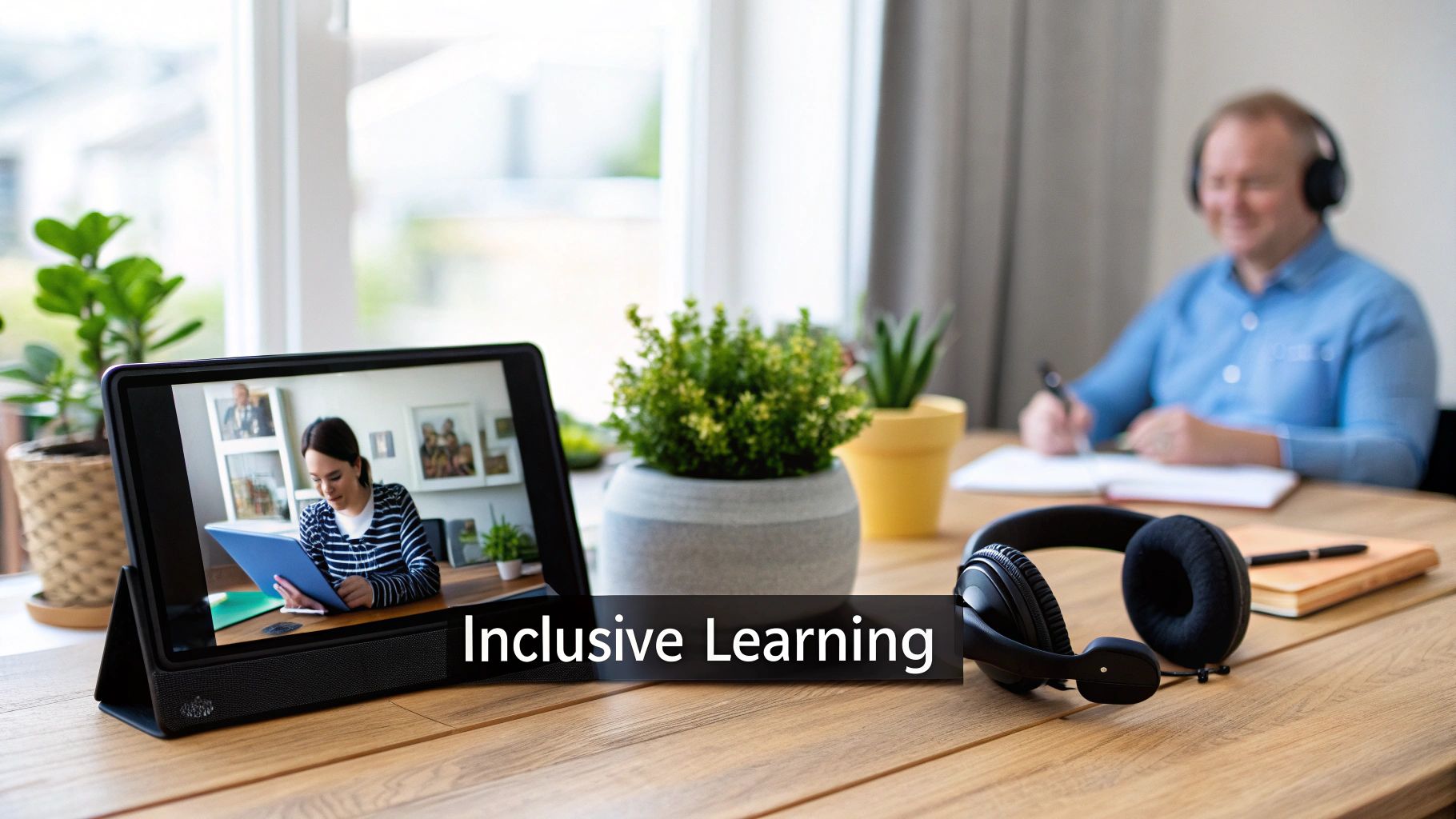
Online home education can completely transform this experience. It gives you the power to create a true sanctuary for learning—a space where your child feels emotionally and physically safe enough to lower their guard and just be themselves. Think about it: their classroom becomes a calm, familiar room, free from the anxieties that can make it so hard to focus. This sense of security is the bedrock on which genuine confidence is built.
When a child feels safe, they’re far more willing to ask questions, make mistakes, and really throw themselves into their learning. This supportive setting can be the key that finally unlocks the brilliant potential you've always known was inside them.
Personalised Attention in Small Classes
One of the most powerful and life-changing features of a high-quality online school is the small class size. In a typical mainstream classroom, a single teacher’s attention is split between thirty or more pupils, making individual support a huge daily struggle. Online, the model is flipped on its head.
With intentionally small groups, teachers can get to know every single student personally. They quickly learn their strengths, understand their struggles, and can pivot their teaching methods in the moment to suit each child's unique learning style. This isn’t just a minor perk; for many children, it’s the difference between feeling lost in the crowd and feeling truly seen and valued.
- For example: A child with dyslexia might feel mortified reading aloud in a large class, but in a small online group, a teacher can discreetly provide digital tools and extra time. Or consider a student with ADHD who finds it hard to sit through long, passive lessons. They can be kept engaged with interactive polls and frequent, direct questions that are much easier to manage in a focused virtual setting where they feel safe to participate.
This kind of focused attention ensures no child slips through the cracks. It turns learning from a one-way lecture into a genuine conversation, building a strong, trusting relationship between the teacher and your child.
Building a Community Where Everyone Belongs
A nurturing environment isn’t just about academics. It’s about creating a community where every student feels they have a place. This is where a school’s culture and policies really matter, showing its true heart.
"Safety is not just the absence of threat. It is the presence of connection. A child who feels connected to their peers and teachers in a positive way will have the courage to explore, learn, and grow without fear."
A strict, zero-tolerance bullying policy should be non-negotiable. In an online school, this is often easier to monitor and enforce, creating a space free from the kind of intimidation that can poison a child’s school years. It means your child can share their ideas without fear of being ridiculed, knowing they’re in a respectful and supportive group.
This positive culture is often backed up with resources that actively support wellbeing, such as:
- Mindfulness sessions to help students manage stress and improve focus.
- Dedicated pastoral support offering a safe, kind person to talk to about any worries.
- Virtual clubs and social events where friendships are built around shared interests, from gaming to creative writing.
This approach really pays off. The academic results from UK online home education are impressive, with homeschooled children often scoring 15-30% higher on standardised tests. With 111,700 children in elective home education by autumn 2024, the model's success is clear. In fact, 77% of learners find it as effective as in-person classes and 90% value its flexibility—a critical factor for families with SEN/SEMH needs. High-quality schools like Queens Online School are a perfect example of this, combining live British curriculum classes with specialist support to make sure every child gets a real chance to succeed. You can read the full findings about homeschooling efficacy to see the data for yourself.
Ultimately, the goal is to build an inclusive space where every student feels valued for exactly who they are. When a child’s confidence is allowed to blossom like this, they’re not only empowered to succeed academically but to thrive as well-rounded, resilient individuals.
Designing a Balanced and Successful School Day
The real magic of online home education isn't just about grades; it’s about creating a calm, joyful, and sustainable rhythm for your whole family. That promise of a flexible, child-centred education really comes to life when you put a bit of thought into how you structure the day. It’s all about finding a flow that feels natural, not forced, and protects that precious balance between learning and just being a family.
This starts by letting go of the rigid bell schedule we all remember from traditional school and embracing a more organic routine. The aim is to build a framework that works with your child's natural energy and curiosity, making learning a positive and integrated part of their day, not just a series of tasks to tick off. This is your chance to design a school day that truly works for them.
Creating Your Learning Zone
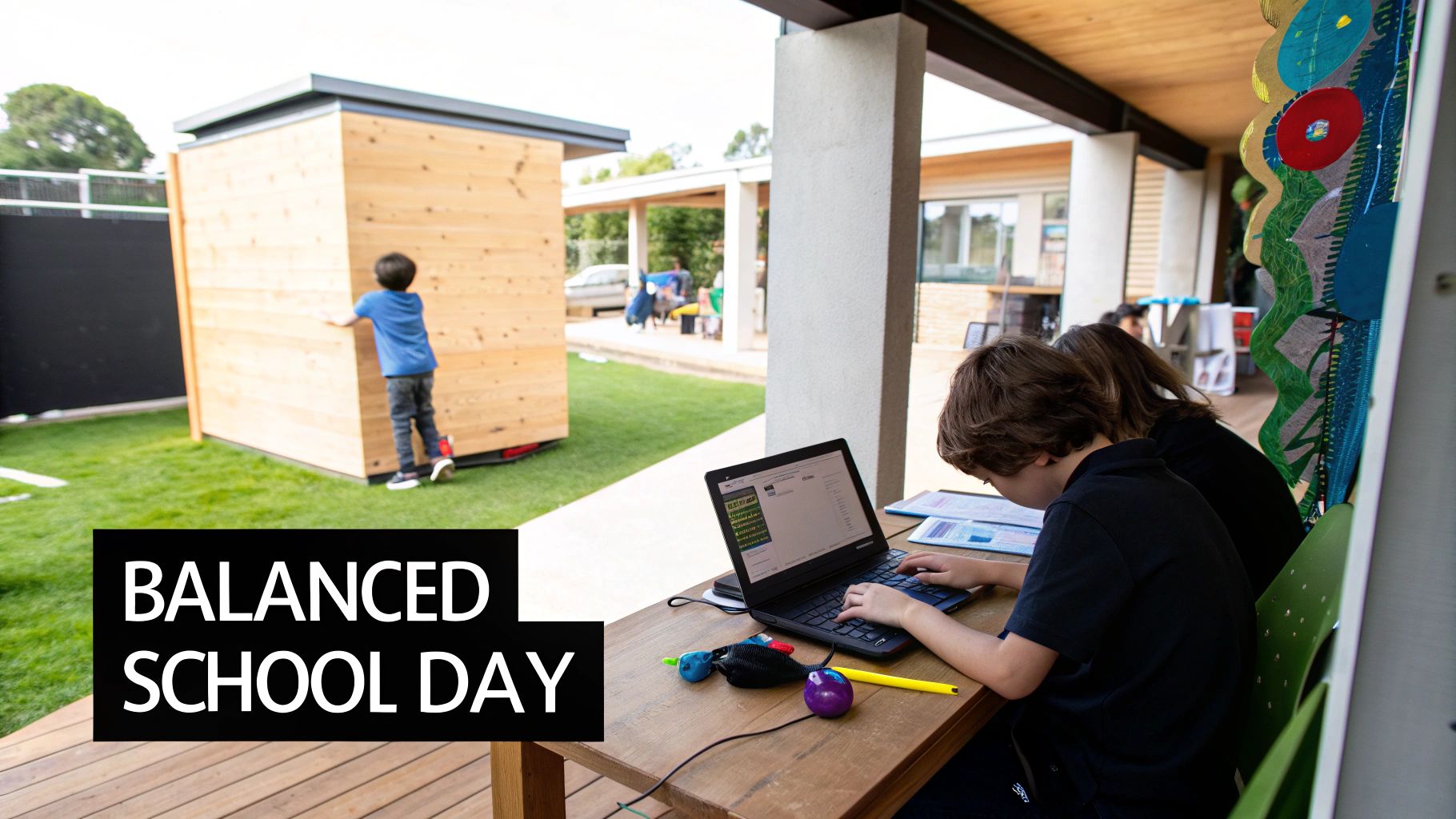
You don't need a picture-perfect, dedicated classroom to make this work. Honestly, even a small, designated corner of a room can signal to your child’s brain that it's time to focus. The secret ingredient is consistency.
Think of it as a psychological trigger. When your child sits down at their "school desk"—even if it's just a specific spot at the kitchen table that's been cleared of everything but their laptop and books—their mind automatically shifts into learning mode. Keep it tidy and free from distractions like toys or the TV remote. Having their pens, notebooks, and headphones within easy reach also cuts down on interruptions and helps them stay in the zone, feeling ready and in control.
A Sample Rhythm for Your Day
A good schedule is a framework, not a cage. It should have clear anchor points—like live lessons—but also plenty of wiggle room for life to happen. To really get a handle on managing your child's schedule and keep things structured, tools like a dedicated planner can be a lifesaver. You might find a great starting point with this guide to The Best Homeschool Planner For Parents.
Here’s what a balanced day could look like for a 9-year-old who has lots of morning energy:
- 9:00 – 9:45 AM Live Maths Lesson: Kick the day off with a structured, interactive class. It’s often best to tackle a trickier subject while your child is fresh and alert.
- 9:45 – 10:15 AM Movement Break: This is non-negotiable for a child's wellbeing. It could be a run around the garden, a quick bike ride, or even just a silly dance party in the living room to get the blood flowing and reset their focus.
- 10:15 – 11:00 AM Independent Study: Time to work on the maths assignments from the live lesson, which helps cement what they've just learned while it's still fresh in their mind.
- 11:00 – 12:00 PM Live English Lesson: Another core subject, ideally one that involves collaborative discussion with their teacher and classmates to spark creativity.
- 12:00 – 1:00 PM Lunch and Free Play: A complete break from screens and schoolwork is absolutely vital for recharging their minds and bodies. Let them choose what to do.
- 1:00 – 2:30 PM Creative Project Time: This block is for passion-led learning. They might be building a history diorama, writing a short story, or coding a simple game. This is where their unique interests can truly shine.
- 2:30 – 3:00 PM Quiet Reading: This helps them wind down academically while still expanding their vocabulary and imagination.
A common mistake is trying to replicate a seven-hour school day at home. Online home education is far more efficient. Because of the focused, one-on-one nature of the learning, you can often achieve more in three to four hours than a traditional school does in a full day. Don't feel guilty about the shorter day; celebrate the extra time for play and connection.
Protecting Your Family Time
Finally, the most important rule of all is knowing when to shut the laptop. When the school day is over, it’s over. Put the learning materials away, clear the desk, and fully transition back into family life. This clear separation is essential for preventing burnout—for both you and your child.
It reinforces that home is still home: a place for connection, relaxation, and play. By setting these boundaries, you protect your relationship, ensuring you remain their parent first and their learning facilitator second. That balance is the true heart of a happy and successful educational journey at home.
How to Choose the Right Online School for Your Child
Choosing an online school is one of the most significant and heartfelt decisions you can make for your child’s future. It’s about so much more than just picking a service; it’s about finding a true partner in their education. With so many options out there in the world of online home education, having a clear framework helps you move from feeling overwhelmed to feeling empowered and hopeful.
This is your chance to find a learning environment where your child doesn't just keep up, but genuinely comes alive. The right school will feel like a natural extension of your family’s values, prioritising your child’s emotional wellbeing just as much as their academic results.
Your Essential Evaluation Checklist
When you start talking to potential schools, use this checklist to steer the conversation. The answers you get will tell you everything you need to know about a school’s real commitment to putting children first. It’s not just about what they teach, but how they teach and the community they build around their students.
-
Teacher Qualifications and Expertise: Are the teachers qualified subject-matter experts in their fields? Dig a bit deeper and ask about their specific experience with online teaching. A brilliant classroom historian isn't automatically a brilliant online one; it takes a unique skill set to captivate and engage children through a screen, making them feel connected and inspired.
-
Class Sizes and Personal Attention: What is the absolute maximum number of students in a class? For your child to feel seen and heard, class sizes must be small. This is what allows for real interaction and ensures your child isn't just another face in a virtual crowd but a valued member of the class.
-
Curriculum and Official Accreditation: Is the curriculum fully accredited by a recognised body like Pearson? This is non-negotiable. It's the only way to ensure your child earns internationally respected GCSEs and A-Levels that will open doors to university and beyond.
Think of accreditation as a quality guarantee. It confirms that the school meets rigorous external standards for teaching, assessment, and student support, giving you complete peace of mind that your child's hard work will result in qualifications that are valued everywhere.
Questions That Reveal a School's Heart
Beyond the core academics, you need to get a feel for the school’s culture. These questions will help you look past the glossy brochures and understand how they support the whole child.
-
How do you support learners with SEN? Ask for specifics, not vague promises. "We offer bespoke support" is good, but "We provide a dedicated SEN specialist who works with each teacher to create an individual learning plan, including tools like text-to-speech software and extra time allowances" is better. A truly inclusive school will have a clear, well-resourced plan in place.
-
How do you foster social interaction? A great online school actively builds a community. Ask them about their virtual clubs, student leadership programmes, and any online social events they run. These are vital for helping your child build real, meaningful friendships based on shared interests, combating any potential for loneliness.
-
What is your approach to student wellbeing? How do they handle pastoral care? Is there a zero-tolerance policy on bullying? The answer to this question reveals whether they see their role as simply delivering lessons or as nurturing resilient, confident, and happy young people.
By using these benchmarks, you can confidently tell the difference between a basic online service and a school that is genuinely invested in your child's happiness and future. This careful evaluation ensures your final choice aligns perfectly with their needs and your family's aspirations.
Got Questions About Online Home Education? We've Got Answers
Even with all the information in the world, it’s completely normal to have a few questions still buzzing around. This is a huge, heartfelt decision for your family, and feeling totally confident is the final, most important step. Let's tackle some of the most common concerns parents raise when they’re thinking about making the switch.
Our goal here is to swap any lingering uncertainty for the reassurance you need, so you know you’re making a brilliant, informed choice for your child’s happiness and their future.
How Will My Child Make Friends and Develop Social Skills?
This is nearly always the first and biggest worry for parents, and it’s something any excellent online school takes very seriously. Far from being an afterthought, social development is woven right into the fabric of the school day. Picture your child in a live, interactive class with a small group of classmates. They aren't just staring at a screen; they're actively working together on projects, debating ideas in history, and figuring out problems as a team in science.
And it doesn't stop when the lesson ends. A vibrant school community offers loads of ways for children to connect.
- Virtual Clubs: Think of a coding club where your tech-loving child can build a game together with new friends, or a book club where your little reader can geek out over their favourite stories. These groups help children build real friendships based on things they genuinely love.
- Social Events: We’re talking online assemblies, themed spirit weeks, and even virtual talent shows. These events create that all-important sense of school spirit and belonging, making your child feel part of something bigger.
This whole setup allows your child to build meaningful relationships with peers from all sorts of backgrounds, all within a safe, moderated, and welcoming space.
Are Qualifications from an Online School Recognised by Universities?
Yes, absolutely—as long as you choose an accredited provider. This is a non-negotiable. For example, an online school that is a Pearson Approved Examination Centre ensures that students are studying for and sitting the exact same internationally recognised GCSE and A-Level examinations as their friends in traditional schools.
These qualifications are the gold standard, accepted and respected by top universities across the UK and the rest of the world. A good online school will also have a dedicated Sixth Form support system, helping students with their UCAS applications and interview skills to pave a clear and successful path to higher education. Your child's future opportunities will be just as bright, if not brighter.
What if My Child Has Special Educational Needs (SEN)?
Online home education can be a wonderfully positive and effective environment for learners with SEN. The hustle and bustle of a traditional school can often be overwhelming, but the calmer, home-based setting can dramatically reduce sensory overload and social anxiety, giving your child the mental space they need to learn.
The single biggest advantage is the personalised attention. With small class sizes, specialist teachers can really get to know your child, adapting how they teach to suit specific learning styles. For a child who has always felt misunderstood or left behind, this can be life-changing. They can offer immediate, one-on-one support in a way that’s simply impossible in a class of thirty, creating a nurturing space where your child can finally learn at their own pace and truly thrive.
At Queens Online School, we believe every child deserves an education where they feel seen, supported, and empowered to succeed. Our live, interactive classes, accredited British curriculum, and vibrant global community are designed to put your child’s needs at the very centre of their learning journey.
Discover how we can build the right educational path for your child by exploring our programmes at https://queensonlineschool.com.