

So, what exactly is Social Emotional Learning?
Imagine your child coming home, their shoulders slumped and a cloud of frustration hanging over them after a tough day. Social Emotional Learning (SEL) is the toolkit that helps them understand that feeling, put a name to it, and find a way through it, rather than letting it overwhelm them. It’s the process of developing the self-awareness, self-control, and interpersonal skills crucial for navigating the playground, the classroom, and eventually, the world. In short, SEL is about nurturing a child’s heart alongside their mind, helping them understand their feelings, connect with others, and make kind, thoughtful choices.
What Is Social Emotional Learning in Simple Terms?
Imagine your child is wrestling with a frustrating new maths problem. Their face scrunches up, their breathing gets shallow, and you can see a tantrum brewing. Now, imagine them stopping, taking a deep breath, and saying, "This is really hard, and I feel upset. Can you help me?" That shift, from an explosion of feeling to a moment of self-awareness and reaching out, is the heart of Social Emotional Learning.
It’s not some abstract theory; it's a set of practical, teachable skills that empower children to navigate their emotional and social worlds with confidence. It’s about honouring their feelings as valid and important.
Think of SEL as the ‘human skills’ that work alongside academic knowledge. Learning to read and write is obviously vital, but so is learning how to manage the butterflies in your stomach before a presentation, how to share a toy with a friend even when you really want to keep it, or how to truly listen when a friend is sad. These are the skills that pave the way for a happy, resilient, and fulfilling life.
More Than Just Feelings
Social Emotional Learning gives children the tools they need to build a strong foundation for well-being and resilience. It’s about equipping them to handle life's inevitable challenges, from the sting of being left out of a game to the mounting pressure of exams. The goal isn't just to create smart kids, but to nurture well-rounded, compassionate human beings who feel secure in who they are.
This involves helping them master key abilities like:
- Understanding Their Emotions: Recognising the hot, prickly feeling of anger or the warm glow of pride and knowing it’s okay to feel both.
- Managing Their Reactions: Learning to pause before acting, like choosing to use their words to express hurt instead of pushing a sibling.
- Showing Empathy for Others: Noticing a classmate sitting alone at lunch and feeling a pang of concern, then inviting them to join in.
- Making Thoughtful Decisions: Thinking about how their actions will make others feel before they act.
"At its core, SEL is about building an internal toolkit. It gives children the ability to understand who they are, what they are feeling, and how their actions impact others. These are the skills that turn academic potential into real-world success."
Ultimately, SEL is about putting a child's emotional needs right at the centre of their education. To dig deeper into the concepts that underpin this approach, it’s worth exploring What Is Emotional Intelligence and its profound impact on personal development. This mindset ensures we’re raising not just great students, but great people.
The Five Core Skills Your Child Needs for Emotional Growth
Social Emotional Learning might sound like another bit of educational jargon, but it’s really just about the simple, everyday skills your child uses to understand themselves, connect with others, and navigate the world. These skills are often grouped into five core areas that work together, building on each other to foster emotional intelligence and resilience.
When you look at these big ideas through the lens of your child’s small, everyday moments, they become much easier to understand and support. These aren't just abstract classroom concepts; they're the foundations of a happy, well-adjusted life. To really get a feel for this journey, it's helpful to see how these skills fit into the wider stages of child development by age.
Self-Awareness: The Ability to Look Inward
Think of self-awareness as your child’s inner mirror. It's their growing ability to recognise their own emotions, understand their strengths, and acknowledge their challenges without judgement.
A child with good self-awareness might say, "My tummy feels wobbly because I'm nervous about the school play." They aren't just feeling an emotion; they're identifying it and connecting it to a specific cause. This is a huge, empowering first step that tells them, "This feeling is normal, and I know why it's here."
Self-Management: Taking Control of Their Actions
Once a child knows what they're feeling, self-management is what they choose to do next. It’s about handling big emotions in a healthy way, resisting that first impulse, and staying focused on a goal, even when it’s hard.
Instead of throwing the game controller after losing, a child practising self-management might clutch their fists, take a deep breath, and say, "I'm so frustrated, I need a break." This shows they're learning to create a vital pause between feeling and reacting—a skill that helps them navigate disappointment and build resilience. Developing this skill is also key to encouraging independence in learning, as it helps them face academic hurdles without getting overwhelmed.
This infographic neatly shows how SEL connects a child's feelings to their friendships and the choices they make.
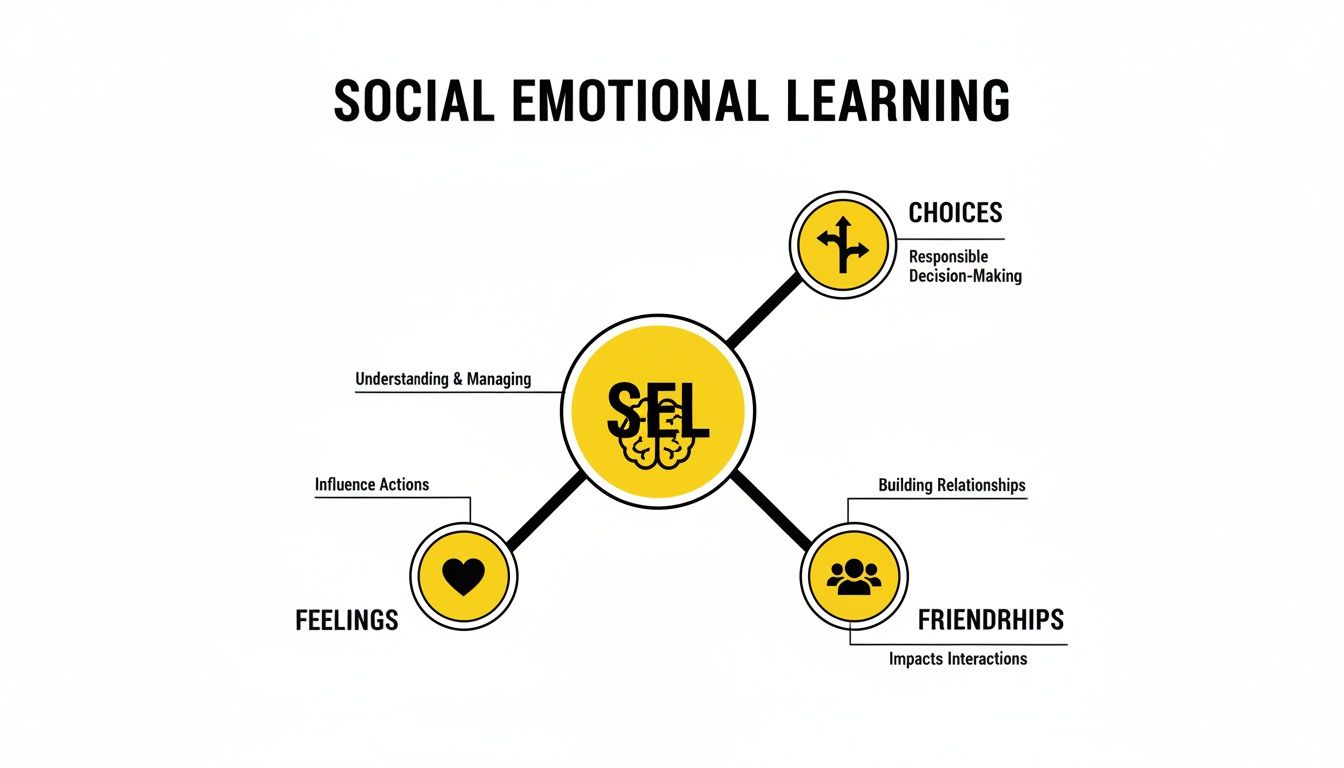
As you can see, getting a handle on emotions is directly tied to building better relationships and making smarter decisions.
Social Awareness: Seeing the World Through Others’ Eyes
This skill is all about empathy. It’s the ability to imagine what another person is feeling, to understand and respect their perspective, even if it's different from their own.
You see this in action when your child spots a friend crying on the playground and goes over to offer a hug or ask, "Are you okay?" In that moment, they are stepping outside of their own world, recognising the pain or sadness in someone else, and showing that they care. It's a beautiful, connecting impulse.
Relationship Skills: Building Positive Connections
This is where all the other skills come together. Relationship skills help your child build and maintain healthy, supportive connections with others through clear communication, active listening, cooperation, and knowing how to navigate disagreements with kindness.
When children learn to communicate their needs and listen to others, they build a foundation for strong, supportive friendships that can last a lifetime. This is about teaching them how to be a good friend, a supportive teammate, and a kind person.
Working together on a school project without arguing, sharing crayons with a sibling without being asked, or finding the courage to say "I'm sorry" after an argument are all powerful, real-world examples of strong relationship skills.
Responsible Decision-Making: Thinking Before They Act
The final piece of the puzzle is about making choices that are not only smart but also kind and ethical. It requires a child to pause and consider, "How will this choice make me feel? How will it make others feel?"
For example, when a child finds a toy on the playground and decides to hand it to a teacher instead of secretly pocketing it, they are making a responsible decision. They are weighing their desire for the toy against what’s right, showing a true sign of emotional and moral growth.
How Emotional Skills Boost Academic Success
Does dedicating time to ‘feelings’ detract from ‘real’ learning, like maths or science? It’s a common worry, but all the evidence shows the opposite is true. A child’s emotional state isn't separate from their ability to learn; it's fundamentally connected to it.
When we focus on social and emotional learning, we are building the very foundation that academic knowledge rests upon. Imagine trying to build a house on shaky ground. That's what it's like for a child overwhelmed by anxiety, frustration, or friendship troubles to try and learn. Their mind simply can't engage. Emotional skills are the key that unlocks their potential to learn.
From Emotional Well-being to Better Grades
Imagine a student staring at a tough exam paper. Without self-management skills, their racing heart and anxious thoughts—"I can't do this, everyone is smarter than me"—might take over, making it impossible to recall information they actually know.
Now, picture that same student. This time, they feel the panic rise, but they pause, take a deep breath, and tell themselves, "It’s okay to feel nervous. I’ve studied for this. I can try." That small act of self-regulation allows their brain to switch from panic mode to focus mode. It directly impacts their performance.
This link between emotional and academic growth is powerful. Here’s how specific SEL skills translate into real success in the classroom for your child:
- Self-Awareness: A child who can recognise, "I'm getting confused," knows to ask for help before they fall behind and feel lost.
- Self-Management: The ability to resist distractions and stay focused is critical for listening during lessons and actually finishing homework without a battle.
- Relationship Skills: A student who can communicate their ideas kindly and cooperate with peers feels more confident and happy in group projects and collaborative learning.
The Proof Is in the Classroom
This isn't just theory; it’s a reality we're seeing in schools across the country. The focus on Social Emotional Learning has grown significantly in the UK. By 2010, the SEAL programme was already used in 90% of primary schools and 70% of secondary schools.
A major analysis covering over 270,000 students found that such programmes had a clear, positive effect on academic performance, while also reducing emotional distress and behaviour problems. You can explore more about these findings on social and emotional learning to see the full picture.
When children feel safe, understood, and emotionally regulated, they show up to school more engaged, confident, and ready to learn. They are better equipped to face challenges, persevere through difficulty, and absorb new concepts.
Ultimately, these emotional skills are not a distraction from academics; they are an accelerator. By nurturing a child's emotional intelligence, we give them the tools to not only succeed in exams but to become resilient, lifelong learners prepared for any challenge life throws their way.
Bringing Social Emotional Learning to Life in the Classroom
So, how do we take the theory of social emotional learning and make it feel real and meaningful for a child during their school day? It’s far more than a one-off lesson on ‘being kind’. Great schools weave these skills into the very fabric of their classroom culture, turning everyday moments into powerful learning opportunities.
This integrated approach helps children see SEL not as just another subject, but as a way of being and interacting with the world. It’s about creating an environment where a child’s feelings are seen as valid and important, just as important as getting the right answer on a test. When these skills become part of the daily routine, they become second nature.
The urgency for this is stark. Recent findings show that young people in England are falling behind their international peers in these crucial life skills. The average score for 15/16-year-olds was -0.12 in the 2022 PISA assessments—below the OECD average of zero. This NFER research reveals a pressing need to sharpen the focus on SEL in UK education.
From Morning Greetings to History Lessons
What does this actually look like for your child? It starts the moment they walk through the door.
Many classrooms begin the day with a simple "feelings check-in," where each child can point to an emoji that shows how they’re feeling. This small ritual tells a child, "It’s okay to be happy, sad, or grumpy here," and gives teachers a gentle insight into who might need a quiet word or a bit of extra support that day.
But great SEL integration goes much deeper, touching every academic subject:
- In English: When reading a story, a teacher might ask, "How do you think the character felt in their heart when that happened? Have you ever felt that way?" This builds a bridge of empathy between the child and the story.
- In History: A lesson on a conflict could involve a discussion asking, "What might the children on each side have been feeling or fearing?" This encourages students to see the human emotions behind historical events.
- In Group Projects: The teacher's role becomes coaching children on how to share their ideas without interrupting, how to listen to a friend's suggestion, and how to say "I disagree" in a kind way.
Creating an Inclusive Space for Every Child
A key part of bringing SEL to life is ensuring every child feels seen, safe, and supported, no matter their background or learning needs. The best strategies are adapted to create a truly inclusive environment where emotional safety comes first.
SEL is the foundation of an inclusive classroom. It provides a common language for understanding ourselves and others, allowing every child to feel a true sense of belonging and know that their voice matters.
This commitment to supporting individual needs is a cornerstone of a well-rounded education. To understand more about how schools create supportive environments for all pupils, you can learn about what is inclusive education and its importance.
By tailoring activities and offering different ways for children to express their feelings, teachers ensure that SEL benefits every single learner, helping them build the confidence to succeed both in their studies and in life.
Simple and Effective SEL Activities for You to Do at Home
As a parent, your role in your child's emotional growth is absolutely central. While schools lay the groundwork, it’s in the safety and warmth of home that these skills truly blossom. You can strengthen their social and emotional learning in everyday moments, creating a powerful partnership that helps your child feel deeply understood and supported.
The key is to start small and connect with your heart. You don’t need complex lesson plans or fancy resources—just a bit of loving intention.
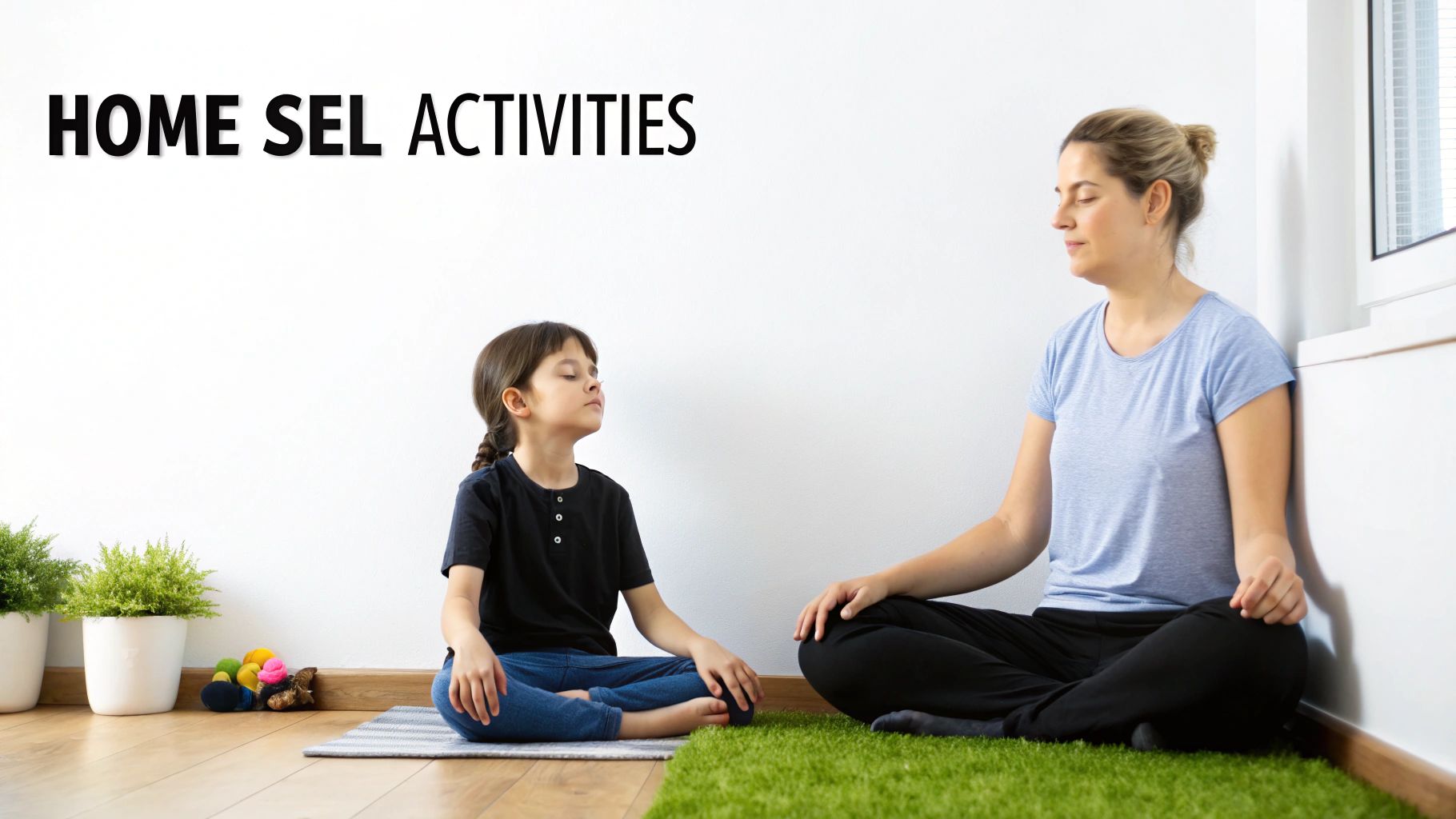
Start Meaningful Conversations
One of the most powerful things you can do is create a safe space for your child to open up about how they’re feeling. This all starts with asking questions from a place of genuine curiosity—questions that go beyond a quick "How was your day?"
Try these gentle conversation starters at the dinner table or at bedtime:
- "What was one thing today that made your heart feel happy?"
- "Was there anything that made you feel a bit sad or worried?"
- "Tell me about a time you were kind to someone today. How did that feel inside?"
When you listen without judgement, simply nodding and saying "I understand," you send your child the powerful message that their feelings matter. This helps them build self-awareness by gently guiding them to reflect on their own emotional world.
Turn Everyday Moments into Learning Opportunities
You can weave SEL into the activities you already do together. By reframing these moments, you can strengthen their emotional skills in a way that feels natural and fun.
A family movie night, for instance, is a perfect chance to explore empathy. You could pause and ask, "Oh, look at her face. What do you think she’s feeling right now?" or "That was a tricky choice he had to make. What would you have done?" This helps your child practise seeing situations from different perspectives. Even losing a board game can become a lesson in handling disappointment with grace.
By turning shared experiences into moments of reflection, you teach your child that emotions are a normal, discussable part of life. This normalisation is the heart of building emotional intelligence at home.
Create a Space for Calm and Regulation
When big feelings like anger or frustration take over, it's hard for any child to think clearly. A designated 'calm-down corner' can be a wonderful tool for teaching self-management. This isn't a time-out spot, but a safe, comforting haven your child can choose to go to when they feel overwhelmed.
Stock this corner with items that help them self-soothe:
- Comforting Objects: A soft blanket, a favourite stuffed toy they can hug, or some cosy cushions.
- Mindful Activities: Things like colouring books, a jar of glitter they can shake and watch settle, or some soft modelling clay to squeeze.
- Feeling identifiers: A chart with different feeling faces can help them point to and name their big emotion.
By encouraging them to use this space, you're giving them a practical strategy to handle their feelings. You're teaching them that it’s okay to feel upset and empowering them with the tools to find their way back to calm, knowing you are there for them.
Common Questions About Social Emotional Learning
As a parent, it's completely natural to have questions when you hear about new approaches in your child's education. And when it comes to something as personal as their emotional world, you want to be sure it’s genuinely helping your child thrive, not just adding another buzzword to their school day.
So, let's tackle some of the most common concerns. Our goal here is to show you that SEL isn’t just another educational trend. It’s a fundamental part of raising a resilient, well-rounded, and successful child who feels secure and ready for whatever life brings.
Is This Just a Passing Fad?
It’s a fair question. While the term "social emotional learning" might sound new, the ideas behind it are timeless. For generations, loving parents and great teachers have always known the importance of raising children to be kind, responsible, and able to manage their feelings.
SEL simply gives us a structured, intentional way to teach these essential life skills, rather than just hoping children will pick them up along the way. It’s backed by decades of research showing that these abilities are not just ‘nice-to-haves’—they are critical for a child's well-being, their ability to learn, and their future happiness. Think of it less as a fad and more as a deeper understanding of what children have always needed to feel whole.
How Do We Know If It Is Actually Working?
This is a great point. Measuring emotional growth isn't as simple as checking a maths test score, but the results of good SEL are plain to see in a child's everyday actions and feelings.
You'll see it when your child starts using words like "I feel frustrated" instead of having a meltdown. You’ll feel it in the gentle way they comfort a friend who is upset, or when they handle a disappointment with a new level of resilience. These moments are the real proof that the skills are taking root in their heart.
For instance, a child who learns to identify and manage their feelings is also much better prepared to deal with tricky social situations. Understanding the signs of bullying is vital, and SEL gives children the emotional confidence to speak up for themselves and for others when something feels wrong.
At its heart, you know SEL is working when you see your child navigating their world with more confidence, kindness, and resilience. It’s about watching them handle challenges, build positive relationships, and make thoughtful choices.
Can My Child Really Learn These Skills Online?
Absolutely. In fact, for many children, a well-designed online learning environment can be an even better place to develop these tender social and emotional skills.
Live, interactive online classes in small groups create a unique and safe space for children to practise. They learn how to listen actively when a classmate is sharing, how to express their own ideas clearly, and how to work together on projects with peers from different backgrounds. A child who may be shy in a busy classroom might find their voice in a smaller, more focused online setting.
In a supportive online school, teachers are specifically trained to nurture these skills. They create an encouraging atmosphere where every child feels seen, heard, and valued. It shows that emotional connection and growth can thrive anywhere that people care.
At Queens Online School, we integrate social and emotional learning into the very fabric of our curriculum. Our live, interactive classes and supportive community are designed to help your child not only excel academically but also grow into a confident, resilient individual. Discover how our approach to online education can empower your child's future.