

When you see your child struggling with words, it’s easy to feel a bit lost. Your heart aches as you watch their frustration build, and you’re left with far more questions than answers. But the simple truth is that dyslexia isn't a one-size-fits-all condition. Getting to grips with the different forms of dyslexia is the very first step toward providing the right kind of support for the child you love.
Each type comes with its own set of challenges, which means the difficulties one child faces might look completely different from another's.
Understanding Your Child's Unique Reading Journey
Watching a child you love wrestle with reading is tough. Homework can feel like a battleground, and it’s natural to worry when their bright, curious mind just doesn't seem to click with the words on a page. This guide is here to swap that uncertainty for understanding.
Let's reframe dyslexia not as a roadblock, but as a unique way your child's brain processes language. It's a common neurological difference—in the UK, dyslexia affects roughly 10% of the population, which translates to about 6.3 million people. It's crucial to remember that these reading difficulties have absolutely no bearing on a child's intelligence. That’s why it’s so important to see their strengths beyond the struggle.
To help make sense of it all, we’ve put together a quick guide to the different profiles.
Quick Guide to Dyslexia Profiles
This table offers a simple summary of the primary forms of dyslexia, their core challenges, and what they might look like in your child's daily life.
| Form of Dyslexia | Core Challenge | What to Look For (Example) |
|---|---|---|
| Phonological Dyslexia | Difficulty processing and manipulating the sounds in words. | Your child might say "pasghetti" instead of "spaghetti" or get stuck sounding out a simple word like 'cat' because blending the sounds /c/ /a/ /t/ feels impossible. |
| Surface Dyslexia | Difficulty recognising whole words by sight. | Reading is slow and tiring because they sound out every single word, even familiar ones like 'what' or 'where'. They might misread 'island' as 'is-land'. |
| Visual Dyslexia | Difficulty with visual processing and remembering letter shapes and sequences. | They might complain that words "wiggle" on the page, skip lines constantly, or mix up letters like 'b' and 'd' long after their friends have stopped. |
Think of these profiles as different pathways that all lead to the same destination: becoming a confident reader. Each just requires a slightly different map.
A Visual Guide to Dyslexia Profiles
The flowchart below illustrates the three main branches of dyslexia, helping to visualise how they differ.
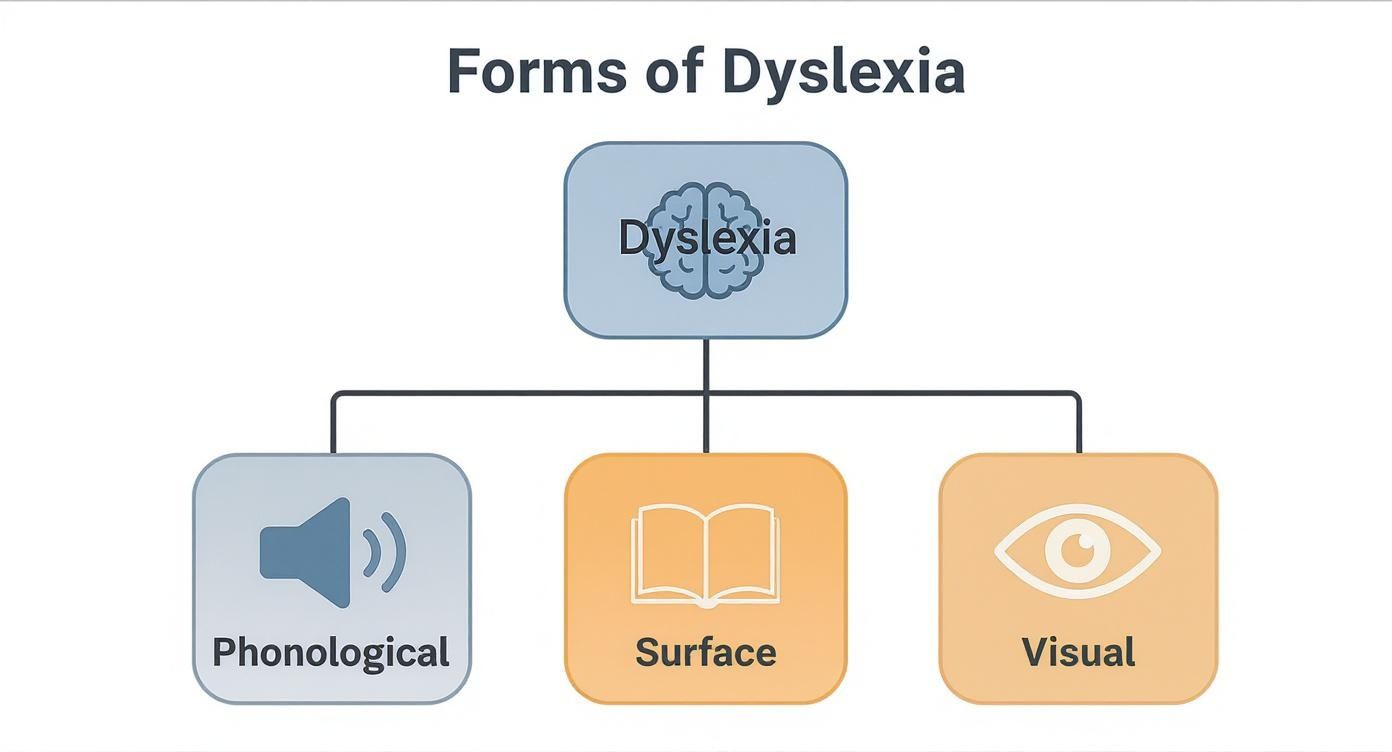
As the chart shows, while all forms of dyslexia impact reading, they stem from different core difficulties—whether it's processing sounds, recognising whole words, or visual perception. By exploring these profiles, you gain the insight needed to become their most effective advocate.
Understanding your child's specific challenges is the first, most powerful step toward celebrating their strengths and unlocking their full potential. It turns confusion into a clear, compassionate plan for support.
This journey is all about finding the right tools and strategies. As you learn more about the different forms of dyslexia, you'll discover new ways to help your child build both skills and confidence. For some targeted advice, you can learn how to improve reading comprehension in our detailed guide. Every small step you take in understanding their world is a giant leap in their learning journey.
Decoding the Sounds of Language with Phonological Dyslexia
Imagine handing your child a book filled with wonderful stories, but to them, the words are a secret code. They see the letters and know their names, but linking those symbols to the sounds they’re supposed to make feels like an impossible task. This is the daily reality for a child with phonological dyslexia, the most common of the different forms of dyslexia.
This isn’t about intelligence or effort. It’s a specific challenge with phonological awareness—the brain’s ability to hear, identify, and play with the individual sounds (phonemes) inside spoken words. Think of it like trying to build a LEGO house when you can’t quite feel the individual bricks; your child knows what the finished model should look like, but they can’t grasp the small parts needed to put it together.
When a teacher gently encourages a child with phonological dyslexia to "sound out" a word like butterfly, the request can set off a wave of panic. They might recognise the 'b', but retrieving the /b/ sound and holding onto it while tackling the next letter is a huge mental lift. The string of sounds—/b/ /u/ /t/ /t/ /er/ /f/ /l/ /y/—can feel jumbled and meaningless, rather than blending into a single, cohesive word.
What Does Phonological Dyslexia Look Like?
This difficulty with the sound structure of language shows up in ways that can be puzzling for both parents and teachers. It’s far more than just a reading problem; its roots lie in how the brain processes spoken language. You might even spot the signs in everyday activities, long before a child is expected to read.
A child might struggle with:
- Rhyming Games: Nursery rhymes and simple rhyming games that other children enjoy can be a source of real confusion. For them, the connection between "cat," "hat," and "mat" just isn't obvious. A simple game of 'I Spy' with a sound ("I spy something that starts with /s/") can feel impossible.
- Sounding Out New Words: They often rely on guessing from the first letter or using pictures as clues because the process of decoding is so mentally draining. You might see them guess 'horse' when the word is 'house'.
- Confusing Similar Sounds: Letters with similar sounds, like 'f' and 'v' or 'b' and 'p', are easily mixed up, both in their reading and spelling. They might write "big" when they mean "pig."
- Segmenting and Blending: Breaking a simple word like 'dog' into its individual sounds—/d/ /o/ /g/—or blending those sounds back together again is a major hurdle.
This constant battle can be incredibly frustrating. The child knows what they want to say and can understand complex stories when they are read aloud, yet the printed words on the page remain a stubborn barrier.
It's a profound disconnect between their bright, curious mind and their ability to decode language. This gap isn't a measure of their potential but a clear sign that they need a different key to unlock the world of reading.
Building Bridges from Sound to Symbol
The great news is that phonological dyslexia is well understood, and there are proven, effective ways to help. The main goal is to build a strong, explicit bridge between sounds and the letters that represent them. This isn't about mindlessly repeating phonics drills; it’s about making the sound-symbol connection tangible and multi-sensory.
Structured, systematic phonics programmes are the gold standard here. These approaches teach the relationships between sounds and letters in a logical, cumulative order, starting with the basics and building up from there. A child learns to feel how their mouth moves when making a sound, see the letter that represents it, and hear that sound on its own and within words. For example, a teacher might use a small mirror to help a child see the difference in their lip shape when making the /p/ and /b/ sounds. To learn about the wider spectrum of challenges, you can explore the different types of dyslexia in our comprehensive guide.
By focusing on strengthening these foundational auditory skills, we turn abstract letters back into meaningful sounds. For a child with phonological dyslexia, this is the breakthrough that transforms reading from a confusing puzzle into a code they can finally, and confidently, crack.
Making Sense of Words That Don't Look Right with Surface Dyslexia
Imagine trying to read a language where every single word is a completely unique picture. There are no reliable spelling rules to fall back on, so you have to memorise what each word looks like, one by one. This is exactly what reading feels like for a child with surface dyslexia, which is also known as orthographic dyslexia.
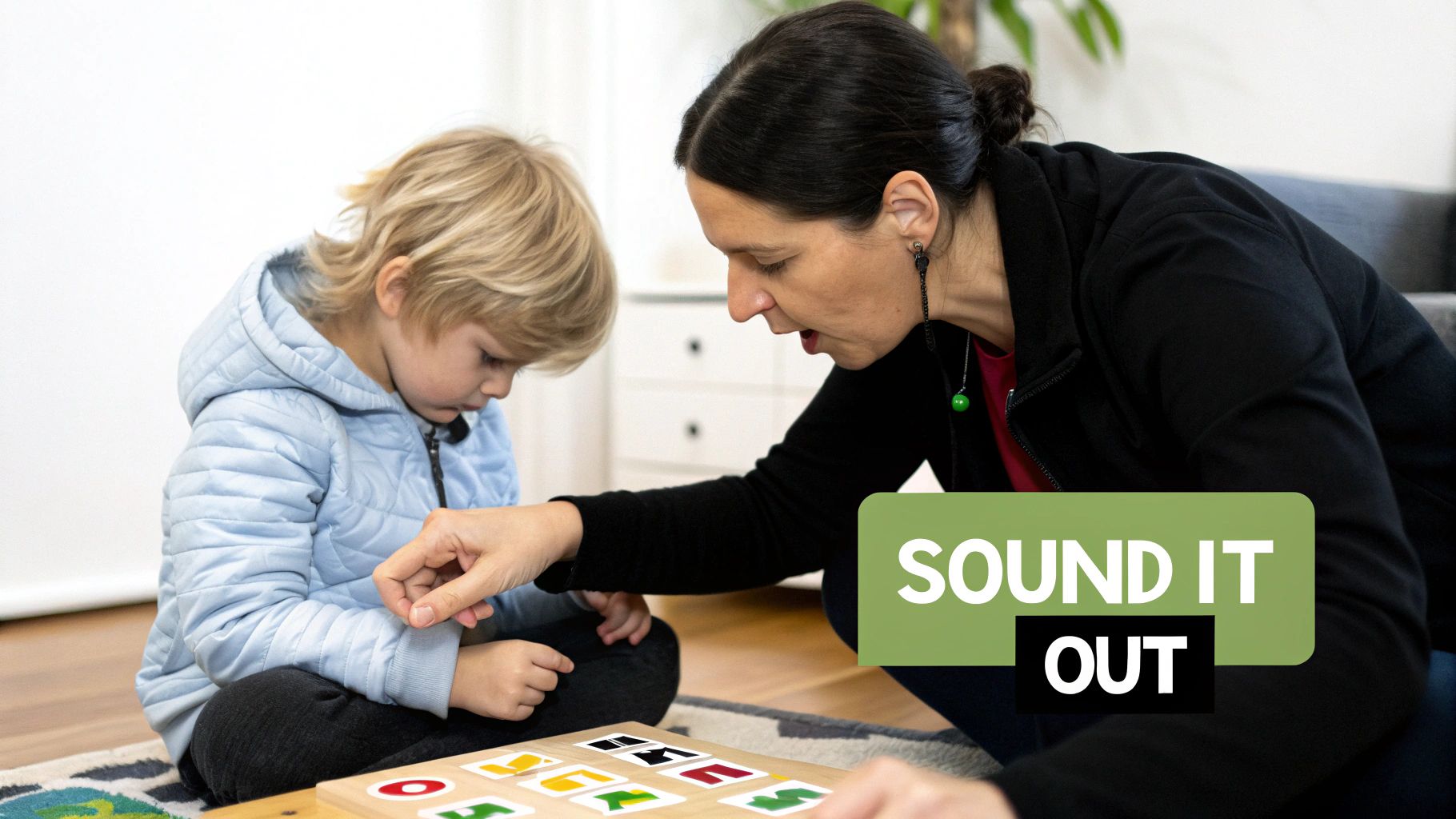
Unlike phonological dyslexia, where the core issue is linking sounds to letters, surface dyslexia is about struggling to recognise whole words instantly by sight. These children are often brilliant at sounding out words phonetically, but they can't seem to build up a bank of familiar words they just know. Every time they encounter a word, even a common one like ‘the’ or ‘said’, it’s almost as if they’re seeing it for the very first time.
This makes their reading incredibly slow and laboured. It’s exhausting. The sheer mental energy it takes to decode every single word is immense, leaving little room for understanding what the text actually means. They feel permanently stuck in first gear, never quite building the fluency that makes reading a joy.
What Does Surface Dyslexia Look Like?
The defining feature here is an over-reliance on sounding-out strategies for every word, even the ones that break the rules. It’s like using a hammer for every job, even when you really need a screwdriver. This approach works perfectly for phonetically regular words like 'cat' or 'sit', but it falls apart with all the irregular words that make English so tricky.
A child with surface dyslexia might:
- Read phonetically irregular words incorrectly. You might hear them read 'have' so it rhymes with 'gave', pronounce 'yacht' as 'yatched', or say 'co-lo-nel' for 'colonel'.
- Struggle with homophones. Words that sound the same but look different, like 'their' and 'there', are a minefield. They can’t rely on a visual memory of the word’s shape to tell them apart.
- Read very slowly and without expression. Because all their brainpower is focused on decoding, there’s no cognitive space left for understanding the meaning or rhythm of the sentences. Their reading might sound robotic and disjointed.
This constant battle can be deeply disheartening. The child might think, "I know the rules, so why can't I read this?" The feeling of never building momentum can make them feel like they're failing, no matter how hard they try.
The emotional weight of this challenge is significant. For a child with surface dyslexia, reading is not a gateway to new worlds but an exhausting task of visual memorisation, where every word demands intense effort, every single time.
Building a Strong Sight Word Vocabulary
The key to supporting a child with surface dyslexia is helping them build a strong sight word vocabulary—a mental library of words they can recognise in a flash. This isn't about mind-numbing drills with endless flashcards, which can feel completely disconnected from real reading. Instead, the focus should be on creating meaningful, multi-sensory connections with these tricky words.
Here are some strategies that really work:
- Word Families: Grouping words that share a visual pattern helps the brain spot the chunk automatically. For example, learning 'light', 'right', 'night', and 'fight' together helps them memorise the '-ight' pattern.
- Visual Cues: Highlighting the difficult part of a word in a different colour can draw their attention to it. For example, in the word 'friend', highlighting the 'ie' can help them remember that unusual spelling. Or you could create a fun mnemonic: "Friends in the end."
- Context is Key: It's far better to embed words in fun, engaging sentences and stories than to learn them in isolation. When a word is tied to a picture or a memorable story, it has a much better chance of sticking.
At an inclusive online school like Queen’s Online School, this personalised approach is at the heart of what we do. Teachers can use digital tools to create interactive games, memorable visual aids, and customised reading materials that focus specifically on building that sight word bank. Our small class sizes mean a teacher can easily spot when a child is mechanically sounding everything out and can gently guide them toward whole-word recognition strategies. This tailored support helps turn frustration into fluency, making words finally look right.
Navigating a Blurry World with Visual Dyslexia
For most people, the word dyslexia conjures up a simple image: seeing letters backwards. While letter reversals can be part of the picture, the reality of visual dyslexia is often a far more disorienting and exhausting experience. It’s not an issue with eyesight, but rather with how the brain processes the perfectly clear information the eyes are sending it.
Imagine your child sitting down with their favourite story, but the words just won't stay still. To them, the letters might seem to shimmer, blur, or even float across the page. That crisp black text on a bright white background can feel overwhelmingly harsh, creating a glare that makes it almost painful to focus. This is the frustrating, often invisible, world a child with visual dyslexia navigates every single day.
They might lose their place on a line, only to find it again two sentences down, leaving them completely lost. The sheer effort of trying to hold the words in focus can lead to tired eyes, headaches, and a profound sense of failure before they’ve even finished a page.
Spotting the Signs of Visual Stress
A child often assumes everyone sees the world exactly as they do, so they may not have the words to explain what’s happening. Instead, their struggles bubble to the surface through their behaviour and reading habits.
You might notice your child:
- Using their finger or a ruler to track the text. This isn’t a bad habit; it’s a clever coping mechanism to stop them from losing their place or skipping lines.
- Frequently blinking, rubbing their eyes, or complaining of headaches. After just a few minutes of reading, they might say, "My head hurts," because the strain of trying to make sense of a swimming page takes a real physical toll.
- Skipping small words or entire lines. When the text is visually unstable, it’s incredibly easy to miss parts of a sentence without even realising. They might read "The cat sat on mat" instead of "The cat sat on the mat."
- Struggling to copy from the board. Transferring information from a distance adds another layer of visual complexity that can feel insurmountable.
These signs aren't about a lack of attention; they are clues that the physical act of reading is genuinely uncomfortable. In the UK, it is estimated that dyslexia affects up to 17% of school-aged children, making it the most common learning difficulty. Early identification is crucial; with the right support, up to 90% of students can dramatically improve their reading outcomes. You can discover more insights about dyslexia and support in UK schools.
For a child with visual dyslexia, the page isn’t a source of knowledge but a source of stress. Changing how the page looks can be the key that finally makes the words feel calm and accessible.
Simple Changes That Make a Big Difference
The good news is that you don’t need complex solutions. Small, practical adjustments can dramatically reduce visual stress and completely transform a child’s reading experience. These aren't cures, but they are powerful tools for creating a calmer, more stable visual environment.
Consider trying these simple accommodations:
- Coloured Overlays or Filters: A simple sheet of transparent coloured plastic placed over a page can cut down the glare and make the text appear clearer and more stable. You can buy these online or at educational supply stores.
- Dyslexia-Friendly Fonts: Fonts like OpenDyslexic or Comic Sans have unique letter shapes and heavier bottoms, which can make them easier to distinguish and less likely to blur together. Change the font on your home computer or tablet to see if it helps.
- Increased Spacing: Adjusting the space between letters, words, and lines in digital documents can declutter the page, making it much easier for the brain to process. Try setting the line spacing to 1.5 or 2.0 in a Word document.
For those navigating a blurry world, exploring options like photophobia eye glasses designed to filter specific light wavelengths might also offer significant comfort. By making these simple changes, you empower your child, turning a stressful page into a readable one and giving them the confidence to finally engage with the stories they so desperately want to enjoy.
Building a Supportive World for Your Child
Once you begin to understand the specific shape of your child’s dyslexia, the next step is just as crucial: building a world around them where they feel safe, understood, and ready to succeed. This isn’t just about school; it’s about creating a powerful partnership between home and the classroom that provides a consistent, positive foundation for their entire learning journey.
Think of this section as your playbook for turning your home into a sanctuary of support and confidently advocating for your child’s needs at school.
Nurturing Confidence and Resilience at Home
Home needs to be the place where your child’s self-esteem gets refuelled. When school feels tough, the emotional support they receive from you becomes their anchor, constantly reminding them that reading difficulties do not define their worth or their intelligence.
One of the most profound shifts you can make is to praise the effort, not just the outcome. Instead of zeroing in on a test score, celebrate the hours of revision they put in. Acknowledge their persistence when they wrestled with a frustrating paragraph. This simple change teaches them that resilience is a strength in and of itself. For example, instead of "You got a bad mark," try, "I saw how hard you worked on that spelling list, and I'm so proud of your effort."
It’s also about rediscovering the magic of stories without the pressure of reading.
- Embrace Audiobooks: Listening to stories is a fantastic way to build vocabulary, comprehension, and a genuine love for narrative. It allows your child to get lost in worlds of adventure, just like their peers, keeping their imagination and intellect fired up.
- Read Aloud Together: Take turns reading, or simply read to them. This not only models fluent reading but keeps the experience of sharing a book a joyful, bonding activity rather than a chore. Snuggle up on the sofa and let them relax while you bring a story to life.
At its heart, emotional support is about sending a clear message: "I see how hard you are working, and I am so proud of you." This simple validation can give your child the strength to face their challenges day after day.
Becoming a Confident Advocate at School
Partnering effectively with your child's school is non-negotiable. As their parent, you are the expert on your child, and your insights are invaluable. Opening a constructive, collaborative dialogue with their teachers is the key to unlocking the support they need to truly flourish.
A great first step is to request a meeting to share your observations. Explain what you're seeing at home—for example, "Leo spends an hour on homework that should take 15 minutes, and often ends up in tears." Connect it to the different forms of dyslexia you've learned about. Frame the conversation around teamwork—using phrases like, "How can we work together to help them succeed?" makes all the difference.
One of the most important concepts to get comfortable with is reasonable adjustments. These aren't about giving your child an unfair advantage; they are about levelling the playing field so they have an equal opportunity to show what they know.
Common adjustments often include:
- Extra Time in Exams: This gives them the breathing room to decode questions and formulate their answers without the added pressure of a ticking clock.
- Access to a Laptop: For a child whose spelling or handwriting is a major barrier, typing can free them up to focus on the quality and content of their work.
- Use of Assistive Technology: Tools like text-to-speech software can read exam questions or digital texts aloud, removing reading as a barrier in subjects like science or history.
A formal assessment is often the key that unlocks this next level of help. A report from an educational psychologist provides the school with a clear diagnosis and specific, actionable recommendations. This formal document makes it much easier to access the full range of SEN support your child is entitled to.
Finally, equipping your child with effective study techniques is fundamental for their long-term success, especially when traditional methods fall short. Exploring effective textbook study strategies can provide you with practical tips to help them absorb and retain information. By combining unwavering emotional support at home with strong, informed advocacy at school, you create an unbreakable network that allows your child to navigate their education with confidence and truly thrive.
Common Questions Parents Ask About Dyslexia
When you first receive a diagnosis, it can feel like you’re suddenly navigating a new world. A flood of questions is completely normal—in fact, it’s the first step toward becoming your child’s best advocate. Let’s walk through some of the most common concerns we hear from parents, offering clear, reassuring answers to help you on this journey.

Can My Child Have More Than One Form of Dyslexia?
Yes, absolutely. It's actually very common for a child to show a 'mixed profile,' meaning they have traits from different forms of dyslexia. For instance, a child might really struggle to sound out an unfamiliar word (a sign of phonological dyslexia) while also finding it tough to instantly recognise common but tricky words like 'friend' or 'said' (a sign of surface dyslexia).
This is exactly why a comprehensive assessment is so important. It doesn't just stick a single label on a child; it paints a detailed picture of their unique learning landscape. This allows us to shape support that’s perfectly tailored to their specific mix of needs.
Does Dyslexia Mean My Child Isn’t Smart?
Not in the slightest. This is perhaps the most critical myth we need to bust, and it’s one that can cause a lot of heartache for your child. Dyslexia is simply a difference in how the brain processes language. It has absolutely no connection to intelligence.
Many of the world's most brilliant thinkers, creators, and innovators have dyslexia. They often excel in areas like entrepreneurship, the arts, and science precisely because their brains are wired differently. It’s crucial to see their reading challenges as just one part of who they are, and to champion their incredible strengths and talents—whether they're a master LEGO builder, a compassionate friend, or a budding artist.
Your child's intelligence is a vast and wonderful landscape. Dyslexia is just one path they travel through it, and it does not define the destination. Their potential remains limitless.
Will My Child Ever Grow Out of Dyslexia?
Dyslexia is a lifelong learning difference, not a phase your child will simply outgrow. But please don’t let that sentence feel discouraging. It absolutely does not limit their potential for a happy, successful life.
With the right support, strategies, and understanding, children learn to work with their dyslexia. They build powerful skills and coping mechanisms that serve them well into adulthood. The goal isn't to 'cure' it, but to equip your child with the confidence and tools they need to become a skilled reader and a powerful learner. Early, consistent, and positive support is the key to helping them thrive.
At Queen’s Online School, we understand that no two children learn in the same way. Our specialist teachers are trained to support learners with diverse needs, creating personalised strategies that build on their strengths and foster genuine confidence. Discover how our inclusive online environment can help your child flourish by visiting https://queensonlineschool.com.