


The first step to effective A levels revision isn't cracking open a textbook; it’s building a solid, personalised plan that feels supportive, not stressful. It’s about creating a flexible timetable that works with your child's natural energy cycles, setting small, achievable daily goals, and laying a foundation that prevents that all-too-familiar last-minute panic.
The goal is to create a clear, manageable path forward that puts your child in control, transforming their anxiety into quiet confidence.
Building a Calmer Foundation for A Levels Revision
The mere thought of A levels revision can send a wave of panic through students and parents alike. It's a journey filled with high stakes and intense pressure. But what if the process started not with dense textbooks, but with building a calm, structured foundation centred entirely on your child's needs and emotional wellbeing?
This isn't about enforcing a rigid, military-style schedule that adds to their stress. It's about collaboratively crafting a smart, flexible blueprint that respects their individual rhythm and acknowledges their fears. The most successful revision plans are deeply personal, turning a daunting task into a series of manageable, confidence-boosting steps.
This visual flow shows the core components: creating a personalised timetable, setting clear daily goals, and using rewards to keep motivation high.
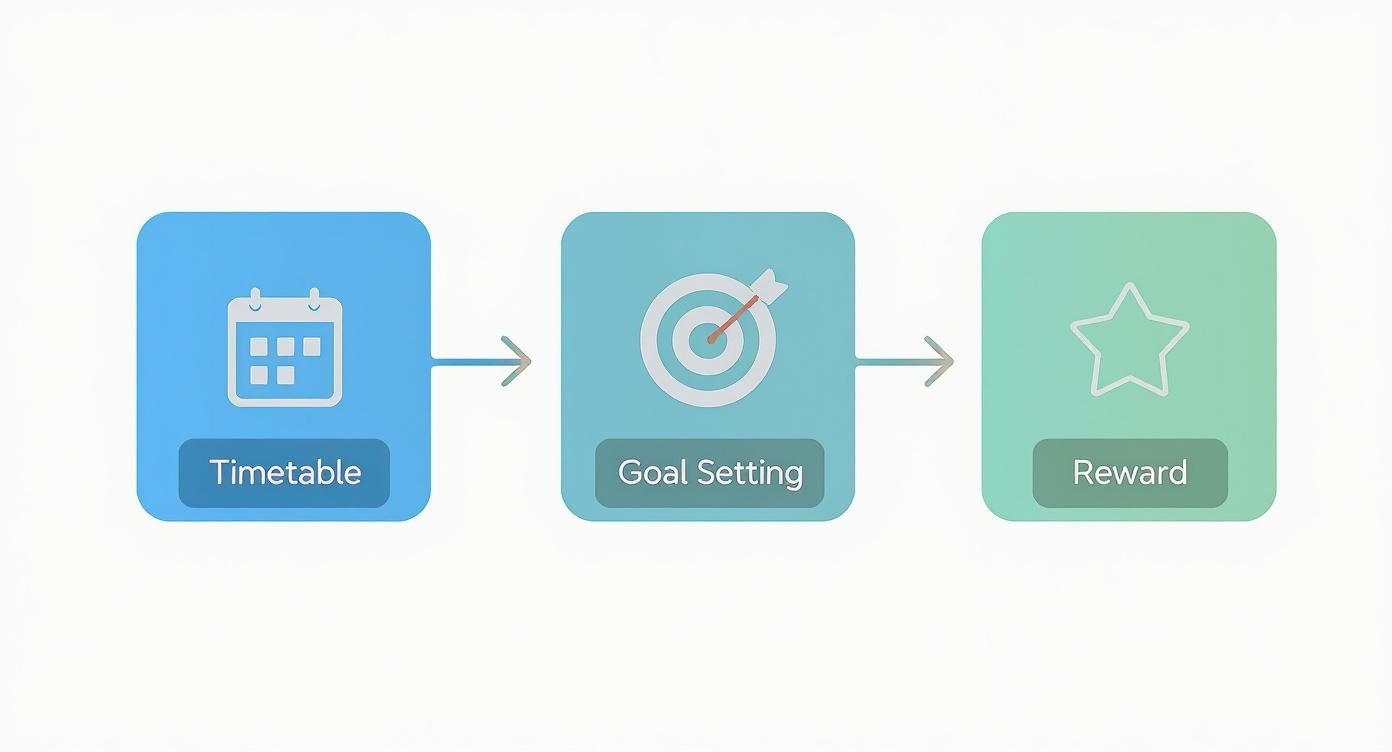
These elements work together in a cycle, creating a revision system that’s not just effective, but sustainable and emotionally supportive.
Design a Timetable That Breathes
A great revision timetable is a living document, not a prison sentence. It should feel like a supportive guide, built around your child’s unique energy patterns and how they learn best.
For example, a student named Alex knows his brain feels foggy and anxious in the morning. So, instead of forcing his most demanding subject, Maths, into a 9 AM slot, he starts his day with something calmer, like reviewing flashcards for History. He tackles the complex Maths problems after lunch, when he feels more alert. This simple, empathetic adjustment prevents burnout and makes every session feel productive, not punishing.
To build a plan that truly supports your child, start by identifying:
- Energy Peaks and Troughs: When does your child feel most alert? When do they need a break? Ask them. Their answer might surprise you.
- Subject Demands: Which subjects feel draining (like Physics problem-solving) versus more creative (like History source analysis)?
- Non-Negotiable Downtime: Schedule hobbies, exercise, and social time first. These aren't luxuries; they are essential for their mental wellbeing and actually help with memory retention. Seeing fun on the calendar makes the hard work feel more bearable.
Here’s a blueprint you can adapt. The key is balance – notice how it mixes focused study with crucial downtime.
Your A Levels Revision Timetable Blueprint
| Time Slot | Monday | Tuesday | Wednesday | Thursday | Friday | Weekend Focus |
|---|---|---|---|---|---|---|
| 9:00 – 10:30 | Subject 1 (High Focus) | Subject 2 (High Focus) | Subject 3 (High Focus) | Subject 1 (High Focus) | Subject 2 (High Focus) | Morning: Review week's topics with flashcards. |
| 10:30 – 11:00 | BREAK | BREAK | BREAK | BREAK | BREAK | BREAK |
| 11:00 – 12:30 | Subject 2 (Medium Focus) | Subject 3 (Medium Focus) | Past Paper Practice (Sub 1) | Subject 2 (Medium Focus) | Past Paper Practice (Sub 3) | Afternoon: Longer past paper under exam conditions. |
| 12:30 – 1:30 | LUNCH | LUNCH | LUNCH | LUNCH | LUNCH | LUNCH |
| 1:30 – 3:00 | Subject 3 (Lower Focus/Creative) | Essay Planning (Sub 1) | Mind Mapping (Sub 2) | Subject 3 (Lower Focus/Creative) | Mark Past Paper | Evening: Relax and recharge. No revision! |
| 3:00 – 3:30 | BREAK | BREAK | BREAK | BREAK | BREAK | |
| 3:30 – 4:30 | Review Day's Notes | Review Day's Notes | Review Day's Notes | Review Day's Notes | Weekly Review | |
| Evening | FREE TIME | Hobby/Sport | FREE TIME | Social Time | FREE TIME |
This structure ensures that no subject gets neglected and that your child has dedicated time to switch off, which is just as important as the time they spend studying.
Set Goals That Build Momentum
Vague goals like "revise Biology" are paralysing because they feel impossibly huge. Instead, help your child break down massive topics into small, concrete daily targets. This approach turns an insurmountable mountain of stress into a series of small, climbable hills of achievement.
A powerful goal isn't "revise Chapter 5." It's "create 15 flashcards for key definitions in Chapter 5" or "complete three short-answer questions from the 2022 past paper."
Each completed task provides a small dopamine hit—a feeling of "I did it!"—that builds a sense of accomplishment and fuels motivation for the next session. This is a crucial step in becoming a self-directed learner, empowering your child to take real ownership of their progress and feel in control again.
Create a Supportive Study Environment
The physical space where revision happens matters immensely. It should be a zone of focus and calm, a sanctuary free from the distractions of social media or family hustle.
Work with your child to design a space that feels good to them. This isn't about creating a perfect Instagram-worthy study area; it's about what helps them feel settled. This might include:
- Good lighting to reduce eye strain and headaches.
- An organised desk with all their supplies within easy reach, reducing frustration.
- Comfortable seating that supports good posture during long sessions.
- Minimal distractions—a "phone in another room" policy during study blocks works wonders for anxiety.
To really cement a disciplined routine, finding a study accountability partner can keep them motivated and on track. This external support can make a huge difference, especially on days when their self-belief wavers.
It's also important to remind them they aren't alone in this. A-level entry numbers have remained steady, with summer 2025 entries projected to be around 821,875. Your child is part of a massive, shared experience of hope and hard work.
Active Revision Techniques That Actually Stick

If you want your child's A-Level revision to stick, they have to move beyond just re-reading notes until their eyes glaze over. Real learning, the kind that builds genuine confidence, happens when they actively engage with the material. Let's explore the methods that make a real difference, like active recall, spaced repetition, and the brilliant Feynman technique.
Active Recall in Action
Think of Sam, who used to feel a knot of dread every time he opened his Biology textbook. He turned his dull notes into quick-fire flashcard quizzes for his morning commute. He wasn't just passively reading; he was actively testing himself. He’d keep track of the cards that made his heart sink and make a point of revisiting them on the way home. It’s a simple shift, but it transforms revision from a passive chore into a powerful mental workout.
Here’s how to encourage this:
- Create question-and-answer flashcards for key definitions, dates, and processes. On one side, write "What is the role of ribosomes?" and put the answer on the other. It’s simple, but feels much more proactive than just reading.
- Use digital apps with built-in self-testing features if they prefer working on a phone or tablet.
“Testing myself rather than rereading cut my study time in half.”
That quote from Sam says it all. Self-quizzing is far more efficient than passive review. Even a quick session with a whiteboard can work wonders. Encourage them to try drawing a flowchart for a chemical reaction from memory, then erase it and do it again. Each attempt strengthens those neural pathways, building confidence with every line drawn.
Spaced Repetition Tips
This is the secret to making sure knowledge stays locked in their long-term memory, reducing that awful "I've forgotten everything" panic. Spaced repetition is all about reviewing information at increasing intervals. They might look at a flashcard after one day, then three days, then a week, and so on.
The goal is to interrupt the process of forgetting.
- Log the date they review each topic.
- Gradually increase the time between reviews for topics they feel confident about.
- If they get something wrong, bring it back for review within 24 hours to stop the mistake from setting in.
| Review Interval | Day 1 | Day 3 | Day 7 | Day 14 |
|---|---|---|---|---|
| Action | Initial Test | Test Again | Reinforce | Final Check |
| Purpose | Build | Strengthen | Solidify | Retain |
This kind of schedule helps them spend their precious time on the things they don't know, rather than wasting it on concepts they’ve already nailed. While apps can automate this, a simple paper log works just as well.
Interleaving and Feynman
Instead of studying one subject for hours on end until their brain feels like mush ('block' studying), suggest they try interleaving. This just means mixing related topics within a single session. So, rather than doing Biology all morning, they could switch between Biology and Chemistry every 20 minutes or so. This technique keeps their brain on its toes and helps them spot connections they might have otherwise missed.
- In Maths, switch between different types of problems instead of doing 20 of the same kind.
- For Geography, alternate between analysing texts and interpreting data.
- In Physics, mix up formula drills with conceptual questions.
Then there's the Feynman technique, which is deceptively simple: try to teach a concept to someone else. The act of explaining a tricky Physics topic to a friend or younger sibling forces them to simplify it, instantly revealing any gaps in their own understanding.
Key Insight
Explaining a topic out loud is as potent as an hour of solo revision.
Mia, for instance, taught Newton’s laws to her cousin using everyday examples, like what happens when you brake on a bicycle. The exercise not only solidified her own grasp of mechanics but also made the topic feel more relevant and less intimidating.
Tracking Progress with Logs
Keeping a simple log of revision sessions provides tangible proof of their hard work, which is a huge motivator when they feel like they're getting nowhere. A quick chart or a note in a journal can show them just how far they've come.
Their log could include:
- Date and subject of each session
- The technique they used (e.g., flashcards, teaching, past paper)
- A confidence rating out of five
Seeing a consistent streak of five revision days in a row can give them the push they need to keep going. For more ideas, you can also read our guide on effective revision techniques. A journal is also a great place to manage stress by noting down "difficult concepts" to tackle later and celebrating "small wins" like finally mastering a tricky formula.
Boost Emotional Engagement
Believe it or not, emotions play a huge part in memory. When a child connects a topic to something they find interesting or fun, their brain is far more likely to retain it. Encourage them to link revision to their personal interests—maybe by drawing biochemical pathways as if they were characters in a comic strip.
When their brain labels information as relevant and enjoyable, retention skyrockets. Sam, for example, created mashups of equations and his favourite song lyrics to help him remember formulas. It was a playful twist that not only worked but also eased his study anxiety and kept him going.
Remember, active revision is a skill. Encourage your child to start small, find what works for them, and build on it over time.
Customising Revision For Each A Level Subject
A one-size-fits-all approach to A Level revision is a recipe for frustration. Let's be honest, the skills needed to dissect a Shakespearean sonnet are worlds away from those required to solve a complex calculus problem. Trying to revise for History and Physics in the same way is like using a sledgehammer to crack a nut—it’s the wrong tool for the job and leads to wasted effort and a feeling of failure.
Placing your child at the centre of this process means accepting that each subject speaks its own language. The real key to unlocking their potential is helping them become fluent in each one. This means tailoring revision techniques not just to the subject, but also to their personal learning style, turning a daunting syllabus into something they can actually manage and conquer.
Mastering The Art Of Essay Subjects
For subjects like English Literature, History, or Sociology, success is all about building compelling arguments, recalling specific evidence, and structuring thoughts coherently, all under the intense pressure of the clock. This is where creative and visual techniques can really help ease the overwhelm.
Imagine a student studying the causes of World War One. Instead of just re-reading her notes, she creates a huge visual timeline on her bedroom wall. She uses different coloured strings to connect key events, treaties, and political figures. Suddenly, abstract dates and names become a tangible story, making that complex web of causes and effects much easier to remember and explain. It turns a chore into a creative project.
Here are a few practical strategies that work wonders for essay-based subjects:
- Mind-Map Core Themes: For every major topic, create a central mind map. If it's a novel, put the title in the middle with branches for characters, themes, symbols, and key quotes. This gives a powerful visual overview that helps connect disparate ideas when their brain feels jumbled.
- Create Quote Flashcards: Don’t just write the quote down. On the back, jot down 3-5 bullet points about its significance, any literary devices used, and where it fits into the wider text. This kind of active analysis is far more effective than just trying to memorise lines.
- Practise Timed Paragraphs: The pressure of the exam hall is very real. Set a timer for 15 minutes and challenge your child to write a single, perfectly structured paragraph on a specific question. It’s a low-stakes way to build both speed and confidence, one paragraph at a time.
The goal isn't just to know the information; it's to be able to use it fluently and persuasively under timed conditions. Each practice paragraph builds that critical muscle memory.
Cracking The Code Of STEM Subjects
In complete contrast, STEM subjects like Maths, Chemistry, and Physics are all about precision, problem-solving, and applying formulas correctly. Revision here needs to be methodical and logical. It’s less about creative flow and more about systematic, deliberate practice to build a feeling of competence.
For these subjects, passively reading a textbook is one of the least effective things your child can do. Active problem-solving is the only way to build true competence and the confidence needed to tackle unfamiliar questions in the final exam.
One of the most powerful techniques here is the error log. When your child completes a past paper, they shouldn’t just glance at the mark with a sinking feeling. They should create a simple logbook or spreadsheet to categorise their mistakes.
- Was it a simple calculation error? (A 'silly mistake')
- A misunderstood concept? (A knowledge gap)
- A misapplied formula? (A process error)
Over time, patterns will emerge. They might realise they consistently make sign errors in algebra or always struggle with a specific type of chemical equation. This data-driven approach allows them to target their weakest areas with surgical precision, turning repeat mistakes into properly learned lessons, which is incredibly empowering. Our guide on how to revise for Biology A-Level offers more science-specific strategies that can easily be adapted.
Effective Revision Techniques by A Level Subject Group
Different subjects demand different approaches. Trying to use the same method for English and Physics just won't cut it. The table below breaks down some of the most effective primary and secondary revision techniques for the main A Level subject groups.
| Subject Type | Primary Revision Technique | Secondary Technique | Example Application |
|---|---|---|---|
| Essay Subjects (English, History) | Thematic Mind Maps | Timed Paragraph Practice | Crafting a mind map on the theme of ambition in Macbeth, then writing a 15-minute paragraph on how it leads to his downfall. |
| STEM Subjects (Maths, Physics) | Past Paper Drills | Creating an Error Log | Completing a mechanics past paper, then logging every mistake to identify weaknesses in projectile motion questions. |
| Content-Heavy Sciences (Biology, Chemistry) | Active Recall Flashcards | Blurting & Brain Dumps | Using flashcards for metabolic pathways, then spending 10 minutes writing down everything known about photosynthesis from memory. |
| Languages (French, Spanish) | Spaced Repetition for Vocabulary | Speaking Practice with a Partner | Using a digital app to review 20 new vocabulary words daily and having a 30-minute conversation in the target language twice a week. |
This tailored strategy respects the unique demands of each discipline and helps your child focus their energy where it will have the most impact.
Understanding these subject-specific challenges is vital, especially when you look at performance trends. Recent data from Scotland, for instance, shows that attainment rates can vary significantly between subjects. In 2025, Advanced Higher Mathematics saw 72.4% of students achieve grades A to C, a figure that highlights the specific grading standards and difficulties within different A Level subjects.
By customising their A Level revision, your child isn't just studying harder; they're studying smarter. This builds not only subject knowledge but also a deep sense of competence and control—which is probably the best antidote to exam anxiety there is.
Master Exam Technique Using Past Papers
Moving from simply knowing a subject to proving it in an exam is a huge leap that can cause a lot of anxiety. Past papers are the bridge that gets your child across. They aren't just for practice; they’re a direct window into the minds of the examiners, showing exactly what’s expected and where marks are won and lost.
Working through past papers builds more than just knowledge—it builds resilience and calm. It demystifies the whole exam process, turning a major source of anxiety into a familiar challenge your child feels genuinely equipped to handle.
Simulate The Real Thing
By far the most powerful way to use past papers is to recreate exam conditions at home. This isn’t just about timing; it’s about conditioning the brain and body to perform under pressure. One student I worked with had his dad act as an invigilator for a full, timed paper.
This meant:
- No phone in the room. Period.
- Strict start and finish times, announced clearly.
- Complete silence for the entire duration.
The experience was intense, but it completely transformed his relationship with exam pressure. He learned to manage his adrenaline, pace himself naturally, and think clearly even when the clock was ticking. It’s a real act of care to help your child face this simulated pressure in a safe space before the actual day.
Decode The Mark Scheme
The mark scheme is the most valuable—and most underused—tool in A-Level revision. It’s practically a cheat sheet, revealing exactly what examiners are trained to reward. After your child completes a paper, the real work begins.
Instead of just checking answers, encourage them to become a detective. A great way to do this is with a simple colour-coded highlighting system on their completed paper, cross-referenced with the mark scheme.
- Green: Awarded marks that match the scheme perfectly. (A moment to celebrate!)
- Yellow: Points that were partially correct but missed key terminology. (A quick fix!)
- Pink: Areas where marks were completely dropped. (The new focus area!)
This visual feedback instantly shows them the patterns. They might see lots of yellow, which tells them their knowledge is solid but their use of specific scientific terms is too vague. This shifts their focus from a demoralising "I don't know this topic" to an actionable "I need to be more precise with my language."
A mark scheme isn’t just a list of answers; it's a guide to the specific language and structure examiners want to see. Understanding it is like learning the rules of the game before you play.
Master Marks-Per-Minute Pacing
Panic often kicks in when students feel they're running out of time. A simple but incredibly effective technique is to calculate the marks-per-minute for each exam. For a 2-hour (120-minute) paper worth 100 marks, that’s roughly 1.2 minutes per mark.
This little calculation empowers them to allocate their time intelligently.
A 3-mark question should take just under 4 minutes. A monster 25-mark essay deserves a full 30 minutes, which can be broken down even further:
- 5 minutes for planning a quick bullet-point outline to calm the nerves.
- 20 minutes for focused writing.
- 5 minutes for a final proofread to catch any silly errors.
This approach stops them from sinking 15 minutes into a question that's only worth 5 marks. It puts them in control of the clock, not the other way around.
Plan For The Unexpected
Exams are designed to have "curveball" questions that test deep understanding. The natural reaction is to panic, but a simple strategy can make all the difference. Teach your child that if a question stumps them, they should immediately draft a quick bullet-point outline of anything they do know that seems even vaguely relevant.
This does two crucial things. First, it calms the mind by initiating action instead of letting them freeze. Second, it often helps them make connections they might have missed, unlocking the rest of the answer. It’s a safety net that ensures they can always make a confident start, even on the toughest questions.
With competition for top marks so high, every single point counts. Grade boundaries reflect this, with the proportion of A-levels awarded A/A* reaching 28.2% in 2025, continuing a steady increase over the last six years. You can discover more insights about this trend from the Education Policy Institute.
Ultimately, mastering past papers is about building a sense of deep-seated preparedness. It’s about walking into the exam hall feeling not just knowledgeable, but calm, focused, and ready to show the examiner exactly what they're capable of.
Maintain Wellbeing During Revision
Revision isn't just a mental game; it’s an emotional marathon that demands physical and emotional stamina. When stress piles up, you can practically see a child's concentration crumble and their motivation fizzle out.
Putting your child’s wellbeing at the heart of their revision strategy isn't a "nice-to-have"—it's the key to keeping them resilient, engaged, and performing at their best when it matters most.
- Plan short, sharp exercise breaks to get the blood flowing and clear their head.
- Stock the kitchen with snacks rich in protein and healthy fats for steady energy and fewer mood swings.
- Schedule proper screen-free time to give their eyes and brain a much-needed reset.
- Keep an eye out for the early signs of stress, like unusual irritability, headaches, or that classic "brain fog."
Setting Up A Wellbeing Corner
A dedicated nook for self-care can become a genuine refuge during intense revision days. This isn't about anything complicated; it's just about creating a space that signals it’s okay to switch off and breathe.
Let your child pick out a few things that feel comforting to them—maybe a few cushions, a plant, or some soft lighting. Encourage them to keep calming objects nearby, like a stress ball or scented candles.
A few simple ideas:
- A soft throw or cushion for a quick reset.
- A timer or clock to help manage break durations properly.
- A water bottle as a constant hydration reminder.
- A printable breathing guide to use as a visual cue.
This little corner becomes a physical reminder that taking a break is a non-negotiable part of the revision plan. Just a glance at that cosy spot can be enough to calm racing thoughts before they dive back into a tricky topic.
Breathing Exercises To Dissolve Tension
Never underestimate the power of the breath. Just five minutes of focused breathing can reset rising stress levels in an instant, pulling your child out of a spiral of panic.
A simple technique to try is the '4-2-6' count: inhale for four counts, hold for two, and then exhale slowly for six. This simple action can help reduce cortisol spikes and bring their focus right back to the task at hand.
Key Takeaway
A short breathing pause can cut feelings of stress by up to 30% and sharpen concentration, making it a perfect tool to use right before tackling a particularly challenging subject.
Conversations To Spot Early Burnout
As a parent, you’re in the best position to spot the early warning signs of burnout. But how you approach it makes all the difference. Instead of adding pressure, open a gentle dialogue with caring, solution-focused questions.
Things like midday fatigue or sudden mood swings are red flags that a reset is needed.
Try using openers that show empathy and invite them to find a solution with you:
- "I've noticed you seem to hit a wall around 3 p.m. How about we schedule a quick walk then?"
- "That topic seems to be really frustrating you. Why not take a five-minute breathing break before trying again?"
- "You’ve worked really hard today. What's one small thing we could do that would help you feel recharged?"
These kinds of questions show your child that you’re on their team and support is there, without judgement. Honest, open conversations can defuse that building tension long before it turns into full-blown burnout.
Build In Movement And Snacks
Sitting still for hours on end is a recipe for drained energy and blurred concentration. It’s crucial to build movement into the day.
Schedule short bursts of activity, like stretching, a few jumping jacks, or even just a quick walk up and down the hallway. Pair these active breaks with balanced snacks to keep blood sugar and mood stable.
- Try 5-minute stretch breaks every hour to reconnect with their body.
- Offer small portions of nuts and fruit for sustained fuel, not a sugar rush.
- Encourage a glass of water before and after snacks to stay properly hydrated.
These tiny micro-breaks often do wonders for both brain and mood in under 5 minutes. They’re far more effective than sugary treats, which inevitably lead to a crash and kill focus.
It's also vital to get away from the screen. Suggest they read a page of a favourite book or just doodle for 10 minutes.
- Listen to some relaxing music or a short podcast totally unrelated to their studies.
- Do a few light yoga poses or simple balance exercises.
- Step outside for a dose of fresh air and natural daylight.
These pockets of offline time are brilliant for sharpening productivity and reducing eye strain.
By weaving wellbeing right into the fabric of their revision plan, your child will stay energised, confident, and calm. These aren't just one-off tricks; they are simple habits that protect against burnout and build resilience for the long haul.
"When wellbeing leads revision, stress fades and learning thrives."
Your child’s emotional health isn’t an optional extra; it’s the very backbone of effective revision. Invest in these pauses and conversations, and you’ll see both their grades and their wellbeing improve. Small steps build real resilience.
Still Have Questions About A-Level Revision?
It’s completely normal to feel a bit lost in the flood of advice and pressure during the A-Level revision period. For students and parents alike, the questions can feel endless. We’ve pulled together some of the most common worries we hear and offered clear, practical answers to help you navigate this time with a bit more calm and a lot more confidence.
How Many Hours a Day Should My Child Revise?
This is the big one, but the answer is always quality over quantity. A student who spends three focused hours using active recall techniques will achieve far more than someone who passively rereads their notes for six.
Once study leave kicks in, a realistic target is 4–6 hours of genuine, focused work each day. The key is to break this down into manageable chunks. The classic 50-minute session followed by a 10-minute break is popular for a reason—it keeps concentration high and stops the mental burnout that makes revision feel pointless.
Encourage your child to track their output, not just their hours. What did they actually do? Completing and marking three past-paper questions in two hours is a tangible win. Vaguely reading notes for four hours is not. This shift in mindset empowers them to focus on what actually moves the needle.
What’s the Best Way to Help an Unmotivated Child?
When motivation hits rock bottom, your first move should always be connection, not correction. Start with a gentle, non-judgemental chat to figure out what’s really going on. Are they completely overwhelmed? Do they feel like they’ve left it too late? Are they terrified of failing?
Once you get to the root of it, break revision down into impossibly small wins. The goal isn’t to "revise Chemistry." It’s to "write five flashcards for Topic 1." Celebrate every tiny step forward. This helps rebuild momentum and proves that progress is possible, even when it feels hopeless.
It also helps to gently connect these small tasks back to their bigger life goals. Remind them how this effort is a stepping stone to that university place or future career they've talked about. And finally, check the basics are in place: sleep, nutrition, and exercise. A well-rested, properly fuelled brain is far more likely to feel motivated.
Helping a child find their 'why'—the reason they are doing this in the first place—is often the most powerful motivational tool a parent has. It reframes revision from a chore into a stepping stone towards their dreams.
How Should We Adapt Revision for SEN or SEMH Needs?
For a child with SEN (Special Educational Needs) or SEMH (Social, Emotional, and Mental Health) needs, personalisation is everything. A standard, high-intensity revision plan can be completely counterproductive and distressing. The focus must be on creating a supportive, predictable, and sensory-friendly process.
Work closely with the school's SENCO to implement strategies that play to your child's strengths. This might look like:
- Shorter study bursts: Think 25-minute sessions with 15-minute breaks in between.
- Multi-sensory tools: Using audio summaries for auditory learners, colourful mind maps for visual learners, or even physical models for those who learn by doing.
- Assistive technology: Tools like text-to-speech software can reduce the cognitive load and make information much easier to access.
- A low-stimulus environment: A quiet, uncluttered space free from distractions is absolutely essential for maintaining focus.
Most importantly, keep the atmosphere positive and supportive. Frame revision as a team effort where you focus on effort and progress, not just the final results.
Is It Too Late to Start a Month Before Exams?
It’s never too late to make a real difference. But with only a month to go, you have to be strategic and ruthless with priorities. Forget trying to cover everything from scratch; that’s just a recipe for panic.
Instead, take a diagnostic approach. Get your child to sit a recent past paper under timed conditions. This will instantly show you where their weakest topics are—the areas losing them the most marks. That's where you focus all your energy.
For maximum efficiency, lean heavily on high-intensity revision techniques:
- Blurting: Spend 10 minutes frantically writing down everything they can remember about a key topic from memory, then check it against their notes.
- Timed past-paper questions: Focus on nailing the exam technique for the high-mark questions that can make or break a grade.
- Flashcards for key facts: Target the essential, non-negotiable knowledge needed to secure foundational marks.
A focused, smart plan for these final four weeks can dramatically boost both their confidence and their final grade.
At Queens Online School, we understand that every child’s educational journey is unique. We provide a supportive, flexible online learning environment where students receive personalised attention from subject-specialist teachers, ensuring they have the tools and confidence to excel in their A Levels and beyond. Explore our A-Level programmes.